


Preparing Teens for Independent Living: Practical Skills and Support to Build Confidence
Independent living for adolescents means being able to handle day-to-day routines, make safe choices, and take part in work and community roles—with the right supports in place. This guide explains why building these skills during the teen years improves long-term outcomes and lowers risk during the transition to adulthood. You’ll find which core skills matter most, how executive function and emotional regulation support everyday tasks, and which program elements make transition planning work. We outline how occupational therapy and group-based supports strengthen life skills, share step-by-step strategies for teaching budgeting and financial decision-making, and point to local resources serving Tampa and Brandon. Read on for prioritized skill lists, simple teaching plans, side-by-side comparisons for quick reference, and practical checklists families can use to prepare teens for independence.
Key Takeaways
- Independent living skills for teens include self-care, executive function, social communication, financial literacy, emotional regulation, and community navigation.
- Executive function—planning, organization, and task initiation—helps adolescents complete multi-step tasks and manage daily responsibilities.
- Occupational therapy uses task analysis, adaptive tools, and graded practice to increase independence in life skills.
- Social skills groups build self-advocacy, communication, and problem-solving needed for work and community participation.
- Effective transition programs combine individualized planning, hands-on vocational experience, life-skills instruction, and coordinated connections to adult services.
- Parent coaching teaches caregivers how to scaffold learning, set routines, and fade supports so teens gain autonomy.
- Financial literacy instruction covers budgeting, banking, saving, and reflective practices to support long-term economic stability.
- Emotional regulation strategies—like breathing techniques, cognitive reframing, and predictable routines—support decision-making and well-being.
- Tampa-area resources include therapy, social groups, and parent coaching to support transition planning and independent living.
What Are the Key Independent Living Skills for Teens?
Independent living skills are the practical abilities that enable a young person to care for themselves, manage a household, work, and navigate the community. These skills depend on consistent routines, planning ability, clear communication, and emotional regulation. Together they increase safety, employability, and overall quality of life. Intentionally teaching these skills during adolescence creates a smoother path into adult services and independent roles. Below we list prioritized skill areas and then connect them to daily tasks and the executive function supports that underlie them.
Core independent living skills for adolescents typically include:
- Daily living and self-care: meal prep, hygiene, and household chores.
- Executive function: planning, organization, working memory, and task initiation.
- Social and communication skills: self-advocacy, workplace interactions, and relationship management.
- Financial literacy: budgeting, banking, and responsible spending.
- Emotional regulation: coping strategies for stress and behavior management.
- Transportation and community navigation: getting around safely and independently.
These domains interact: better executive function supports budgeting and household management, and stronger social skills enable effective self-advocacy at school and work. The next section reviews concrete daily tasks that families can teach in a stepwise way.
Which Daily Living Skills Should Adolescents Master?
Daily living skills are specific tasks that enable self-care and household management. Teaching works best with scaffolding, routine, and hands-on practice in real settings. Parents and providers can break tasks into clear steps, model the process, and gradually increase teen responsibility while using visual supports and checklists. Practice in the natural environment—cooking in the kitchen, doing laundry in the laundry room, and practicing transit routes—builds competence and confidence. Tracking progress with simple milestones helps teams know when to fade prompts and encourage independence.
The table below maps common daily tasks to their components and provides practical teaching examples, along with typical age ranges for each phase of independence.
Different daily living tasks align with teaching steps and observable milestones.
This mapping helps parents sequence instruction and measure readiness. The following section ties these everyday tasks to executive function skills that support reliable performance.
How Do Executive Function Skills Support Independence?

Executive function is the set of cognitive processes—planning, organization, working memory, and task initiation—that lets adolescents complete multi-step tasks and manage time. Strong executive function helps teens plan a grocery run, follow recipes without missing steps, keep appointments, and finish work tasks independently. Weakness in these areas often shows up as missed deadlines, skipped steps, or difficulty starting tasks—barriers to independent living. Practical supports—external planners, step-by-step breakdowns, timers, and regular practice—both compensate for deficits and build internal skills.
Interventions that strengthen executive function focus on graded practice and environmental supports: checklists reduce working-memory load, explicit planning routines guide multi-step tasks, and brief daily reflections build self-monitoring. Occupational therapists and educators often teach these strategies in real contexts to speed generalization. Improving executive function, therefore, directly supports daily living tasks and prepares teens for more complex responsibilities, such as employment and housing management.
How Does Occupational Therapy Enhance Independent Living Skills?
Occupational therapy (OT) helps adolescents build the functional skills needed for independent living. OT assesses current abilities, sets measurable goals, and uses task-based interventions so teens practice real-world activities and gain confidence. Therapists break tasks into manageable parts, teach compensatory strategies, and adapt environments or tools to reduce barriers from motor, sensory, or cognitive differences. OT also partners with families and schools to make sure gains carry over into everyday routines.
Below is a concise mapping linking common OT interventions to targeted life skills and expected outcomes.
OT interventions link specific techniques to improvements in life skills and measurable progress.
These intervention examples show how OT turns assessment into functional gains. Many programs pair individual OT with group practice to reinforce skills. Next, we outline specific OT techniques for developing life skills.
What Occupational Therapy Interventions Support Life Skills Development?
Occupational therapists teach life skills using concrete methods—task breakdown, graded exposure, simulated real-world practice, and adaptive tools. For example, a therapist might conduct an in-home meal-prep session where the teen plans, shops, cooks, and cleans while the therapist gradually reduces prompts. Progress is tracked by fewer adult cues, increased accuracy, and handling greater task complexity. Therapists also introduce compensatory tools—visual schedules, checklists, stepwise cues—that teens can adopt long term.
Parents reinforce OT gains by maintaining consistent routines, using the same checklists therapists use, and slowly stepping back as competence grows. Collaboration with schools supports transfer to classroom and vocational settings, strengthening the pathway to adult independence. The next section explains how social skills groups complement OT by building self-advocacy and communication.
How Do Social Skills Groups Foster Self-Advocacy and Communication?
Social skills groups provide teens with a structured, supportive environment to practice conversation, perspective-taking, problem-solving, and self-advocacy through role-play and guided feedback. Group leaders set goals around pragmatic language, turn-taking, asking for help, and resolving conflict—skills that matter for employment and community life. Repeated practice with coaching in a low-stakes setting reduces anxiety about real interactions and helps adolescents apply these skills at school, work, and in social situations. When parents reinforce goals at home, skills generalize faster.
Many groups combine social coaching with problem-solving tasks and outings to mirror real-world demands; progress is tracked through observable behaviors such as initiating conversation or appropriately requesting accommodations. Skill Point Therapy offers social groups alongside parent coaching so caregivers learn how to scaffold conversations and rehearse scenarios at home. With social competence built through peer practice, teens are better prepared to self-advocate in IEP meetings or workplace conversations—key supports for growing independence.
What Makes Transition-to-Adulthood Programs Effective?
Programs that successfully support transition to adulthood combine individualized planning, hands-on vocational experiences, life-skills instruction, and coordinated case management to bridge school supports and adult services. These programs work because they set measurable goals linked to real outcomes—paid work, postsecondary education, supported housing—and progressively transfer responsibility to the young person. Core elements include an Individualized Transition Plan (ITP or IEP transition goals), vocational readiness training, community integration activities, and interagency coordination to connect adult services. Programs that blend practice, coaching, and system navigation yield better long-term results.
High-quality transition planning starts early (in middle adolescence), emphasizes repeated practice in authentic settings, and involves families in goal-setting and gradual support fading. A practical checklist helps families engage with programs and track milestones, such as short work trials or independent travel. Below is a short list of program elements, along with a brief note on using them in individualized plans.
Transition programs usually include these core elements:
- Individualized planning with measurable transition goals documented in the IEP.
- Vocational readiness experiences, such as job sampling and workplace coaching.
- Community integration opportunities to practice transportation and social skills.
- Case management and interagency coordination to secure adult services when needed.
These components create a structured pathway from school to adult life. The next section explains how planning adjusts for developmental differences.
How Does Transition Planning Address Developmental Differences?
Transition planning aligns expectations and timelines with each youth’s strengths, needs, and developmental profile by setting realistic, measurable short- and long-term goals. For students with diverse learning needs, teams specify accommodations, break tasks into smaller steps, and identify supported employment options. Early coordination with adult service agencies clarifies eligibility and smooths the handoff. Typical timelines include early exploration (ages 14–16), vocational trials and skills-building (16–18), and adult service linkage and housing or employment supports (18+). Family involvement and interagency communication are critical throughout.
A simple family checklist includes identifying strengths and interests, documenting needed supports in the IEP, arranging vocational experiences, and starting adult service referrals well before the final school year. These steps reduce last-minute gaps and clarify next steps toward independent living. Effective planning blends individual goals with coordinated services to support sustainable independence.
What Role Does Parent Coaching Play in Preparing Youth for Independence?
Parent coaching equips caregivers with strategies to scaffold learning, design supportive environments, and fade assistance so teens gain autonomy while staying safe. Coaches teach modeling, consistent routines, visual supports, and reinforcement techniques—and help parents set measurable practice schedules and track progress. When caregivers learn effective prompting and fading strategies, adolescents generalize skills more quickly and maintain gains across settings. Parent coaching also builds caregiver confidence in navigating transition systems and advocating for appropriate services.
Practical coaching exercises include partnered practice (parent shadows, then steps back), role-play for self-advocacy conversations, and home-based task analysis for chores and budgeting. Short-term goals might target a single life skill (for example, independent laundry); longer plans focus on broader markers of independence. When parent coaching is integrated with OT and school supports, families create a consistent environment for skill growth and sustained transition success.
How Can Financial Literacy Be Taught to Adolescents?
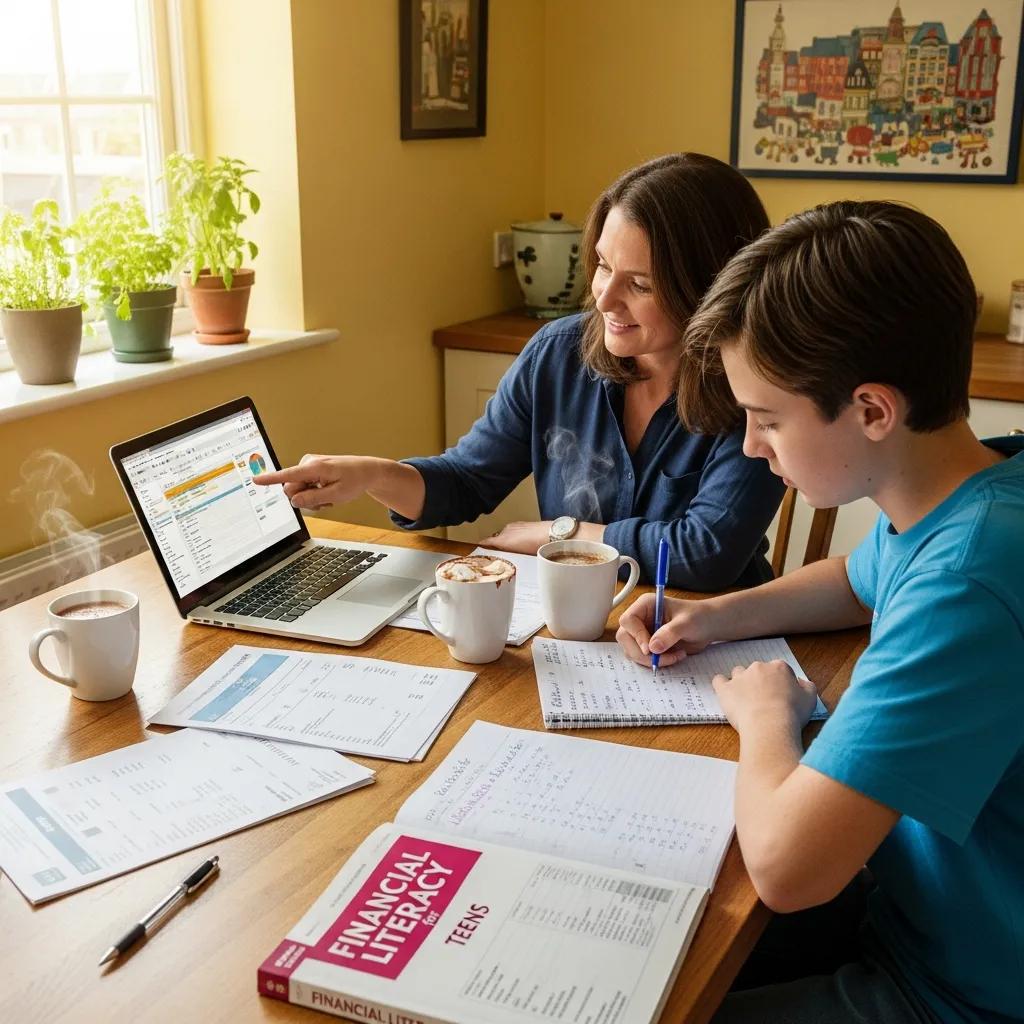
Financial literacy teaches teens concrete skills—budgeting, saving, basic banking, and responsible spending—that influence housing stability, job readiness, and long-term self-sufficiency. Instruction is most effective when it’s active and age-appropriate: managing an allowance or paycheck, using simple budget templates, setting short- and long-term goals, and practicing banking tasks with supervision. Emphasize cause-and-effect—how saving now affects future choices and how credit decisions have long-term consequences. Below, we lay out stepwise teaching steps and an example budget exercise.
Practical steps to teach financial skills:
- Introduce core concepts with real examples (income, expenses, savings).
- Create a simple monthly budget template with clear categories and goals.
- Practice banking tasks and track small transactions to build financial numeracy.
- Reflect regularly: what worked, what to change, and what the next steps are.
This sequence moves teens from understanding to real-world application, helping them develop both knowledge and habits that support independence. The table below pairs topics with teaching approaches and suggested ages.
Comparing financial topics with teaching strategies helps families choose where to begin.
With these strategies, parents can scaffold responsibility while monitoring progress. The next section gives a replicable budgeting exercise families can use right away.
What Are the Basics of Budgeting and Money Management for Teens?
A simple budgeting exercise teaches planning and decision-making: list expected monthly income, divide expenses into categories (needs, wants, savings), assign amounts, and review weekly to adjust. Start with three columns—spend, save, share—and run a one-month trial where the teen records every transaction and reflects on choices. Use low-tech (paper ledger) or apps, but the key skill is consistent tracking and regular review. Parents should model open conversations about money and gradually hand over decision-making as competence grows.
A sample allocation could be 50% for needs (transport, phone), 30% for wants, and 20% for savings, with adjustments based on family goals and circumstances. Weekly check-ins reinforce accountability and teach problem-solving (for example, deciding what to cut when spending exceeds the plan). These habits support long-term financial independence and reduce risk when teens enter work or housing situations.
How Does Financial Literacy Impact Long-Term Self-Sufficiency?
Early financial competence predicts better job stability, lower debt risk, and improved housing outcomes because people who budget and save are better prepared for unexpected costs and regular bills. Teaching financial skills during adolescence strengthens economic resilience and lowers the chance of crisis-driven dependence on services. Ongoing supports—vocational training and coaching tied to real earnings—help cement these practices. Families should set measurable long-term goals (steady employment, emergency savings) and track progress across adolescence.
Programs that pair financial education with vocational readiness and case management produce stronger outcomes than standalone classes because they link income-generating experiences with money-management practice. Track milestones—first bank account, first paycheck saved, consistent monthly budgeting—to sustain motivation and show real-world benefits of financial literacy for independence.
Why Is Emotional Regulation Important for Independent Living?
Emotional regulation helps adolescents manage stress, resolve conflict, and make safe choices—skills that support daily functioning and community participation. Good regulation reduces impulsive behavior that can threaten employment or housing and supports relationship maintenance needed for social integration. Teaching emotional skills centers on identifying feelings, practicing coping strategies to change intensity, and rehearsing problem-solving in calm moments so those skills are available under stress. Emotional regulation pairs with executive function and social competence to form a durable foundation for independence.
Evidence-based coping strategies can be taught and integrated into routines and coaching sessions. The short list below offers three practical techniques that families can begin using immediately, with brief teaching notes that follow.
Teach these three practical coping strategies:
- Daily deep-breathing and grounding routines to reduce acute stress.
- Simple cognitive-reframing scripts to help teens name thoughts and choose adaptive responses.
- Structured activity scheduling to stabilize mood—regular sleep, exercise, and social time.
Practicing these strategies in low-stress settings increases the likelihood that teens will use them in high-stress moments. The next section links emotional health to measurable transition outcomes and flags when to seek extra support.
What Coping Strategies Support Mental Well-Being in Adolescents?
Effective coping combines skill practice with structured environments: teach breathing and grounding (for example, inhale 4, hold 4, exhale 6), role-play reframing scripts for common stressors, and build daily routines that include exercise and sleep hygiene. Reinforce practice with short, regular sessions and cue cards or phone reminders for on-the-spot use. Parents model reframing language and validate feelings while guiding problem-solving, thereby normalizing help-seeking and reducing stigma.
Watch for red flags—persistent withdrawal, escalating behavior, or declining function—which indicate a need for professional assessment and integrated supports such as therapy or school-based interventions. When coping skills are combined with social skills training and occupational therapy, adolescents gain a resilient foundation for managing the demands of independent life.
How Does Emotional Health Influence Successful Transition to Adulthood?
Mental health affects job retention, relationship stability, and independent decision-making, so addressing emotional needs in transition planning reduces barriers to adult outcomes. Integrated supports—therapy, coaching, peer groups, and family strategies—link skills practice to goals like work and housing and lower the risk of crises that can derail progress. Early identification and prompt linkage to services prevent setbacks. Families should include emotional health goals in transition plans and monitor them in the same way they track academic or vocational milestones.
Coordinating emotional supports with vocational and life-skills training helps teens sustain employment, manage a household, and build supportive relationships—key markers of independence. The next section lists local resources to help families put these strategies into practice.
Where Can Families Find Local Resources and Support in Tampa for Independent Living?
Families in Tampa and Brandon can access community programs, school-based transition services, and pediatric therapy providers that support teen independence. Local offerings often include vocational readiness, social skills groups, parent coaching, and clinical therapy delivered in-home, at community sites, or via telehealth to increase access. Knowing which services focus on assessment, skill-building, or system navigation helps families choose supports aligned to their teen’s needs and timelines. Below, we summarize Skill Point Therapy’s community services and how to use downloadable checklists and guides.
What Community-Based Services Does Skill Point Therapy Offer?
Skill Point Therapy provides pediatric occupational therapy in the Tampa area for children and youth up to age 21, with community-focused services that support independent living goals. Offerings include traditional pediatric OT, DIRFloortime, aquatic therapy, group formats, social skills therapy, and specialized programs such as Writing Without Tears. We also provide IEP support, homeschool consultation, and parent coaching, with flexible delivery options—at home, at daycare, or via telehealth. These services combine skill instruction, family coaching, and community practice to support transition goals.
Families can fold these services into transition plans by aligning therapy goals with IEP objectives and scheduling parent coaching to reinforce practice at home. Engaging providers early supports continuity of services as adolescents approach adult eligibility for community supports.
How Can Parents Access Checklists and Guides for Supporting Teen Independence?
Parents can download checklists and printable guides that break skills into teachable steps, structure weekly practice, and offer templates for tracking progress. Practical guidance includes focusing on one skill per week, short daily practice windows, and brief family reviews to celebrate gains and troubleshoot barriers. After identifying gaps with a checklist, families typically arrange a targeted evaluation and parent coaching or therapy to build a structured plan. These steps form a clear path from assessment to practice to measurable independence.
Using checklists consistently makes progress visible and supports decisions about when to increase responsibility or seek additional help. Families should document milestones and share them with school teams and providers to ensure coordinated, goal-driven transition planning that leads to successful adult outcomes.
Frequently Asked Questions
What is the importance of executive function skills in independent living?
Executive function skills—planning, organization, time management, and task initiation—are essential because they let adolescents complete daily tasks independently. Strong executive function helps teens manage appointments, follow multi-step chores, and keep routines, all of which are foundational to successful independent living and long-term adult functioning.
How can parents effectively teach emotional regulation to their teens?
Parents can teach emotional regulation by introducing structured techniques like deep breathing, cognitive reframing, and activity scheduling—and by practicing these skills regularly. Embedding brief practice into daily routines makes strategies automatic, and modeling calm responses during stressful moments gives teens practical examples they can emulate.
3. What role do social skills groups play in preparing adolescents for independence?
Social skills groups offer structured practice in communication, problem-solving, and self-advocacy through role-play and peer interaction. These groups reduce social anxiety, improve conversational and workplace skills, and increase confidence—helping teens navigate school, employment, and community settings more successfully.
How does financial literacy contribute to long-term self-sufficiency for adolescents?
Financial literacy equips teens with skills like budgeting, saving, and managing transactions—abilities that reduce debt risk and improve housing and employment outcomes. Early, practical money-management experience builds habits that support long-term financial stability and independence.
What are effective strategies for teaching budgeting skills to teens?
Break budgeting into manageable steps: start with a hands-on allowance or paycheck exercise, set clear categories, track transactions, and hold regular check-ins. Consistent feedback and open conversations about choices build transparency and accountability, helping teens internalize money-management behaviors.
How can local resources support adolescents in developing independent living skills?
Local resources—community programs, therapy services, and vocational training—provide assessment, targeted skill-building, and real-world practice. Providers like Skill Point Therapy offer life-skills instruction, occupational therapy, and parent coaching to help teens practice skills in everyday settings and prepare for adulthood.
What are the benefits of parent coaching in preparing teens for independence?
Parent coaching teaches caregivers to model tasks, establish supportive routines, and gradually reduce assistance so that teens can gain autonomy safely. Coaching builds family confidence, creates consistent home supports, and accelerates skill generalization—resulting in a smoother transition to independent adulthood.
Conclusion
Preparing teens for independent living reduces risk and increases their chances of long-term success. Focusing on core skills—executive function, daily living tasks, social communication, financial literacy, and emotional regulation—supported by OT, social groups, and parent coaching, gives families a practical pathway forward. We encourage families to explore local programs and use downloadable checklists to guide practice. Investing time and support now helps teens move toward a more independent, confident future.

Nicole Bilodeau, MS, OTR/L, is an occupational therapist and founder of Skill Point Therapy in Tampa and Brandon. She leads a skilled team that provides speech and pediatric occupational therapy, supporting children with autism, ADHD, sensory processing disorders, social skills challenges, and motor development issues. Nicole is dedicated to helping every child reach milestones and thrive at home, school, and in the community