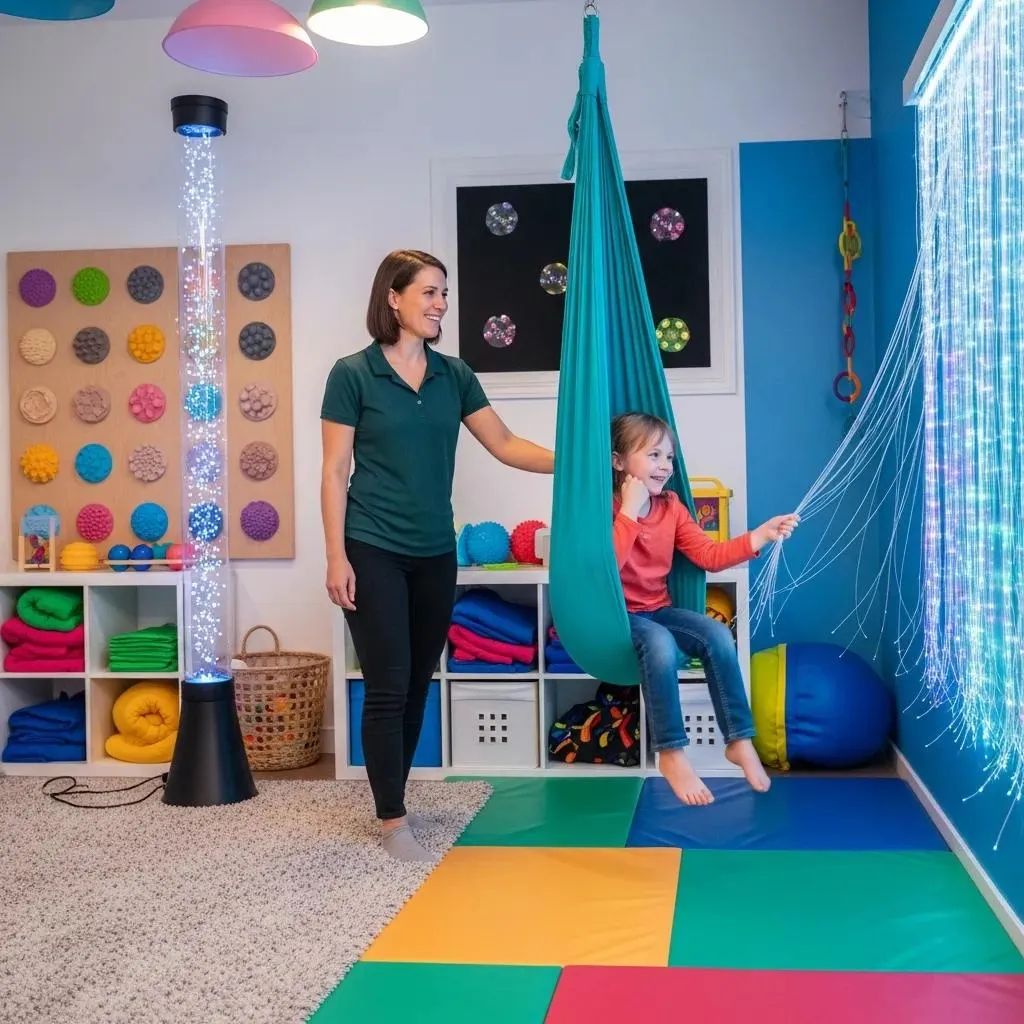

Understanding Visual‑Motor Skills: A Practical Guide for Parents and Caregivers
Visual‑motor skills describe how the eyes, brain, and hands work together so a child can see information and turn it into smooth, accurate movement. Understanding these skills helps caregivers support everyday independence — from dressing and cutting to writing and playing. This guide explains visual‑motor integration, why eye‑hand coordination and motor planning matter, and how spotting needs early plus targeted support can boost classroom success and confidence. You’ll find typical development across ages, common red flags, practical activities for home and school, and how occupational therapy evaluates and treats these concerns. The content draws on current pediatric OT best practices and research, and includes simple lists and step‑by‑step activities that families and teachers can use right away. By the end, you’ll have screening questions, home‑friendly strategies, and clear next steps if professional evaluation is needed.
Key Takeaways
- Visual‑motor skills link vision, brain processing, and hand movement to support daily tasks and learning.
- Spotting delays early helps improve school performance and a child’s confidence.
- Development follows age‑based stages from infancy through adolescence — watch for age‑appropriate milestones.
- Red flags include messy handwriting, poor coordination, and avoiding fine motor tasks.
- OTs use tools like the Beery VMI to assess integration and guide individualized plans.
- Best practice blends sensory strategies, task‑specific practice, and motor planning work.
- Parents and teachers can use simple activities — puzzles, tracing, ball games — to build skills.
- Short, consistent practice within routines supports lasting gains across settings.
- Seek professional evaluation when difficulties persist and affect school or daily independence.
What Are Visual‑Motor Skills and Why Are They Important?
Visual‑motor skills let a child translate what they see into coordinated movement — for example, copying a shape, catching a ball, or writing on a line. The visual system gives spatial and timing cues, the brain plans the action, and the hands execute it. When integration is strong, tasks like handwriting, cutting, and copying from the board become easier and less frustrating. Understanding this connection helps caregivers recognize why monitoring and targeted practice make a real difference for daily function and learning.
These skills show up in clear, everyday ways. A quick home check can reveal whether a child is on track and where to focus practice.
- Drawing inside boundaries builds fine motor control and visual discrimination.
- Catching or throwing a ball demonstrates visual tracking and timing needed for coordinated play.
- Handwriting and copying require sustained visual attention, spatial mapping, and precise eye‑hand timing.
Noticing which component is weaker — perception, tracking, or planning — points toward practical activities, which we cover next.
How Do Visual‑Motor Skills Affect Daily Activities and Learning?

Visual‑motor skills support tasks that need accurate placement, timing, and sequencing, so schoolwork and daily independence often reflect how well these systems work together. For example, handwriting depends on spatial mapping and fine motor control — delays can cause slow, hard‑to‑read writing and avoidance of written tasks. Simple observations — a timed copy task, a short ball game, or tracing shapes — give useful insight into a child’s coordination and planning. Parents can weave short, structured practice into routines (tracing during snack time, buttoning practice to a favorite song) so skill-building feels low‑pressure and natural. Comparing behavior across home, playground, and classroom settings helps determine whether differences are typical or warrant professional attention.
What Are the Key Components of Visual‑Motor Skills?
Visual‑motor integration depends on several interacting parts: visual perception (interpreting shape and orientation), visual tracking (following moving objects), eye‑hand coordination (timing hand movements to what is seen), spatial awareness (placing actions in space), and motor planning (praxis — sequencing actions). The system works as a chain: eyes gather information, the brain plans, and the hands carry out the plan. A weakness in any link affects performance, so identifying the specific area guides targeted interventions — from tracking drills to planning activities.
How Do Visual‑Motor Skills Develop Across Childhood?
Skills develop in predictable stages: infants begin with basic eye movements and reaching; toddlers refine bilateral coordination and early drawing; preschoolers improve cutting and copying; school‑age children combine speed with accuracy in handwriting and sports; and adolescents refine fine detail and multitasking. There’s normal variation, but consistent delays relative to peers or trouble transferring skills across settings deserve monitoring. The table below summarizes typical milestones by age band to help parents and educators set realistic expectations and spot red flags.
This milestone snapshot gives quick, age‑banded reference points to help observe functional expectations and decide when to monitor or refer for evaluation.
Knowing these age bands helps identify when early intervention is most likely to support lasting progress.
When families notice possible delays, pediatric occupational therapy can provide screening and early intervention. Skill Point Therapy works with children from infancy through age 21, emphasizing individualized assessment, family‑centered communication, and practical next steps so that variation is normalized while persistent challenges receive timely attention.
What Are Visual‑Motor Development Milestones from Infancy to Adolescence?
Milestones are practical skills parents can observe across settings. Infants usually develop smooth tracking and purposeful reach; toddlers gain bilateral manipulation and early tool use; preschoolers pick up scissor skills and basic copying; school‑age children show improved handwriting and copying speed; and teens refine precision and endurance for fine tasks. Simple screening questions — “Can my child copy a circle by age 3? Write a short sentence by age 7?” — give concrete checkpoints to share with teachers or clinicians. Keep in mind that cultural and educational differences can affect timing, so frame concerns as opportunities to monitor and support.
How Can Parents Recognize Typical vs. Delayed Visual‑Motor Development?
Distinguishing variation from delay depends on frequency, persistence, and functional impact. Occasional messiness is different from daily difficulty that limits classroom participation. Use a brief checklist — consistent poor handwriting, avoidance of drawing or ball play, trouble with scissors or puzzles — and note whether these patterns persist across weeks and settings. If several items appear and interfere with schoolwork or independence, discuss observations with the pediatrician, request school supports, or consult a pediatric occupational therapist for evaluation. Early steps increase the chance that focused practice and small accommodations will produce measurable gains.
What Are the Signs of Visual‑Motor Difficulties in Children?
Visual‑motor difficulties show up in observable behaviors that affect schoolwork, play, and daily routines. Common signs include messy or illegible handwriting, frequent erasing, difficulty copying from the board, difficulty with puzzles or construction toys, clumsiness in ball games, and avoidance of fine-motor tasks. These behaviors often lead to frustration, slower task completion, or drops in written grades. Tracking these signs over time and across settings helps guide appropriate intervention. The list below highlights the most common indicators to watch for.
- Messy or slow handwriting that interferes with classwork and participation.
- Difficulty copying from the board or aligning numbers in math, causing errors.
- Poor coordination with puzzles, cutting, or ball games that require precise timing.
Observing these patterns across multiple contexts for several weeks helps separate normal variation from persistent challenges that benefit from professional evaluation.
Which Behaviors Indicate Poor Eye‑Hand Coordination or Motor Planning Challenges?
Eye‑hand coordination problems often show as dropping objects, trouble guiding scissors along a line, or difficulty threading beads. Motor planning (praxis) issues appear as hesitancy, poor sequencing, or awkward imitation of movements. Differentiating praxis from vision or strength issues matters because each needs a different approach: vision concerns call for an eye exam, low strength responds to graded strengthening, and praxis improves with sequencing and practice. Quick observation tasks — copying a short sequence, starting and pausing a drawing, or completing a two‑step motor game — help clarify whether coordination or planning is the main challenge and set up a focused conversation with a pediatrician or OT.
How Do Visual‑Motor Deficits Impact Academic and Social Skills?
Visual‑motor deficits can reduce handwriting speed and legibility, copying accuracy, and math alignment, potentially lowering written grades despite the child’s cognitive ability. Socially, coordination challenges can make playground games and group activities harder, leading some children to avoid play or feel embarrassed. Addressing these skills improves both academic performance and willingness to join peers. Early therapy and classroom accommodations often reverse negative patterns and rebuild engagement and confidence.
How Can Occupational Therapy Support Visual‑Motor Skills Development?
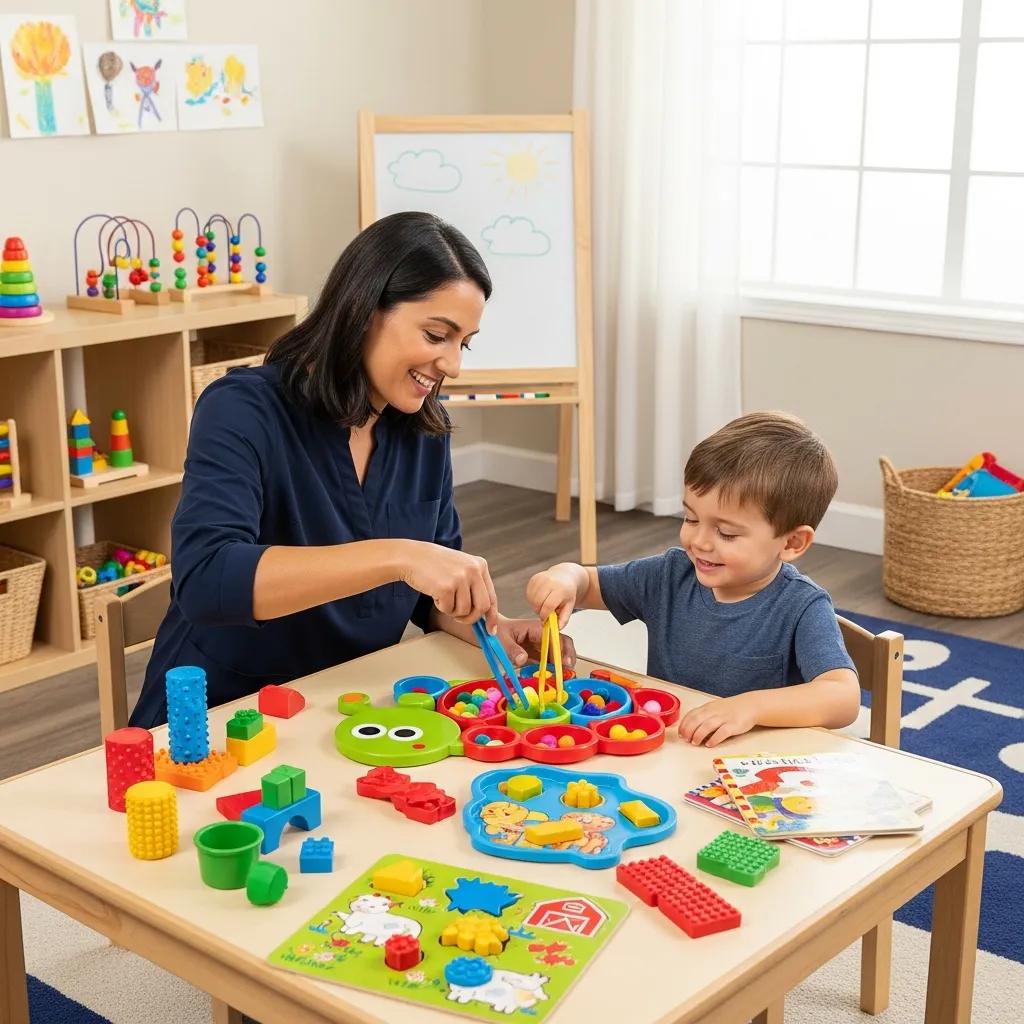
Occupational therapy evaluates visual‑motor integration using standardized tests and functional observation, then develops individualized plans that combine practice, sensory supports, and environmental changes to improve daily performance, from the clinic to the home. OT targets specific components — perception, tracking, eye‑hand coordination, motor planning — using play‑based tasks, graded practice, and meaningful activities to build automaticity and confidence. Parent coaching and school collaboration help skills carry over from the clinic to the home and the classroom. Below is a quick comparison of common approaches, what they involve, and expected outcomes to help families understand how goals turn into practical strategies.
This table connects assessment results to therapy choices so families understand why a therapist recommends specific activities.
Occupational therapists often work closely with families to deliver practical strategies and flexible care. Skill Point Therapy provides pediatric OT from infancy to 21 years, focusing on personalized goals, family coaching, and collaboration with schools. They offer in‑home, in‑daycare, and telehealth options to make therapy consistent and accessible, with measurable, functional goals that translate into daily success.
What Are Effective Occupational Therapy Approaches for Visual‑Motor Integration?
Effective programs combine sensory strategies to support attention and body awareness, task‑specific practice to build automaticity, and playful sequencing activities that train motor planning. Therapists also adapt tools and environments — changing pencil size, surface texture, or visual cues — so children experience success while skill demands increase gradually. Evidence and clinical practice suggest that pairing sensory supports with meaningful, repetitive practice produces better generalization to school and home than practice alone. Parent coaching helps families embed consistent practice into routines so improvements stick.
How Does Motor Planning Therapy Benefit Children with Visual‑Motor Challenges?
Motor planning therapy helps children anticipate, sequence, and carry out multi‑step tasks, improving independence in dressing, playground games, and classroom activities. Techniques include imitation drills, gesture‑to‑action tasks, and graded problem‑solving games that require planning before acting. Typical outcomes are smoother task starts, fewer prompts, and greater success with activities that once needed adult help. As praxis improves, children gain confidence and are more willing to try new tasks without avoidance.
This quick table links approaches to functional gains to help families decide on therapy options.
When families are ready to start, Skill Point Therapy uses goal‑setting, parent coaching, and flexible scheduling to fit each child’s needs while supporting consistent progress and school collaboration.
What Visual‑Motor Integration Activities Can Parents and Schools Use?
Here are straightforward activities teachers and caregivers can use to strengthen tracking, perception, eye‑hand coordination, and motor planning. Each requires minimal materials and short bursts of practice, so they’re easy to add to daily routines or classroom centers. Adapt difficulty by changing size, speed, or sequence length so children succeed and then progress.
These suggestions use simple, inexpensive materials and short time slots, so practice fits naturally into the day.
- Puzzle assembly: Start with large pieces and increase complexity to target visual discrimination and eye‑hand coordination.
- Ball toss with targets: Use hoops or taped circles to practice dynamic tracking and timing.
- Tracing and mazes: Provide tracing templates or mazes to build fine motor control and spatial planning.
- Threading beads or lacing cards: Use laces and beads to strengthen precision and bilateral coordination.
- Scissor practice on lines: Cut along drawn paths to refine hand‑eye control and tool handling.
- Copy‑and‑cover tasks: Copy a model, then reproduce it from memory to work on visual memory and planning.
Which Home and School Activities Improve Eye‑Hand Coordination and Visual Perception?
Effective classroom and home activities repeat meaningful tasks — manipulatives for math alignment, careful placement in art projects, or timed station work — with gradual progressions (larger to smaller pieces, slow to fast pace, short to longer sequences). Materials are easy to find: crayons, scissors, beads, small balls, and printable tracing pages. Teachers can set up short practice stations during transitions so children get frequent, brief practice without losing instructional time. Embedding practice into routines makes it consistent and functional.
How Can Parents Incorporate Visual‑Motor Activities into Daily Routines?
Use micro‑practice windows of 2–5 minutes during dressing, mealtimes, or toothbrushing to add high‑frequency practice without stress. Thread beads on a car ride, trace shapes while waiting for food, or practice buttoning in the final minutes before going out. Track progress with a sticker chart or quick notes to celebrate small wins. Routine‑based practice helps skills transfer to real life and keeps therapy from feeling separate from daily activities.
How Is Visual‑Motor Skills Development Assessed and Evaluated?
Assessment combines intake and observation, standardized tests, functional tasks, and goal setting. Occupational therapists commonly use the Beery VMI alongside developmental checklists and classroom observations to capture both scores and real‑world performance. Results shape measurable goals and guide therapy choices; regular reassessment tracks progress. The table below summarizes common tools, what they measure, age ranges, and how OTs use results to plan treatment.
This comparison clarifies why clinicians choose particular instruments and what information each provides about a child’s strengths and needs.
Combining standardized scores with functional observation produces a family‑focused plan that links assessment to daily participation.
What Tools and Methods Are Used to Assess Visual‑Motor Integration?
OTs use standardized tests (Beery VMI), structured fine motor tasks, parent/teacher questionnaires, and observations of natural tasks to capture both measured ability and real‑life performance. Together, these methods show where a child succeeds and where they struggle. Therapists synthesize the data to set measurable goals, choose evidence‑based techniques, and recommend classroom accommodations. Clear communication of results helps families understand strengths and small steps that lead to improvement.
When Should Parents Seek Professional Evaluation for Visual‑Motor Concerns?
Consider evaluation when difficulties persist across settings, interfere with school or independence, or when consistent home strategies fail after several weeks. Red flags include illegible handwriting affecting grades, avoidance of age‑appropriate play or self‑care tasks, and fatigue or frustration with fine motor work. Next steps: document examples, share them with the pediatrician and teacher, and request a pediatric OT consult for screening or formal assessment. Early evaluation and timely intervention boost the chance of meaningful, sustained gains.
- Request an evaluation: Collect brief examples of challenging skills from home and school.
- Share observations: Bring teacher notes or samples of written work to the appointment.
- Plan next steps: Use assessment findings to guide practice, therapy, or school accommodations.
Frequently Asked Questions
What are some fun activities to improve visual‑motor skills at home?
Try puzzles, ball toss games, and arts‑and‑crafts projects. Puzzles build visual discrimination and coordination, tossing a ball through a hoop helps with dynamic tracking, and tracing or mazes support fine motor control. Keep activities short and playful, so practice stays enjoyable.
How can I support my child’s visual‑motor skill development outside of therapy sessions?
Embed short practice moments into routines: tracing during snack time, simple puzzles in the car, or buttoning practice before you leave the house. Use everyday tasks like cutting paper for art projects or using utensils at mealtimes. Celebrate small achievements to keep motivation high.
How do visual‑motor skills influence a child’s social interactions?
Strong visual‑motor skills make it easier to join games, sports, and group activities, which supports peer interaction. Difficulties can lead to avoidance of play or feeling left out. Addressing these skills helps children participate more and build confidence with classmates.
What should I do if I notice my child struggling with visual‑motor tasks?
Start by noting specific examples and patterns, then discuss them with your pediatrician and the child’s teacher. If concerns persist, ask for a screening or referral to a pediatric OT. Early action gives the best chance for effective, practical support.
Are visual‑motor skills linked to other developmental areas?
Yes. Visual‑motor skills interact with cognitive, social, and emotional development. Challenges can affect academic work, like writing and math, and social participation in play. Supporting visual‑motor growth often yields benefits across multiple developmental areas.
At what age is it appropriate to start observing visual‑motor milestones?
Begin observing in infancy. Simple milestones — tracking objects by a few months or scribbling by around 18 months — give early checkpoints. Regular observation helps catch delays early so supports can start when they’re most effective.
Can visual‑motor skills be improved with practice alone?
Practice is essential and can produce gains, but it’s most effective when tailored to the child’s needs and combined with targeted strategies from a therapist when needed. Occupational therapy provides structured guidance to accelerate progress and ensure skills transfer to daily life.
Conclusion
Understanding visual‑motor skills helps caregivers support a child’s independence at home and school. Early recognition, simple daily activities, and timely professional help when needed can improve coordination, classroom performance, and confidence. Start small — add a few short, fun activities to your routine today and watch progress add up.