


DIRFloortime Approach — A Guide for Parents in Hillsborough County: Principles, Techniques, and Benefits
DIRFloortime is a relationship-based method that helps children grow by prioritizing emotional connection and individualized play. It’s especially useful for children who face developmental challenges because it centers learning in the context of trusted, responsive interactions. Below we explain the core ideas behind DIRFloortime, how to adapt the approach to your child’s needs, simple techniques parents can try at home, and the research-backed benefits you can expect. For families in Hillsborough County, these strategies offer practical ways to shape play and learning around each child’s unique strengths and differences.
Key Takeaways
- DIRFloortime promotes development through warm, child-focused play and strong emotional connections.
- Its core ideas are child-centered learning, emotional bonding, and honoring each child’s individual differences.
- Attachment theory underlies DIRFloortime, highlighting secure parent-child bonds as the foundation for emotional regulation.
- Therapy is customized to each child’s emotional, sensory, and developmental profile to boost engagement and growth.
- Parents can use practical Floortime techniques at home, including turn-taking games, pretend play, and music-based activities.
- Regular, consistent parental involvement and flexible strategies support improvements in social, communication, and emotional skills.
- Research links DIRFloortime to gains in communication, emotional regulation, attention, and spontaneous initiation.
- Progress is tracked with clear goals, simple logs, and ongoing teamwork with therapists.
- Hillsborough County families can find local training and support to help put DIRFloortime into practice.
What Is the DIRFloortime Approach and How Does It Support Child Development?
The DIR (Developmental, Individual-differences, Relationship-based) model—commonly called DIRFloortime—was developed by Dr. Stanley Greenspan. It focuses on meeting children where they are developmentally and using play and emotional connection as the primary vehicles for learning. By responding to a child’s interests, sensory needs, and emotional cues, DIRFloortime helps build communication skills, social understanding, and emotional regulation. The model’s emphasis on individualized strategies and parent–child relationship work provides a flexible framework caregivers can adapt to support each child’s growth.
What Are the Core Principles of Developmental Relationship-Based Therapy?
Developmental Relationship-Based Therapy rests on a few central principles that guide how sessions and everyday interactions are shaped:
- Child-Centered Learning: Activities follow the child’s interests and motivations, so learning stays meaningful and engaging.
- Emotional Connections: Strong, responsive relationships between caregivers and children create safety and promote learning.
- Individual Differences: Therapy is shaped around a child’s unique sensory profile, temperament, and developmental strengths and challenges.
These principles form the practical foundation of DIRFloortime and help parents support their child’s natural development in ways that feel respectful and effective.
How Does Attachment Theory Influence DIRFloortime?

Attachment theory is central to DIRFloortime because secure, predictable relationships give children the confidence to explore, learn, and connect with others. DIRFloortime encourages caregivers to be emotionally present and attuned, so children feel supported while they practice new skills. That dependable emotional base helps with self-regulation, social problem-solving, and the confidence to try new interactions.
How Does the DIR Model Address Individual Differences in Children?
DIRFloortime recognizes that each child follows their own developmental path. Effective support begins with a careful look at a child’s strengths, sensory preferences, and areas of challenge. From there, caregivers and therapists choose activities that match the child’s profile—maximizing engagement and minimizing stress so learning happens more naturally.
What Role Do Developmental Milestones Play in DIR?
Developmental milestones act as useful touchpoints within DIRFloortime, helping caregivers and therapists see where a child is progressing and where targeted support might help. Important domains to watch include:
- Motor skills: Movement, coordination, and physical play
- Language development: Receptive and expressive communication
- Social interaction: Shared attention, turn-taking, and relationship-building
These markers guide goal-setting and the choice of activities so interventions stay relevant and effective.
How Does DIR Tailor Therapy to Each Child’s Emotional and Sensory Needs?
DIRFloortime tailors supports by observing how a child responds to sights, sounds, touch, and social cues, then adjusting the environment and approach. Some children do best with lively, sensory-rich play; others need quieter, predictable settings. Practical steps include creating sensory-friendly spaces, offering clear emotional coaching, and using specific activities that help the child regulate input and stay engaged.
What Are Practical Floortime Techniques Parents Can Use at Home?
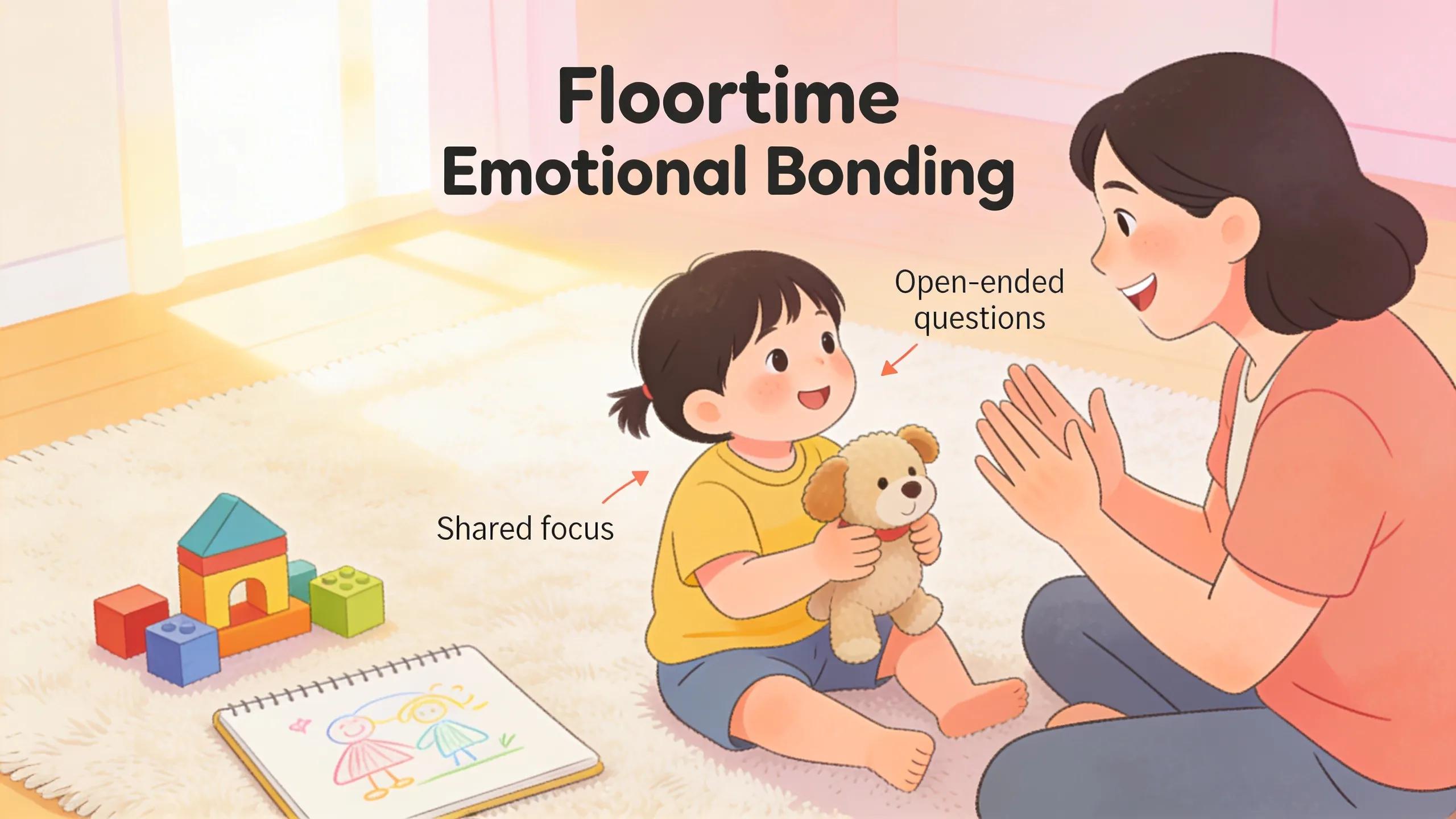
Families in Hillsborough County can bring DIRFloortime into daily life with simple, repeatable techniques that build connection and skills through play.
Which Floortime Activities Are Effective for Toddlers?
Effective DIRFloortime activities for toddlers include:
- Interactive Play: Games and toys that encourage turn-taking and shared attention, like stacking blocks or simple cause-and-effect toys.
- Pretend Play: Role-play and imaginative scenarios that let toddlers communicate ideas and feelings in a safe way.
- Musical Activities: Singing, movement, and rhythm to motivate engagement and support communication.
These activities strengthen bonds while giving toddlers repeated, meaningful practice with social and communication skills.
How Can Parents Set Up and Facilitate Floortime Sessions?
Setting up effective DIRFloortime at home is straightforward. Try these practical steps:
- Choose a Comfortable Space: Pick a low-distraction area that feels safe and inviting for play.
- Gather Needed Materials: Keep a variety of toys, books, and sensory items on hand to match your child’s interests.
- Schedule Regular Sessions: Make short, predictable playtimes part of your daily routine so interaction becomes familiar and expected.
Small, consistent changes like these can make it easier for children to join in and benefit from Floortime play.
How Can Parents Engage Effectively in DIRFloortime Therapy?
Active, thoughtful parental involvement is a key ingredient for success. When caregivers adjust their responses to match their child’s level, the child is more likely to engage, learn, and generalize new skills across settings.
What Strategies Help Parents Manage Challenges During Therapy?
When challenges arise, these strategies can help parents stay effective:
- Stay Calm: Modeling steady emotions helps children learn to regulate their own feelings.
- Be Attentive: Read and respond to your child’s cues—shifts in interest or stress tell you when to change pace.
- Use Positive Reinforcement: Notice and praise attempts at interaction to build motivation and confidence.
Patience, observation, and small adjustments often make the biggest difference.
How Does Parental Interaction Enhance Emotional and Social Development?
When parents consistently engage in meaningful interactions, children gain practice with empathy, communication, and self-control. Regular, responsive contact helps children learn how to read social cues, manage emotions, and try new ways of interacting—skills that transfer beyond therapy sessions into everyday life.
What Are the Documented Benefits of DIRFloortime for Children and Families?
Research and clinical reports indicate that DIRFloortime can produce meaningful gains for children and support families in building stronger, more connected relationships.
What Evidence Supports Improvements in Communication and Emotional Regulation?
Studies show that children who receive DIRFloortime-based interventions often improve in communication (both verbal and nonverbal) and in managing emotions. These gains come from repeated, emotionally supportive interactions that encourage connection and practice. Adding parent-focused training at home has also been linked to better attention and increased spontaneous initiation in children.
Home-Based DIRFloortime Parent Training Improves Child Attention and Initiation
A 2019 randomized controlled trial tested whether adding a DIRFloortime parent-training program for children with developmental disabilities could improve attention and initiation. The study reported clinically meaningful improvements when parents used the DIRFloortime strategies at home.
How Do Parents Observe Progress and Measure Outcomes?
Parents can track progress in practical ways:
- Keeping Progress Logs: Note interactions, behaviors, and milestones to spot patterns over time.
- Setting Clear Goals: Define specific, measurable targets for communication, social skills, or self-regulation.
- Using Feedback: Regular communication with therapists helps interpret changes and adjust strategies.
These simple tools make it easier to see meaningful change and guide next steps.
Frequently Asked Questions
How can DIRFloortime be integrated into daily routines?
DIRFloortime fits naturally into everyday moments: mealtime, bath time, or car rides are all chances to follow your child’s lead, join their play, and scaffold communication. You can also set aside short, daily play sessions focused on connection and shared attention—consistency matters more than length.
Are there any specific professional resources for DIRFloortime in Hillsborough County?
Yes. Hillsborough County offers local workshops, support groups, and certified DIRFloortime providers. Community health centers and autism support organizations often post listings for trainings and therapy resources—reach out to local clinics or parent networks for current options.
What are common challenges parents face while implementing DIRFloortime?
Common challenges include keeping interactions consistent, resisting the urge to direct play, and managing parental frustration when progress is slow. These are normal—practice, support from a therapist, and peer groups can help families stay steady and refine techniques that best fit their child.
What role do siblings play in DIRFloortime therapy?
Siblings can be valuable play partners, offering natural opportunities for turn-taking, role-play, and social practice. With guidance, siblings can help reinforce skills learned in therapy and contribute to a supportive home environment that nurtures growth for the whole family.
How can parents assess their child’s developmental progress within DIRFloortime?
Track progress with regular notes on specific goals—communication attempts, social responses, or emotional regulation episodes. Combine those notes with therapist feedback and periodic reviews to adjust goals and strategies as your child develops.
Can DIRFloortime be adapted for older children?
Yes. For older children, DIRFloortime shifts to include more age-appropriate activities—cooperative projects, problem-solving tasks, and conversations about feelings and social situations. The core idea remains the same: follow the child’s lead and build relational supports that encourage growth.
What support is available for families using DIRFloortime?
Families can access community programs, parent training, and peer support groups. Online resources and forums also connect parents to shared strategies. For individualized guidance, working with trained DIRFloortime therapists offers tailored coaching that helps families apply the approach effectively at home.
Conclusion
DIRFloortime gives parents a relationship-first framework to support their child’s emotional, social, and communication development. When caregivers use play, responsiveness, and consistent strategies, children often make steady gains—and families grow more confident in supporting those changes. At Skill Point Therapy, we integrate DIRFloortime principles into occupational, physical, and speech therapy, as well as group programs. For more details about how these services can support your child, please call Skill Point Therapy at (813) 555-1234.
Additional Citations Supporting DIRFloortime Benefits
Further research highlighting the effectiveness of the DIRFloortime approach includes:
- Solomon, R., & Chung, B. (2012). Multiple Indicators of Improvement in a Developmental, Individual-Difference, Relationship-Based Model of Intervention for Children With Autism Spectrum Disorders: A Repeated Measures Study. Journal of Autism and Developmental Disorders.
- Miller, J., & Fuller, E. (2017). The Efficacy of DIRFloortime in Treating Autism Spectrum Disorder: A Systematic Review. Journal of Autism and Developmental Disorders.

Nicole Bilodeau, MS, OTR/L, is an occupational therapist and founder of Skill Point Therapy in Tampa and Brandon. She leads a skilled team that provides speech and pediatric occupational therapy, supporting children with autism, ADHD, sensory processing disorders, social skills challenges, and motor development issues. Nicole is dedicated to helping every child reach milestones and thrive at home, school, and in the community