

Tips to Improve Reading Skills in Children: Effective Strategies and Occupational Therapy Support
Reading skills are a set of interrelated abilities that enable children to decode text, understand meaning, and use language to learn; improving these skills depends on strengthening phonological awareness, phonics, vocabulary, fluency, comprehension, and underlying sensory and motor systems. This article explains how those foundational components interact, provides age-banded milestones and red flags, and offers practical, evidence-informed activities for parents and educators to build literacy. You will learn specific phonological awareness activities for preschoolers, phonics games that support decoding, visual perceptual drills that aid tracking, and executive-function strategies that improve sustained reading. The guide also clarifies when a professional evaluation is warranted and how occupational therapy addresses visual processing, fine motor control, sensory integration, and attention to support reading progress. Finally, the article describes how Skill Point Therapy approaches literacy-related needs through individualized assessment, Writing Without Tears programming, and family-school collaboration, while offering actionable tips you can start using at home or in the classroom today.
What Are the Key Foundations of Reading Development in Children?
Reading development rests on several core foundations: phonological awareness for sound structure, phonics for letter–sound mapping, vocabulary for word meaning, fluency for automatic decoding, comprehension for higher-level interpretation, and visual/sensory skills for efficient processing. Each foundation contributes mechanistically: phonological awareness enables segmentation and blending, phonics links graphemes to phonemes, and visual processing supports letter recognition and tracking. Strengthening these areas produces measurable reading outcomes, such as improved decoding accuracy and faster fluency, and occupational therapy can assess and support visual-perceptual and fine-motor components that influence reading. Understanding how these elements connect helps caregivers prioritize targeted practice and seek evaluation when multiple foundations lag simultaneously. The next section breaks these foundations into a quick-reference comparison to clarify OT roles and practical interventions.
Different foundational components interact through specific mechanisms, producing observable classroom behaviors.
This comparison highlights which reading components are directly observable in schoolwork and which often benefit from OT assessment and targeted supports.
What Are Typical Reading Milestones from Infancy to Adolescence?
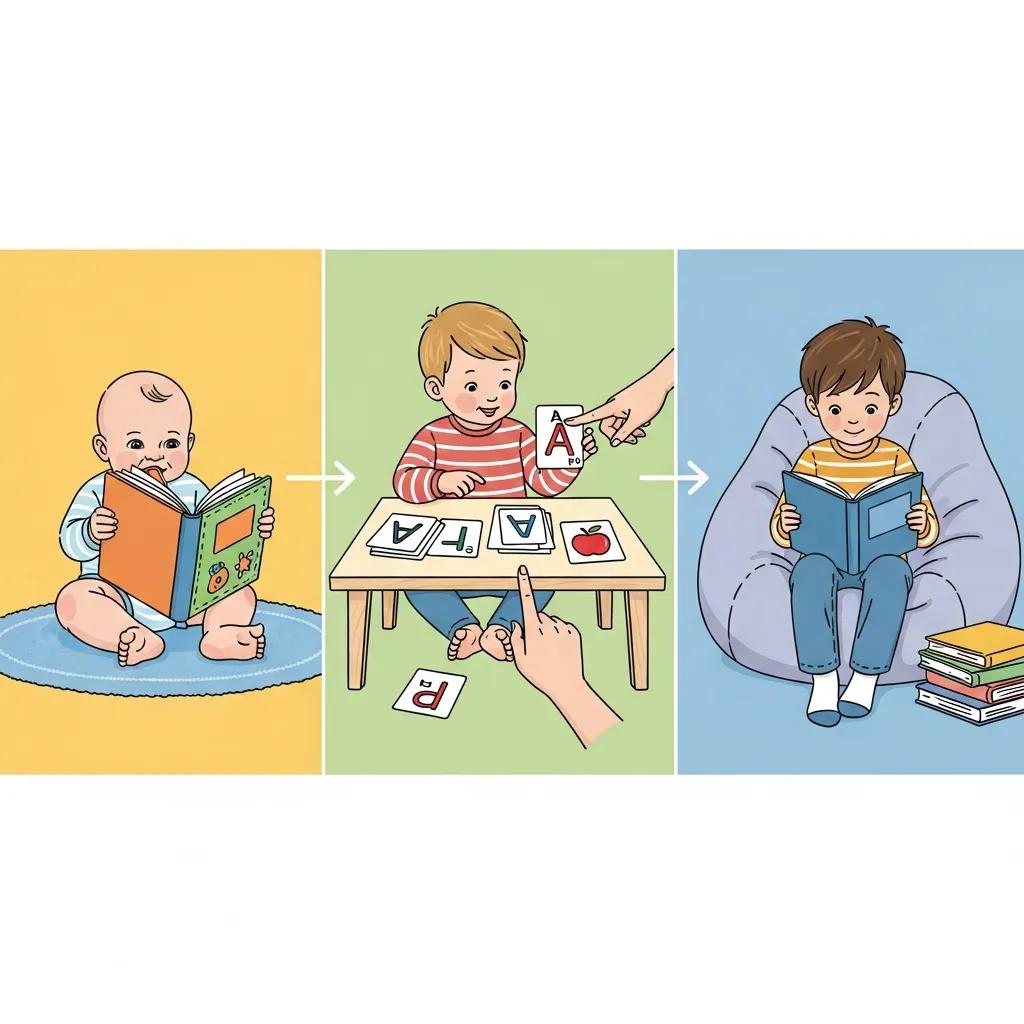
Emergent literacy begins with joint attention, book exploration, and babbling in infancy and progresses to rhyme awareness, letter recognition, and simple decoding by early elementary grades. Toddlers and preschoolers typically show phonological awareness through rhyming and syllable clapping, while kindergartners begin blending and segmenting sounds and recognizing high-frequency words. By grades 1–3, children should develop decoding fluency and begin reading with accuracy and speed; grades 4–6 shift toward reading to learn, with increasing comprehension demands; and adolescence emphasizes critical reading and study skills. Watch for red flags such as persistent difficulty with rhyme, slow or inaccurate decoding by mid-first grade, frequent letter reversals beyond typical developmental windows, or avoidance of reading tasks. These milestones help caregivers and educators decide when to intensify instruction or seek assessment.
How Do Phonics, Phonological Awareness, and Visual Processing Support Reading?
Phonological awareness enables a child to hear and manipulate sounds; phonics provides the rules for mapping those sounds to letters; and visual processing ensures efficient letter recognition and tracking during reading. When phonological awareness is weak, a child struggles to blend or segment words, impeding decoding; when phonics instruction is inconsistent, letter-sound correspondence remains unreliable, and reading becomes slow. Visual processing deficits present as losing place on a line, skipping words, or confusing similar letters, which slows fluency and increases cognitive load during comprehension.
Occupational therapy targets visual tracking and discrimination while also supporting fine-motor activities that make writing automatic, which, in turn, reinforces orthographic learning and helps close the gap between decoding and fluent reading.
How Can Parents and Educators Create a Reading-Rich Environment?
A reading-rich environment intentionally increases exposure to print, models reading as useful and enjoyable, and reduces barriers to focused reading through routine and space design. Key elements include predictable daily reading times, easy access to books across topics and reading levels, low-distraction, cozy reading nooks, and adult modeling of reading strategies such as think-alouds. Environmental supports reduce cognitive load, allowing children to focus on decoding and comprehension, while multisensory materials engage diverse learners. Below is a concise list of practical changes families and classrooms can implement to strengthen daily literacy habits and make reading a natural part of routine.
- Provide a daily reading routine with a consistent time and place for both independent and shared reading practice.
- Offer a variety of books matched to interests and reading level to motivate sustained engagement.
- Create a low-distraction, comfortable reading area stocked with age-appropriate materials and writing tools.
- Use predictable rituals, like previewing titles and setting a brief reading goal, to support attention and executive function.
Creating an intentional reading environment increases practice opportunities and supports habit formation, which makes subsequent skill-building activities more effective.
What Activities Promote Early Literacy Development and Reading Comprehension?
Age-appropriate activities build specific literacy skills through play and structured practice, progressing from shared book interactions in toddlers to decoding and text-based discussions in school-age children. For preschoolers, dialogic reading, sound games, and letter-play support phonological awareness and vocabulary, while kindergarten activities should include segmenting/blending games and decodable texts for phonics practice. Elementary students benefit from guided oral reading, choral reading for fluency, and scaffolded questioning to deepen comprehension; materials such as flashcards, sand trays, and magnetic letters provide multisensory reinforcement. Provide activity materials and simple steps so caregivers can replicate sessions: model, prompt, scaffold, and fade support while tracking progress. The next section covers motivating reluctant readers with interest-based adaptations that keep participation high.
How Can You Motivate Reluctant Readers with Fun and Interest-Based Approaches?
Motivation increases reading practice, which drives skill gains; using a child’s interests, gamification, and multimodal formats turns reading from a chore into an opportunity to explore hobbies and media they enjoy. Select books tied to favorite shows, sports, or activities, pair text with audiobooks for graded exposure, and create low-stakes incentives like reading badges to reward effort rather than accuracy. Gamified activities—timed scavenger hunts for sight words or cooperative reading challenges—build engagement while practicing specific skills like fluency and vocabulary in a playful format. Avoid pressuring performance; instead, offer choice, praise strategies, and persistence, and scaffold tasks so children experience successive successes that build confidence and intrinsic motivation.
When Should You Seek Professional Help for a Child Struggling with Reading?
When reading progress lags despite consistent high-quality instruction and home practice, a professional evaluation can identify underlying issues and guide targeted interventions. Key signs warranting evaluation include persistent decoding errors after adequate instruction, slow progress in fluency beyond expected grade norms, frequent loss of place when reading, and significant avoidance or frustration that limits practice. Early intervention produces better outcomes because neural and skill systems are more plastic in early school years, so timely referrals to an interdisciplinary team—occupational therapy, speech-language pathology, and educational assessment—are important. The checklist below gives immediate red flags to watch and suggested next steps for families considering evaluation.
- Decoding Delay: Child struggles to sound out words by the middle of first grade and shows little improvement after targeted instruction.
- Fluency Problems: Reading is slow and laborious, with poor phrasing and reduced comprehension.
- Visual/Sensory Signs: Child frequently loses place, omits words, or covers text while reading.
- Avoidance or Anxiety: Persistent refusal to read aloud or marked distress during reading tasks.
When several signs co-occur, a referral for interdisciplinary assessment—including an OT screening for visual processing, fine motor control, and sensory-based attention issues—is advisable to identify multi-factorial contributors to reading difficulty.
What Are the Signs That Indicate Reading Difficulties Needing Occupational Therapy?
Occupational therapy is particularly relevant when reading challenges include visual-perceptual, motor, or sensory-regulation components that interfere with literacy tasks. Observable signs that map to OT-treatable issues include inconsistent tracking that leads to skipped lines, cramped or illegible handwriting that slows text encoding, and sensory over- or underresponsiveness that reduces sustained attention during reading. Parents may also notice difficulty with visual memory for sight words, poor posture, or inefficient pencil grasp, and behavioral signs of sensory overload in busy classroom settings. When these signs appear along with reading struggles, an OT screening can identify specific visual, motor, or sensory targets and recommend classroom and home strategies to increase participation and reduce reading barriers.
For families interested in next steps, Skill Point Therapy offers pediatric occupational therapy evaluations that identify underlying causes and produce individualized plans; services include flexible delivery formats—community-based options in-office, in-home, in-daycare, and telehealth—to meet family needs. An evaluation clarifies whether visual processing training, sensory modulation strategies, or handwriting interventions should be prioritized and results in practical home programs and school collaboration to support the child’s learning environment. If multiple red flags are present, early screening helps teams coordinate support swiftly to reduce reading delays.
How Does Occupational Therapy Address Underlying Challenges Like Visual Processing and Sensory Integration?
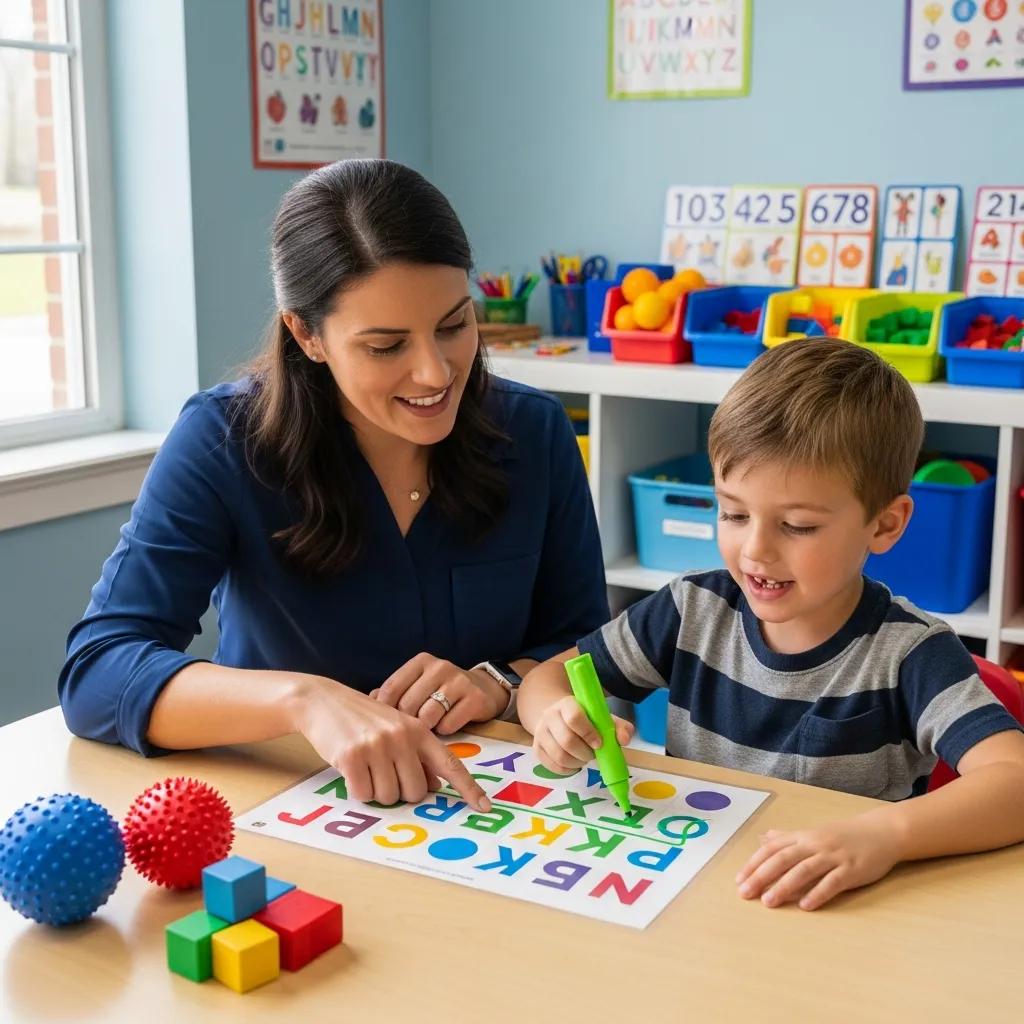
Occupational therapy addresses the functional components that support reading by targeting visual perceptual skills, sensory regulation, fine motor control, and executive functioning strategies within meaningful reading tasks. Visual interventions include tracking drills, visual discrimination tasks, and graded scanning activities to improve line-by-line accuracy and reduce skipping. Sensory integration approaches teach children self-regulation strategies and provide sensory diets to increase tolerance for sustained reading sessions, while parent training embeds these strategies into daily routines. Fine motor work, such as grasp refinement and motor planning exercises, enhances automaticity in handwriting, reducing cognitive load during writing-to-read activities and reinforcing orthographic learning.
OT sessions translate into classroom gains by coaching teachers on classroom adaptations and providing carryover strategies—such as seating suggestions, visual cues, and brief break schedules—that scaffold attention and participation during literacy tasks. This coordinated approach connects therapeutic gains directly to improved reading fluency and comprehension in real-world contexts.
What Is Skill Point Therapy’s Approach to Supporting Reading Skills?
Skill Point Therapy approaches reading support through holistic pediatric occupational therapy that assesses foundational skills, develops individualized plans, and partners with families and schools to implement functional goals. The model emphasizes evaluation of visual processing, sensory regulation, fine motor skills, and executive function in relation to reading tasks and uses evidence-informed interventions to build strengths. Skill Point Therapy delivers services in community-based settings and supports continuity through in-office, in-home, in-daycare, and telehealth options, enabling consistent practice and parent coaching across environments. Collaboration with caregivers and school teams is central: therapists translate assessment findings into practical home programs and IEP contributions that prioritize classroom participation and reading success. The following subsection describes a specific handwriting program used to build pre-reading and motor skills.
How Does the Writing Without Tears Program Enhance Pre-Reading and Handwriting Skills?
The Writing Without Tears program focuses on multisensory instruction for letter formation, motor planning, and pencil grasp, which supports the bridge between handwriting and reading acquisition. Through simplified letter shapes, verbal cues, and kinesthetic practice, the program builds automatic letter production so children expend less effort on handwriting and more on comprehension. Skill Point Therapy incorporates Writing Without Tears activities to strengthen fine motor control and orthographic mapping, pairing clinic sessions with parent coaching so families can reinforce consistent practice at home and in the classroom. Expected functional outcomes include smoother letter formation, improved legibility, faster transcription speed, and greater confidence during written tasks, all of which contribute to stronger reading-writing connections.
How Does Skill Point Therapy Partner with Parents and Schools for IEP and Home Support?
Skill Point Therapy follows a collaborative process that begins with referral and assessment, leads to individualized goal-setting, and continues with therapist-led communication to support IEP development and home carryover. Therapists produce functional recommendations aligned to classroom demands, attend or contribute to IEP meetings as needed, and provide home program sheets and coaching to make daily routines literacy-supportive. Families can expect documentation that translates OT goals into measurable classroom objectives and practical strategies such as seating adjustments, visual organizers, and short practice protocols for handwriting and visual tracking. This stepwise partnership enhances consistency between therapy and school expectations and often accelerates progress through shared strategies and ongoing progress reporting.
What Practical Tips Can Help Improve Reading Comprehension and Fluency at Home?
Targeted, routine practice that balances accuracy, speed, and comprehension builds reading fluency and deeper understanding over time; parents can scaffold this development through guided oral reading, vocabulary routines, and scaffolded questioning. Guided oral reading involves modeling, prompting, and repeated reading of leveled texts to increase accuracy and prosody, while timed, short practice sessions improve pacing without creating pressure. Vocabulary can be taught through brief, context-rich encounters during daily routines—labeling objects, discussing meanings, and linking words to experiences—and scaffolded questioning (before-during-after) guides comprehension development. The list below outlines practical strategies parents can adopt immediately, followed by a brief note on when occupational therapy can tailor these activities for individual needs.
- Guided Oral Reading: Model fluent reading; have the child read aloud; then provide corrective feedback and rereading to improve fluency.
- Timed Repeated Reading: Short, timed passages repeated across days to build automaticity without sacrificing comprehension.
- Vocabulary in Context: Teach 2–4 target words per day using visuals and real-life examples to deepen semantic networks.
- Scaffolded Questions: Ask predictive and inferential prompts before and after reading to strengthen comprehension.
These strategies are effective when implemented regularly and adjusted to the child’s current level to maintain a balance between challenge and success.
Which Phonics Games and Visual Processing Activities Are Effective for Children?
Phonics games that emphasize segmenting, blending, and grapheme recognition make decoding practice playful and concrete; visual processing drills that target tracking and discrimination improve accuracy and reduce omission errors. Games like sound-box segmenting, phoneme scavenger hunts, and decodable-book bingo target phonological awareness and mapping, while visual activities such as line-tracking mazes, “find-the-difference” worksheets, and graded saccade exercises increase scanning efficiency. The materials needed are low-cost—index cards, markers, timers, and simple manipulatives—and the activities should progress from high support to independent practice. When a child shows persistent errors or difficulty progressing, occupational therapy can tailor visual processing drills and recommend scaffolds that align with the child’s sensory profile and learning style.
Occupational therapists can adapt these activities into short home programs and coach parents in implementation to ensure consistent carryover and skill generalization.
How Can Parents Support Executive Function and Attention to Boost Reading Success?
Executive function underpins the ability to initiate reading, maintain attention, hold information in working memory, and organize written responses; scaffolding these skills increases reading efficiency and comprehension. Structure reading sessions with timers and short segments, provide visual schedules and checklists for multi-step tasks, and use chunking to break longer texts into manageable pieces. Working memory supports—such as graphic organizers, sticky-note summaries, or guided annotations—offload cognitive demands so children can focus on meaning. Environmental adjustments such as minimizing background noise, providing fidget-friendly putty for tactile regulation, and providing clear seating cues reduce sensory distractions and support sustained engagement during reading.
These executive function strategies complement direct reading instruction and, when combined with targeted OT supports, produce measurable gains in reading stamina and comprehension.
What Success Stories Demonstrate the Impact of Occupational Therapy on Reading Skills?
Anonymized vignettes illustrate how targeted OT work on visual processing, sensory regulation, and handwriting can translate into functional reading gains, increased confidence, and improved classroom participation. Short case summaries commonly show a sequence: assessment identifies specific barriers, intervention targets those skills through graded practice and home strategies, and follow-up demonstrates measurable improvements in fluency, reduced skipping, or greater on-task reading time. Outcome metrics often reported by caregivers and educators include faster word rate per minute, cleaner handwriting that supports written expression, and reduced reading avoidance. The parent-teacher collaboration integral to these cases underscores how coordinated approaches accelerate progress and sustain gains across environments.
These success patterns show that individualized OT interventions, combined with consistent home practice and school collaboration, produce practical reading improvements for many children.
How Have Children Improved Reading Through Personalized Occupational Therapy Plans?
Personalized OT plans target one or more specific deficits—visual tracking, sensory modulation, or fine motor inefficiency commonly—then use task-specific practice to produce measurable changes in reading-related function. For example, a child with tracking difficulties completed a graded scanning program and used line guides, resulting in fewer skipped words and improved comprehension within weeks; another child who received handwriting motor planning support showed faster transcription speed and better written responses that complemented reading comprehension tasks. Progress depends on consistent home practice, coordinated classroom accommodations, and iterative goal adjustments based on outcome data. These trajectories emphasize the individualized, measurable nature of OT-driven reading supports and the importance of team-based carryover.
What Do Parents Say About the Benefits of Skill Point Therapy’s Reading Support?
Parents commonly report increased reading confidence in their children, reduced homework stress, and stronger participation in classroom activities after coordinated OT interventions. Feedback themes often include appreciation for clear home programs, practical strategies they can use daily, and effective communication between therapists and school staff that led to meaningful IEP contributions. Families note that targeted OT reduced frustration around reading tasks, made handwriting less effortful, and gave children tools for self-regulation during homework time. For families ready to pursue evaluation or school collaboration, Skill Point Therapy welcomes inquiries and offers assessments and individualized plans focused on functional reading outcomes and IEP/home support.
For next steps, caregivers can reach out to Skill Point Therapy to request an occupational therapy evaluation tailored to reading-related concerns; therapists provide family coaching, school collaboration, and flexible service delivery across in-office, in-home, in-daycare, and telehealth settings to support consistent progress.
Frequently Asked Questions
What role does phonological awareness play in reading development?
Phonological awareness is crucial for reading development as it involves the ability to recognize and manipulate sounds in spoken language. This skill allows children to segment and blend sounds, which is essential for decoding words. Without strong phonological awareness, children may struggle with reading fluency and comprehension. Activities that promote phonological awareness, such as rhyming games and sound manipulation exercises, can significantly enhance a child’s ability to read effectively. Occupational therapy can further support this by integrating multisensory approaches to strengthen auditory attention and sound processing.
How can parents assess their child’s reading progress at home?
Parents can assess their child’s reading progress by observing their fluency, comprehension, and engagement during reading activities. Regularly listening to them read aloud can help identify areas of difficulty, such as slow decoding or frequent errors. Additionally, asking questions about the text before, during, and after reading can gauge comprehension. Keeping a reading log to track the number of books read and the child’s responses can also provide insights into their progress. If concerns arise, parents should consider seeking a professional evaluation to address any underlying issues.
What are some effective strategies for improving reading fluency?
Improving reading fluency can be achieved through several effective strategies. One approach is guided oral reading, where parents or educators model fluent reading and provide feedback. Timed repeated reading of familiar texts can also enhance speed and accuracy. Incorporating choral reading, where children read along with an adult or peers, can build confidence and rhythm. Additionally, using engaging materials, such as poetry or plays, can make practice enjoyable. Consistent practice, combined with positive reinforcement, helps children develop fluency over time.
How can visual processing issues affect reading skills?
Visual processing issues can significantly impact a child’s reading skills by hindering their ability to track text smoothly, recognize letters, and maintain focus on the page. Children with these difficulties may skip words, lose their place, or confuse similar-looking letters, which can lead to frustration and decreased comprehension. Occupational therapy can help address these challenges through targeted visual tracking exercises and discrimination activities, improving the child’s ability to process visual information efficiently and enhancing their overall reading experience.
What types of books are best for reluctant readers?
For reluctant readers, selecting books that align with their interests is key to fostering engagement. Graphic novels, picture books, and series with relatable characters can capture their attention. Additionally, books that incorporate help organizing often appeal to those who may be hesitant to read. Offering a variety of formats, such as audiobooks or interactive e-books, can also make reading more appealing. The goal is to create a positive reading experience that encourages exploration and enjoyment, ultimately building confidence and motivation.
How can parents support their child’s executive function skills related to reading?
Parents can support their child’s executive function skills by creating structured reading routines that include clear expectations and visual schedules. Breaking reading tasks into smaller, manageable segments can help children focus and reduce overwhelm. Using tools like graphic organizers can help organize thoughts and improve comprehension. Additionally, minimizing distractions in the reading environment and incorporating short breaks can enhance attention and such management. These strategies not only support reading but also foster essential skills for academic success.
What should parents do if they notice red flags in their child’s reading development?
If parents notice red flags in their child’s reading development, such as persistent difficulty with decoding or avoidance of reading tasks, it is important to seek professional help. Early intervention is crucial, as it can lead to better outcomes. Parents should consider scheduling an evaluation with a qualified professional, such as an occupational therapist or educational psychologist, who can assess the child’s skills and recommend targeted interventions. Collaborating with teachers and using resources such as tutoring or specialized programs can also provide additional support.
Conclusion
Improving children’s reading skills is essential for their academic success and lifelong learning. By understanding the foundational components of reading and implementing targeted strategies, parents and educators can foster a supportive environment that enhances literacy development. For personalized support, consider reaching out to Skill Point Therapy for tailored occupational therapy evaluations and interventions. Start your journey towards empowering your child’s reading skills today.