
Fun Ways to Build Math Skills for Kids: Engaging Activities and Therapeutic Approaches
Early math skill building means helping children develop number sense, spatial reasoning, measurement understanding, and problem-solving through play and structured practice. Play-based learning and pediatric occupational therapy (OT) both target foundational abilities—fine motor control, visual-spatial reasoning, sensory regulation, and executive function—that make math meaningful and accessible. That combination improves confidence and school readiness. Parents and educators will learn practical games, everyday routines, sensory and executive function strategies, and when to seek professional support to accelerate progress. This guide maps the path from early numeracy milestones to targeted interventions, including examples adaptable by age and tips for telehealth or in-home practice. We will explain why early math matters, how OT supports math learning, list fun activities and sensory strategies, and describe signs that suggest a child needs an evaluation. By combining engaging activities with therapeutic approaches, caregivers can create consistent learning opportunities that strengthen numeracy development and transfer to classroom success.
Why Are Early Math Skills Important for Children’s Development?
Early math skills are the building blocks of later academic success because they form number sense, pattern recognition, and spatial understanding that underlie formal arithmetic and problem-solving. Recent studies show early numeracy often predicts later achievement in mathematics and reading, indicating that strengthening number sense before school improves long-term outcomes. Early math also supports executive function: counting games require working memory and inhibition, which transfer to classroom tasks and attention control. Parents who embed math in play and routines help children develop symbolic thinking and confidence, reducing math anxiety before it starts and preparing children for instruction that follows.
How Does Early Numeracy Predict Academic Success?
Early numeracy predicts academic success because early number skills create mental representations that make later math concepts easier to learn; children who understand quantities and relationships adapt quickly to formal schooling. Longitudinal research indicates that preschool number knowledge correlates with elementary math scores and even reading outcomes, suggesting that shared cognitive resources, such as language and working memory, support both domains. Mechanistically, number sense supports strategies like estimation and problem decomposition that underlie higher math. Strengthening numeracy in early years, therefore, accelerates skill acquisition and classroom engagement, setting the stage for continued academic growth.
What Role Does Play-Based Learning Have in Math Development?

Play-based learning builds math concepts by embedding symbolic representation, exploration, and repetition in enjoyable contexts that motivate children to experiment and persist. Through block play, pretend shopping, or building ramps, children practice counting, measurement, and spatial reasoning while developing language for math ideas. These playful contexts let children test hypotheses and receive immediate feedback, which supports concept formation more effectively than rote drills. When caregivers scaffold play with targeted questions and materials, children deepen their understanding and transfer their skills to structured tasks such as workbook problems or classroom activities.
How Does Pediatric Occupational Therapy Support Math Skill Building?
Pediatric occupational therapy supports math learning by addressing the underlying sensorimotor and cognitive skills required for math tasks, including fine motor control, visual-spatial perception, sensory regulation, and executive function. OT interventions are designed to make number writing, manipulative use, and multi-step problem solving more efficient so that children can access math content without motor or attention barriers. Therapists assess specific skill gaps, set measurable goals tied to classroom tasks, and coach caregivers on practice strategies that embed math into daily routines. The following table outlines common OT-provided interventions, the developmental attribute they target, and the expected math-related outcome to help parents understand practical links between therapy and numeracy.
Different OT interventions target distinct developmental attributes to produce measurable improvements in math-related skills.
This mapping clarifies how targeted OT approaches create practical gains in classroom math tasks by removing motor and sensory barriers and enhancing processing skills.
How Do Fine Motor Skills Enhance Number Writing and Math Concepts?
Fine motor skills enable children to form numerals accurately, manipulate counters, and use tools like rulers and scissors—activities essential for demonstrating and practicing math concepts. Therapeutic activities such as clay shaping numbers, using tweezers to pick up counters, and tracing numeral stencils strengthen grasp patterns and coordination required for fluent number writing. Improved pencil control reduces cognitive load, allowing children to focus on mathematical thinking rather than the mechanics of writing, which supports problem-solving and test performance. Caregivers can practice short, playful exercises daily to transfer gains from therapy to classroom tasks and homework routines.
In What Ways Does Visual-Spatial Reasoning Develop Geometry Skills?
Visual-spatial reasoning helps children mentally rotate shapes, judge spatial relationships, and visualize measurement—skills central to geometry and measurement problems. Activities like block building, tangrams, and guided puzzle assembly train spatial relations and mental manipulation, which translate directly into classroom tasks involving shape decomposition and area estimation. OT uses progressive challenges that increase complexity while maintaining success to build confidence and strategy use, such as prompting children to predict how pieces fit before trying them. As spatial skills develop, children approach geometry and measurement with more effective strategies and less frustration.
What Are Fun Math Games and Activities Recommended for Kids?
Playful, targeted activities make numeracy concrete and memorable by linking numbers to movement, objects, and stories; these games reinforce counting, patterning, measurement, and spatial awareness through hands-on practice. Below are adaptable activities with clear goals and simple materials that caregivers can use at home, each mapped to the skill it develops and to ways to adjust the difficulty by age. Introducing games as brief daily routines creates repeated, low-pressure exposure that builds automaticity and confidence. The table that follows compares activities to targeted skills and gives quick adaptation tips so parents can choose the best fit.
Practical activities aligned with goals help caregivers quickly implement purposeful play.
This activity menu gives families flexible ideas that build key math skills through play and everyday materials.
Which Play-Based Math Games Boost Counting and Number Sense?
Play-based counting games make abstract quantities tangible and strengthen early numeracy through repetition and context. Simple board games that require moving pieces while counting steps, hopscotch with numeral labels, and counting songs with object manipulations all scaffold one-to-one correspondence and cardinality. To adapt for different ages, increase the counting ranges, introduce basic operations like addition/subtraction during game turns, or add timed rounds to build fluency. These activities reduce stress around numbers and provide caregivers with opportunities to model counting strategies and estimation language that children can internalize.
How Can Everyday Activities Like Cooking and Outdoor Play Teach Math?
Everyday routines naturally embed measurement, fractions, estimation, and sequencing into family life, turning chores into learning episodes without extra worksheets. Cooking provides a clear math context: measuring cups teach fraction relationships, counting ingredients supports sequencing, and timing supports measurement of duration. Outdoor play, such as measuring plant growth, sorting rocks by size, or estimating distances while walking, develops measurement and data recording skills. Caregivers can use simple prompts—”How many cups do we need?” or “Which pile has more?”—to scaffold thinking, and these routines also support fine motor practice through pouring and stirring.
How Can Sensory Integration and Executive Function Improve Math Learning?
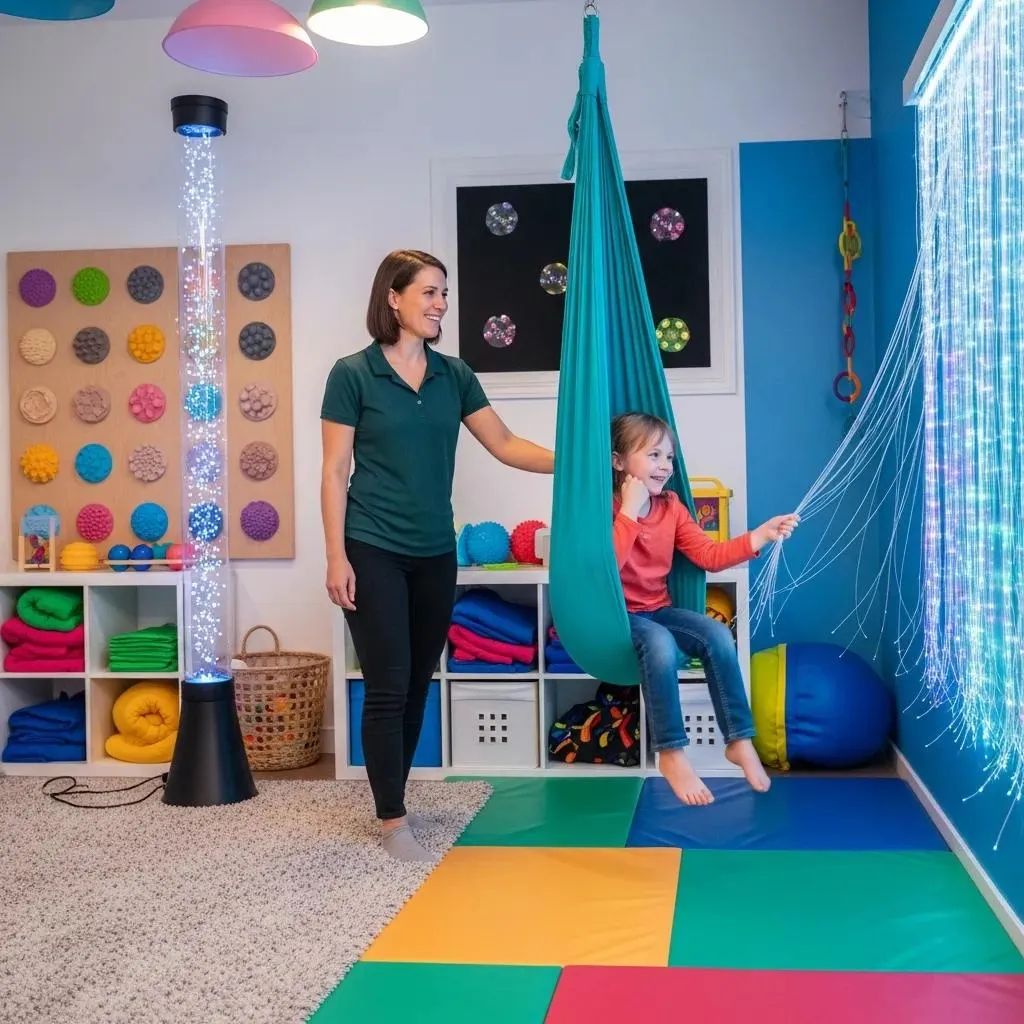
Sensory integration and executive function (EF) shape a child’s ability to attend, hold information, and flexibly apply strategies—core capacities needed for math learning. When sensory systems are dysregulated, children may become distracted, avoid tasks, or exhibit inconsistent performance; targeted sensory activities improve arousal regulation and readiness to learn. Executive functions, such as working memory, cognitive flexibility, and inhibitory control, enable children to follow multi-step problems, switch strategies, and resist impulsive responses. Combining sensory supports with EF scaffolds creates conditions where children can engage with numeracy tasks more effectively and generalize strategies across contexts.
The table below links interventions to EF or sensory components and shows expected classroom/home effects on math learning.
What Sensory Play Activities Enhance Focus and Math Skills?

Sensory play activities such as sand or rice trays for tactile counting, weighted lap pads during table work, and movement breaks before math tasks improve focus and reduce distractibility for many children. A sand tray with hidden number cards encourages tactile exploration while practicing numeral identification; short, structured movement sequences help reset attention before a problem set. Set up activities for 5–10 minutes, with a clear transition back to math to maximize carryover, and pair sensory play with explicit prompts that link the sensory task to the math goal. Incorporating these strategies into routines supports longer, more productive learning sessions.
How Do Executive Function Strategies Aid Math Problem-Solving?
Executive function strategies—visual supports, chunking problems, checklists, and teaching self-talk—help children approach multi-step math problems methodically and reduce cognitive overload. For instance, breaking a multi-step word problem into labeled parts, using a checklist to track steps, and modeling aloud how to hold intermediate results in memorysupports working memory and sequencing. Telehealth and in-home sessions can coach parents to use these scripts, allowing immediate practice in real contexts with caregiver feedback. When EF supports are consistent, children demonstrate improved accuracy and confidence on complex tasks.
When Should Parents Seek Professional Support for Math Difficulties?
Parents should consider a professional evaluation when difficulties persist across settings, progress stalls despite practice, or motor or attention issues interfere with participation in math activities. Early warning signs warranting assessment include consistent inability to understand quantity, refusal or avoidance of math tasks, poor pencil control that prevents showing work, or extreme distractibility during math instruction.
Parents can use the checklist below to track signs and decide on next steps.
Common indicators that a professional evaluation may help include observable behaviors and performance patterns.
- Persistent number confusion: The child regularly miscounts, cannot match quantities to numerals, or lacks basic number sense.
- Motor barriers: Fine-motor difficulties prevent legible number writing or the manipulation of counters needed for math tasks.
- Task avoidance or anxiety: The child consistently refuses math activities or experiences intense stress related to math.
- Cross-setting consistency: Difficulties appear both at home and at school despite classroom supports.
Tracking these signs helps determine whether to pursue an evaluation and which specialist (teacher, school psychologist, pediatric OT) to involve. After gathering observations, the next practical step is to request a coordinated assessment to develop a personalized plan.
What Are Signs That a Child Needs Specialized Math Intervention?
Signs a child needs specialized intervention include continued difficulty with number concepts despite repeated instruction, inability to complete grade-level tasks despite accommodations, or fine-motor barriers that prevent them from demonstrating knowledge. Examples include a child who counts on fingers beyond an age-expected stage, who cannot copy simple number patterns, or who tires quickly when working on math worksheets. Parents should collect samples of work, notes from teachers, and brief videos of the child performing tasks to illustrate patterns. Using objective examples when communicating with school teams or therapists clarifies needs and expedites the provision of appropriate supports.
How Does Skill Point Therapy Provide Personalized Math Skill Support?
Skill Point Therapy provides pediatric occupational therapy and related services tailored to children from infancy through young adulthood, focusing on developmental, academic, and social growth while collaborating closely with families and educators. Services include pediatric occupational therapy, DIRFloortime, aquatic therapy, social skills groups, IEP support, homeschooling support, and Writing Without Tears—delivered in-office, in-home, in-daycare, and via telehealth—to match family needs and promote carryover into daily routines. Their approach emphasizes compassionate, dedicated care and personalized treatment plans that target fine motor skills, visual-spatial reasoning, sensory integration, and executive function, all of which support math learning for families ready to request an evaluation or discuss individualized goals. Skill Point Therapy can be reached at 813-491-8300 to arrange an assessment and next steps.
How Can Telehealth and In-Home Therapy Make Math Learning Accessible?
Telehealth and in-home therapy remove access barriers by embedding interventions into the cchild’sreal-life environments and coaching caregivers to implement strategies consistently across routines. Telehealth math therapy supports skill practice with caregiver-mediated activities, screen-based visual supports, and remote coaching that helps generalize strategies to school and home contexts. In-home sessions allow therapists to identify natural learning opportunities—bathroom counting, kitchen measuring—and to model caregiver prompts that translate to daily practice. Both modalities increase consistency, reduce travel burdens, and allow therapists to tailor materials and routines to the family’s schedule and environment.
What Are Effective Telehealth Math Activities for Kids?
Practical telehealth math activities include screen-shared manipulatives for counting and place-value practice, parent-facilitated hands-on tasks with live coaching, and visual strategy modeling for multi-step problems. For example, a therapist can use a shared document with virtual counters while a parent uses household objects to mirror the activity, enabling real-time feedback and strategy prompts. Tech tips include using a dedicated camera angle for hands-on work and preparing simple materials beforehand so sessions focus on skill practice. Remote progress is tracked through short performance probes, and caregiver reports to ensure measurable gains between sessions.
Inconsistent Therapy Support Coath Skill Development?
In-home therapy supports consistent math development by integrating goals into daily routines, training caregivers to cue and reinforce strategies, and practicing skills in the places children naturally learn. Therapists can design activities, such as kitchen measurement tasks to target fractions, or timed clean-up sequences to strengthen sequencing and working memory, and then coach caregivers to embed short practice moments throughout the day. This ecological approach promotes generalization because skills are taught where they will be used, and caregivers become reliable partners who can prompt practice between formal sessions. Families interested in this model can inquire about in-home options to ensure therapy aligns with everyday learning needs and schedules.
Frequently Asked Questions
What are some signs that a child may be struggling with math skills?
Signs that a child may be struggling with math skills include persistent confusion with numbers, difficulty matching quantities to numerals, and avoidance of math-related activities. Additionally, if a child exhibits fine motor difficulties that hinder their ability to write numbers legibly or manipulate math tools, this may indicate a need for support. Parents should also look for signs of anxiety related to math tasks or inconsistent performance across settings, such as home and school.
How can parents effectively support their child’s math learning at home?
Parents can support their child’s math learning at home by incorporating math into everyday activities, such as cooking or shopping, where they can practice measurement and counting. Engaging in play-based activities, like board games or outdoor counting games, can also reinforce math concepts in a fun way. Additionally, using visual aids, such as charts or manipulatives, can help children understand abstract concepts. Consistent practice and positive reinforcement will build confidence and improve their skills over time.
What role does sensory play have in enhancing math skills?
Sensory play plays a significant role in enhancing math skills by providing tactile experiences that make abstract concepts more concrete. Activities like using sand or rice trays for counting help children engage with numbers in a hands-on way. Sensory play can also improve focus and reduce anxiety, allowing children to approach math tasks with a more positive mindset. By integrating sensory activities into math learning, caregivers can create a more engaging and effective learning environment.
How can technology be used to support math learning for children?
Technology can support math learning through interactive apps and online games that make learning engaging and fun. These tools often provide instant feedback, allowing children to practice skills at their own pace. Additionally, telehealth services can offer remote therapy sessions in which therapists use screen sharing to guide children through math activities. Parents can also utilize educational videos and online resources to supplement their child’s learning and provide diverse approaches to understanding math concepts.
What are some effective strategies for improving a child’s executive function in math?
Improving a child’s executive function in math can be achieved through strategies such as breaking tasks into smaller, manageable steps and using visual aids, such as checklists or charts. Teaching self-talk techniques can help children articulate their thought processes as they solve problems. Regular practice with multi-step problems can also enhance cognitive flexibility and working memory. Incorporating movement breaks and sensory activities can further support focus and attention, creating a conducive learning environment for math tasks.
When is it appropriate to seek professional help for a child’s math difficulties?
It is appropriate to seek professional help for a child’s math difficulties when they consistently struggle with number concepts despite support, show signs of anxiety or avoidance towards math, or have fine motor issues that impede their ability to complete tasks. If these challenges persist across different settings, such as home and school, it may indicate a need for a professional evaluation. Early intervention can provide tailored support to address specific learning needs and improve outcomes.