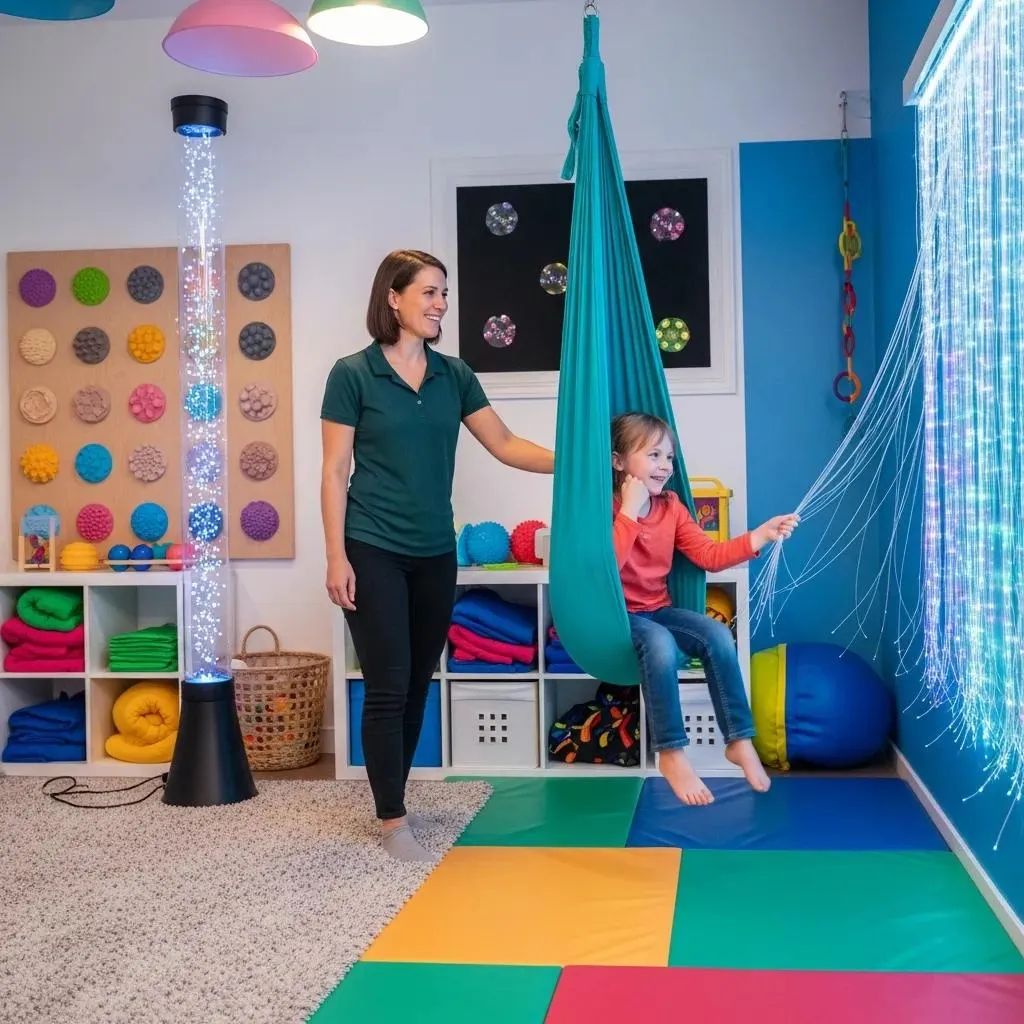

Pediatric Occupational Therapy for Supporting Emotional Regulation and Coping Skills in Children
Emotional regulation is a core outcome of pediatric occupational therapy, in which practitioners assess sensory processing and teach coping strategies to improve daily functioning and reduce meltdowns. This article explains how occupational therapy (OT) supports emotional regulation through sensory integration, play-based interventions, mindfulness adaptations, and skill-building for children from infancy through young adulthood. Parents and educators will learn developmental milestones, signs of dysregulation, practical self-regulation tools, and evidence-informed OT techniques that can be used at home, in school, and in community settings. The piece maps condition-specific approaches for anxiety, ADHD, and autism, shows how therapists collaborate with families and schools, and highlights resources that caregivers can implement immediately. Finally, we describe how Skill Point Therapy delivers family-centered pediatric OT across multiple settings to increase access to evaluations and ongoing support. Read on to understand the mechanisms, concrete activities, and supports that help children develop lasting coping skills and emotional control.
What Is Emotional Regulation and Why Is It Important for Children?
Emotional regulation is a child’s ability to notice, modulate, and respond to feelings in ways that allow effective participation in daily life; it functions through interactions between sensory processing, attention, and executive function. When regulation works well, children can transition between activities, engage in learning, and maintain social relationships; when it is immature or disrupted, behavior, understanding, and peer interactions suffer. Current research shows that early development of regulation skills supports long-term academic and mental health outcomes, and occupational therapists target underlying mechanisms to strengthen these abilities. Understanding the developmental trajectory of regulation clarifies when targeted supports are needed and what practical strategies will be effective.
How Do Children Develop Emotional Control and Self-Regulation?
Children develop self-regulation along a predictable path, moving from caregiver-led soothing in infancy toward independent coping and executive control in later childhood, and this progression depends on caregiver scaffolding and consistent routines. Infants rely on co-regulation — caregivers interpret and respond to distress — while toddlers gradually learn simple strategies such as naming feelings and using brief calming activities. By early school age, children begin to use internalized routines, visual schedules, and rehearsal of coping skills to manage frustration during tasks and peer interactions. Early intervention accelerates these changes by teaching caregivers to cue regulation, scaffold tasks, and reinforce small successes, which supports the development of more complex self-control skills later in development.
What Are the Signs of Emotional Dysregulation in Kids?
Signs of emotional dysregulation include frequent meltdowns, difficulty calming after stress, prolonged tantrums beyond developmental expectations, and either over- or under-responsiveness to sensory input that disrupts daily routines. Children may avoid tasks that require sustained attention, resist transitions, or display aggressive or withdrawn behaviors that interfere with school and peer relationships. Physiological indicators such as elevated arousal, sleep disruptions, and somatic complaints can accompany behavioral signs, signaling the need for assessment. When these patterns persist despite typical supports, a referral to pediatric occupational therapy and collaboration with educators or mental health professionals is warranted to identify strategies that target the underlying sensory and self-regulation processes.
How Does Occupational Therapy Support Emotional Regulation in Children?
Occupational therapy supports emotional regulation by assessing sensory processing, executive function, and environmental triggers, then designing individualized interventions that combine sensory integration, play-based learning, and skill training. OTs evaluate how sensory inputs influence arousal and attention, then create sensory diets, graded activities, and routines that increase a child’s capacity to self-regulate in real-world contexts. Sessions often include direct practice of coping strategies, modeling, and caregiver coaching to transfer skills into home and school environments. These approaches lead to measurable outcomes such as fewer meltdowns, improved task persistence, and greater participation in classroom routines.
Skill Point Therapy delivers pediatric occupational therapy across in-office, in-home, in-daycare, community-based, and telehealth settings, allowing evaluation and treatment to occur where children live and learn and improving the transfer of skills across contexts. Families can access assessments and individualized treatment plans in familiar environments, and therapists can demonstrate strategies in the exact settings where challenges occur. For parents seeking an initial evaluation, Skill Point Therapy offers streamlined scheduling and collaborative planning to identify priority goals and begin practical skill-building with family involvement and school communication. This flexible delivery supports consistent practice and better generalization of self-regulation strategies.
What Sensory Integration Techniques Help Balance Emotions?

Sensory integration techniques aim to modulate arousal by using proprioceptive, vestibular, tactile, and deep pressure inputs to stabilize physiological states and support calmer responses to stressors. Activities like “heavy work” (pushing, pulling, carrying weighted items), swinging for vestibular input, and tactile play with textured materials can either increase alertness or promote calming, depending on how they are structured. Therapists create a personalized sensory diet — a set of scheduled sensory activities — that targets each child’s sensory profile and links activities to daily routines, such as before challenging transitions or homework. Safety, gradual progression, and therapist guidance are crucial to ensure activities meet regulatory goals without overstimulation and to help caregivers learn to integrate these techniques into predictable routines.
How Are Play-Based and Mindfulness Therapies Used in OT?

Play-based therapy and child-adapted mindfulness teach emotional awareness and coping through engaging, developmentally appropriate activities that build skills while maintaining motivation and connection. Play provides opportunities to practice turn-taking, frustration tolerance, and emotion labeling in low-stakes scenarios, while short mindfulness exercises — such as five-breath grounding, belly-breathing with a stuffed toy, or a brief body scan — teach interoceptive awareness and attention control. Therapists set measurable goals, such as reduced outburst frequency and increased calm intervals, and embed practice opportunities across sessions and home routines to reinforce learning. Integrating play and mindfulness fosters internal strategies children can call on during stress and primes them for smoother transitions to classroom and peer contexts.
What Coping Skills Does Occupational Therapy Teach to Children?
Occupational therapy teaches concrete coping skills that children can use immediately to regulate emotions, including breathing techniques, sensory strategies, grounding exercises, and emotion-labeling tools that improve communication and self-awareness. OTs prioritize skills based on the child’s developmental level and sensory needs, then scaffold practice so that short, frequent rehearsals become automatic. Caregivers receive coaching on how to cue and reinforce these skills, embed them in daily schedules, and create calm-down kits that increase independent use. The goal is practical transfer: children should be able to use one or two reliable tools during moments of stress to reduce escalation and return to tasks.
Which Self-Regulation Tools and Activities Are Effective at Home?
Practical self-regulation tools for home include calm-down kits, visual schedules, short breathing routines, and scheduled heavy-work breaks, all simple to implement and requiring minimal materials. A calm-down kit might consist of a small weighted lap pad, a visual emotion chart, a squeeze ball for proprioception, and a list of two-step coping scripts for the child to choose from when upset. Visual schedules and timers support transitions and reduce uncertainty, while quick 2–5 minute breathing exercises practiced daily strengthen the child’s capacity to use the skill under stress. Caregivers should practice these tools with children during calm moments to build familiarity, and then cue them consistently as stress rises to promote independence.
How Does OT Enhance Social Skills for Emotional Expression?
Occupational therapists integrate social skills training into regulation work by teaching emotion vocabulary, using social scripts, and conducting role-play to practice appropriate emotional expression and peer interaction. Interventions focus on measurable skills such as recognizing cues in others, using “I feel” statements, and applying calming strategies before reactive behaviors escalate. Group-based social skills sessions and classroom-based peer practice help children rehearse turn-taking, perspective-taking, and repair strategies after conflict. By linking social skills directly to regulation tools, OT supports children not only in managing internal states but also in communicating needs and maintaining relationships.
How Does Occupational Therapy Address Specific Emotional Challenges?
Occupational therapy tailors strategies to specific conditions by targeting sensory modulation, executive function scaffolds, and social-communication supports that match the child’s diagnostic profile and daily demands. For anxiety, OT emphasizes predictable routines, graded exposure with sensory supports, and calming protocols to reduce avoidance and physiological arousal. For ADHD, therapists build executive function tools like visual timers, task breakdowns, and sensory-based movement breaks to improve sustained attention and impulse control. For children on the autism spectrum, interventions combine sensory modulation, social narratives, and structured communication supports to reduce overwhelm and improve expressive opportunities. Collaboration with mental health providers and educators is essential when addressing complex presentations to ensure consistent goals across settings.
Can OT Help Children Manage Anxiety and Emotional Outbursts?
Yes — occupational therapy can help children manage anxiety and emotional outbursts by teaching sensory and cognitive strategies that reduce physiological arousal and increase coping capacity. A typical approach includes identifying triggers, implementing sensory supports to down-regulate arousal before escalation, and practicing brief coping routines, such as grounding and breathwork, during calm periods so they are available during stress. For example, a child with school-related anxiety might use a pre-class heavy-work activity and a two-breath grounding script to enter the classroom with lower baseline arousal. OTs coordinate with caregivers and mental health professionals when anxiety symptoms require integrated behavioral or clinical interventions to ensure comprehensive support.
What OT Strategies Support Children with ADHD and Autism?
For children with ADHD, OT strategies emphasize sensory regulation, paired with executive function supports such as visual schedules, task breakdowns, and frequent movement opportunities, to reduce impulsivity and improve task persistence. For children on the autism spectrum, therapists combine sensory modulation plans, social stories, and clear visual supports to make expectations explicit and reduce sensory overload. Both populations benefit from individualized “toolkits” — predictable strategies the child can select in moments of dysregulation — and consistent cues from caregivers and teachers to reinforce use. Minor classroom adaptations such as alternate seating, structured transitions, and short, scheduled movement breaks support generalization and reduce the frequency of escalations.
What Resources and Support Do Parents and Schools Receive from OT?
Occupational therapy provides parents and schools with practical coaching, classroom modifications, visual tools, and collaborative planning that translate therapeutic goals into everyday routines and educational objectives. Parent coaching focuses on cueing strategies, scaffolding cueing tasks, reinforcing desired behaviors, and measuring progress using simple metrics such as reduced meltdown frequency or increased time on task. School-based OT offers direct support through IEP contributions, classroom consults, and teacher training to embed sensory supports and behavioral strategies into daily schedules. These coordinated resources ensure that children receive consistent expectations and supports across home and school environments.
Skill Point Therapy offers parent coaching, active school communication, and community-based services that help families and educators implement OT strategies where children spend their time. Therapists at Skill Point Therapy prioritize family-centered planning, share visual resources and handouts, and collaborate with school teams to align IEP goals, classroom strategies, and therapy objectives. Community-based visits and telehealth options further support continuity of care by allowing therapists to coach in natural contexts and provide accessible follow-up. These supports help caregivers and teachers feel confident in prompting and reinforcing coping skills consistently across settings.
How Does Parent Coaching Enhance Emotional Regulation Support?
Parent coaching equips caregivers with techniques to cue, scaffold, and reinforce regulation strategies so children can practice and generalize skills across daily routines and stressors. Sessions typically include demonstrations, guided practice, and homework assignments focused on implementing short, consistent strategies, such as visual cues, calm-down sequences, and contingency-based reinforcement. Measuring progress can involve tracking the frequency of outbursts, the time to calm, or the successful independent use of tools, providing families with clear markers of improvement. Effective coaching also empowers caregivers to adapt strategies as the child develops, ensuring supports remain relevant and promote increasing independence.
What Role Does School-Based OT Play in Behavioral Support?
School-based OT contributes to behavioral support by translating therapeutic strategies into classroom accommodations, training teachers on cues and routines, and writing functional IEP goals that reflect regulation and participation outcomes. Therapists observe classroom routines, recommend environmental changes, such as sensory corners or alternate seating, and collaborate with educators to pre-teach transitions and incorporate movement breaks. IEP goals often target measurable skills, such as increased on-task behavior duration, improved transition responses, or independent use of a calming strategy. Close teacher-therapist communication ensures consistent prompts and reinforcement across academic demands and social contexts.
Why Choose Skill Point Therapy for Pediatric Emotional Regulation and Coping Skills OT?
Skill Point Therapy emphasizes compassionate, family-centered pediatric occupational therapy designed to help children achieve their fullest potential through individualized care and strong communication with families and schools. The practice offers flexible delivery across in-office, in-home, in-daycare, community-based, and telehealth formats to meet families where they are and to increase opportunities for therapists to model strategies in the child’s natural environments. Parent coaching, social skills therapy, sensory integration, and personalized treatment plans form the core of services, and therapists prioritize clear, ongoing communication with caregivers and school teams to support consistent implementation. For families seeking evaluation and a collaborative plan, Skill Point Therapy facilitates goal-setting and practical next steps to begin targeted intervention.
What Makes Our Compassionate, Family-Centered Care Stand Out?
Skill Point Therapy’s approach centers on personalized treatment plans that involve caregivers at every step, ensuring goals reflect family priorities and everyday routines rather than generic checklists. Therapists emphasize caregiver education, measurable progress indicators, and ongoing adjustments based on response, which support meaningful changes in home and school participation. Services include sensory integration, social skills work, and IEP support, delivered with a focus on dignity and collaboration rather than just symptom management. By aligning therapy with family values and school expectations, Skill Point Therapy increases the likelihood that regulation strategies will be practiced and sustained.
How Do Our Telehealth and Community-Based Services Improve Accessibility?
Offering telehealth and community-based visits allows Skill Point Therapy to provide evaluations and coaching without requiring families to travel, making it easier to schedule sessions that fit into busy routines and to observe children in the settings where challenges arise. Telehealth sessions are used for caregiver coaching, strategy review, and ongoing progress monitoring, while community-based visits let therapists work directly in daycare, school, or neighborhood environments to tailor supports. This flexibility supports continuity of care, quicker problem-solving when challenges emerge, and better application of skills across contexts. Families interested in an evaluation are encouraged to reach out to learn about available formats and to begin a collaborative plan.
- Key Takeaways: Pediatric OT teaches sensory-based and cognitive coping strategies that reduce arousal, strengthen self-regulation, and improve participation.
- Practical Next Steps: Begin by tracking moments of dysregulation, introduce one reliable coping tool, and practice it during calm times to build automaticity.
- When to Seek Help: If dysregulation consistently interferes with learning, social relationships, or daily routines despite typical supports, consider an OT evaluation for targeted intervention.
Frequently Asked Questions
What age groups can benefit from pediatric occupational therapy for emotional regulation?
Pediatric occupational therapy is beneficial for children from infancy through young adulthood. Early intervention is crucial, as it helps children develop foundational emotional regulation skills. Therapists tailor their approaches to developmental stages, ensuring strategies are age-appropriate and effective. For instance, infants may require co-regulation techniques, while older children can engage in more complex coping strategies. This adaptability allows OT to support emotional growth across various age groups and developmental milestones.
How can parents reinforce emotional regulation skills at home?
Parents can reinforce emotional regulation skills by creating a supportive environment that encourages practice and consistency. This includes using calm-down kits, visual schedules, and regularly practicing coping strategies during low-stress moments. Engaging in activities that promote emotional awareness, such as discussing feelings or role-playing scenarios, can also be beneficial. Consistent reinforcement and positive feedback help children internalize these skills, making them more likely to use them independently during challenging situations.
What role do schools play in supporting children’s emotional regulation?
Schools play a vital role in supporting children’s emotional regulation by implementing wellbeing strategies regularly that align with occupational therapy goals. This includes creating structured environments, providing sensory breaks, and training teachers to recognize and respond to emotional needs. Collaboration between therapists and educators ensures that children receive consistent support across settings. Additionally, schools can incorporate social skills training and emotional awareness activities into the curriculum, fostering a holistic approach to emotional development.
How can caregivers identify when to seek occupational therapy for their child?
Caregivers should consider seeking occupational therapy if their child consistently exhibits signs of emotional dysregulation that interfere with daily life, such as frequent meltdowns, difficulty transitioning between activities, or challenges in social interactions. If typical strategies and supports do not lead to improvement, an OT evaluation can provide targeted interventions. Early identification and intervention are key to helping children develop practical coping skills and improve their overall emotional wellbeing.
What are some common misconceptions about occupational therapy for emotional regulation?
One common misconception is that occupational therapy is only for physical disabilities. In reality, OT encompasses a wide range of emotional and behavioral challenges, including emotional regulation. Another misconception is that treatment is solely focused on the child; however, effective OT involves family engagement and education to ensure strategies are practiced consistently at home and school. Understanding the comprehensive nature of OT can help families better appreciate its benefits for emotional development.
How do sensory diets contribute to emotional regulation in children?
Sensory diets are personalized plans that include a variety of sensory activities designed to help children modulate their arousal levels and improve emotional regulation. By incorporating activities that provide proprioceptive, vestibular, and tactile input, sensory diets can help children improve a state that supports self-regulation. These activities are strategically scheduled throughout the day to prepare children for transitions and challenging tasks, ultimately enhancing their ability to cope with stressors and maintain emotional control.
What should parents expect during an occupational therapy session focused on emotional regulation?
During an occupational therapy session focused on emotional regulation, parents can expect a combination of assessment, skill-building activities, and caregiver coaching. The therapist will evaluate the child’s sensory processing and emotional responses, then engage the child in play-based or sensory activities that promote coping skills. Parents will receive guidance on how to reinforce these skills at home, ensuring that strategies are integrated into daily routines. The session aims to create a collaborative environment that empowers both the child and the family.
Conclusion
Engaging in pediatric occupational therapy can significantly enhance children’s emotional regulation and coping skills, thereby improving daily functioning and social interactions. By using tailored strategies such as sensory integration and play-based interventions, therapists help children manage their emotions effectively. Parents and educators are equipped with practical tools to support this development at home and in school settings. Discover how Skill Point Therapy can help your child thrive by exploring our services today.