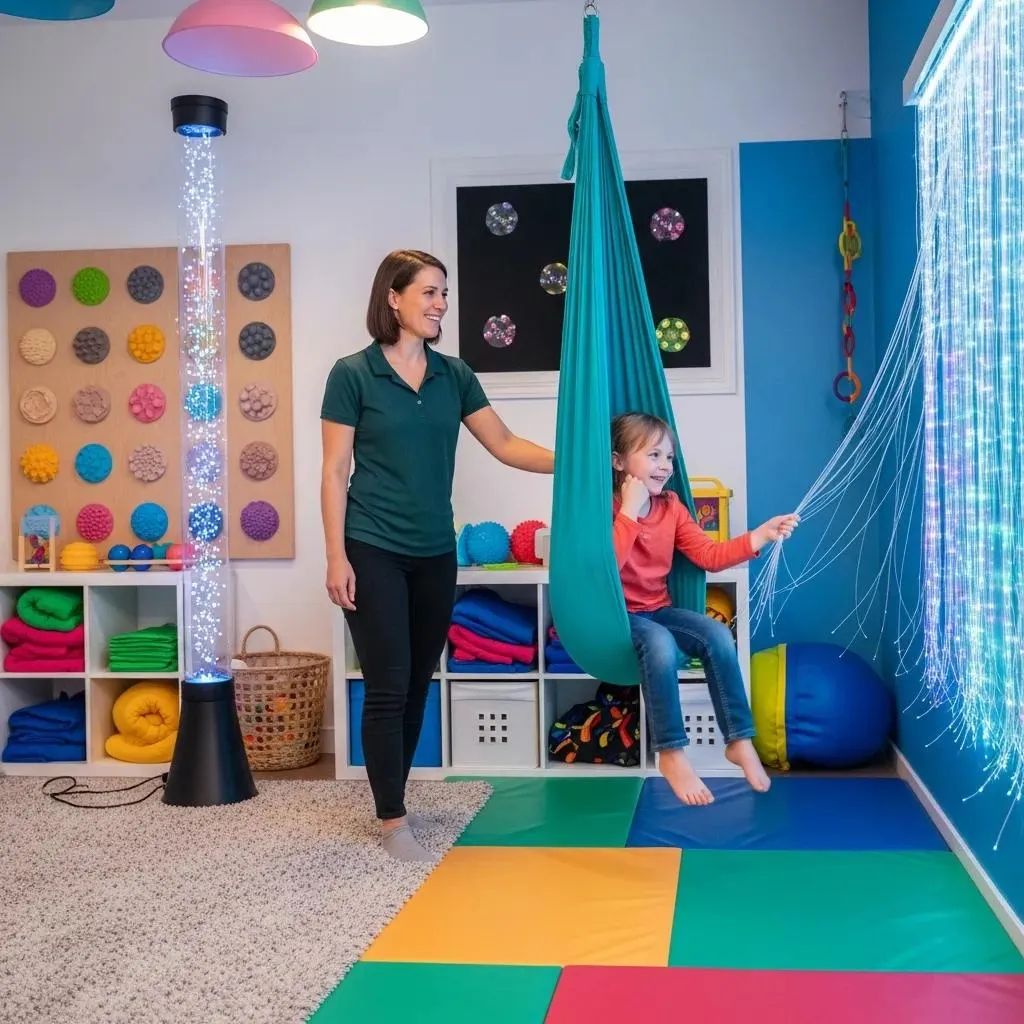

At SkillPoint Therapy, with offices in Tampa and Brandon, we understand the importance of providing families with resources to support their children at home. Simple, playful moments, such as jumping on a mini-trampoline or creating a sensory bin with rice, can make a significant difference in building regulatory skills. Research shows that nearly one in six children experience some form of sensory processing challenge, making it essential for families to have tools at home that can be both empowering and comforting.
Home-based sensory integration activities for kids are more than just fun—they help strengthen motor skills, attention, and emotional growth. Activities like swinging in a backyard hammock or using deep-pressure hugs with a weighted blanket can provide children with the sensory input they need to stay calm and focused. These moments create a supportive rhythm that blends naturally into everyday family life.
Parents often ask how to help their child best when they’re not in a therapy session, and the good news is that many answers can be found in your own living room. Sensory integration activities for kids offer opportunities for bonding, laughter, and steady progress, while also reinforcing the skills children develop in therapy. With love, patience, and creative play, families in Tampa and Brandon can transform their homes into places of growth, confidence, and joy.
Key Takeaways
- Create a sensory-friendly space with natural lighting and minimal distractions to enhance engagement in sensory activities.
- Incorporate swinging and jumping activities to improve vestibular input, balance, and coordination in children.
- Use tactile play materials, such as sensory bins filled with rice or water beads, to stimulate exploration and develop fine motor skills.
- Engage in deep-pressure exercises such as burrito wraps or animal walks to promote relaxation and body awareness.
- Involve family members in sensory activities to strengthen bonds and increase understanding of each child’s unique sensory needs.
Understanding Sensory Processing Challenges in Children
Understanding sensory processing challenges in children is crucial, as these difficulties can significantly impact their daily functioning and overall well-being. Sensory processing disorders (SPD) affect approximately 5-10% of children, presenting as abnormal responses to sensory stimuli that can hinder their participation in everyday activities. Children with SPD may struggle to detect, modulate, or interpret sensory input, often resulting in significant challenges with sensory integration.
These disorders might manifest alongside conditions like ADHD or autism, but can also exist independently. Engaging children in sensory integration activities can help address these challenges, promoting better sensory modulation and overall functioning. By providing appropriate sensory experiences, caregivers can create an environment that fosters developmental growth and well-being.
Many children with SPD also experience sensory processing difficulties that can affect their ability to interact effectively with their environment. Early identification of SPD signs is essential, as it enables prompt intervention with tailored treatment plans, improving quality of life and coping strategies.
Benefits of Engaging in Sensory Activities at Home
Engaging children in sensory activities at home offers numerous benefits that extend beyond mere play, as these activities can significantly improve different aspects of their development. Improved self-regulation and emotional control are primary outcomes, with children learning to manage their emotions and reduce behavioral outbursts. Furthermore, sensory activities support cognitive development by boosting attention, working memory, and problem-solving abilities, as they help regulate sensory input and calm the nervous system.
Engaging in deep-pressure activities can also promote self-regulation and emotional stability. Enhanced motor skills and coordination also result from sensory-based play, facilitating better performance in physical activities. These activities promote social skills and adaptive behaviors, increasing children’s ability to interact and respond appropriately in social settings. Ultimately, regular engagement in sensory activities fosters long-term developmental and psychological benefits, creating a foundation for resilience and adaptability throughout childhood.
Types of Home Sensory Integration Activities

Home sensory integration activities can encompass a variety of approaches, including swinging and jumping activities that improve vestibular input and coordination. Tactile play materials further stimulate sensory exploration, while deep pressure exercises promote body awareness and relaxation. These activities are designed to support children’s sensory processing needs in a structured environment.
Targeted sensory activities can also enhance fine motor skills and visual perception, making them a valuable addition to home activities. Incorporating tactile sensory bins can also improve fine motor skills and visual perception, making them a valuable addition to home activities.
Swinging and Jumping Activities
Swinging and jumping activities serve as practical tools for enhancing sensory integration in children, promoting both physical and cognitive development. Swinging stimulates the vestibular system, promoting balance and spatial orientation. Linear swinging calms while rotary swinging offers stimulating input, aiding sensory regulation.
Jumping, particularly on trampolines, enhances balance and coordination, providing proprioceptive feedback that is vital for motor planning. Both activities offer essential inputs that help organize the nervous system, thereby mitigating sensory overload and enhancing emotional regulation. Moreover, variations in swinging positions and jumping challenges can further develop motor skills and body awareness.
Incorporating these activities at home encourages playful engagement while supporting the sensory processing needs of children, ultimately contributing to their comprehensive wellbeing and development. Additionally, these activities align with the principles of a sensory diet, which emphasizes the development of tailored plans to meet individual sensory needs.
Tactile Play Materials
A range of tactile play materials can significantly enhance sensory integration processes in children, thereby promoting their fine motor skills and sensory discrimination. Sensory bins filled with materials such as rice, sand, and water beads encourage exploration and dexterity. Numerous textured surfaces, including sandpaper and bubble wrap, provide varied sensory input, fostering hands-on engagement.
Messy play activities, such as finger painting, playdough, and slime, stimulate tactile senses and creativity. Additionally, engaging with sensory materials can enhance cognitive growth and problem-solving skills. Water play with differing temperatures and containers augments both tactile and motor coordination.
Moreover, interactive tools such as sensory boxes and textured toys facilitate sensory discrimination practice. Incorporating these materials into play provides children with crucial experiences that support their sensory and motor development in a home environment. Tactile sensory perception enables the recognition of textures and sensations, which are essential for daily activities.
Deep Pressure Exercises
Tactile play materials lay the groundwork for diverse sensory activities that can further improve sensory integration in children, including deep pressure exercises. These exercises, which provide calming effects through proprioceptive input, can significantly boost a child’s ability to self-regulate. Deep pressure exercises are efficient because they increase parasympathetic activity, helping to create a more relaxed state for the child.
Incorporating these activities into a personalized sensory diet can enhance their effectiveness.
- Burrito Wrap: Rolling a child in a blanket applies deep pressure, promoting relaxation and a sense of security.
- Sandwich Squish: Pressing a child between soft pillows offers prolonged deep pressure for calming.
- Animal Walks: Engaging in bear or crab walks utilizes muscle engagement while delivering deep pressure.
These activities not only foster sensory integration but also contribute to reduced anxiety and improved affect regulation, making them a valuable supplement to home-based sensory strategies.
Target Groups Who Can Benefit From Sensory Integration Therapy

Sensory integration therapy can be especially beneficial for children with Autism Spectrum Disorder (ASD) and developmental delays. Research indicates that these populations often face significant sensory processing challenges, which can impact their affective regulation and social interactions. Tailored therapeutic interventions may enhance their sensory experiences and functional skills, ultimately improving overall quality of life.
Additionally, children with Sensory Modulation Disorder may also benefit from targeted sensory integration activities designed to help them better manage their sensory input. However, the effectiveness of sensory integration therapy remains unproven due to the lack of rigorous research establishing its outcomes.
Children With Autism
While children with autism spectrum disorder (ASD) often face significant sensory integration challenges, approximately 90% to 95% of this population exhibits difficulties in processing sensory information. These challenges can manifest as overreactivity, underresponsiveness, or unusual sensory-seeking behaviors, impacting various areas such as communication and affective regulation. Understanding the full range of sensory inputs is essential for tailoring effective interventions.
Sensory integration therapy (SIT) offers potential benefits, including:
- Reducing repetitive behaviors and improving social responsiveness.
- Enhancing motor skills and fine motor abilities through structured activities.
- Customizing therapeutic interventions to meet unique needs and monitor progress effectively.
Despite the promise of SIT, the lack of conclusive evidence on its long-term effectiveness remains limited, necessitating further research to fully understand its impact on children with autism.
Developmental Delays Support
Many children experiencing developmental delays can benefit from sensory integration therapy, which addresses diverse underlying sensory processing challenges. Research indicates that sensory integration therapy yields varying effects across conditions. For instance, children with cerebral palsy exhibit the highest effect size (1.50), enhancing motor function through targeted activities.
Those with ADHD show moderate benefits (1.06) in attention regulation and reduced hyperactivity. Developmental disabilities can lead to gains in attention and motor skills (0.48), while children with intellectual disabilities may experience limited but potential benefits (0.14).
Furthermore, children with sensory processing disorder can improve their sensory modulation through personalized interventions. In summary, tailored and consistent sensory integration activities are crucial for maximizing therapeutic benefits across these populations. Additionally, early intervention strategies can lead to improved long-term management of sensory challenges.
Specific Goals of Home Sensory Activities
Engaging in home sensory activities can significantly enhance a child’s overall development by targeting specific goals related to sensory processing and integration. These activities are designed to enhance various skills essential for overall functioning and well-being.
- Improve Sensory Processing: Enhance the ability to integrate and respond to sensory inputs, thereby fostering emotional regulation and increased confidence.
- Develop Self-Regulation: Support focus and attention through sensory strategies, enabling children to manage sensory overload and sustain participation.
- Facilitate Motor Skills: Promote balance and coordination through targeted activities, improving both fine and gross motor abilities.
Practical Guidelines for Implementing Sensory Activities

Implementing sensory activities effectively requires careful planning and consideration to create an environment conducive to learning and development. It is crucial to optimize the sensory-friendly space by utilizing natural lighting, minimizing distractions, and arranging a quiet play area that promotes calmness. Incorporating proprioceptive activities, such as heavy work tasks and structured play, improves children’s body awareness and self-regulation skills.
Guidance for sensory activities should follow a transparent stepwise approach tailored to personal needs, ensuring consistency for familiarity and comfort. Engaging children through interactive sensory play supports cognitive and affective development, encouraging verbal expression of feelings. By integrating these practical guidelines, caregivers can foster positive sensory experiences that benefit children’s comprehensive growth.
Research Evidence Supporting Sensory Integration Practices
Although the effectiveness of sensory integration practices has been the subject of extensive research, a growing body of evidence clearly supports their positive impact on diverse populations of children. Key findings include:
- Sensory integration therapy, especially tailored 1:1 sessions, greatly improves social skills, sensory processing, and motor skills in children with conditions such as ASD and ADHD.
- Randomized controlled trials have validated the effectiveness of Ayres Sensory Integration therapy, demonstrating improvements in self-care and socialization.
- Surveys indicate that 82% of occupational therapists consistently employ sensory-based treatments in their practice, highlighting their crucial role in therapy.
Creative Ideas for Tactile Play and Exploration

When children interact with different textures during play, they improve their tactile awareness and sensory processing capabilities. Engaging with varied surfaces, such as rough or smooth textures, promotes tactile discrimination. Activities like rolling over textured mats or handling natural items, such as pinecones, boost fine motor control.
“Feely boxes” provide an opportunity for blind tactile exploration, fostering object recognition—water-based activities, including measuring different textured containers, further support tactile and proprioceptive development. Messy play, such as finger painting or using slime, encourages creative expression while improving tactile tolerance. Ultimately, oral motor activities, such as licking textured surfaces or chewing on chew toys, facilitate sensory regulation.
These creative ideas guarantee holistic sensory engagement that benefits children’s development.
Family Involvement in Sensory Activities and Its Importance
Engaging in sensory activities not only benefits children but also actively involves families in meaningful ways, fostering stronger connections and understanding among family members. Family involvement in sensory activities plays an essential role in enhancing overall family dynamics and participation.
- Improved Understanding: Parents gain insights into their child’s sensory needs, leading to better support and interaction.
- Increased Participation: Involvement in sensory-rich routines enables families to engage more fully within their home and community.
- Enhanced Family Functioning: Adapting family routines to accommodate sensory needs strengthens bonds and improves quality of life.
Frequently Asked Questions
What Are the Benefits of Sensory Integration Activities for Kids at Home?
When practiced at home, sensory integration activities for kids encourage consistent skill-building and reinforce progress made in therapy. They also give parents hands-on strategies to nurture emotional regulation, coordination, and social engagement in a familiar setting.
How Do I Know if My Child Needs Sensory Integration Activities?
To determine if a child requires sensory integration activities, observe for signs such as hypersensitivity, difficulty with fine motor skills, affective dysregulation, avoidance behaviors, and poor social interactions, which may necessitate further assessment and intervention if needed.
Can Sensory Integration Activities Be Harmful or Overstimulating?
Sensory integration activities can indeed be harmful or overstimulating for sensitive children, potentially leading to distress. Personalized approaches, professional guidance, and careful monitoring are crucial to mitigate risks and guarantee positive experiences during sensory engagement.
How Often Should We Engage in Sensory Activities at Home?
In a vibrant garden, flowers bloom best with balanced sunlight and water. Likewise, engaging in sensory activities several times a day, tailored to personal needs, nurtures children’s growth by maintaining a harmonious state of awareness and emotional regulation.
What Age Is Ideal to Start Sensory Integration Activities?
The ideal age to start sensory integration activities is during infancy, as early engagement facilitates vital developmental milestones, supporting self-regulation and motor skills, ultimately fostering foundational capabilities necessary for future growth and everyday functioning.
Are There Specific Sensory Activities for Older Children or Teenagers?
Like a well-tuned instrument, specific sensory activities for older children and teenagers, including weighted vests, movement-based challenges, and tactile exploration, effectively promote body awareness, regulation, and self-control, supporting their developmental needs and psychological wellbeing.
Conclusion
In summary, home-based sensory integration activities can help children develop confidence, self-regulation, and other developmental skills. Research suggests that about 1 in 20 children face sensory processing challenges, making it essential for families to know simple strategies they can use at home. These activities are not only helpful but can also be enjoyable bonding experiences for the whole family.
By incorporating small yet meaningful routines, such as swinging, tactile play, or deep-pressure hugs, parents can provide their children with consistent support outside of therapy sessions. Sensory activities also encourage problem-solving, body awareness, and emotional balance in everyday life. Over time, these moments of connection can build a stronger foundation for both learning and social success.
At SkillPoint Therapy, we believe every child deserves loving support and opportunities to thrive, both in therapy and at home. If you’re a parent in the Tampa Bay area and would like to discuss your child’s specific needs, we welcome your call and are here to provide support. Together, we can create the right plan for your family to encourage growth, joy, and progress.
References
- https://www.skillpointtherapy.com/home-sensory-integration-exercises/
- https://pmc.ncbi.nlm.nih.gov/articles/PMC10955541/
- https://pmc.ncbi.nlm.nih.gov/articles/PMC3708964/
- https://sensoryhealth.org/basic/home-activities
- https://www.nature.com/articles/s41598-025-05393-3
- https://sensoryhealth.org/sites/default/files/file-attachments/ahn_miller.pdf
- https://www.frontiersin.org/journals/integrative-neuroscience/articles/10.3389/fnint.2020.00022/full
- https://www.ucsf.edu/news/2013/07/107316/breakthrough-study-reveals-biological-basis-sensory-processing-disorders-kids
- https://pmc.ncbi.nlm.nih.gov/articles/PMC9180069/
- https://pmc.ncbi.nlm.nih.gov/articles/PMC5733937/