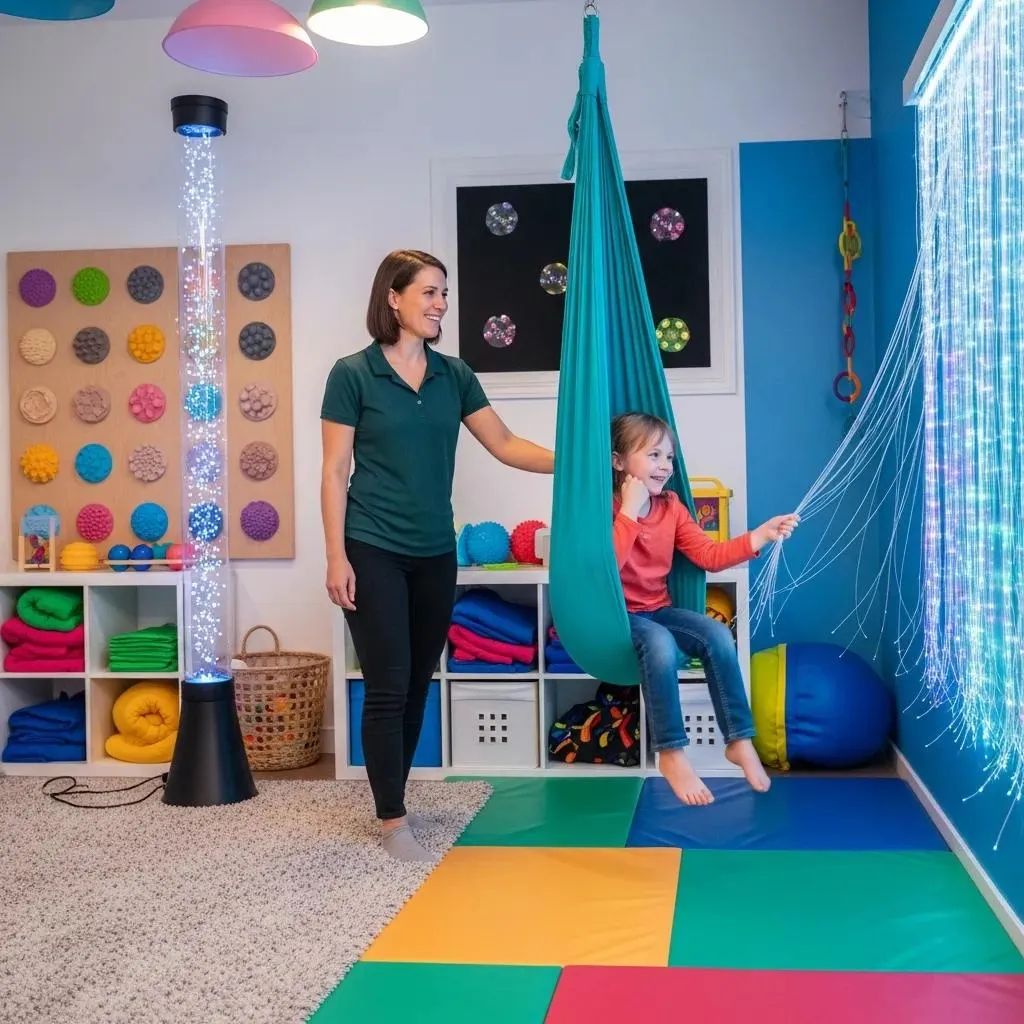

Occupational Therapy for School Performance: Supporting School-Aged Kids’ Academic and Life Skills
Occupational therapy for school-age children is a specialized form of pediatric therapy that targets the motor, sensory, and cognitive skills children need to participate successfully in classroom and school-life activities.
This article explains how school-age OT improves fine motor and handwriting skills, enhances executive function, supports sensory processing, and builds social and behavioral skills, enabling children to access learning and daily routines more independently. Parents, teachers, and caregivers will learn practical signs that indicate the need for evaluation, clear intervention strategies used by therapists, and realistic outcomes to expect when therapy is implemented consistently. We also map how OT contributes to IEP and 504 planning, describe school carryover strategies, and show concrete readiness activities that prepare children for classroom routines. Expect evidence-informed techniques, classroom support checklists, and examples of measurable goals you can discuss with your child’s therapist or school team. Throughout the piece, we use terms such as school-age OT, fine motor skills, sensory integration therapy, executive function therapy, and IEP support occupational therapy so readers can connect the recommendations to common search queries and school-based needs.
How Does Occupational Therapy Enhance Academic Skills in School-Aged Children?
Occupational therapy for school performance focuses on the specific academic and daily tasks that make up a child’s school day by targeting fine motor control, visual-motor integration, endurance, and executive function skills that support classroom participation. OT uses graded practice, adaptive strategies, environmental modifications, and coaching to change how a child engages with learning materials, improving speed, legibility, and task completion, thereby directly affecting academic performance. Teachers and parents often notice progress when handwriting becomes more legible, fine motor tasks require less effort, and classroom routines are completed more independently. The following paragraphs outline common targets, practical classroom examples, and measurable outcomes to help teams write functional goals that align with curriculum demands.
This comparison helps teams prioritize intervention targets based on classroom demands and leads to specific therapy approaches for fine motor and executive function work.
- Fine motor remediation: Improve pencil grip, scissor skills, and classroom tool use through progressive exercises.
- Visual-motor training: Strengthen eye-hand coordination needed for copying from the board to paper and reading alignment.
- Executive function supports: Implement external organizers, checklists, and time-management tools to scaffold planning.
These mechanisms interact: strengthening hand skills reduces cognitive load during writing, which in turn frees working memory for composition and problem-solving. Understanding that interplay naturally leads to focused interventions, beginning with handwriting and fine-motor therapy.
What Are Fine Motor and Handwriting Therapies for School Success?

Fine motor and handwriting therapies aim to make written work efficient, legible, and sustainable over a typical school day by addressing pencil grasp, endurance, and visual-motor coordination. Therapy begins with assessment of grip, posture, bilateral hand skills, and copying accuracy, then progresses through graded activities such as manipulation tasks, hand strengthening, and multisensory writing practice that match classroom tasks. Interventions often use task-specific practice—copying sentences, speed drills, and functional classroom simulations—to build automaticity and stamina that translate to less teacher prompting and more independent work. Typical outcomes include measurable improvements in legibility scores, decreased time to complete written tasks, and increased willingness to engage in written assignments. These improvements support academic performance by reducing frustration and increasing the child’s ability to demonstrate knowledge without motor limitations.
How Does Executive Function Therapy Improve Student Organization and Planning?
Executive function therapy in the school setting targets planning, initiation, working memory, and time management by teaching compensatory strategies and altering task demands to match the student’s current abilities. Therapists introduce concrete tools such as visual schedules, checklists, colored folders, and step-by-step assignment breakdowns during training and coach teachers on consistent implementation. Progress is tracked using measurable markers like completion rates, reduced transition prompts, and rubric-based goal attainment, and therapists adjust supports to fade external prompts as internal skills strengthen. An example goal might read: “Student will use a visual checklist to complete and turn in three-step homework assignments on 4 of 5 school days,” which links therapy directly to classroom expectations and measurable outcomes.
What Sensory Processing Strategies Support Children in School Environments?
Sensory processing strategies in school environments help children regulate arousal, attention, and emotional states, enabling them to engage in learning tasks with fewer disruptions. Occupational therapists design individualized sensory plans that include sensory diets, classroom modifications, scheduled sensory breaks, and tool recommendations to address modulation, registration, and discrimination differences that affect attention and participation. These strategies improve on-task behavior and reduce escalation by giving children predictable routines and sensory options that match their needs.
The following sections describe clinic- and school-based sensory integration approaches and immediate regulation techniques teachers can apply while collaborating with therapists.
- Sensory diet components: Scheduled activities (heavy work, proprioceptive input) integrated into the day to maintain optimal arousal.
- Classroom modifications: Alternative seating, low-distraction work zones, and adjusted lighting to reduce sensory overload.
- Scheduled sensory breaks: Short, planned movement or calming breaks that prevent dysregulation before it escalates.
These strategies work best when an OT evaluates the child and prescribes frequency and intensity, ensuring school staff implement consistent strategies that complement therapeutic goals.
How Does Sensory Integration Therapy Address Sensory Processing Disorder at School?
Sensory integration therapy addresses sensory processing differences by assessing the child’s sensory profile, identifying specific modulation or registration issues, and designing activities that gradually challenge the sensory systems to improve adaptive responses. The process begins with formal assessment, followed by individualized clinic- or school-based sessions that use play-based, graded sensory experiences to build tolerance and adaptive motor responses. School carryover is critical: therapists teach teachers targeted classroom strategies and create simple charts or cues to ensure consistent implementation, so gains generalize to learning situations. Progress is monitored with observable changes in attention, decreased avoidance behaviors, and increased participation in class activities, demonstrating functional improvement that supports academic goals.
What Occupational Therapy Techniques Improve Attention and Emotional Regulation?
Occupational therapy improves attention and emotional regulation by combining sensory tools, cognitive strategies, and behavioral scaffolding to help students manage arousal and maintain engagement. Techniques include using visual timers and task chunking to make expectations concrete, quiet corners or calming kits for de-escalation, and co-regulation strategies in which adults model breathing and self-talk scripts. Classroom examples are explicit: teach a student a five-step breathing routine to use before tests, or implement a first-then chart to support transitions into new tasks. These techniques reduce anxiety-driven avoidance and improve sustained attention, thereby enhancing learning efficiency and classroom conduct; consistent adult coaching ensures that students internalize regulation strategies over time.
How Can Occupational Therapy Develop Social and Behavioral Skills for School Interaction?

Occupational therapy contributes to social skill development by addressing the motor, sensory, and cognitive components that underlie peer interaction and classroom behavior. OT-led social skills interventions combine role-play, structured group activities, and environmental supports to teach turn-taking, perspective-taking, and self-management skills. Therapists often collaborate with speech therapists and school staff to integrate pragmatic language targets with motor and sensory supports that make social participation more accessible. The following sections detail group formats, behavioral supports, and classroom strategies OT professionals use to foster positive peer interactions and improve overall conduct.
Below is an overview list of social skills group formats and their core purposes to help educators and families select an approach that aligns with the child’s needs.
- Structured skill groups: Small groups practicing scripted interactions to teach conversation skills and emotion recognition.
- Peer-mediated sessions: Use trained peers to model and reinforce target behaviors during cooperative tasks.
- Integrated classroom coaching: Therapist models strategies in the classroom while supporting teacher-led interventions.
These formats can be combined based on goals and classroom logistics, creating natural contexts for practicing and reinforcing social skills across settings. Implementation planning leads to measurable social outcomes, which we describe in detail next for group structure and behavioral supports.
What Social Skills Groups and Behavioral Supports Are Offered for School-Aged Kids?
Social skills groups for school-aged children typically run in small cohorts and focus on concrete, observable skills such as initiating greetings, maintaining reciprocal conversation, and interpreting nonverbal cues. Sessions include a warm-up, skill instruction, role-play, and real-world practice with feedback, tailored by age and developmental level. Behavioral supports integrated into these groups use positive reinforcement, self-monitoring charts, and visual prompts to teach self-regulation during social interactions; progress is tracked through pre- and post-intervention measures and parent/teacher reports. Expected outcomes include increased peer invitations, improved turn-taking, and fewer disruptive incidents during cooperative tasks. These group approaches bridge individual OT goals with classroom expectations to support inclusive participation.
How Does OT Foster Positive Peer Interaction and Classroom Conduct?
Occupational therapists foster positive peer interaction and classroom conduct by coaching teachers on environmental structures and by teaching students self-management tools that make social expectations explicit. Strategies include designing cooperative motor tasks that naturally require turn-taking, embedding social prompts into classroom routines, and using behavior-specific praise to reinforce desired actions. Therapists provide brief scripts and teacher cues to scaffold peer facilitation and reduce adult prompting, which creates independence and peer-led support systems. When teachers implement consistent routines alongside targeted OT strategies, children show measurable gains in prosocial behavior and reduced need for corrective interventions.
What Is the Role of Occupational Therapy in IEP and 504 Plan Support?
Occupational therapy plays a central role in school-based accommodations by conducting assessments, providing functional recommendations, writing measurable goals, and collaborating with families and school teams to implement supports that enable access to the curriculum. OT assessments translate classroom performance into functional IEP goals that address handwriting, self-care, sensory regulation, and organization. Therapists advocate for accommodations such as preferential seating, assistive technology, adjusted assignment formats, and scheduled sensory breaks that directly link to assessed needs.
This table clarifies how OT recommendations translate into measurable IEP accommodations and sets the stage for collaborative implementation and monitoring.
After explaining OT’s role in school collaboration, families often ask how to initiate supports and what next steps look like in practice. For those considering clinic-based evaluation or school consultation, Skill Point Therapy offers pediatric occupational therapy evaluations and individualized service planning that bridge clinic and school needs in partnership with families and educators.
From SERP report: Skill Point Therapy is a pediatric occupational therapy provider serving children from infancy to 21 years. Services explicitly mentioned: Pediatric Occupational Therapy, Sensory Integration, Therapeutic Listening, Fine Motor Skills, Handwriting Skills, Social Skills Group, DIRFloortime, IEP Support, Home School Support, Parent Coaching, Aquatic Therapy. Locations mentioned: Tampa, FL; Brandon, FL.
How Does OT Collaborate with Schools to Advocate for Individualized Education?
Effective collaboration follows a stepwise process: referral and intake, clinic- or school-based assessment, joint goal-setting at an IEP/504 meeting, implementation planning, and ongoing progress monitoring with data-driven adjustments. Therapists prepare functional reports that translate clinical findings into classroom-relevant language and recommended accommodations, then attend meetings or provide written summaries to guide discussion. Communication templates such as goal summaries, sample accommodations, and daily implementation notes help maintain consistent strategies across home and school. Families who engage therapists early in the process navigate meetings more confidently and secure supports that align with observable classroom needs.
What Resources Are Available for Educators to Support OT Strategies?
Educators can access practical resources to carry OT recommendations into daily practice, including visual schedules, sensory station checklists, simple classroom adaptations, and brief how-to guides for implementing sensory breaks. Therapists often provide downloadable behavior chart templates, a list of low-cost sensory tools, and short in-class demonstration sessions to train staff to implement strategies with fidelity. When teachers receive concise, classroom-ready materials and brief coaching, carryover improves, and outcomes become measurable, prompting the following topic: readiness strategies that build foundational school skills.
How Does Occupational Therapy Prepare Children for School Readiness?
Occupational therapy prepares children for school readiness by developing motor, self-care, attention, and social skills that allow them to participate in classroom routines and learning activities. OT interventions focus on foundational abilities such as independent dressing, sustained attention, pre-writing strokes, and cooperative play so that children meet the functional demands of kindergarten and early grades. Early identification and parent coaching increase home practice that directly accelerates readiness, and therapists coordinate transition plans with preschool staff to create continuity. The following subsections list specific readiness skills and concrete transition supports parents and teachers can implement to ease enrollment and early academic success.
Before the checklist below, I’d like you to know that these activities are intended to be practical, parent-friendly strategies that integrate into everyday routines and promote measurable progress in common readiness domains.
- Self-care and independence tasks: Practice fasteners, snack opening, and toileting routines to reduce dependence during the school day.
- Pre-writing and fine motor play: Use playdough, drawing strokes, and scissor practice to build pre-writing foundation and hand strength.
- Attention and group participation: Short, structured circle-time routines with simple turn-taking tasks build stamina for classroom instruction.
These readiness components align with kindergarten expectations and create a clear focus for early intervention and parent coaching, which we explain next.
Skill Point Therapy provides evaluation and parent coaching focused on school readiness and transition planning to support families preparing for kindergarten or other early academic steps.
From SERP report: Skill Point Therapy is a pediatric occupational therapy provider serving children from infancy to 21 years. Services explicitly mentioned: Pediatric Occupational Therapy, Sensory Integration, Therapeutic Listening, Fine Motor Skills, Handwriting Skills, Social Skills Group, DIRFloortime, IEP Support, Home School Support, Parent Coaching, Aquatic Therapy. Locations mentioned: Tampa, FL; Brandon, FL.
What Are Key School Readiness Skills Addressed by Pediatric OT?
Key readiness skills include independence in self-care tasks, basic fine motor abilities for coloring and pre-writing, and emerging attention skills that allow children to follow simple group directions. Therapists assess each domain using play-based observations and parent interviews, then recommend targeted home activities such as clasping/unclasping practice, weekly scissor play, and brief story-time attention games that build stamina. Milestone indicators, such as being able to sit for a five- to ten-minute group activity, use a spoon independently, and trace simple shapes, suggest readiness; if concerns arise, early evaluation can identify targeted supports. Early intervention prevents skill gaps from widening and sets children up for positive early academic experiences.
How Does OT Support Transition to Kindergarten and Early Academic Success?
OT supports transition by creating a sample plan with classroom visits, social stories, gradual exposure to school routines, and therapist-led coaching for parents to rehearse new skills at home. Therapists may recommend short, scaffolded sessions that simulate kindergarten activities—such as lining up, following multi-step instructions, or sharing materials—to reduce anxiety and build competence. Communication with incoming teachers, sharing concise goal statements, and proposing reasonable accommodations ensure continuity and help teachers implement appropriate supports from day one. These transition-focused activities help children adapt quickly, enabling earlier engagement with academic tasks and peer participation.
From SERP report: Skill Point Therapy is a pediatric occupational therapy provider serving children from infancy to 21 years. Services explicitly mentioned: Pediatric Occupational Therapy, Sensory Integration, Therapeutic Listening, Fine Motor Skills, Handwriting Skills, Social Skills Group, DIRFloortime, IEP Support, Home School Support, Parent Coaching, Aquatic Therapy. Locations mentioned: Tampa, FL; Brandon, FL.
Frequently Asked Questions
What qualifications should an occupational therapist have to work with school-aged children?
Occupational therapists working with school-aged children should hold a master’s or doctoral degree in occupational therapy from an accredited program. They must also be licensed to practice in their state, which typically requires passing a national certification exam. Additionally, experience or specialized training in pediatric therapy, particularly in school settings, is beneficial. Continuous professional development through workshops and courses focused on child development, sensory integration, and educational strategies is also essential to staying up to date on best practices.
How can parents identify if their child needs occupational therapy?
Parents can look for signs that may indicate a need for occupational therapy, such as difficulty with fine-motor tasks like writing or using scissors, challenges following multi-step instructions, or struggles with social interactions. Other indicators include frequent frustration during homework, avoidance of school-related tasks, or difficulty regulating emotions in classroom settings. If these challenges persist and impact the child’s academic performance or social relationships, seeking an evaluation from an occupational therapist can provide clarity and support.
What is the typical duration and frequency of occupational therapy sessions for children?
The duration and frequency of occupational therapy sessions for children can vary based on individual needs and goals. Typically, sessions last 30-60 minutes and may occur once or twice a week. Some children may require more frequent sessions initially, especially if they are addressing significant challenges. As progress is made, the frequency may decrease. The therapist will work with the family and school team to determine the best schedule to support the child’s development and learning objectives.
How can teachers effectively implement occupational therapy strategies in the classroom?
Teachers can effectively implement occupational therapy strategies by collaborating closely with occupational therapists to understand specific recommendations tailored to their students. This may include using visual schedules, providing sensory breaks, or modifying classroom environments to reduce distractions. Training sessions or workshops led by therapists can equip teachers with practical tools and techniques. Regular communication with therapists about student progress and challenges ensures that strategies remain relevant and valuable, fostering a supportive learning environment for all students.
What role do parents play in supporting their child’s occupational therapy goals?
Parents play a crucial role in supporting their child’s occupational therapy goals by reinforcing strategies and activities at home. This includes practicing skills learned during therapy sessions, providing encouragement, and creating a supportive environment for their child’s development. Regular communication with the therapist about progress and challenges helps parents stay informed and engaged. Additionally, attending therapy sessions when possible allows parents to learn techniques that can be integrated into daily routines, enhancing the effectiveness of the therapy.
Are there specific tools or resources that can help children with sensory processing issues in school?
Yes, several tools and resources can assist children with sensory processing issues in school. These may include sensory kits with fidget toys, noise-canceling headphones, or weighted blankets to support self-regulation. Visual schedules and checklists can provide structure and predictability, while alternative seating options, like stability balls or wiggle cushions, can help children focus. Collaborating with occupational therapists can help educators identify the most effective tools tailored to each child’s sensory needs.