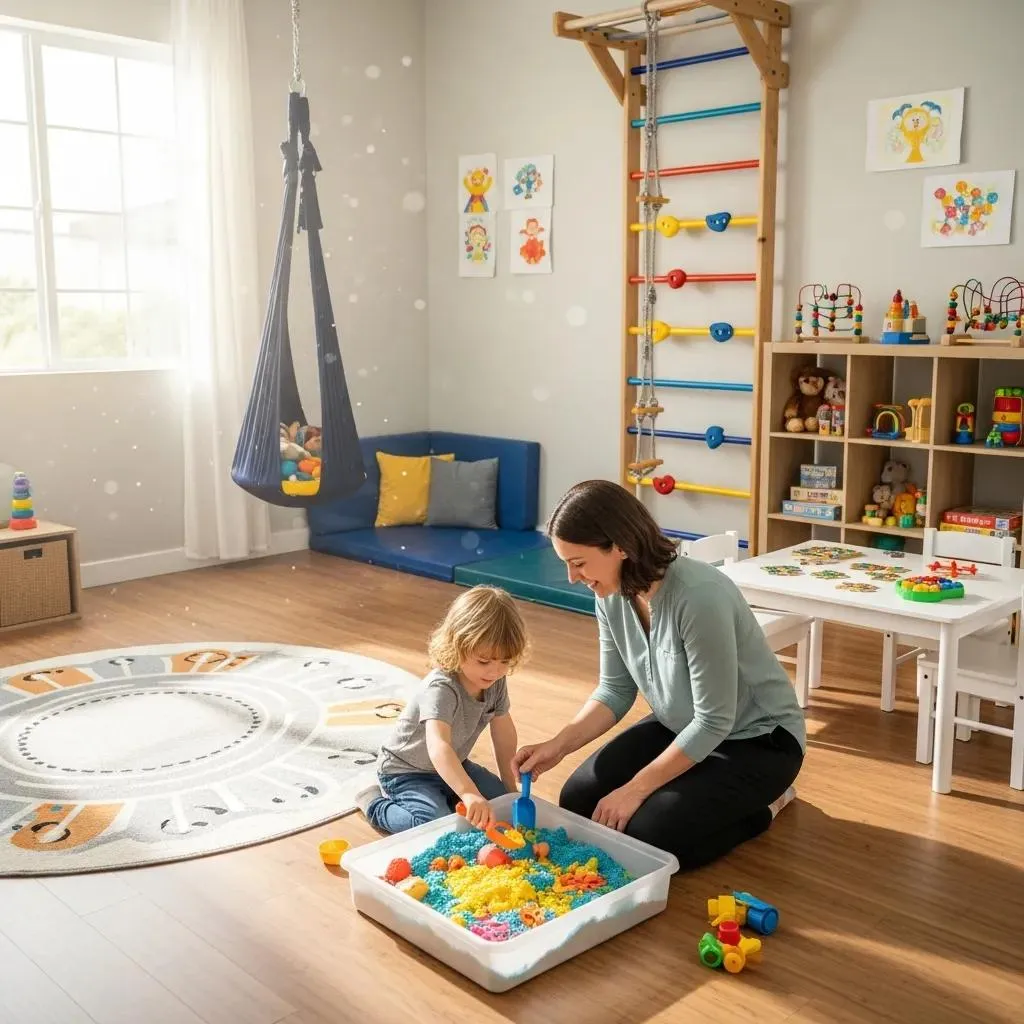
Unlocking Speech Skills Through Play-Based Learning
At Skill Point Therapy, a trusted leader in pediatric speech therapy with licensed clinicians who are members of the American Speech-Language-Hearing Association (ASHA), we specialize in evidence-based, play-centered approaches to help children improve their speech skills. In our clinical practice, we have observed that play-based learning creates a natural, engaging environment in which children can develop language through fun, meaningful interactions. This method supports children in learning new words, practicing sounds, and using language in real-life contexts, making therapy both effective and enjoyable.
This article explains key play-based methods, shares research, and offers easy activities for families and therapists. We want to show how play can make speech therapy more effective and enjoyable. If you wonder, “What is the best way to help my child with speech delays?” This guide will help you understand why play matters and how our licensed SLPs regularly use these strategies to support children’s communication growth.
Using play in therapy makes learning feel like fun, not work. Kids stay interested and practice more when they enjoy the activities. DIRFloortime is one way we do this by joining the child’s play and encouraging talking and interaction.
What Are the Core Speech Therapy Techniques Utilizing Play-Based Learning?
Play-based speech therapy uses games and pretend play to help children talk more. DIRFloortime is a key approach that lets the child lead the play while the therapist supports communication. This method helps kids feel safe and motivated to try new words and sounds.
Therapists and parents learn to follow the child’s interests and join their play. This builds emotional connection and makes language learning natural. Pretend play and interactive games, then focus on specific speech goals in fun ways.
By using play that children enjoy, therapy becomes less like a lesson and more like a game. This helps kids practice talking without feeling pressured. DIRFloortime supports this by encouraging back-and-forth communication during play.
How Does Play-Based Learning Enhance Speech Development?
Play-based learning creates a lively space where children use words and sounds often. Storytelling and role-playing help kids practice talking in real-life situations. DIRFloortime adds to this by following the child’s lead and encouraging natural conversation.
Can Play Therapy Really Improve My Child’s Communication Skills?
Yes, play therapy helps children use language in ways that feel real and fun. It builds skills such as vocabulary, sentence structure, and social skills. DIRFloortime uses play to make these skills grow naturally and happily.
Which Evidence-Based Play Activities Support Speech Skill Acquisition?
Research shows that pretend play, turn-taking games, and reading together help kids learn language. Games like Simon Says and charades improve listening and speaking skills. Shared reading introduces new words and ideas in a fun way.
DIRFloortime uses these activities by letting the child choose what to play and talk about. This keeps the child interested and helps them practice speech naturally. These methods work best when done regularly and with support from adults.
Studies from the American Speech-Language-Hearing Association (ASHA) support the use of play to boost speech skills. They show that children learn better when therapy feels like play and is child-led.
Specific Play-Based Therapy Techniques
1. DIRFloortime with Step-by-Step Application
DIRFloortime is a developmental, individual-difference, relationship-based model that emphasizes following the child’s lead to build communication and emotional connections. The therapist or parent joins the child’s play and encourages interaction through these steps:
- Observe and Follow the Child's Lead: Watch what interests the child and join in their play without directing it.
- Engage and Expand: Add language, sounds, or gestures related to the child's play to encourage communication.
- Challenge and Encourage: Gently prompt the child to use new words, sounds, or social interactions, such as turn-taking or requesting.
- Build Complexity: Gradually increase the complexity of language and play scenarios as the child progresses.
- Support Emotional Connection: Use affect and shared enjoyment to strengthen the child's motivation to communicate.
Based on our experience working with children at Skill Point Therapy, this approach is flexible and adapts to each child’s developmental level and interests, making therapy feel natural and engaging.
2. Symbolic Play Intervention with Age-Appropriate Activities
Symbolic play involves using objects, actions, or ideas to represent other objects or concepts, which is crucial for language development. Therapists use age-appropriate activities such as:
- For Toddlers (2-3 years): Simple pretend play like feeding a doll, using toy phones, or imitating daily routines.
- For Preschoolers (3-5 years): Role-playing scenarios such as grocery shopping, cooking, or doctor visits with props.
- For Early School Age (5-7 years): Storytelling with puppets, creating imaginative stories, and cooperative play with peers.
These activities encourage children to use language creatively and practice new vocabulary and sentence structures in meaningful contexts.
3. Joint Attention & Shared Engagement Strategies Using Toys and Games
Joint attention is the shared focus of two individuals on an object or event, and it is foundational for language learning. Strategies include:
- Using Highly Motivating Toys: Select toys that capture the child's interest, such as bubbles, cars, or musical instruments.
- Following the Child's Gaze and Gestures: Respond to where the child is looking or pointing to engage them in shared activities.
- Turn-Taking Games: Play simple games, such as rolling a ball back and forth or passing a toy, to encourage reciprocal interaction.
- Modeling Language: Use simple, clear language to describe actions and objects during play to build vocabulary.
Our licensed SLPs regularly use these strategies to help children develop the social communication skills necessary for effective speech and language use.
Real-World Case Study Examples
Case Study 1: Progress in a 3-Year-Old with Minimal Verbal Output
A 3-year-old child with minimal verbal output began play-based therapy using DIRFloortime. Initially, the child used mostly gestures and single words. Over 8 weeks of twice-weekly sessions, the therapist followed the child’s interests in cars and animals, engaging in symbolic play and joint attention with the child’s activities.
By the end of the intervention, the child demonstrated measurable progress, including the use of 2-word combinations (e.g., “go car,” “big dog”) and increased spontaneous vocalizations during play. Parents reported improved communication at home and greater social engagement with peers.
Case Study 2: Enhancing Social Communication in a 5-Year-Old with Autism
A 5-year-old diagnosed with Autism Spectrum Disorder participated in a 12-week play-based therapy program focusing on joint attention and shared engagement strategies. Using motivating toys and turn-taking games, the therapist encouraged eye contact, requesting, and conversational turn-taking.
Post-intervention assessments showed significant improvements in social communication skills, including increased initiation of joint attention bids and improved use of functional language during play. The child also demonstrated reduced anxiety during social interactions.
What Are the Benefits of Play-Based Learning in Speech Therapy?
Play-based therapy makes children more interested and excited to join sessions. This helps them learn and remember speech skills better. DIRFloortime fosters emotional connection, helping kids feel safe and ready to communicate.
Using play also helps children grow socially and emotionally. They learn how to take turns, share ideas, and understand feelings. These skills support speech and make everyday talking easier.
Compared to traditional drills, play-based therapy feels more real and less stressful. Kids practice talking in ways they use every day. DIRFloortime helps reduce anxiety by making therapy feel like fun playtime.
How Does Play-Based Learning Improve Speech Outcomes Compared to Traditional Methods?
Play-based methods keep children more focused and willing to try new words. They get to use language in real situations, not just repeat sounds. DIRFloortime supports this by encouraging natural back-and-forth talk during play.
What Should I Look For in a Speech Therapist for My Child?
Look for therapists who use child-led, play-based approaches like DIRFloortime. They should follow your child’s interests and make therapy fun. This helps your child feel comfortable and eager to learn.
What Role Does Early Intervention Play in Maximizing Therapy Benefits?
Starting therapy early helps children learn to speak during important growth periods. Therapists create plans that fit each child’s needs and work with families to practice at home. DIRFloortime is great for early intervention because it grows with the child’s interests and skills.
Which Speech Development Activities Are Most Effective for Children?
Good activities include reading together, singing songs, and talking about daily routines. These give children many chances to hear and use new words. DIRFloortime uses these activities in playful ways that keep kids engaged.
Interactive play, such as pretend games and storytelling, helps children practice talking and listening. Taking turns and using sounds in games builds important speech skills. DIRFloortime encourages these activities by following the child’s developmental lead and joining their play.
Research shows that children who play and talk in real situations improve their speech faster. The National Institute on Deafness and Other Communication Disorders (NIDCD) supports the use of play to help language grow naturally.
What Interactive Play Activities Promote Child Language Development?
Pretend play, group stories, and sound games help kids use language in fun ways. Taking turns in these activities teaches social talking skills. DIRFloortime uses these games to build both understanding and speaking.
How Does Play Help Children Learn to Talk?
Play gives children a chance to try new words without pressure. It makes learning feel like fun instead of work. DIRFloortime uses play to help children express themselves and connect with others.
How Can Therapy Progress Be Tracked Through Play-Based Methods?
Therapists watch how children play and talk during sessions to see progress. They keep notes and use tests to check skills over time. DIRFloortime therapists adjust activities based on what the child needs next.
How Can Families and Healthcare Professionals Support Speech Skills Through Play?
Families and therapists work best when they share goals and use the same play strategies. Practicing speech skills at home and in therapy helps children learn faster. DIRFloortime encourages this teamwork by involving parents in the play.
Parents can help by having daily talks, reading books, and praising efforts to speak. Using language during everyday activities gives kids many chances to practice. DIRFloortime shows parents how to join play and support talking naturally.
Therapists create plans that match each child’s interests and goals. They use play that the child enjoys to keep sessions fun and effective. DIRFloortime fits well here because it follows what the child wants to do.
What Strategies Can Parents Use to Reinforce Speech Development at Home?
Parents should talk often with their child and read together every day. They can ask questions and encourage the child to describe what they see or do. DIRFloortime teaches parents to join play and help their child use words.
How Do Healthcare Professionals Integrate Play-Based Learning in Therapy Plans?
Therapists design fun activities that match the child’s age and interests. They use play to practice speech goals in ways the child enjoys. DIRFloortime helps therapists follow the child’s lead and build communication step by step.
What Conditions Does Skill Point Therapy Treat Through Play-Based Speech Therapy?
Many children struggle with speech clarity and sound production. Skill Point Therapy offers articulation therapy and treats phonological disorders to help kids speak clearly. We also support children with childhood apraxia of speech, using play to build precise muscle movements and sound sequencing naturally.
Delays in understanding and using language can make communication hard. Our therapy addresses expressive and receptive language delays by expanding vocabulary and sentence skills. We also help children follow directions and understand WH-questions through engaging play activities that feel like fun, not work.
Social Communication (Pragmatics)
Talking with others involves more than words. We teach social skills like turn-taking, conversational skills, and perspective-taking in both individual and group settings. Play helps children learn nonverbal communication, problem-solving in social situations, and peer interaction skills naturally.
Children with Autism often need extra help with communication. Our play-based approach supports joint attention skills and uses AAC (Augmentative & Alternative Communication) when needed. We also provide support for Gestalt language processing, helping children build meaningful communication step by step.
Stuttering and voice disorders can affect a child’s confidence. We offer stuttering therapy and fluency shaping through playful activities that reduce stress. Voice therapy is also available to help children use their voices clearly and comfortably.
Speech and feeding skills are closely linked. Our oral motor therapy strengthens the muscles needed for talking and eating. We provide feeding therapy and swallowing support to ensure children develop these important skills in a safe, playful environment.
What Are the Latest Research Insights and Case Studies on Play-Based Speech Therapy?
Recent studies show that play-based speech therapy helps children learn language better than traditional methods. Kids improve their vocabulary, sounds, and social talking skills. DIRFloortime is often part of these successful programs because it uses child-led play.
Research also finds that children who enjoy therapy stay motivated and make bigger gains. Play-based methods reduce stress and help kids use language in real life. These findings come from many studies, including those by ASHA and other experts.
Case studies show that children improve their speech sounds and words after play-based therapy. Games that focus on sounds help kids fix mistakes and talk more clearly. DIRFloortime supports this by making therapy feel like play rather than work.
What Recent Data Demonstrates the Effectiveness of Play-Based Speech Therapy?
Data from many studies show that children who get play-based therapy learn more words and talk better. They also use language more often in social situations. DIRFloortime is a key approach in these studies because it follows the child’s interests.
How Do Case Studies Illustrate Measurable Speech Improvements Using Play?
Case studies track how children improve in speech after play-based therapy. They show better pronunciation, a larger vocabulary, and more social talk. DIRFloortime helps by making therapy fun and child-centered.
How Can Prospective Clients Schedule a Play-Based Speech Therapy Consultation?
If you want to help your child with speech, you can schedule a consultation. This meeting will review your child’s needs and set goals. At Skill Point Therapy, we use DIRFloortime and other play-based methods to help children talk better.
Contact Skill Point Therapy to start the process. The first step is an evaluation to understand your child’s speech skills. Then, therapists create a plan that fits your child’s needs and interests.
For more information or to book a session, visit our website or call us. We are here to support your child’s speech journey with warm, expert care.
What Is the Process to Contact SkillPoint Therapy for Speech Services?
Reach out to Skill Point Therapy by phone or online to begin. We will schedule an intake and discuss your child’s needs. Our team will guide you through the evaluation and therapy planning.
What Should Families Expect During Initial Therapy Sessions?
First sessions focus on making your child comfortable and observing their speech. Therapists use play to see how your child communicates. Families learn ways to support speech at home between sessions.
For additional information or to arrange a consultation, stakeholders may reach out directly.
Frequently Asked Questions
What age group benefits most from play-based speech therapy?
Play-based speech therapy works best for children ages two to seven. This is when language skills grow quickly. Older kids with speech delays can also benefit if therapy is tailored to their needs.
How can caregivers create a play-based learning environment at home?
Caregivers can use pretend play, such as with stores or puppets, to encourage talking. Asking open-ended questions during daily routines helps build vocabulary. Using play to practice speech makes learning fun and natural.
Are there specific toys or games recommended for enhancing speech skills?
Toys that encourage imagination, like dolls and playsets, help kids tell stories. Board games and interactive books also support talking and turn-taking. These tools make speech practice enjoyable.
What role do siblings play in supporting speech development through play?
Siblings offer natural chances to talk and play together. They model language and help with social skills. Playing with brothers or sisters encourages kids to use words and share ideas.
How can technology be integrated into play-based speech therapy?
Technology can add fun with apps and games that focus on speech sounds and words. Video calls let therapists guide play from a distance. But hands-on play remains important for learning.
What signs indicate that a child may need speech therapy?
Look for trouble with sounds, small vocabulary, or difficulty making sentences. Avoiding talking or not following directions can also be signs. A speech-language pathologist can help if you notice these issues.
Play-based learning helps children improve speech by mixing fun activities with clear language goals. When families and therapists use play and DIRFloortime together, children make strong progress. This approach also supports social and emotional growth, making communication easier every day.
If you want to help your child speak better, Skill Point Therapy is here for you. We have offices in Tampa and Brandon, FL, ready to welcome your family. Call us today at 813-491-8300 to talk about your child’s needs and start a joyful speech journey.
This article was written by a licensed Speech-Language Pathologist (CCC-SLP) at Skill Point Therapy, a proud member of ASHA. Our clinicians bring years of clinical experience and a commitment to evidence-based practice in pediatric speech therapy. For a full author bio and more about our team’s qualifications, please visit our website.