
Typical Developmental Stages by Age: A Practical Guide to Childhood Milestones and Early Support
This guide outlines typical developmental stages by age and highlights the key milestones in motor skills, speech and language, and social-emotional growth. Understanding these markers helps caregivers encourage progress and notice possible delays sooner. You’ll also find a brief overview of pediatric therapy approaches—like DIRFloortime—advice on when to consider occupational or speech therapy referrals, and local resources for families in Tampa and the greater Tampa Bay area.
What Are the Key Developmental Milestones in Early Childhood?
Developmental milestones are observable skills or behaviors most children reach by certain ages. Clinicians organize them into domains—motor, communication, and social-emotional—to monitor progress and identify when extra support may help. Regular check-ins give caregivers and professionals a clear picture of where to focus, especially for Tampa Bay families looking for practical next steps.
Which Motor Skills Should Children Achieve by Age?

Motor skills include gross motor (whole-body movements) and fine motor (hand and finger precision). Typical patterns include sitting and starting to crawl by about 12 months, walking and early running by 24 months, and more confident climbing and kicking by 36 months—milestones commonly seen in children across Tampa, FL [1].
- By age 4: Most children can hop and often stand on one foot for a couple of seconds.
- By age 5: Many will use a fork and spoon independently and begin forming some letters when writing.
These motor abilities support daily independence. Pediatric therapy in Tampa often focuses on the building blocks of everyday tasks so families can help their child participate more fully at home and in community activities.
What Are Typical Speech and Language Milestones by Age?

Speech and language form the foundation for communication and social interaction. Common benchmarks include first words around 12 months, two-word combinations by 24 months, and an expanding vocabulary with three-word sentences by 36 months—about 200 words is a typical target per ASHA guidance [3].
- By age 4: Children generally speak in longer sentences and use more complex grammar.
- By age 5: They can tell a simple story and start using verb tenses that support school readiness.
Keeping track of these milestones helps spot communication delays early and guides planning for interventions that support social and academic participation—areas pediatric therapy in Tampa frequently addresses.
How Do Social and Emotional Development Stages Progress in Children?
Social and emotional development is about how children connect with others and manage feelings—skills that support relationships and everyday social expectations. These abilities build gradually and are an important focus for families across the Tampa Bay region.
What Social-Emotional Skills Are Expected at Different Ages?
Social-emotional skills emerge over time: by 12 months, many children show secure attachment and may protest separation from caregivers; by 24 months, they often engage in parallel play and begin to notice other children.
- By age 3: Children can express a wider range of emotions and begin to recognize how others are feeling.
- By age 4, they engage in more cooperative play and can begin sharing toys with peers.
These skills form the foundation for healthy relationships and ongoing emotional well-being—areas that local Tampa families frequently address with community supports and pediatric therapy.
How Does DIRFloortime Support Social and Emotional Growth?
DIRFloortime is a relationship-based approach that centers on emotional engagement. Caregivers follow the child’s lead and respond to cues to strengthen the connection and build communication.
- Child-led interactions: Letting the child set the activity encourages curiosity and a sense of safety.
- Dynamic interactions: Meeting the child where they are supports regulation and social skills.
By shaping play and interaction around the child’s interests, DIRFloortime validates feelings and promotes back-and-forth engagement—an approach used by pediatric therapy providers across Hillsborough County and the Tampa Bay area.
When Should Parents and Professionals Recognize Signs of Developmental Delay?
Spotting possible developmental delays early creates opportunities for timely evaluation and support. Delays may appear in motor, speech, or social-emotional areas and should prompt further assessment—especially for Tampa Bay parents who are tracking milestones closely [2].
What Are Common Indicators of Speech and Motor Delays?
Common signs that a child may benefit from further evaluation include:
Early identification opens the door to prompt intervention, which is linked to better developmental outcomes and is an important consideration for families in Tampa and the greater Tampa Bay area [1][2].
How Does Early Identification Improve Long-Term Outcomes?
Finding delays early often leads to stronger long-term results. Faster access to services gives families practical strategies and connects children to supports that help them make steady gains.
- Timely intervention benefits: Children who receive early support frequently show meaningful improvements in their developmental trajectories.
- Empowerment for families: Understanding a child’s needs helps families advocate for appropriate services and supports.
Addressing concerns early improves developmental outcomes and is a core focus of pediatric therapy in the Tampa Bay community.
Research supports the value of early identification and comprehensive assessment for developmental concerns.
Timely Identification & Assessment of Developmental Delay
This paper reviews how common developmental delays are and summarizes evidence that early screening and identification lead to better outcomes. It outlines a practical clinical approach and methods to investigate the causes of developmental delay.
Developmental delay: Timely identification and assessment, 2010
What Are the Benefits and Expectations of Pediatric Therapy Sessions?
Pediatric therapy offers targeted strategies to address specific developmental challenges and promote measurable progress. Families in Tampa and the greater Tampa Bay area often turn to these services to support daily skills and participation.
How Does Occupational Therapy Support Toddlers’ Development?
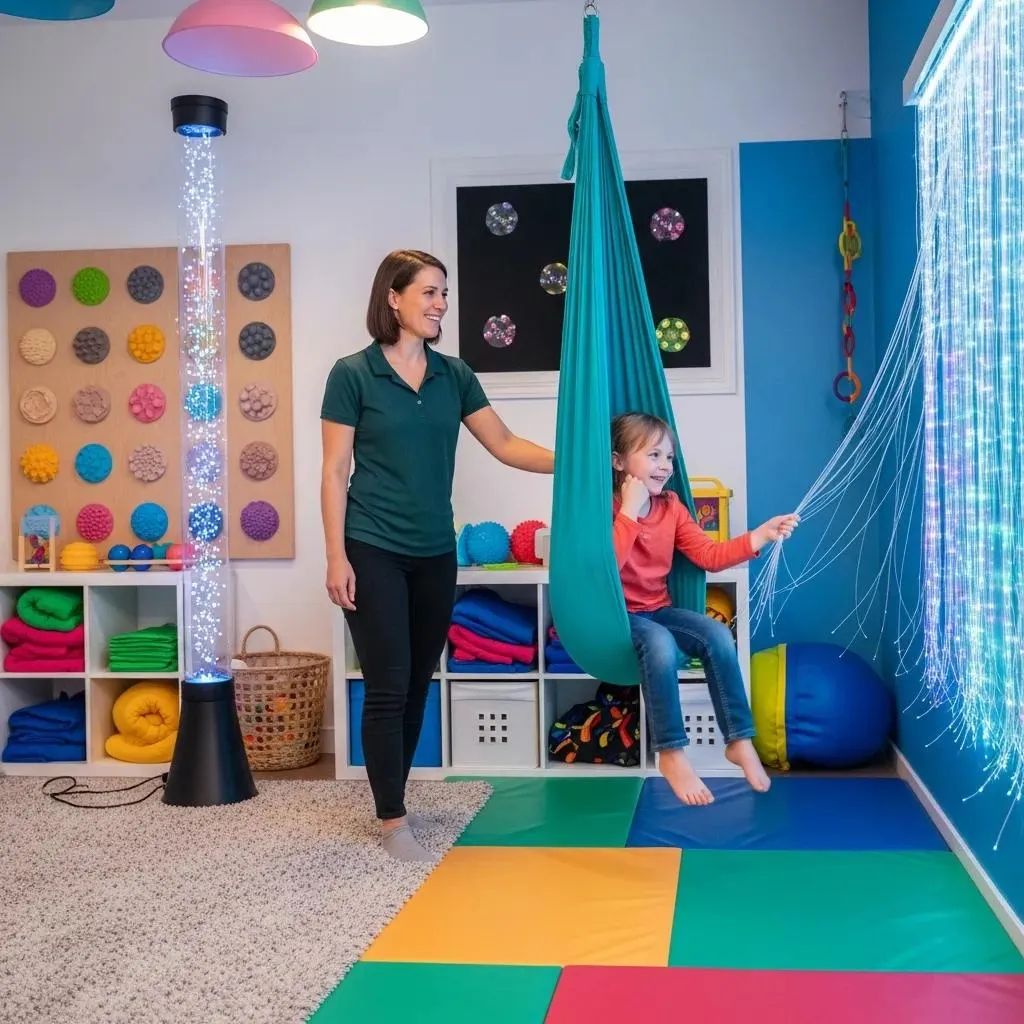
Occupational therapy concentrates on daily living skills, fine motor control, and sensory processing to help toddlers grow more independent.
- Fostering independence: Therapists teach practical routines, such as dressing and feeding, so children can meet more of their own needs and build confidence.
- Enhancing motor skills: Play-based activities develop coordination, strength, and self-assurance.
Occupational therapy often helps children manage daily routines more easily—an outcome many Tampa families value.
What Is the Role of Speech Therapy in Early Childhood?
Speech therapy targets articulation, receptive and expressive language delays, and social communication so children can connect with others and participate more fully.
- Enhancing communication skills: Therapists use targeted activities to improve clarity, comprehension, and expressive language.
- Addressing speech disorders: Early work can reduce long-term communication challenges and support school readiness.
Speech therapy helps children express their needs and build relationships—a service many families in Tampa and the greater Tampa Bay area access [3].
How Is the DIRFloortime Approach Applied in Pediatric Therapy?
DIRFloortime is a child-centered method that emphasizes emotional connection and developmental growth; it’s commonly used with children who have developmental or neurodevelopmental differences.
What Principles Define DIRFloortime Therapy?
DIRFloortime follows several guiding principles:
- Developmental focus: Therapy is adjusted to the child’s current developmental level.
- Child-led interactions: Children guide play, building engagement and motivation.
- Holistic approach: The method addresses emotional, social, and cognitive growth together.
These principles form a flexible framework that supports developmental learning and progress, and are used by pediatric therapy providers throughout Hillsborough County and the Tampa Bay region.
How Does DIRFloortime Enhance Child Development?
DIRFloortime strengthens emotional engagement and guided exploration to grow social-emotional skills and functional abilities.
- Stronger communication skills: Children learn ways to share thoughts and feelings more clearly.
- Improved emotional regulation: The approach supports better management of emotions and reactions in social situations.
By prioritizing the child’s emotional needs, DIRFloortime can produce measurable gains in social and communication abilities. Research continues to explore its effectiveness, particularly for communication outcomes in children with developmental challenges.
DIR/Floortime Intervention for Communication Skills
The DIR/Floortime approach shows promise for improving communication, though evidence in classroom settings is limited. This single-subject A-B-A’ reversal study examined DIR/Floortime effects on a 10-year-old male student with ASD.
Effectiveness of DIR/
Floortime Intervention on Communication Skills Development in Elementary School Students with Autism Spectrum Disorder, S Sukinah, 2025
What Resources and Support Are Available for Early Childhood Development?
Families in the Tampa area can access developmental evaluations, therapy services, and evidence-based materials to support early childhood development.
Where Can Parents Schedule a Pediatric Therapy Evaluation?
Parents may schedule a pediatric therapy evaluation with local providers to review developmental status and identify areas that would benefit from targeted supports. These evaluations are available to families throughout Tampa and the greater Tampa Bay area.
- Contact number for scheduling: Reach out to local providers to learn about evaluation steps, insurance, and availability.
What Educational Materials Explain Developmental Milestones?
Trusted materials—like milestone checklists and clear guides—help caregivers know what to expect and how to support each stage.
- Developmental milestones checklist: A practical tool to track progress and flag concerns.
- Guides on key milestones: Step-by-step tips and simple strategies families can use at home.
Using validated resources lets caregivers follow evidence-based practices and confidently monitor progress. Milestone tracking also helps clinicians with early detection and referral for Tampa Bay families.
Research supports the usefulness of parent-led monitoring tools for early detection of developmental concerns.
Parent Tracking of Developmental Milestones for Early Detection
Parents’ tracking of milestones can help clinicians spot concerns and refer children for intervention. This feasibility study examined which milestones parents tracked and what they added via a crowdsourced mobile app.
The feasibility of a crowd-based early developmental milestone tracking application, A Ben-Sasson, 2022
Frequently Asked Questions About Child Development
What are the typical developmental milestones for a 2-year-old?
By age 2, many children put two words together, have a vocabulary of roughly 50 words, and walk and run with increasing confidence. Socially, they often play alongside other children (parallel play) and show more independence—useful markers for Tampa Bay parents monitoring growth.
How do I know if my child’s development is on track?
Regular developmental screenings at well-child visits are a primary way to monitor progress. Watch for red flags like delayed speech or motor skills, and if you’re concerned, consult Skill Point Therapy or your pediatrician for an evaluation and guidance on next steps.
At what age should a child start talking?
Many children say their first words around 12 months and begin combining words between 18 and 24 months, according to ASHA. If you notice delays, early speech therapy in Tampa can provide timely support.
What should I do if I’m concerned about my child’s development?
If you observe delays or unusual behaviors, seek an early evaluation. Skill Point Therapy in Tampa offers comprehensive assessments and individualized therapy plans to help your child make progress.
Support Your Child’s Development with Skill Point Therapy in Tampa
Every child develops at their own pace, and the right support can make a real difference. At Skill Point Therapy, our pediatric therapists in Tampa, FL, partner with families to help children reach important milestones—from early speech and motor skills to social-emotional growth. If you have questions or concerns about your child’s development, contact Skill Point Therapy to schedule an evaluation and begin a plan tailored to your child’s needs. We proudly serve families across Tampa, Brandon, Riverview, and the greater Tampa Bay area.
Conclusion
Understanding typical developmental stages helps caregivers support their child and spot potential delays earlier. By watching motor, speech, and social-emotional milestones, families can make informed decisions about interventions and local resources. If you have concerns, consider scheduling a pediatric therapy evaluation to confirm your child is on a healthy developmental path. Take the first step to support your child’s growth with Skill Point Therapy.
References
- Centers for Disease Control and Prevention (CDC). Developmental Milestones. Retrieved from https://www.cdc.gov/ncbddd/actearly/milestones/index.html
- American Academy of Pediatrics (AAP). Developmental Surveillance and Screening. Retrieved from https://www.aap.org
- American Speech-Language-Hearing Association (ASHA). Speech and Language Developmental Milestones. Retrieved from https://www.asha.org/public/speech/development/