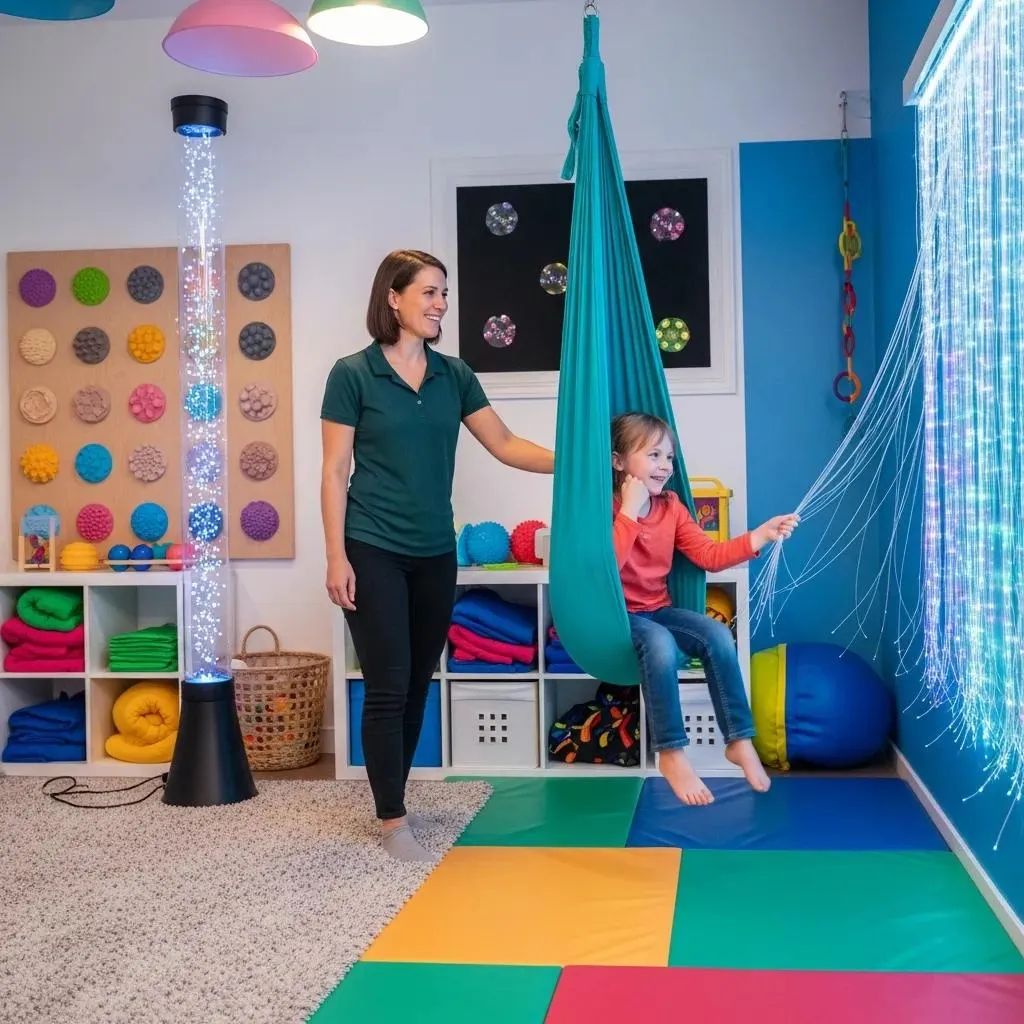

For over 20 years, I’ve had the privilege of working as a pediatric occupational therapist, helping children with sensory processing disorder find ways to thrive in their daily lives. At our Tampa and Brandon offices, we utilize the child-led DIRFloortime approach, which combines fun and effectiveness while honoring each child’s unique needs and interests. By focusing on children’s occupational therapy sensory strategies, we aim to create safe and meaningful opportunities for growth and development.
Sensory strategies are powerful tools that support children in regulating their emotions, attention, and behavior, enabling them to succeed in various settings, including home, school, and the community. For example, a child who struggles with loud noises may benefit from noise-canceling headphones during busy activities. At the same time, another might use a weighted lap pad to stay calm and focused during mealtimes or homework. Research indicates that nearly one in six children experience sensory challenges, making supportive interventions both necessary and impactful.
Parents often tell me how much more confident their children feel once they have the proper support in place. That’s why we involve caregivers every step of the way, ensuring therapy strategies can be reinforced at home and in everyday routines. With individualized guidance, an effective sensory strategy can unlock opportunities for improved communication, stronger relationships, and increased independence for your child.
Key Takeaways
- Tailored sensory strategies must be developed through comprehensive assessments that identify each child’s unique sensory processing needs and preferences.
- Incorporating a structured sensory diet with regular, balanced activities supports children’s self-regulation and enhances their ability to manage sensory inputs effectively.
- Engaging caregivers in the therapeutic process fosters supportive environments that improve children’s emotional control and overall progress in therapy.
- Utilize evidence-based tools, such as the Sensory Profile 2 and the Pediatric Evaluation of Disability Inventory, to accurately track progress and measure functional gains effectively.
- One-on-one sensory integration therapy sessions generally yield better outcomes compared to group interventions, underscoring the importance of individualized approaches.
Understanding Sensory Integration in Pediatric OT
Although sensory integration is a complex neurological process, it plays an essential role in how children interact with their environment. It involves organizing sensory inputs from multiple modalities, including the five senses, the vestibular system, and the proprioceptive systems. Dysfunction in sensory integration can lead to challenges reflected in Sensory Processing Disorder, impacting learning, behavior, and motor skills.
Children’s occupational therapy sensory strategies involve tailored assessments and interventions designed to improve sensory processing abilities. Therapists utilize engaging, play-based activities and distinct equipment to create effective therapy plans. By addressing sensory integration deficits, these strategies aim to enhance children’s adaptive responses, thereby fostering better impulse control, improved social interactions, and more complete functional outcomes in daily life.
Pediatric occupational therapists work collaboratively with families and educators to implement these strategies effectively, employing sensory integration therapy to help children integrate and respond to diverse sensory inputs.
Exploring the Effectiveness of Sensory Integration Therapy
Numerous studies have sought to evaluate the effectiveness of Sensory Integration Therapy (SIT) in pediatric occupational therapy, revealing a complex landscape of findings. While SIT has been utilized clinically for over 50 years, its research evidence is mixed, marked by a scarcity of robust studies. Several randomized controlled trials have shown positive short-term outcomes, especially in children with autism spectrum disorder, indicating improvements in self-care and social skills.
However, the durability of these effects beyond six months remains largely unexplored. With calls for more rigorous, large-scale research and diverse outcome measures, it becomes crucial to understand SIT’s personalization in addressing specific sensory challenges, reinforcing its role as a valuable adjunct in enhancing children’s functional capabilities. This approach can be particularly beneficial for individuals with sensory integration dysfunction, highlighting the need for tailored intervention strategies in therapy.
Additionally, implementing a sensory diet can further support children in managing their daily sensory challenges effectively.
Techniques for Sensory Processing Evaluation

When evaluating sensory processing challenges, particularly sensory defensiveness, occupational therapists utilize a range of standardized assessment tools that provide reliable data for informed intervention planning. These tools, such as the Sensory Integration and Praxis Tests (SIPT) and the Sensory Profile 2, provide critical insights into a child’s sensory profile and behaviors. Combining these formal assessments with observational techniques improves the understanding of each child’s distinct sensory needs and responses in everyday situations.
This comprehensive assessment is essential for clients with sensory integration differences, ensuring that intervention strategies are tailored to individual needs. Additionally, early detection of sensory issues plays a crucial role in creating effective treatment plans that address specific challenges.
Assessing Sensory Defensiveness
How can practitioners effectively assess sensory defensiveness in children? Initially, they can observe the child’s responses to various sensory stimuli in familiar environments, noting behaviors such as avoidance or distress associated with specific sensations. Detailed case histories provide insight into developmental milestones and sensory reactions during everyday routines.
Graded sensory exposure can reveal the child’s tolerance levels, while integrating tactile-rich activities helps promote acceptance of touch. Practitioners may also employ sensory defensiveness screening questionnaires to identify symptoms and their impact on functioning. These tools, combined with empirical observation, aid in formulating tailored intervention plans that address personal sensory processing challenges with compassion and precision, ultimately enhancing the child’s comprehensive well-being.
Understanding that tactile defensiveness is linked to sensory processing disorders can further inform the assessment process. Additionally, recognizing the role of sensory integration is crucial in developing effective strategies for managing sensory defensiveness.
Standardized Evaluation Tools
Practical evaluation of sensory processing challenges in children often employs standardized assessment tools that can provide a structured approach to understanding their sensory needs. These tools provide valuable insights into sensory processing through parent- and teacher-reported questionnaires, as well as clinical observations. Key evaluation options include:
- The Sensory Profile 2 (SP-2): A widely recommended tool evaluating sensory processing patterns in children aged 0-14. This tool is essential for identifying specific sensory challenges that can impact a child’s daily functioning.
- The Sensory Processing Measure-2 (SPM-2): Commonly used in schools, this tool is easy to administer with a short time commitment.
- Observation assessments: Tools like SOSI-M and COP-R provide authentic insights, enriching the evaluation process with qualitative data. Additionally, sensory assessment tools offer valuable insights into sensory sensitivities, informing the development of effective intervention strategies.
Combining these tools guarantees a thorough understanding of each child’s distinct sensory needs.
The Impact of Pediatric Occupational Therapy on Children With ASD
As children with Autism Spectrum Disorder (ASD) traverse a world filled with sensory challenges, the role of occupational therapy becomes increasingly crucial in fostering their development. OT improves sensory processing and regulation, helping children manage sensitivities and promote affective well-being. By utilizing strategies like sensory integration therapy, children can experience fewer meltdowns and greater success in social and self-care activities.
Furthermore, occupational therapy supports the development of motor skills, improving coordination and independence in daily tasks. Additionally, occupational therapy addresses unique challenges with fine and gross motor skills, empowering children with the skills necessary for social and educational participation. Tailored OT interventions not only enhance communication and social interactions but also build self-care abilities that notably raise a child’s quality of life.
Early and ongoing intervention guarantees the sustained gains necessary for their long-term success in maneuvering their environments, as early identification of sensory processing difficulties allows for timely and practical support.
Analyzing Quality and Evidence Levels of Sensory Interventions

The quality and evidence levels of sensory interventions significantly impact their perceived efficacy and outcomes for children. Current research methodologies reveal limitations that may affect the reliability of findings, underscoring the need for consistent tracking of outcomes to measure progress effectively. Moreover, variability in intervention practices underscores the importance of tailoring approaches to personal needs, ensuring that each child benefits from an optimized sensory experience.
Utilizing sensory integration therapy can help address specific sensory processing issues that a child may face, enhancing the overall effectiveness of these interventions. Incorporating structured sensory activities into therapy can further facilitate improved self-regulation and attention in children.
Research Methodology and Limitations
While traversing the landscape of sensory interventions in occupational therapy for children, it becomes evident that a rigorous research approach is crucial for evaluating the effectiveness of these strategies. The approach applied in studies reveals critical insights and limitations, underscoring the need for improved practices. Key considerations include:
- Adherence to systematic review protocols, such as PRISMA, ensures the quality of selection and synthesis.
- Use of grading systems, like GRADE, to evaluate the strength and quality of evidence.
- Research limitations, including small sample sizes and diverse sensory inputs, hinder the reproducibility and generalizability of the findings. Importantly, many studies suggest that children with autism often exhibit deficits in attention and self-regulation, highlighting the urgent need for tailored interventions. Engaging in sensory activities is crucial for enhancing children’s self-regulation and overall well-being.
These factors play a significant role in shaping the outcomes drawn from research, emphasizing the need for standardized protocols and robust approaches in future studies to enhance understanding of efficacy and inform interventions.
Intervention Variability and Efficacy
How do the diverse intervention approaches in sensory integration therapy influence their general effectiveness? The variability in sensory integration strategies has a significant impact on their outcomes. Strong evidence from Level I randomized controlled trials indicates that specific treatments can be effective in reducing stress markers in children with sensory modulation difficulties; however, variability in intervention designs and sample sizes often complicates the generalizability of findings.
Systematic reviews confirm the efficacy of sensory therapy for various diagnoses, yet they reveal inconsistencies across protocols. While one-on-one sessions yield better results than group interventions, a vital need exists for standardized practices to enhance the efficacy of therapy. Addressing these variabilities can lead to more effective occupational therapy interventions, ultimately fostering improved developmental and functional skills in children.
Additionally, understanding the sensory processing difficulties that affect children can enhance the development of targeted interventions.
Tracking Outcomes and Progress
Successful tracking of outcomes and progress in sensory interventions requires a multifaceted approach that prioritizes the use of standardized and evidence-based measurement tools. Utilizing a combination of objective and qualitative data is crucial to ensure a thorough evaluation. Effective tracking entails:
- Employing standardized assessments like the Pediatric Evaluation of Disability Inventory (PEDI) to measure functional gains.
- Monitoring sensory processing through tools such as the Short Sensory Profile.
- Regularly collecting data to assess the fidelity and effectiveness of interventions.
Recognizing the varying levels of evidence for different sensory strategies is critical. While some interventions show moderate efficacy, others demand more rigorous protocols and ongoing adjustments. This focus fosters informed decision-making, enhancing therapeutic impact on children’s lives.
Key Benefits of Sensory-Based Occupational Therapy

Numerous key benefits arise from sensory-based occupational therapy, particularly for children facing challenges in sensory processing. This therapy enhances sensory regulation, enabling children to respond more effectively to stimuli, which in turn fosters concentration and readiness to learn. Improved motor skills and coordination also result from engaging activities that promote independence in daily tasks.
Moreover, sensory therapy cultivates social skills by facilitating better communication and affective regulation, helping children navigate peer interactions more successfully. As children gain self-awareness and resilience in managing sensory overload, they experience sustained improvements in mood and behavior. Ultimately, sensory-based occupational therapy not only supports academic and social success but also enriches the overall quality of life for these children and their families.
Recommendations for Individualized Sensory Strategies
While each child has distinct sensory processing needs, developing customized sensory strategies is crucial for effective occupational therapy. Occupational therapists should utilize thorough assessments to understand a child’s singular profile, focusing on their sensitivities and needs. Recommendations for tailored sensory strategies include:
Customized sensory strategies are essential for effective occupational therapy, focusing on each child’s unique processing needs.
- Engaging in balanced vestibular and proprioceptive activities to support body awareness and self-regulation.
- Incorporating tactile and auditory stimulation tailored to the child’s specific sensory preferences to improve processing.
- Creating a structured sensory diet with scheduled sensory inputs throughout the day for peak regulation.
Engaging Parents and Caregivers in Sensory Integration Techniques

Engagement from parents and caregivers plays a crucial role in the effectiveness of sensory integration techniques within occupational therapy. Research shows that personalized coaching for parents improves their competence and reduces stress, enabling them to manage their child’s sensory processing challenges more effectively. Furthermore, group coaching sessions promote shared learning, enhancing caregivers’ knowledge and confidence in implementing sensory strategies.
When parents actively implement these techniques, family dynamics shift in a positive direction, leading to increased participation in daily activities. Occupational therapists benefit from developing structured educational resources that clarify sensory integration concepts, thereby encouraging collaboration with families. Ultimately, well-informed and engaged caregivers create supportive environments that enable children to thrive and develop self-regulation skills, ensuring meaningful and lasting progress in therapy.
Frequently Asked Questions
How Do I Know if My Child Needs Sensory Integration Therapy?
If a child exhibits persistent over- or under-reactivity to sensory stimuli, struggles with daily activities, or shows unusual responses that disrupt social interactions and learning, sensory integration therapy may be beneficial for their development and well-being.
What Should I Expect During a Sensory Integration Therapy Session?
During a sensory integration therapy session, children investigate tailored activities within a safe environment, promoting improved sensory processing. Studies show 70% of participants show improved self-regulation, fostering confidence and participation in everyday tasks through engaging play experiences.
Are There Age Limits for Starting Sensory Integration Therapy?
Yes, age limits exist for sensory integration therapy, typically targeting children aged 1 to 4 years old. This range aligns with developmental milestones, ensuring therapy is both practical and suitable for addressing sensory processing challenges at appropriate stages.
How do sensory strategies support a child’s social and emotional growth?
Sensory strategies help children manage overwhelming inputs, making it easier for them to engage calmly and confidently with peers and caregivers. Over time, this reduces frustration, builds resilience, and fosters meaningful social connections.
How Can I Adapt Sensory Strategies for Use at Home?
Adapting sensory strategies for home involves evaluating the child’s unique sensory needs, creating calming spaces, utilizing sensory tools, engaging caregivers in the implementation process, and maintaining regular communication with professionals to ensure customized support that improves the child’s overall well-being.
What Are Some Signs of Progress in Sensory Integration Therapy?
Signs of progress in sensory integration therapy include improved self-regulation, enhanced motor skills, improved social interactions, increased emotional resilience, and successful completion of daily tasks, all of which indicate a child’s growing ability to manage sensory experiences effectively.
Conclusion
In summary, children’s occupational therapy sensory strategies are most effective when they are both individualized and rooted in understanding each child’s unique way of experiencing the world. Just as tuning an instrument can create harmony, minor adjustments in therapy can help children build confidence and independence. With the DIRFloortime approach, these moments of progress often come through play, connection, and joy.
When parents and therapists work together, the impact of therapy extends far beyond the clinic. Caregivers gain tools they can use at home and in daily routines, making sensory support a natural part of family life. Over time, these collaborative efforts help build stronger self-regulation skills, improve social interactions, and increase resilience in children with sensory processing challenges.
Every child deserves the opportunity to thrive in their own unique sensory world, and with the proper support, meaningful progress is achievable. If you’d like to learn more about how child-led therapy works or discuss specific needs of your child, please reach out to Skill Point Therapy—we’re here to help.
References
- https://scholarworks.gvsu.edu/cgi/viewcontent.cgi?article=1003&context=ot_pediatrics
- https://pmc.ncbi.nlm.nih.gov/articles/PMC10955541/
- https://childmind.org/article/treating-sensory-processing-issues/
- https://pmc.ncbi.nlm.nih.gov/articles/PMC11302171/
- https://research.aota.org/ajot/article/76/Supplement_1/7610510189p1/23413/A-Systematic-Review-of-Sensory-Interventions-for
- https://www.unh.edu/inquiryjournal/blog/2021/11/exploration-strategies-enhancing-engagement-children-sensory-processing-challenges-during
- https://research.aota.org/ajot/article/77/Supplement 3/7713410230/25035/Sensory-Integration-Approaches-for-Children-and
- https://autism.org/sensory-friendly-strategies-at-home-p2/
- https://www.ncbi.nlm.nih.gov/books/NBK559155/
- https://www.understood.org/en/articles/what-is-sensory-integration-therapy