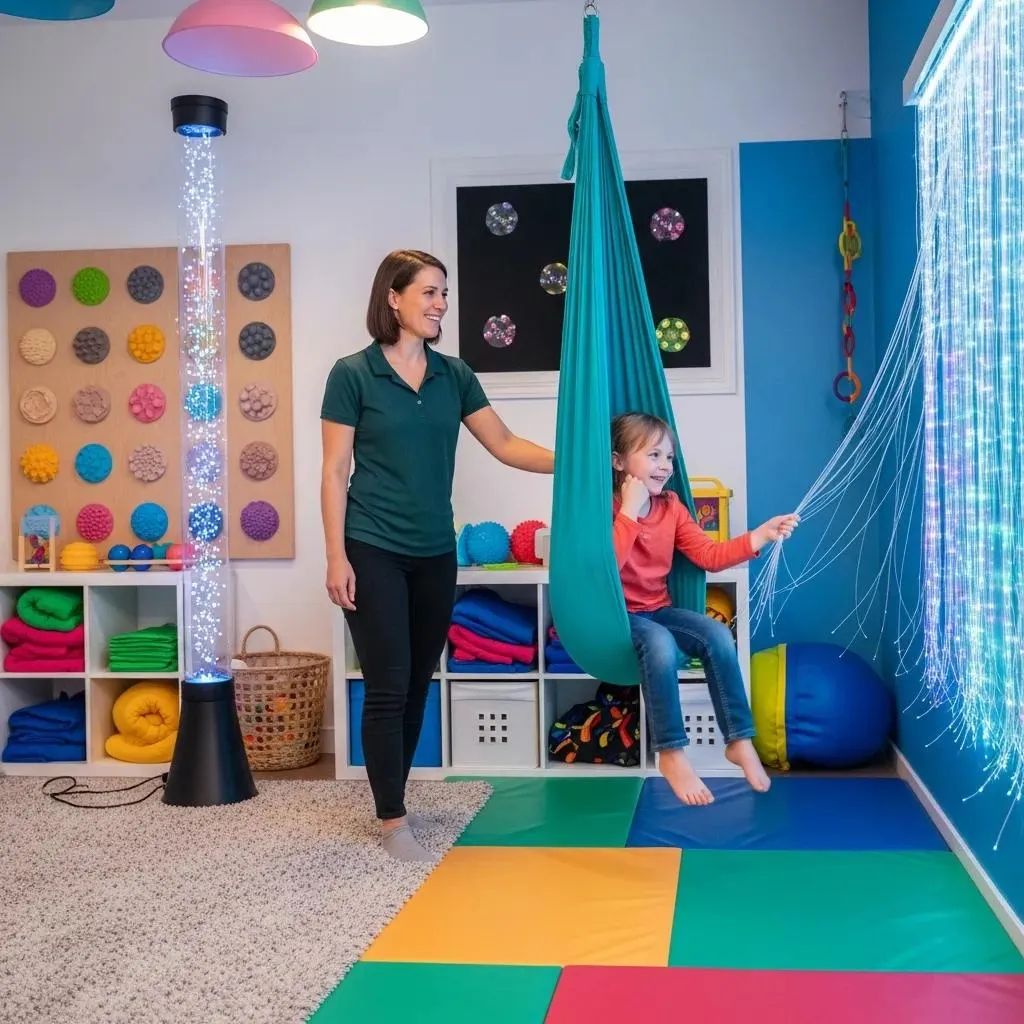

Simple sensory activities you can do at home can help your child grow in calm, steady ways, especially when love and patience guide each step. As a pediatric occupational therapist who uses DIRFloortime, I believe the best learning happens when children feel safe, supported, and understood. Research shows that sensory play can improve a child’s focus by almost 30%, which helps them succeed in everyday routines.
With patience and gentle encouragement, many DIRFloortime ideas can become part of your daily life. You might try slow, cozy swinging in a hammock to help your child relax and feel grounded. You can also create a small sensory bin with rice or beans, letting your child explore new textures at their own pace.
These moments work best when they are filled with warmth and connection. Try squeezing therapy putty during quiet breaks, stringing large beads together, or doing playful animal walks to build motor strength. When parents use loving, patient support during these sensory activities you can do at home, children feel more confident, regulated, and deeply connected to you.
Key Takeaways
- Create a sensory bin filled with rice, beans, or sand for tactile exploration and fine motor practice.
- Set up a swinging or rocking station using a hammock or swing to provide vestibular stimulation and improve balance.
- Engage in simple DIY obstacle courses using pillows and furniture to promote gross motor skills and problem-solving.
- Incorporate calming techniques, such as deep-pressure hugs and weighted blankets, to support relaxation during playtime.
- Use textured items, such as sponges or brushes, for hands-on activities to enhance fine motor skills and sensory awareness.
Easy Ways to Make Sensory Play Part of Your Day
Sensory play works best when it becomes a natural part of your child’s daily life. You don’t need to buy special tools; simple household items can provide significant sensory input. When children explore different textures, movements, and sounds, they build skills that help them stay calm and focused.
Parents can add short sensory breaks during regular routines, such as getting ready for school, doing homework, or winding down for bed. A few minutes of stretching, deep pressure, or movement can help children feel more settled and ready for the next activity. These small moments make it easier for kids to manage big feelings, transitions, and busy days.
Sensory play also builds confidence and strengthens your connection with your child. When you join in the activity, you show your child that learning can feel safe, fun, and supported. Over time, these shared experiences help children feel more comfortable in their bodies and more successful in daily life—both at home and in therapy.
Engaging in Vestibular Stimulation Activities

While engaging in vestibular stimulation activities, parents in Tampa can support their children’s sensory development and general wellbeing. These activities, fundamental to occupational therapy, improve balance, coordination, and spatial orientation by activating the vestibular system. Implementing simple exercises, such as swinging, rocking, and spinning, offers delightful opportunities for sensory regulation activities for toddlers.
Parents can guarantee safety by creating a hazard-free environment and supervising their children during practice. For peak benefits, it is vital to perform these exercises consistently, accommodating personal tolerance levels. Children may experience mild dizziness, which is normal, but monitoring is essential to ensure comfort.
Engaging in exercises like gaze stabilisation can further support children’s balance and coordination by enhancing their visual focus and overall stability.
Additionally, incorporating vestibular activities into daily routines fosters emotional regulation and helps children develop confidence in their physical abilities. As a result, families can promote children’s resilience and adaptability through engaging, therapeutic vestibular experiences. Implementing these activities can lead to improved self-regulation and emotional balance, essential for children with sensory processing difficulties.
Enhancing Fine Motor Skills Through Play
Enhancing fine motor skills through play is an essential aspect of child development that parents in Tampa can easily integrate into their daily routines. Engaging in sensory activities for kids in Tampa, such as manipulating therapy putty and crumpling paper, builds hand strength and dexterity. Activities like stringing beads and buttoning clothes promote coordination and precision.
Using tools like tweezers and scissors refines grip and enhances pincer skills. Structured play with blocks and puzzles helps develop fine-motor planning skills.
Furthermore, incorporating everyday tasks such as self-feeding and keyboard use reinforces these skills. Fine motor skills are crucial for academic readiness, and parents can consult pediatric occupational therapists to learn which sensory exercises they recommend, thereby ensuring a supportive environment that fosters independence and skill development. Additionally, engaging in container play can further enhance children’s ability to manipulate small items, supporting their overall fine motor development.
These activities not only promote skill progression but also address developmental delays that can impact a child’s learning journey.
Utilizing Calming Techniques for Sensory Regulation

Utilizing calming techniques for sensory regulation is crucial for children facing sensory processing challenges, as these strategies can provide much-needed comfort and stability. Parents can incorporate a range of approaches to create a calming environment:
- Deep Pressure Techniques: Use weighted blankets, compression clothing, or the Wilbarger brushing protocol for soothing input. Engaging in deep-pressure activities can enhance focus and relaxation, which are essential for emotional regulation in children.
- Tactile Sensory Activities: Offer sensory bins with different materials or engage in activities such as Play-Doh manipulation to foster calm.
- Visual and Auditory Strategies: Implement calming music and visual schedules to reduce anxiety and create predictability, especially since sensory issues can lead to heightened anxiety in children.
- Mindfulness Techniques: Practice grounding exercises like “4-3-2-1” or diaphragmatic breathing to improve internal calm.
These techniques enable children to navigate sensory overload while promoting self-regulation and wellbeing.
Supporting Gross Motor Development at Home
Supporting gross motor development at home is essential for children as they navigate significant milestones in physical growth. Parents can facilitate this by engaging in activities that target a range of skills. For infants, tummy time helps strengthen neck and trunk muscles. As children progress, encourage crawling through playful floor activities. For toddlers, activities such as wheelbarrow walks and animal walks improve coordination and core strength.
Setting up obstacle courses promotes motor planning and problem-solving. Games such as Simon Says improve body awareness, while sensory-motor activities can enhance communication and social interaction. Incorporating exercises such as sit-ups, planks, or yoga can further strengthen the core. Engaging in these activities can also help improve self-regulation skills, which are crucial for managing impulsivity.
Finally, playful challenges like standing on one leg or walking on uneven surfaces can improve balance and coordination, fostering physical competence and confidence in children. Additionally, engaging in activities that promote gross motor skills will help children safely navigate stairs by the time they start school.
Creating a Sensory-Friendly Environment

Creating a sensory-friendly environment is crucial for fostering comfort and engagement in children with diverse sensory needs. Parents can make thoughtful adjustments to their surroundings to effectively accommodate these needs.
- Lighting: Use soft, adjustable lighting to reduce visual overwhelm, as it can help children with sensory sensitivities feel more at ease. Additionally, incorporating sensory integration techniques can further enhance children’s adaptability to various lighting conditions.
- Soundproofing: Incorporate sound-absorbing materials, such as rugs and curtains, to reduce noise.
- Color Choice: Opt for neutral or calming colors, such as blue or lavender, to promote relaxation.
- Organization: Guarantee clear pathways and minimal clutter to decrease visual chaos. Implementing these changes can significantly enhance safety and predictability in the home environment.
How to Choose the Right Sensory Activities for Your Child
Choosing the right sensory activities starts with watching what your child enjoys and how their body reacts during play. Some children seek movement, while others prefer quiet, hands-on tasks. When you notice what helps them feel calm or excited, you can select activities that truly support their needs.
It helps to begin with simple ideas and see how your child responds. If they seem relaxed and focused, you can build on that activity and offer it more often. If they look stressed or pull away, gently try another option until something feels comfortable for them.
Parents can also mix calming and energizing activities throughout the day. A child who loves noise might enjoy drumming before transitioning to a soft, quiet activity, such as squeezing a stress ball. By choosing activities that match your child’s cues, you create a safe and supportive routine that helps them grow at their own pace.
Frequently Asked Questions
What Are Simple Sensory Activities You Can Do at Home?
These activities use everyday items to help kids explore touch, movement, and calming input. They build skills while keeping play fun and stress-free.
What simple Sensory Activities can you do at Home to Support Daily Routines?
They help children transition more smoothly, stay regulated, and participate with more confidence. A few minutes of sensory play can make mornings and evenings much easier.
How do I know if My Child Needs Sensory Activities?
A child may need sensory activities if they display signs of sensory processing challenges, such as extreme reactions to stimuli, excessive movement, clumsiness, difficulty shifting between activities, or atypical distress in specific environments or situations.
Can Sensory Activities Be Done Indoors?
Indoor sensory activities can flourish, like flowers in a sunlit room, offering growth and exploration. Engaging in tactile, vestibular, and calming tasks nurtures children’s development, fostering resilience and creativity while enhancing fine motor skills and self-regulation.
What Materials Are Safe for Sensory Bins?
Safe materials for sensory bins include decaf coffee grounds, dry rice, popcorn kernels, and natural items like acorns. Always supervise children to manage choking hazards and avoid toxic or potentially harmful substances during play.
How Often Should We Engage in Sensory Play?
Engaging in sensory play multiple times daily, preferably in brief 8-minute intervals, fosters a child’s development. Such regularity, like the steady rhythm of waves, nurtures balance and adaptation throughout their daily experiences.
Are There Budget-Friendly Sensory Activity Ideas?
Budget-friendly sensory activity ideas include DIY sensory bottles, textured boards, water play, and homemade slime. These creative projects utilize household items and encourage exploration, supporting development in visual processing, fine motor skills, and tactile experiences.
Conclusion
In every Tampa or Brandon home, parents can turn simple, everyday moments into meaningful opportunities for growth with loving attention and patience. When children lead the play, they show us what captures their curiosity, and we can gently weave sensory support into those interests. If your child loves cars, you might create a bumpy “road” with pillows for them to drive across, giving them calming movement input. If they enjoy water play, you can offer warm and cool cups of water to pour and compare, helping them explore soothing temperature and touch.
These child-led sensory moments help children feel seen, supported, and deeply connected to the people they love most. By following your child’s cues and adding small sensory elements, you create a safe and joyful space where they can learn, explore, and grow at their own pace.
If you have specific questions or would like ideas you can try at home, feel free to contact Skill Point Therapy—we’re always here to help.
References
- https://www.skillpointtherapy.com/strategies-recommended-for-autism/
- https://www.tampachildrenstherapies.com/occupationaltherapy
- https://gingerhealth.com/childrens-therapy/sensory-integration-therapy-for-adults-and-children/
- https://aaspeech.com/occupational-therapy-services/
- https://www.tampakidstherapy.com
- https://www.greeneggstherapy.com
- https://www.familyfirsttherapyinc.com/occupational-therapy-services/
- https://physioandexerciselab.com.au/top-8-vestibular-exercises/
- https://napacenter.org/vestibular-input/
- https://www.lumierechild.com/blog/child-therapy-vestibular-sensory-activities/