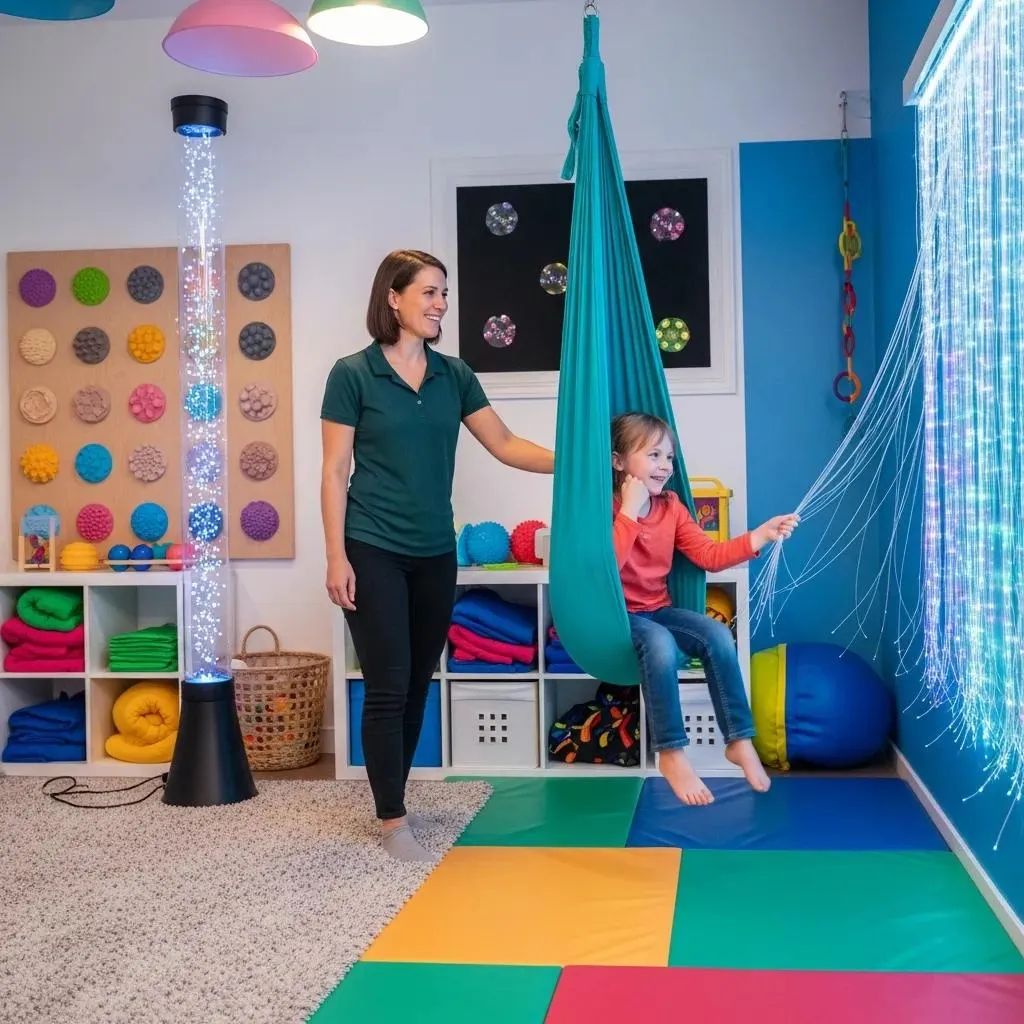

Sensory Therapy for Children provides compassionate, individualized support for kids who struggle to process everyday sights, sounds, and sensations. By creating a safe and nurturing environment, our therapists help children feel understood and empowered. Parents often tell us how relieved they feel when their child finally begins to make sense of the world around them.
At our Tampa and Brandon offices, we integrate DIRFloortime into all sensory-based programs because emotional connection enhances therapeutic progress. For example, a child practicing swinging activities may be more engaged and regulated when a caregiver joins the play and follows their lead. Another example is using a sensory bin alongside pretend play to strengthen both tactile processing and communication skills simultaneously.
When delivered consistently, Sensory Therapy for Children leads to meaningful improvements in behavior, emotional control, and social participation. In fact, research shows that more than 80% of children receiving individualized sensory interventions demonstrate measurable gains in functional participation. By combining evidence-based sensory activities with relationship-based DIRFloortime, children gain the confidence and regulation needed to thrive at home, school, and in the community.
Key Takeaways
- Sensory integration therapy addresses sensory processing difficulties in children, improving their daily functioning and social interactions through personalized techniques.
- Key techniques include proprioceptive input, vestibular activities, tactile stimulation, and auditory processing exercises that cater to individual sensory needs.
- A sensory diet balances alerting, calming, and organizing activities throughout the day to promote emotional regulation and prevent sensory overload.
- The assessment process involves caregiver interviews and direct observation, helping create individualized sensory profiles for effective intervention.
- Documented outcomes show that sensory therapy enhances social participation and reduces behavioral challenges, leading to improved overall wellbeing in children.
Understanding Sensory Integration Therapy
Understanding sensory integration therapy (SIT) is crucial for recognizing its role in addressing the distinctive challenges faced by children with sensory processing difficulties. This specialized sensory therapy for children enables them to effectively process multiple sensory inputs, such as touch, sight, and sound, which can impact behaviors, affect regulation, and play. Specifically tailored by occupational therapists, SIT is especially beneficial for children diagnosed with conditions like autism or ADHD and is historically rooted in the work of A. Jean Ayres, SIT aims to improve sensory integration, fostering enhanced social interactions, daily functioning, and academic performance.
Notably, it often focuses on helping individuals with sensory processing difficulties to improve their overall sensory integration skills. Personalized interventions are essential for effective SPD management and play a crucial role in navigating daily life comfortably. Although skepticism exists, SIT continues to offer a valuable approach to help children develop confidence and navigate their environments more successfully, ultimately improving their quality of life.
Key Sensory Therapy Techniques
A range of key sensory therapy techniques is employed to support children with sensory processing challenges, each tailored to their distinct needs. Proprioceptive input techniques, such as weighted blankets and muscle-strengthening activities, improve body awareness and reduce anxiety. Sensory processing disorders can significantly affect children’s participation in daily activities, making these approaches even more crucial.
Additionally, sensory integration therapy has been shown to help children effectively integrate and respond to diverse sensory inputs. Vestibular activities like swinging and bouncing stimulate balance and coordination, fostering emotional regulation. Tactile stimulation techniques, including the Wilbarger brushing protocol, help desensitize tactile defensiveness, while exploration of diverse textures improves sensory processing.
Auditory processing techniques involve sound filtering exercises to enhance focus, while visual and olfactory activities aid in cognitive development. Each approach is designed to improve motor skills and sensory integration, addressing the singular challenges faced by children, thereby guiding their path toward improved functioning and wellbeing.
Crafting a Sensory Diet for Home

Crafting a sensory diet at home requires an understanding of each child’s distinctive sensory needs and their daily activity patterns. By thoughtfully scheduling sensory activities, caregivers can provide crucial input that supports emotional regulation and improves participation in everyday tasks. This approach fosters an environment where children can thrive, promoting effective sensory integration while minimizing the risk of sensory overload.
Incorporating a sensory diet can effectively provide the necessary sensory input that children with processing difficulties need throughout the day. Engaging in deep-pressure tasks can be particularly beneficial for helping children self-regulate and manage their sensory needs.
Understanding Sensory Needs
As children navigate their daily environments, their distinctive sensory processing needs greatly influence their behavior and general wellbeing. Understanding these needs is essential for parents and caregivers. Sensory processing abilities vary, affecting how children engage with their environment and respond to stimuli. Standard sensory systems include proprioceptive, vestibular, tactile, auditory, and visual modalities.
Children may exhibit behaviors like seeking movement or avoiding certain textures due to sensory sensitivities. Pediatric occupational therapists play a key role in identifying these profiles, guiding interventions tailored to individual children. Incorporating a sensory diet at home with balanced activities can help address these exceptional needs, promoting greater independence and affective stability, and ultimately supporting healthier daily interactions and improved quality of life.
Early intervention is crucial for developing sensory processing skills and ensuring children can thrive in various settings.
Daily Activity Scheduling
Establishing a well-structured daily schedule is essential for children with sensory processing needs, offering a framework that helps balance their sensory experiences throughout the day. A sensory diet should incorporate alerting, calming, and organizing activities, strategically scheduled to maintain regulation and focus. Additionally, customizing the schedule can improve emotional regulation for the child, making it easier to manage their sensory experiences. Incorporating deep-pressure activities can further enhance emotional stability and self-regulation throughout the day.
| Activity Type | Example Activities | Timing |
|---|---|---|
| Alerting | Jumping, Running | Morning, After-School |
| Calming | Deep-pressure massage | Evening Routine |
| Organizing | Yoga, Sensory Bins | Homework Breaks |
Integrating sensory activities during natural shifts increases acceptance and compliance. Customizing the schedule guarantees it meets the child’s distinct sensory needs while allowing for flexibility, fostering independence as they grow.
The Assessment Process for Individualized Therapy
The assessment process for multifaceted assessments fundamentally relies on a thorough understanding of each child’s distinct sensory experiences and challenges. Initial information gathering begins with caregiver interviews to identify sensory behaviors and concerns, often utilizing standardized questionnaires like the Sensory Profile. Direct observation during play and daily activities helps therapists assess sensory reactions across different environments.
Standardized tools, including the Sensory Integration and Praxis Tests, provide essential normative data. Furthermore, functional evaluations consider how sensory challenges impact daily living skills and social interactions. By integrating insights from caregivers and teachers, a detailed understanding is developed, guiding the creation of a personalized intervention plan tailored to meet each child’s singular needs.
Understanding sensory processing is crucial as it helps identify whether a child is over-responsive or under-responsive to sensory input. Additionally, evaluating sensory integration challenges can reveal underlying issues affecting a child’s development.
Principles Behind Sensory-Based Interventions

Understanding a child’s unique sensory profile lays the groundwork for implementing effective sensory-based interventions, which are designed to support sensory processing and improve general functioning. These interventions prioritize individualized sensory opportunities, targeting tactile and proprioceptive systems to engage children at a “just right” level. By fostering a collaborative environment, therapists can integrate the child’s interests into activity selection, enhancing motivation.
Safe, play-based settings serve as natural platforms for facilitating self-organization, allowing children to regulate their behaviors independently. Modifying environments optimizes arousal states, further supporting attention and comfort. Ultimately, the principles guiding these interventions are rooted in promoting adaptive responses and practicing multisensory engagement, ensuring that children receive meaningful, developmentally appropriate experiences during therapy.
Recent guidelines emphasize the importance of children with autism’s learning, participation, and wellbeing when implementing these sensory-based interventions. Additionally, understanding the full range of senses involved in sensory processing enhances the effectiveness of therapeutic strategies.
Documented Outcomes and Efficacy of Sensory Therapy
Research indicates that sensory therapy can lead to marked improvements in affective regulation, improved social participation, and reduced behavioral challenges among children. Studies have shown that interventions improve children’s ability to manage their emotional responses and facilitate better interactions with peers. These outcomes highlight the potential of sensory therapy as a meaningful approach for addressing multifaceted developmental needs.
Additionally, occupational therapy using sensory integration has been found to enhance skills in children with sensory modulation disorders, reinforcing the effectiveness of these therapeutic interventions. Furthermore, early intervention is crucial for effective SPD management, as it allows children to develop essential coping mechanisms that support their integration into various environments.
Emotional Regulation Improvements
Affective regulation is a fundamental aspect of general wellbeing, particularly for children with neurodevelopmental disorders such as autism spectrum disorder (ASD) and sensory processing disorder. Research indicates that emotional dysregulation greatly mediates the relationship between sensory processing patterns and behavioral problems. Children exhibiting sensory processing issues often face heightened stress, leading to difficulties in managing emotions effectively.
Targeted sensory therapy interventions can aid in improving emotional regulation, ultimately reducing behavioral challenges. Insights from studies show a remarkable link between sensory sensitivity and emotion regulation impairments, supporting the need for integrated approaches. By addressing sensory inputs, caregivers can boost emotional resilience, fostering a healthier emotional and behavioral landscape for these children, which positively impacts their daily functioning and overall quality of life.
Additionally, understanding individual sensory needs is critical for practical support and can enhance the outcomes of sensory therapy interventions.
Enhanced Social Participation
Improving social participation for children, particularly those with sensory processing challenges, emerges as a vital outcome of effective sensory therapy. Research indicates that sensory integration dysfunction often restricts children’s engagement in social activities, leading to limited interactions with peers. However, sensory therapy, specifically when combined with social skills training, has demonstrated significant improvements in social participation.
Approaches like Ayres Sensory Integration® have shown documented success in facilitating these outcomes. Additionally, improved sensory processing correlates with increased involvement in play and leisure activities, which are fundamental for social integration. By addressing sensory-related behaviors alongside social engagement patterns, practitioners can support children in overcoming barriers to their social participation and fostering meaningful connections with their peers in a variety of environments.
Reduced Behavioral Challenges
Sensory therapy has emerged as a promising intervention for reducing behavioral challenges in children facing diverse developmental issues. Research indicates that sensory integration therapy effectively improves adaptive behaviors in children with conditions like autism spectrum disorder and ADHD. One-on-one sessions lasting about 40 minutes are especially beneficial.
Tailored sensory protocols address personal sensitivities, with techniques such as deep pressure inputs helping manage behavioral responses. Evidence from meta-analyses suggests significant improvements in sensory processing and behavior, although the overall effect sizes remain modest. The American Academy of Pediatrics acknowledges the necessity for further rigorous studies to improve understanding.
As practitioners implement these therapies, attention to personalized assessments will be essential for optimizing behavioral outcomes in children.
Frequently Asked Questions
What Age Groups Benefit Most From Sensory Integration Therapy?
Research shows that sensory integration therapy benefits children most notably between the ages of 3 and 6. During this developmental window, interventions improve sensory processing, motor skills, and adaptive behaviors, laying essential foundations for future social and affective growth.
How Does DIRFloortime Complement Sensory Therapy for Children?
DIRFloortime enhances Sensory Therapy for Children by building on a child’s strengths and emotional connections to make therapy more meaningful and effective. Combining sensory activities with relationship-based interaction promotes long-term developmental growth and self-regulation.
How Long Does a Typical Sensory Therapy Session Last?
Research indicates initial sensory therapy sessions typically last one to two hours, allowing for thorough assessments. Follow-up sessions commonly range from 30 to 60 minutes, tailored to each child’s distinct needs and progress.
Can Sensory Therapy Be Applied in School Settings?
Sensory therapy can be applied effectively in school settings, enhancing children’s engagement and participation. However, challenges such as resource limitations, training needs, and time constraints necessitate tailored strategies to guarantee successful integration into educational environments.
Are There Any Risks Associated With Sensory Integration Therapy?
Steering through the landscape of sensory integration therapy reveals potential risks, such as increased challenging behaviors or sensory overload. Careful monitoring and personalized approaches are crucial to guarantee safety and efficacy for each child undergoing therapy.
How Can Parents Reinforce Sensory Strategies at Home?
Parents can reinforce sensory strategies at home by creating structured routines, utilizing sensory-rich environments, and promoting consistent engagement in proprioceptive and vestibular activities, thereby enhancing children’s self-regulation and sensory processing skills in familiar settings.
Conclusion
Sensory Therapy for Children offers families a reassuring path forward by providing targeted support that helps children navigate overwhelming sensory experiences with greater ease. Through DIRFloortime, these sessions become more than just therapeutic exercises—they become emotionally rich moments that strengthen parent-child connection. For instance, during a weighted blanket activity, parents are encouraged to engage in calming dialogue to support emotional co-regulation.
References
- https://www.buildingblockstherapy.org/blog/how-to-use-sensory-techniques-to-support-children-in-therapy
- https://skillpointtherapy.com/8-sensory-integration-therapy-techniques/
- https://childmind.org/article/treating-sensory-processing-issues/
- https://www.autismcrc.com.au/interventions-evidence/category-overview/sensory
- https://www.ncbi.nlm.nih.gov/books/NBK559155/
- https://raisingchildren.net.au/autism/therapies-guide/sensory-integration
- https://www.sensoryintegrationeducation.com/pages/what-is-si
- https://en.wikipedia.org/wiki/Sensory_integration_therapy
- http://slchc.edu/occupational-therapy/role-of-occupational-therapy/sensory-integration-therapys-role-in-occupational-therapy/
- https://pmc.ncbi.nlm.nih.gov/articles/PMC10955541/