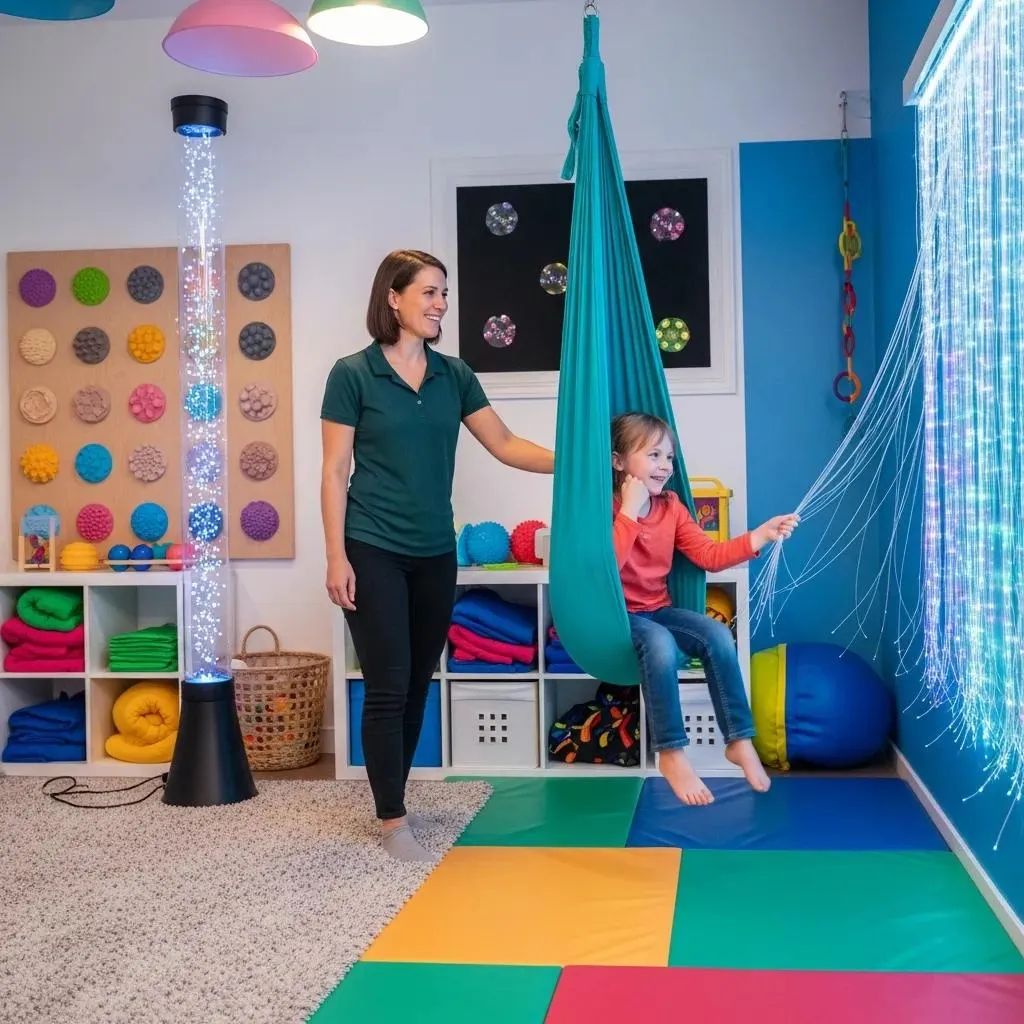
Pediatric occupational therapy supports children’s development by addressing milestone attainment across motor, cognitive, and social domains. These milestones provide objective indicators of functional progress and inform clinical decision-making. This article examines the significance of milestones, common indicators of therapy needs, evidence-based therapeutic approaches, session expectations, and the documented benefits of early intervention.
Developmental milestones represent age-referenced skills or behaviors used to evaluate a child’s physical, cognitive, and social development. Clinicians use these benchmarks to detect deviations from expected trajectories and to prioritize diagnostic assessment. Early identification of delays enables timely interventions that positively influence long-term developmental and functional outcomes.

Parents should monitor specific, age-referenced milestones across motor, cognitive, and social domains to assess developmental progress.
- Motor Skills: By age 1, children should be able to sit without support, crawl, and pull themselves up to stand. By age 2, they should be walking independently and beginning to run.
- Cognitive Skills: At 6 months, babies typically respond to their name and recognize familiar faces. By age 2, they should be able to follow simple instructions and engage in pretend play.
- Social Skills: By age 1, children should show interest in social interactions, such as smiling at others. By age 2, they should begin to engage in parallel play with peers.
Monitoring these benchmarks enables parents to document progress and seek professional assessment when performance deviates from expected ranges.
Timely recognition of developmental indicators supports prompt referral to pediatric occupational therapy for formal evaluation and intervention.
Children who demonstrate sensory processing challenges or motor delays often require therapeutic input to improve daily functioning. For example, hypersensitivity to textures or sounds can restrict participation in routines, and deficits in fine motor control may impair tasks such as holding a pencil or fastening clothing.
Parents should seek professional evaluation if they observe any of the following red flags indicating potential developmental delay:
- Lack of interest in social interactions or play
- Difficulty following simple instructions
- Delays in reaching key motor milestones, such as walking or running
Referring to a pediatric occupational therapist yields a structured assessment, differential diagnosis, and evidence-based recommendations for intervention.
Tracking developmental milestones is essential for understanding your child’s growth and identifying any potential delays early. Skill Point therapy supports families in Brandon, Tampa, and surrounding communities by offering expert guidance and early intervention to help children reach their full potential.
If your child is not meeting these milestones, pediatric occupational therapy in Brandon and Tampa can help bridge developmental gaps with personalized support and expert care.
Pediatric occupational therapy delivers individualized intervention plans that target specific functional deficits and promote the acquisition of developmentally appropriate skills.
Clinicians apply evidence-based modalities tailored to each child’s clinical presentation. Common approaches include:
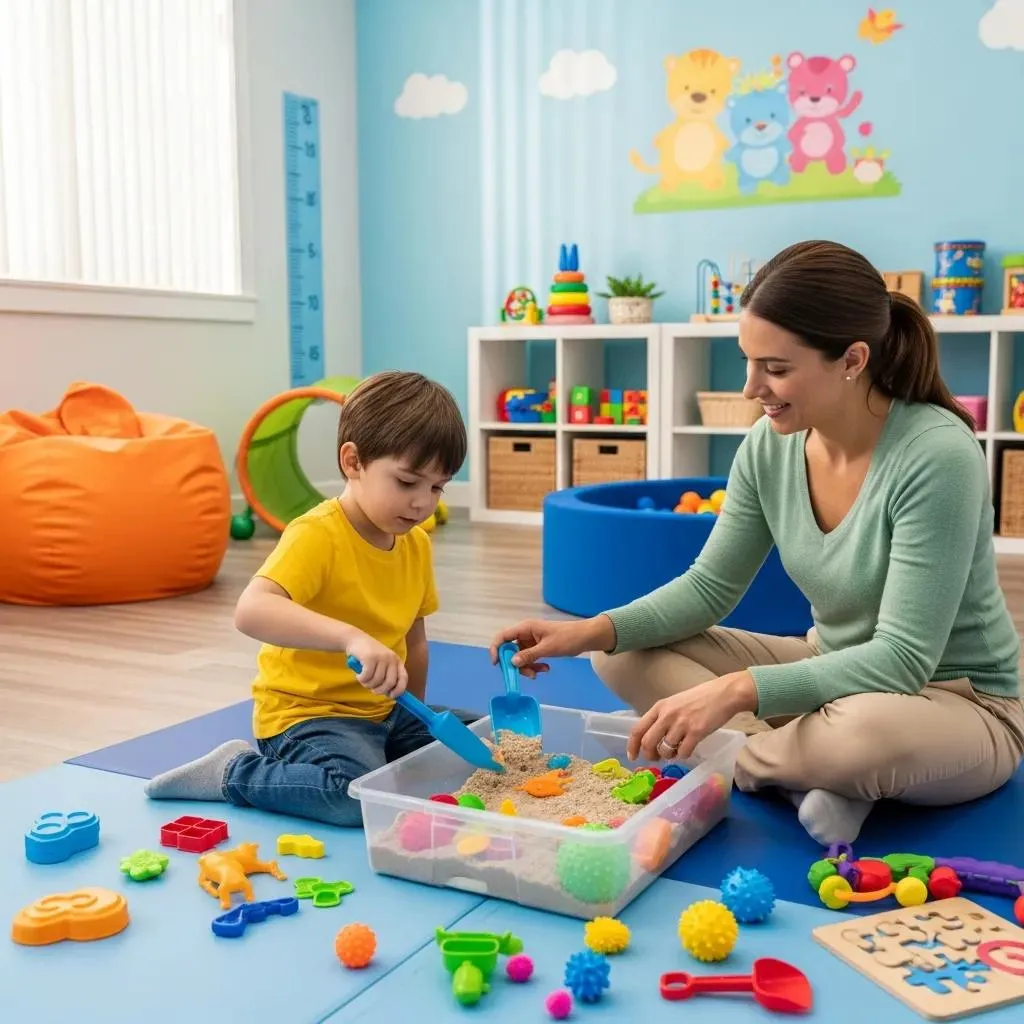
- Play-Based Activities: Engaging children in play helps them develop motor skills and social skills in a fun, natural environment.
- Sensory Integration therapy: This approach focuses on helping children process sensory information more effectively, improving their ability to engage with their surroundings.
- Fine Motor Skills Development: Activities that promote hand-eye coordination and dexterity, such as arts and crafts, are commonly used to enhance fine motor skills.
Research supports the efficacy of targeted approaches, such as sensory integration therapy, which have been shown to improve functional outcomes in pediatric cohorts.
Sensory Integration OT for Functional Outcomes in Children
This single-subject study examined the effects of sensory integrative–based occupational therapy on functional performance in two preschool-age children diagnosed with pervasive developmental disorder. Sensory integrative–based occupational therapy and functional outcomes in young children with pervasive developmental disorders: A single-subject study, 1999
These clinical techniques aim to advance developmental competencies within structured, engaging therapeutic contexts.
DIRFloortthe ime employs a relationship-based framework that emphasizes emotional engagement to support communication and social interaction. Therapists follow the child’s lead to scaffold interaction, communication, and regulatory skills that contribute to milestone attainment.
Parents function as active collaborators in the therapeutic process; understanding session structure facilitates consistent implementation of strategies across settings.
The therapists develop individualized goals aligned with the child’s functional profile and developmental milestones. Teams routinely review progress and adjust intervention strategies to ensure measurable gains, using parental observations to refine priorities.
Family-centered care is a core principle of pediatric occupational therapy. Engaging caregivers aligns home supports with clinical objectives, increases intervention fidelity, and improves overall therapeutic outcomes.
Early intervention targets developmental delays during critical windows of neurodevelopment. Empirical studies indicate that children receiving early occupational therapy demonstrate higher rates of milestone attainment and improved longitudinal outcomes.
Subsequently, the research further documents the advantages of timely therapeutic engagement for pediatric developmental trajectories.
Pediatric OT: Early Intervention for Developmental Milestones
Early intervention provides services to infants and toddlers with developmental deficits or at high risk due to environmental or biological factors. The primary objective is to enhance physical, cognitive, and emotional capacities while mitigating identified risks. Initiation as early as possible, particularly within the first three years of life, yields the most favorable outcomes given the critical period of neurologic development. Early intervention in pediatric occupational therapy, S Pekçetin, 2017
Evidence indicates that early intervention produces measurable improvements across cognitive function, social competence, and adaptive independence.
- Enhanced Cognitive Skills: Children who receive early therapy often demonstrate improved problem-solving abilities and academic performance.
- Improved Social Interactions: Early support helps children develop essential social skills, leading to more positive peer relationships.
- Greater Independence: Children who receive timely intervention are more likely to achieve greater independence in daily activities as they grow.
Recent studies support relationship-based approaches, including DIRFloortime, showing enhanced engagement and individualized developmental gains in clinical populations.
SkillPointe’s therapy maintains a defined intake process on its website to initiate evaluations and therapeutic services for pediatric clients.
The evaluation typically begins with an intake consultation in which clinicians assess developmental status and functional needs. Families should compile medical history, milestone records, and specific observations to inform a comprehensive, individualized evaluation plan.
Parents can contact SkillPoint therapyby calling (813) 491-8300 to schedule an evaluation or inquire about services. The team provides family-centered, individualized care designed to address each child’s clinical needs.
The first e three years of life represent a critical period for neurological development and milestone acquisition. Close monitoring during this window enables early detection and intervention, which improves long-term educational and functional outcomes.
Parents can promote development through targeted activities that build motor, cognitive, and social skills. Structured play with blocks, regular reading, and guided pretend play reinforce fine motor control, language, and social reciprocity. Maintain a safe, stimulating environment and consult professionals when concerns arise.
Play is the primary medium for pediatric occupational therapy, enabling therapists to embed therapeutic objectives in developmentally appropriate activities. Play-based interventions support motor coordination, social skills, and cognitive processes while facilitating generalization to daily contexts.
Pediatric occupational therapy addresses conditions that affect development, including developmental delays, autism spectrum disorder, sensory processing disorder, and physical disabilities. Clinicians tailor interventions to enhance participation, social functioning, and independence, with early intervention yielding the greatest functional gains.
Parents measure progress through regular review of established therapy goals, clinician reports, and observable improvements in daily functioning. Track gains such as increased independence in self-care tasks and enhanced peer interactions, and maintain open communication with therapists to refine the care plan.
If parents suspect developmental delays, they should obtain a professional evaluation without delay. A pediatrician or pediatric occupational therapist can assess development, provide differential diagnosis, and recommend appropriate interventions. Documenting milestones and specific concerns facilitates an efficient assessment.
Pediatric occupational therapy advances the attainment of motor, cognitive, and social milestones through individualized, evidence-based interventions. Early recognition and timely intervention improve developmental trajectories and functional independence. Engage qualified therapists to develop targeted plans that support participation across home and educational environments, and schedule an evaluation with the clinic’s dedicated team to review appropriate therapeutic options.