Good communication helps your child grow in many ways. It helps them make friends, do well in school, and feel happy. Speech and occupational therapy help your child learn to communicate better. In Brandon, FL, you can find special services made just for your child. These services give your child the help they need to grow well. Our therapists are licensed and certified. Our speech therapists hold the CCC-SLP credential from the American Speech-Language-Hearing Association (ASHA). Our occupational therapists are credentialed OTR/Ls, recognized by the American Occupational Therapy Association (AOTA). The Florida Department of Health licenses our clinic to ensure quality care. This article will tell you how to spot signs your child might need therapy. It will also explain why early help is important, what happens during therapy sessions, and how to prepare for evaluations. Knowing this will help you make good choices for your child’s growth.
- What speech therapy helps your child do
- What occupational therapy (OT) helps your child do
- How speech and OT work better together
- How to get started at Skill Point Therapy in Brandon, FL
These therapies help your child in many ways, as research shows.
Benefits of Pediatric Speech & Occupational Therapy
A child’s life improves in many ways when they get speech, physical, or occupational therapy.
Developmental milestones, RJ Scharf, 2016
It’s important to notice if your child needs speech or occupational therapy early. Early help leads to better results. The CDC says that 1 in 6 children between the ages of 3 and 17 has a developmental disability. Early therapy can make a big difference. Some signs include trouble with small movements, sensory processing problems (how your child’s brain processes what they see, hear, and feel), and missing important growth milestones. We use treatments that research has shown to work.
Watching your child’s growth steps helps you see if they have speech delays. Look for these key steps:
- 6 to 12 months: Your child babbles and responds when you call their name.
- 12 to 24 months: Your child uses single words and understands simple instructions.
- 2 to 3 years: Your child puts words together into short sentences and learns more words.
If your child isn’t reaching these steps, you should talk to a professional.
Problems with sensory integration and motor skills can show up in different ways. Watch for these signs:
- In babies: Your child has trouble feeding or is very fussy.
- In school-age kids: Your child struggles with tasks like writing or using scissors.
- General signs: Your child avoids certain textures or has trouble with coordination.
Seeing these signs early helps you get the right support for your child. We use treatments that research has shown to work.

Starting speech therapy early can help your child grow a lot. Studies show that early help improves social skills, thinking skills, and emotional control.
Many studies show that early speech therapy works well. Children who get help before age five learn faster. They have fewer problems and feel more confident talking.
Research also examines which age groups receive the most benefit from early therapy for speech problems.
Early Intervention for Speech-Language Deficits
Early therapy works better for children aged 36–47 months than for those aged 48–60 months. It also looks at whether early therapy works equally well for all children.
Importance of early intervention in reducing autistic symptoms and speech–language deficits in children with autism spectrum disorder, N Stanojević, 2023
Early therapy helps your child in the long run by:
- Improving communication skills: Your child speaks more clearly and understands language better.
- Boosting social skills: Your child talks better with friends and others.
- Helping in school: Good language skills help your child do better in class.
These benefits show why you should get therapy as soon as you notice problems. We use treatments that research has shown to work.
Speech therapy sessions are fun and supportive. They focus on what your child needs. You will see many play-based activities that help your child learn to talk and communicate.
Therapists carefully check your child’s speech and language skills. They will:
- Give a personal evaluation: Tests fit your child’s age and growth stage.
- Set goals: They make goals clear and reachable.
This helps therapists plan the best treatment for your child. We use treatments that research has shown to work.
Therapists use many ways to help your child talk better, such as:
- DIR/Floortime approach: This focuses on feelings and following your child’s lead.
- Play-based activities: Your child learns to talk naturally through play.
- Parent coaching: You learn how to help your child at home.
These ways make therapy fun and helpful for your child.
Occupational therapy helps your child perform daily tasks more effectively. It also helps your child grow in many ways. You will see fun activities that work on specific skills.
Therapists check how your child works in daily life. They will:
- Ask about your child’s history: Learn about your child’s background and problems.
- Watch and test your child: See how your child does tasks in a safe setting.
- Talk with you: Get your views on your child’s behavior and needs.
This helps therapists make a plan that fits your child. We use treatments that research has shown to work.

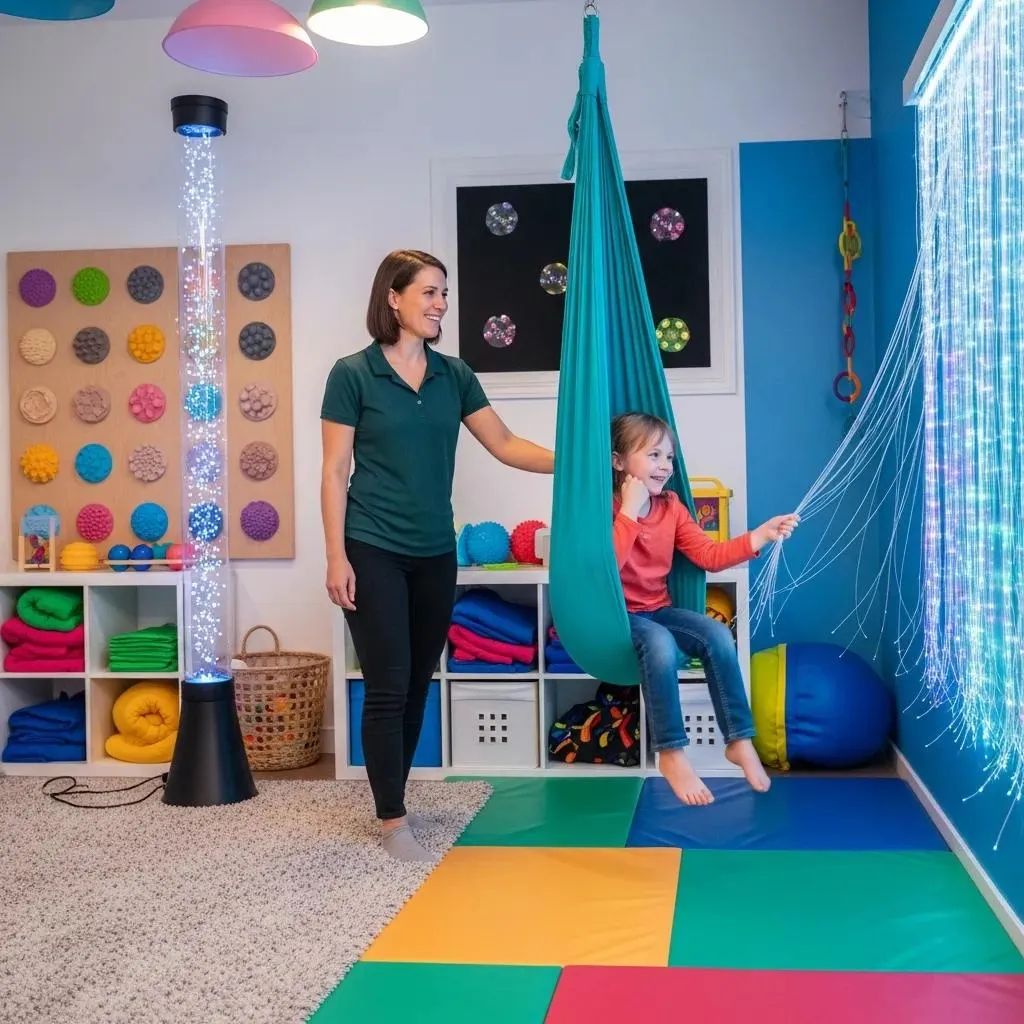
Occupational therapy uses many activities to help your child’s motor skills and sensory integration (how your child’s brain handles what they see, hear, and feel). These include:
- Swinging and rocking: Helps your child balance and move better.
- Tactile stimulation: Your child touches different textures to engage their senses.
- Fine motor activities: Drawing or building with blocks to improve hand skills.
These activities are fun and help your child learn important skills.
These fun activities are based on proven therapy methods that use play to support your child’s sensory and motor development.
Occupational Therapy: Sensory-Motor Play Interventions
Ayres Sensory Integration® (ASI) uses special sensory and motor activities in play. These activities are just right for your child’s level. They help your child respond better and do daily tasks well.
Efficacy of Occupational Therapy Using Ayres Sensory Integration®:
A Systematic Review, RC Schaaf, 2018
The DIRFloortime approach is a therapy that builds strong emotional bonds. It helps your child grow emotionally and socially. This therapy helps your child connect well with the therapist.
DIRFloortime therapy follows key ideas:
- Build emotional connections: Create trust between your child and therapist.
- Individualized interactions: Make sessions fit your child’s needs.
- Play-based learning: Use play to help your child learn and grow.
These ideas make a safe place where your child can do well.
This therapy helps your child talk better by:
- Improving social skills: Your child learns to talk well with friends and adults.
- Involving your family: You take part in therapy and help your child at home.
- Helping emotional control: Your child learns to manage feelings, which helps with talking.
This full approach helps your child with both talking and feelings. We use treatments that research has shown to work.
Getting ready for your child’s therapy evaluation helps it go smoothly. You should gather important information and know what to expect.
Before the evaluation, give the therapist:
- Your child’s age: This helps understand growth steps.
- Your main concerns: Tell what problems made you seek help.
- Your child’s growth history: Share info about your child’s development.
This helps the therapist make the best plan for your child.
To set good expectations for therapy, you should:
- Learn about the process: Know what therapy will be like.
- Understand the session setup: Know how sessions work.
- Celebrate small wins: Notice every bit of progress to keep motivated.
These tips help you support your child’s therapy journey.
Start as early as possible. Kids who get help early make faster progress. If you have concerns, don’t wait. Call us for a free screening.
Our team will evaluate your child and tell you exactly what they need. Many kids benefit from both.
Most insurance plans cover speech and OT therapy. Florida Medicaid and CHIP also cover these services. We help you check your benefits.
Every child is different. Some kids meet their goals in a few months. Others need support for a year or two. We track progress every step of the way.
We treat the whole child, not just one skill. Our certified therapists use play-based, proven methods. We serve Brandon families with care and expertise.
Scheduling therapy is easy. You can get your child the help they need quickly.
SkillPoint Therapy has two locations:
- Brandon: 1463 Oakfield Drive, Suite #131, Brandon, FL 33511
- Tampa: 13907 N. Dale Mabry Hwy., Suite 214, Tampa, FL 33618
To make an appointment, call (813) 491-8300 and give details about your child.
SkillPoint Therapy makes care easy to get and of good quality by:
- Flexible scheduling: They offer many times to fit your family’s needs.
- Personalized plans: They make therapy plans just for your child.
- Family-centered care: It includes your family in therapy to achieve better results.
This care helps your child get the best support for growth.
Our clinic is licensed by the Florida Department of Health, ensuring we meet high standards for pediatric therapy.
About This Article: This article was reviewed by a licensed pediatric therapist at Skill Point Therapy in Brandon, FL.
Children can benefit from speech or occupational therapy as early as infancy. The earlier the intervention, the better the outcomes. Many therapists recommend starting therapy when developmental delays or concerns are first noticed, typically around 18 months to 2 years. Early intervention can significantly improve communication and daily living skills, setting a strong foundation for future growth. If you have concerns about your child’s development, it’s advisable to consult a professional for guidance.
Parents play a crucial role in supporting their child’s progress in therapy at home. Engaging in activities that reinforce skills learned during therapy sessions is essential. This can include practicing speech exercises, reading together, or incorporating sensory play into daily routines. Additionally, maintaining open communication with therapists about your child’s progress and challenges can help tailor home activities to better support their development. Consistency and encouragement from parents can greatly enhance the effectiveness of therapy.
During the first therapy session, the therapist will conduct a comprehensive evaluation of your child’s skills and needs. This may involve observing your child in play, asking questions about their development, and discussing your concerns. The therapist will also explain the therapy process, set initial goals, and outline a plan tailored to your child’s specific needs. It’s a collaborative process, so be prepared to share insights about your child’s behavior and preferences to help guide the therapy.
They use DIR/Floortime for most everything — in both Speech and OT. While they are familiar with ABA, they structure all therapy around child-led, playful DIR/Floortime.
Tracking your child’s progress in therapy can be done through regular communication with the therapist, who will provide updates on goals and achievements. Many therapists use specific metrics to measure progress, such as skill assessments and observational notes. Additionally, parents can keep a journal of their child’s home improvements and challenges. Celebrating small milestones and maintaining a positive attitude can motivate your child and reinforce their learning outside of therapy sessions.
Parents seeking therapy for their children can access resources such as local clinics like Skill Point Therapy, online support groups, and educational websites focused on child development. Many organizations provide information on developmental milestones, therapy techniques, and parenting strategies. Additionally, consulting with pediatricians can help guide parents to appropriate services. Community resources, such as workshops and seminars, can also offer valuable insights into supporting children’s growth and development.
Investing in pediatric speech and occupational therapy can significantly enhance your child’s communication and daily living skills, fostering their overall development. Early intervention not only addresses challenges but also builds a strong foundation for future success in social and academic settings. By choosing Skill Point Therapy, you ensure your child receives personalized, evidence-based care tailored to their unique needs. Contact us today to schedule an evaluation and take the first step towards your child’s brighter future.