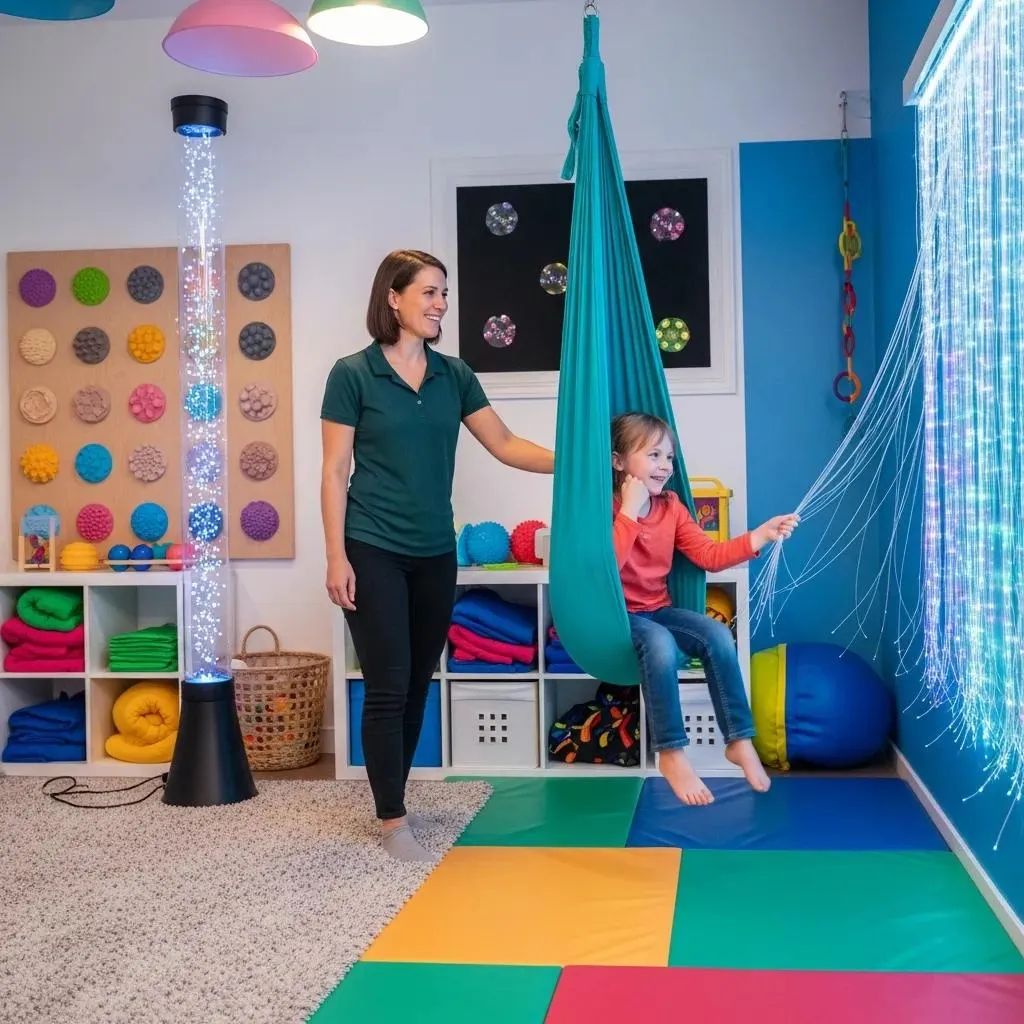


- Fine Motor Skills Development Techniques: Activities such as drawing, cutting with scissors, stringing beads, and manipulating small toys strengthen hand control and precision.
- Gross Motor Skills Development Techniques: Movement-based activities — climbing, skipping, ball play, and obstacle courses — build balance, coordination, and overall stamina.
- Importance of Play-Based Activities: Making therapy playful keeps children engaged and motivated, so practice becomes meaningful rather than a chore.
- Child-led DIRFloortime: This play-following approach allows children to guide activities while the therapist supports their development, keeping them engaged and building skills through meaningful interaction.
- Fine Motor Exercises: Targeted tasks like threading beads, using tweezers, or practicing handwriting improve hand strength, coordination, and control.
- Sensory Integration Activities: Structured sensory experiences help children process touch, movement, and body awareness, which supports smoother coordination and motor planning.
Sensory Integration Program for Motor Skills Development
Aim: This study checked how well sensory integration programs work for children with autism. Methods: Thirty-four children with autism, aged 40 to 65 months, took part. They were tested before and after treatment using the Peabody Developmental Motor Scale (PDMS-2) to see changes in motor skills. Each child had sensory integration sessions three times a week for six months.
Effectiveness of sensory integration program in motor skills in children with autism, AEA Karim, 2015
- Fine Motor Delays: Difficulty holding a pencil, using utensils, or managing buttons and zippers.
- Gross Motor Delays: Late milestones like walking or running, or ongoing problems with balance and coordination.
- General Signs of Delays: Avoiding tasks that require movement, frequent frustration, or clear gaps compared with peers.
- Difficulty with Precise Tasks: Struggling to button clothing, tie shoes, cut along lines, or write neatly.
- Frustration or Avoidance: Refusing tasks that require small movements or getting upset easily during those activities.
- Physical Signs: Awkward hand postures, dropping items often, or tiring quickly during fine-motor tasks.
- Delayed Milestones: Not sitting, crawling, or walking within expected age ranges.
- Movement Problems: Difficulty running, jumping, climbing, or following movement-based tasks.
- Posture and Walking Issues: Unusual gait, poor balance, or a consistently slumped or stiff posture.

- Brain Growth: Young children’s brains are highly adaptable, so early therapy often leads to bigger, faster gains.
- Preventing Secondary Delays: Timely support can reduce the likelihood of related problems in social skills, learning, or behavior.
- Stronger Overall Development: Therapy supports motor skills and also boosts confidence, social participation, and cognitive skills.
- Better Physical Skills: Improved coordination, strength, and endurance over time.
- More Independence: Greater ability to handle daily tasks like dressing, eating, and schoolwork independently.
- School Readiness: Stronger motor skills support handwriting, playground play, and classroom participation.
- Improving Communication: Better motor control supports gestures and nonverbal communication, which in turn supports language growth.
- Boosting Coordination: Practice builds smoother, more confident movement for play and sports.
- Supporting Families: Families feel more confident and less stressed when they have clear strategies and see progress.
- Skills and Experience: Look for professionals trained in pediatric occupational therapy with experience supporting children.
- Therapy Style: Make sure their approach — play-based, family-centered, or structured — fits your child’s personality and your family’s values.
- Personalized Care: A strong therapist will tailor goals and activities to your child’s specific strengths and needs.
- Education and License: A degree in occupational therapy and a current Florida license are essential.
- Experience with Kids: Experience working with children and knowledge of developmental milestones matter.
- Extra Training: Certifications or additional training in pediatric approaches or sensory integration are a plus.
- Skill Point Therapy: Located at 1463 Oakfield Drive, Suite #131, Brandon, FL 33511. They offer child-focused motor skills therapy tailored to each family.
- Contact: Call (813) 491-8300 with questions or to schedule an appointment.
- Fine Motor Exercises: Drawing, cutting, pegboards, and small-object play build hand skills and precision.
- Sensory Integration Activities: Movement, tactile, and proprioceptive experiences help children regulate and coordinate their bodies.
- Play-Based Activities: Games, imaginative play, and meaningful tasks make practice enjoyable and functional.
- Sticker Activities: Peeling and placing stickers improves control and fingertip strength.
- Gardening Tasks: Scooping, planting, and watering help hand strength and bilateral coordination.
- Coin Sorting: Sorting coins by size or color improves dexterity and attention to detail.
- Balance Exercises: Standing on one foot, walking heel-to-toe, or balancing on low beams improves stability.
- Trampoline Activities: Supervised trampoline play strengthens legs and improves body awareness.
- Obstacle Courses: Simple indoor or outdoor courses help with sequencing, planning, and coordination.
- Parent Coaching: Therapists can teach caregivers simple, effective activities to practice at home.
- Goal-Setting: Clear, measurable goals help families track progress and stay focused.
- Flexible Options: Many clinics offer teletherapy, home programs, or hybrid visits to fit family needs.
- Regular Practice: Short, frequent practice sessions work better than occasional long ones.
- Good Communication: Keep an open line with the therapist to review goals and strategies.
- Positive Environment: Encourage effort, celebrate small wins, and make practice playful.
- How Common Are Delays? About 10–15% of children have motor skill delays.
- New Therapy Methods: Teletherapy and technology-based tools are expanding access to services.
- Early Help Works: Research continues to show that earlier intervention usually improves long-term outcomes.
- Prevalence: Around 10–15% of children nationally show delays, and Brandon reflects similar trends.
- Factors: Socioeconomic factors and access to care influence identification and treatment rates.
- Awareness: Increased awareness helps families seek assessment and support sooner.
- Whole-Person Care: Integrating physical, emotional, and social goals gives more comprehensive results.
- Proven Methods: Evidence-based interventions and outcome tracking improve therapy effectiveness.
- Family Involvement: When families are active partners, children tend to make faster, more meaningful gains.
- DIRFloortime: Child-led play that builds motivation while supporting developmental goals.
- Sensory Integration: Activities designed to help children process sensory input and move more confidently.
- Therapeutic Listening: Structured auditory programs that use music and sound to support motor planning and attention.
- Child-led DIRFloortime: Letting the child lead supports engagement and meaningful skill practice.
- Play-Based Therapy: Play is central, so children learn through activities they enjoy.
- Family Collaboration: Therapists coach families to continue progress outside the clinic.
- Initial Consultation: Call to schedule a meeting and share your concerns so the team can learn about your child.
- Full Evaluation: A comprehensive assessment helps identify strengths and areas for targeted improvement.
- Therapy Plan: The therapist develops a customized plan and shares recommended session frequency. For more information or to contact the office, visit their website.