


Better Together: How OT and Speech therapy Team Up to Support the Whole Child.
Benefits of Pediatric Occupational therapy:
- Skill development: OT teaches everyday skills — from dressing and feeding to play and interacting with peers.
- Greater independence and confidence: As children learn tasks, they become more self‑reliant and feel more capable.
- Social and emotional growth: OT helps children manage feelings and develop the social skills they need to connect with others.
Role of Early Speech therapy Intervention:
- Communication skills: Helping children make their needs, ideas, and feelings clear.
- Cognitive development: Stronger language supports thinking, reasoning, and school readiness.
- Whole-child support: Language gains often boost emotional well‑being and social participation.
What are the early signs of Developmental, Speech, Sensory, and Motor Challenges?
- Speech delays: Limited vocabulary, unclear sounds, or challenges putting words together can signal a need for evaluation.
- Motor delays: Trouble with crawling, walking, running, grasping small objects, or self‑care tasks may suggest the need for OT support.
- Actionable steps for parents: Record what you notice, share observations with your child's pediatrician, and request a therapy referral if you're unsure.
How Can Pthe arents Recognize Early Speech and Motor Delays?
- Limited vocabulary: Using far fewer words than peers or having trouble combining words into phrases.
- Difficulty following instructions: Struggling with simple two‑step directions or everyday routines.
- Struggles with fine motor skills: If "my child struggles with fine motor skills" — for example, difficulty holding a pencil or buttoning clothes — occupational therapy may help.
When Should Families Seek a Pediatric therapy Evaluation?
- Occupational therapy needs: Ongoing challenges with daily tasks, play, or fine/gross motor skills.
- Speech therapy needs: Persistent delays in speech, understanding, or social communication.
How Does the Pediatric Occupational therapy Support Motor Skills and Sensory Processing?
- Play-based activities: Fun, goal-focused play builds fine and gross motor skills while keeping kids engaged.
- Sensory integration techniques: Strategies that help children process touch, movement, sound, and other sensory input so they can focus and participate.
What are the Key Benefits of Pediatric Occupational therapy?
- Enhanced fine motor skills: Improved hand coordination for writing, dressing, and everyday self‑care.
- Improved sensory processing: More effective responses to sensory input, which can reduce anxiety and boost attention.
How Does Occupational therapy Address Sensory Processing Disorders?
- Personalized interventions: Therapists design strategies based on each child's sensory profile and daily routines.
- Sensory integration techniques: Repeated, guided experiences help children adapt to a range of sensations and improve their functioning.
What Role Does Speech therapy Play in Early Intervention for Young Children?
- Improved communication skills: Helping children express needs and connect with others.
- Cognitive and academic benefits: Stronger language supports learning and classroom success.
How Does Speech therapy Improve Communication Abilities?
- Expressive language development: Practice with words and sentences, and with clarity, helps children say what they mean.
- Receptive language skills: Building understanding so children can follow directions and engage with peers and adults.
What are the Common Speech therapy Techniques for Developmental Delays?
- Play-based activities: Natural chances to practice language through games and routines.
- Targeted articulation drills: Focused practice on specific sounds to improve clarity.
- Storytelling and reading: Building vocabulary, sequencing, and comprehension through books and guided stories.
PROMPT Intervention for Pediatric Speech Motor Delay
There’s limited published data on treatments for speech motor delay (SMD). This randomized controlled trial (RCT) examined Prompts for Restructuring Oral Muscular Phonetic Targets (PROMPT) to see whether it improved outcomes for children with SMD. The researchers expected that children receiving PROMPT would make greater gains than those on a waitlist receiving home training.
PROMPT intervention for children with severe speech motor delay: a randomized control trial, AK Namasivayam, 2021
How Does the DIRFloortime Approach Enhance Multidisciplinary therapy for Children?

- Child-led focus: Following the child's lead increases engagement and makes therapy feel meaningful.
- Stronger emotional connection: Prioritizing relationships helps children feel safe and more willing to try new skills.
- Whole-child development: DIR/Floortime targets emotional, social, communication, and motor skills together for a truly integrated experience.
What is IRFloortime and How Does It Support Social-Emotional Development?
- Encouraging interaction: Caregivers and therapists follow the child's interests to spark natural back‑and‑forth communication.
- Building self‑regulation: Guided play helps children practice managing emotions and behaviors.
How is the RFloortime Integrated with OT and Speech therapy?
- Joint goals: Therapists coordinate objectives so a single activity can support multiple skills.
- Holistic approach: Combining strategies ensures therapy addresses movement, communication, and emotion together.
Why tis integrated pediatric therapy important for supporting the Whole Child?
- Promotes holistic development: Addressing multiple domains helps children grow across skills rather than in isolated pockets.
- Improves communication and social skills: Coordinated strategies reinforce gains across motor, language, and emotional areas.
How Do Multidisciplinary therapy Programs Improve Developmental Outcomes?
- Early intervention: Addressing delays sooner leads to stronger long‑term results.
- Targeted skill development: Personalized programs focus on the most meaningful goals for each child.
Multidisciplinary Teams in Pediatric Rehabilitation & OT
Multidisciplinary teams and social support are essential in pediatric rehabilitation. Bringing clinicians from different specialties together allows for coordinated medical care and therapy. This team-based approach—combining input from physicians, occupational therapists, physical therapists, and psychologists—can help reduce long-term consequences of disease, hospital stays, or complex conditions. Collaboration improves access to care and patient outcomes.
The importance of the multidisciplinary team and social support in pediatric rehabilitation: a literature review, 2025
What are the benefits of combining OT and Speech therapy?
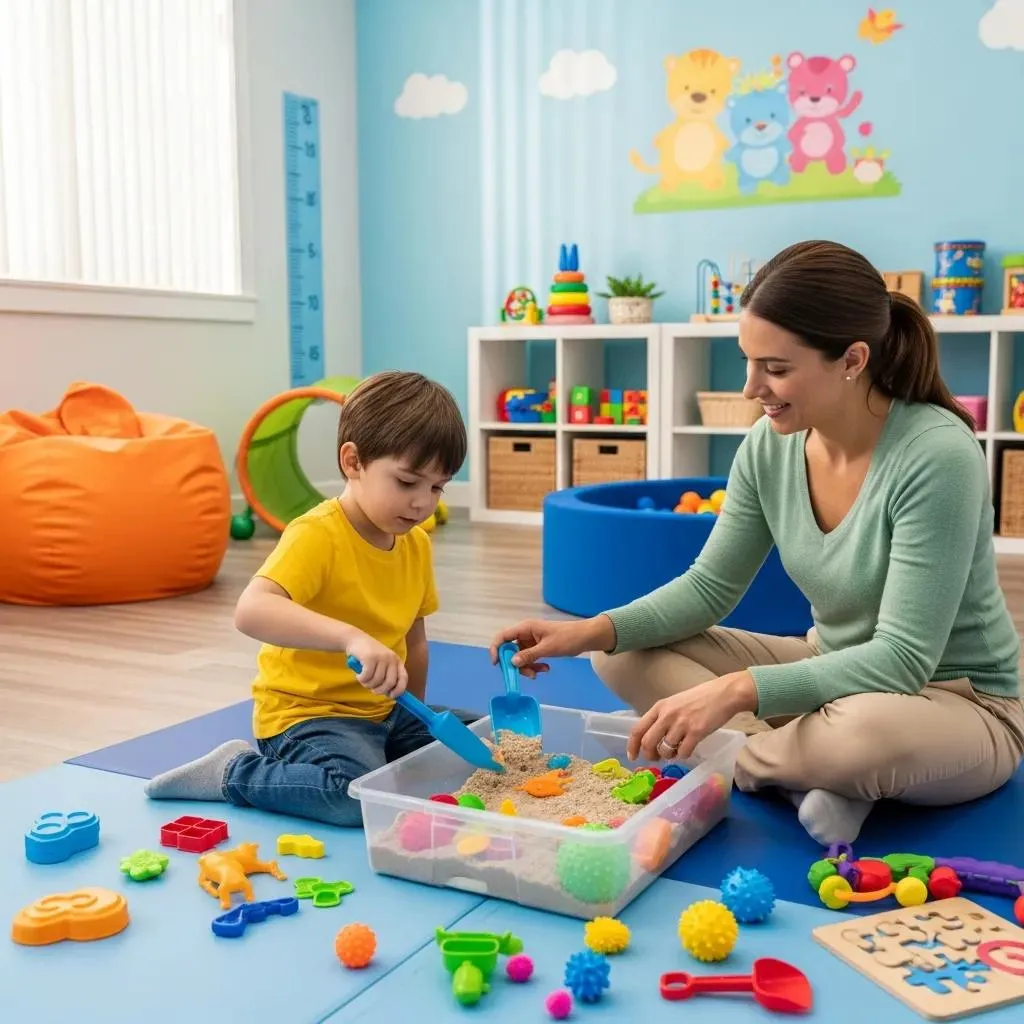
- Holistic development: Addressing motor and communication skills together supports a fuller range of abilities.
- Better emotional regulation: Coordinated strategies help children manage feelings so they can participate more fully.
| Aspect | Integrated OT & Speech therapy (with DIR/Floortime) | Isolated therapy Approaches |
|---|---|---|
| Development Focus | Addresses emotional, social, communication, and motor skills together for whole-child growth. | Focuses on single domains, which can miss connected needs. |
| Therapy Coordination | Therapists collaborate on goals and activities, ensuring consistency and reinforcement. | Therapies tend to operate independently, which can fragment progress. |
| Child Engagement | Child-led, interest-based sessions boost motivation and participation. | May rely on structured activities that don't always match the child's interests. |
| Family Involvement | Families receive unified guidance and strategies that support all areas of development. | Families may get mixed messages or separate plans for different therapies. |
| Outcomes | Faster, more meaningful progress across multiple skill areas. | Progress may be slower or limited to isolated skills. |
How Can the Parents Navigate therapy Options and Schedule Evaluations?
- Identify concerns: Note specific behaviors or tasks your child finds hard.
- Gather documentation: Bring notes, school reports, or past evaluations to appointments.
- Consult with our therapists: Talk with our team about your concerns and schedule an evaluation to begin a coordinated plan.
What Steps Are Involved in scheduling a Pediatric therapy Evaluation?
- Initial consultation: Share your concerns with a provider to decide if an evaluation is needed.
- Standardized assessments: Our therapists use tests and observations to map strengths and needs.
How Can the Parents Choose the Right Integrated therapy Program?
- Qualifications and experience: Seek licensed therapists experienced in pediatric and integrated care.
- Types of programs available: Ask about co‑treatment, session frequency, family involvement, and how goals are coordinated.
What Evidence Supports the Effectiveness of OT and Speech therapy Collaboration?
- Improved functional outcomes: Children in integrated programs often make broader gains across skills.
- Joint assessments and planning: Shared evaluations produce more cohesive, individualized interventions.
What Recent Studies Highlight therapy Outcomes for Developmental Delays?
- Enhanced skill acquisition: Children frequently show quicker gains in motor and language targets.
- Increased engagement: Cross-disciplinary work keeps sessions meaningful and motivating.
How Do Cathe se Studies Demonstrate Success in Multidisciplinary Approaches?
- Examples of successful cases: Individual stories illustrate how integrated therapy can produce measurable improvements.
- Impact of integrated therapy: Collaboration among therapists often yields gains that might not be achieved with siloed care.
Frequently Asked Questions
What is the DIR/Floortime approach, and how does it benefit therapy?
How can the parents support their child’s therapy at home?
What should parents expect during a pediatric therapy evaluation?
How do multidisciplinary teams enhance therapy outcomes for children?
What are some signs that a child may benefit from integrated therapy?
How can the families find the right therapy program for their child?
Conclusion

Nicole Bilodeau, MS, OTR/L, is an occupational therapist and founder of Skill Point Therapy in Tampa and Brandon. She leads a skilled team that provides speech and pediatric occupational therapy, supporting children with autism, ADHD, sensory processing disorders, social skills challenges, and motor development issues. Nicole is dedicated to helping every child reach milestones and thrive at home, school, and in the community