A Parent’s Guide to In-Hand Manipulation: Simple, Playful Activities to Build Your Child’s Fine Motor Skills at Home
Hi, Tampa and Brandon parents! I’m a pediatric occupational therapist with Skill Point Therapy, serving Hillsborough County and the greater Tampa Bay area. I want to share straightforward, fun ways you can help your child grow stronger fine motor skills right at home. Today we’ll talk about in-hand manipulation — a useful skill with a bigger impact than its name suggests. I’ll explain it in plain terms and give easy activities you can try today.
Key Takeaways
- In-hand manipulation is your child’s ability to move and control small objects using just one hand — a foundation for many daily tasks.
- Stronger in-hand skills support writing, buttoning, tying shoes, and using utensils more independently.
- Children usually reach fine motor milestones in predictable age ranges, though each child progresses at their own pace.
- Everyday items — coins, beads, bottle caps — can be turned into effective practice tools at home.
- Simple games like coin drops, bead stringing, and pencil flips build coordination and hand strength.
- Short, regular practice woven into daily routines helps skills improve without pressure.
- Watch for signs of difficulty and consider pediatric occupational therapy for personalized support.
- Therapy is play-based and interest-led, so skill-building feels natural and enjoyable for your child.
- Good fine motor skills boost school performance and confidence in social activities.
What Is In-Hand Manipulation and Why Does It Matter?
In-hand manipulation means your child can hold, move, and adjust small objects using only one hand. Picture turning a pencil end-to-end, sliding a button through a buttonhole, or shifting a coin from fingertips to palm. It’s about control, not force.
Though it may seem small, this skill opens the door to big steps toward independence. Neater handwriting, dressing themselves, opening snack containers, and smoother play all become easier as in-hand manipulation improves. And when kids master these tasks, they feel capable — which helps them try more on their own.
In-Hand Manipulation in Your Child’s Everyday Life
You’ll notice in-hand manipulation in lots of everyday moments, like when your child:
- Buttons and unbuttons shirts or pants.
- Flips a pencil from eraser to tip.
- Picks up coins and drops them into a piggy bank.
- Opens water bottles or snack lids.
- Plays with marbles, beads, or small building pieces.
- Uses utensils at mealtime.
- Zips and unzips jackets.
- Puts on or takes off bracelets or watches.
- Peeled and placed stickers during crafts.
- Turns book pages carefully.
These routine moments are perfect chances for practice — no special equipment needed.
How In-Hand Manipulation Skills Usually Grow as Your Child Grows
All kids develop differently, but here’s a simple age-based guide to what you might see:
If your child is earlier or later than these ranges and having trouble, that’s okay — practice and encouragement help, and support is available if needed.
Items Around Your Home to Help Your Child Practice
No special toys required. Try any of these common items:
- Coins or buttons in assorted sizes
- Beads or pasta pieces for threading
- Pencils, crayons, and markers
- Bottle caps and jar lids to twist
- Small toys like marbles, pegs, or Lego pieces
- Play-dough or putty to squeeze and hide small objects
- Whole nuts or cereal pieces (with supervision)
- Plastic rings and keychains
These household items turn daily play into helpful practice.
Fun and Easy Activities to Build In-Hand Manipulation Skills
Safety first: choose activities that match your child’s age and always supervise closely.
1. Coin Drop Game
This simple game strengthens finger control and hand coordination while keeping it fun.
- Gather a few coins and an empty jar or piggy bank.
- Show how to hold several coins in one palm.
- Help your child pick one coin at a time with the same hand and drop it into the jar.
- Cheer each successful drop to keep it motivating.
- Make it a friendly challenge: “How many coins can you drop in a minute?”
2. Bead Stringing
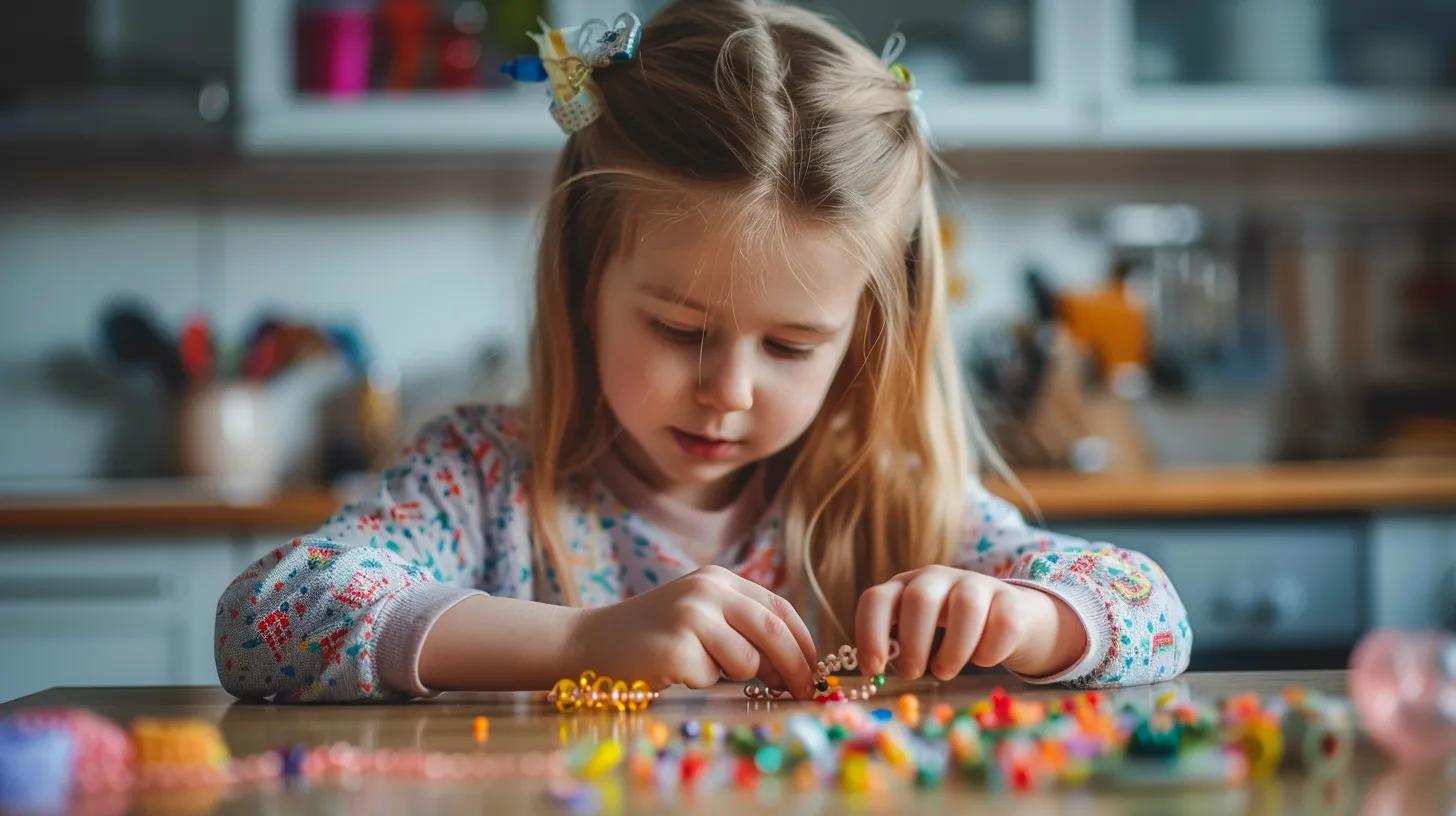
Stringing beads builds fingertip precision and hand-eye coordination.
- Use beads and a string, a pipe cleaner, or a shoelace.
- Demonstrate picking up a bead and positioning it in one hand.
- Have your child move the bead to their other hand or hold it steady.
- Help them slide the bead onto the string and count beads together to keep interest.
- Praise their progress to keep them engaged.
3. Pencil Twists
Flipping a pencil with one hand helps your child rotate objects smoothly — a skill that supports writing.
- Give your child a pencil.
- Show how to flip it from eraser to tip using one hand.
- Let them try slowly at first, then gradually speed up.
- Turn it into a challenge: “Can you flip five times in a row?”
4. Bottle Cap Challenge
Twisting lids on and off builds hand strength and control while teaching turning motions.
- Collect a variety of bottle caps and jar lids.
- Demonstrate how to twist a cap off and back on.
- Let your child try, starting with easier lids.
- Talk about the strength and coordination involved.
- Celebrate progress — small wins matter.
5. Play-Doh Dig
Hiding small toys in play-dough boosts hand strength and gives a rich sensory experience.
- Hide small toys or beads in play-dough.
- Ask your child to find and pull items out.
- This movement builds hand strength and coordination.
- Have them squeeze and roll dough for extra practice.
- Play together to model how to explore safely.
6. Button Practice
Buttoning helps both hands work together and supports daily independence.
- Use a shirt or jacket with buttons.
- Guide your child through buttoning and unbuttoning.
- Start with large buttons, then try smaller ones over time.
- Praise effort and let them progress at their own pace.
7. Sticker Play

Peeling and placing stickers strengthens the thumb and fingers and encourages careful hand movements.
- Give your child a sheet of stickers.
- Show them how to peel a sticker using one hand.
- Help them place stickers on paper or cards.
- This simple activity boosts thumb and finger control.
Extra Tips and Encouragement for Busy Parents
- Weave short practice moments into daily life — during meals, while watching TV, or getting dressed.
- Use specific, gentle praise to celebrate progress.
- Keep it playful — activities should feel like games, not homework.
- If your child gets frustrated, take a break and try again later.
- Be patient. Small, steady steps add up over time.
- Follow your child’s interests to keep them engaged.
- Practice alongside them — children learn a lot by watching and copying.
- Turn everyday tasks (dressing, snack time) into natural opportunities for practice.
Signs Your Child Might Need Extra Help From a Pediatric Occupational Therapist
Children develop at different speeds, but consider outside support if you notice:
- Your child frequently drops small items or has trouble picking them up.
- They consistently need both hands for tasks that most kids do with one hand.
- Buttoning, using utensils, or holding crayons is very difficult.
- Your child avoids drawing, coloring, or other small-hand activities.
- Tasks that require handwork cause a lot of frustration, and they give up quickly.
- Your child keeps switching hands and seems confused by it.
If these signs sound familiar, the therapists at Skill Point Therapy in Tampa and Brandon can help. We use the DIRFloortime® approach to make therapy playful and interest-driven so your child learns through connection and fun — not drills.
What to Expect During Therapy Sessions
When you work with a pediatric occupational therapist, here’s a typical pathway:
- Initial Visit: We discuss your child’s strengths and challenges and observe how they play and use their hands.
- Goal Setting: Together, we create small, clear goals that fit your child and family.
- Fun Therapy Activities: Sessions include playful tasks that build fine motor skills without feeling like work.
- Family Involvement: We teach simple ways to practice at home as part of your routine.
- Regular Progress Checks: We track progress and update goals as your child grows.
- Support and Advice: We answer questions and coach you to feel confident supporting your child.
When therapy connects to your child’s interests and daily life, progress feels natural and exciting.
Common Questions Parents Ask About In-Hand Manipulation
Can I try these activities if my child is shy or doesn’t like to play much?
Yes. Start slowly and follow your child’s lead. The DIRFloortime® approach emphasizes joining their interests — even small engagement helps skills develop.
What if my child has a lot of trouble with these tasks?
That’s okay. Some children need more time or targeted strategies. A pediatric occupational therapist near Tampa or Brandon can tailor activities and guide you with practical steps.
Do I need expensive therapy toys or special tools?
No. Most activities use everyday household items, so practicing is easy, affordable, and practical.
How often should we do these activities?
Short, consistent practice is best — a few minutes each day beats long, infrequent sessions. Fit practice into routines so it feels natural.
My child switches hands a lot when doing tasks. Is that normal?
Many children experiment with both hands as they learn. Usually, a dominant hand emerges over time. If the switching causes confusion or frustration, a therapist can help guide development.
How do I keep my child interested in practicing?
Make it a game, tie activities to their favorite interests, and celebrate small wins. Rotate activities so practice stays fresh and fun.
Can these skills help with other areas, like writing or dressing?
Yes. In-hand manipulation is a foundation for many daily skills. Stronger fine motor control supports easier writing, dressing, and participation in classroom and play activities.
Where to Find Helpful Support in Tampa, Brandon, and Hillsborough County
If you’d like extra help, Skill Point Therapy offers pediatric occupational therapy in homes and community settings around Tampa and Brandon. Our licensed therapists specialize in fine motor and sensory skills, using play-focused DIRFloortime® methods to help your child grow in ways that feel natural and fun.
Remember: You Are Your Child’s Best Coach
Helping your child build fine motor and in-hand manipulation skills doesn’t have to be hard. With simple, playful activities and consistent support, you can make a real difference in their confidence and independence. If you ever feel unsure, reach out to local experts like Skill Point Therapy — we’re here to help your family on this learning journey.
Thanks for reading. Please share this guide with other parents in Tampa, Brandon, and across Tampa Bay. Together we can help children grow stronger, more confident, and ready for everyday tasks — one small movement at a time.
What are some signs that my child may have difficulties with in-hand manipulation?
If your child frequently drops small items, relies on both hands for tasks usually done with one, or becomes frustrated with small-hand activities, these can signal difficulties with in-hand manipulation. Trouble with buttoning, using utensils, or holding crayons is another sign that an evaluation by a pediatric occupational therapist may be helpful.
Are there specific age milestones I should be aware of regarding fine motor skills?
Yes. While children develop at different rates, typical milestones include: by 1–2 years, picking up small items and early self-feeding; 2–3 years, starting to button larger buttons and build small towers; 3–5 years, handling coins and scissors more consistently; and after 5, using fine motor skills smoothly for writing and crafts. Watching these trends helps you know when to offer extra support.
How can I encourage my child to practice fine motor skills without them feeling pressured?
Keep practice playful and embedded in everyday routines. Use arts, cooking, or building toys, offer specific praise for effort, and celebrate small wins. Let your child choose activities and keep sessions short and fun so practice feels natural, not forced.
What role does a pediatric occupational therapist play in enhancing my child’s skills?
A pediatric occupational therapist assesses your child’s strengths and challenges, then creates tailored, play-based activities to promote fine motor development. They coach families to use everyday routines for practice and check progress regularly to adjust goals. The result is targeted help that fits your child’s interests and family life.
Can my child’s improved fine motor skills impact their social interactions?
Absolutely. Improved fine motor skills can boost a child’s confidence and independence, often leading to greater participation in group play and classroom activities. When kids can manage tasks like sharing toys, crafting, and dressing themselves, they tend to engage more with peers and feel more included.
Is it common for children to have preferences for one hand over the other when developing these skills?
Yes, many children try both hands before favoring one. A dominant hand usually becomes clear by around 3–5 years. If your child keeps switching hands and it causes confusion or frustration, a therapist can offer strategies to support consistent use.
Frequently Asked Questions
What additional activities can I do to further enhance my child’s in-hand manipulation skills?
Try threading pasta, using tweezers to pick up small objects, cutting with child-safe scissors, or playing with construction sets. These activities add variety and gradually increase dexterity while staying fun.
How can I tell if my child is ready for more advanced fine motor activities?
Look for confidence and accuracy with basic tasks like buttoning or stringing beads. If your child completes these comfortably and shows interest, you can introduce more complex activities, such as simple sewing or more detailed cutting projects. Always match new tasks to their skill level and interests.
Are there any resources or support groups for parents with concerns about their child’s fine motor skills?
Yes. Online parenting forums, local parenting groups, and child development organizations offer advice and community support. Your pediatrician and local occupational therapy clinics can also recommend resources and groups in the Tampa Bay area.
What are some tips for incorporating fine motor skill practice into daily routines?
Include tasks like helping with cooking (pouring, stirring), setting the table, dressing (buttoning, zipping), and craft time. These everyday moments provide frequent, meaningful practice without extra planning.
What should I do if my child shows reluctance to engage in fine motor skill activities?
Start small, follow their lead, and pair activities with things they enjoy. Use games, choices, and short sessions to lower pressure. If reluctance continues, a therapist can offer tailored strategies to increase motivation and confidence.
Can fine motor skills influence my child’s ability in academic settings?
Yes. Fine motor skills are critical for tasks like handwriting, cutting, and art projects. When children have better dexterity and control, they can complete classroom tasks more easily, which supports learning and confidence at school.
Conclusion
Working on in-hand manipulation helps children gain independence and confidence in everyday tasks. By using simple household items and playful activities, you can support meaningful progress without stress. For more tips and resources, explore our materials or reach out to Skill Point Therapy. Start practicing today — small movements lead to big gains.