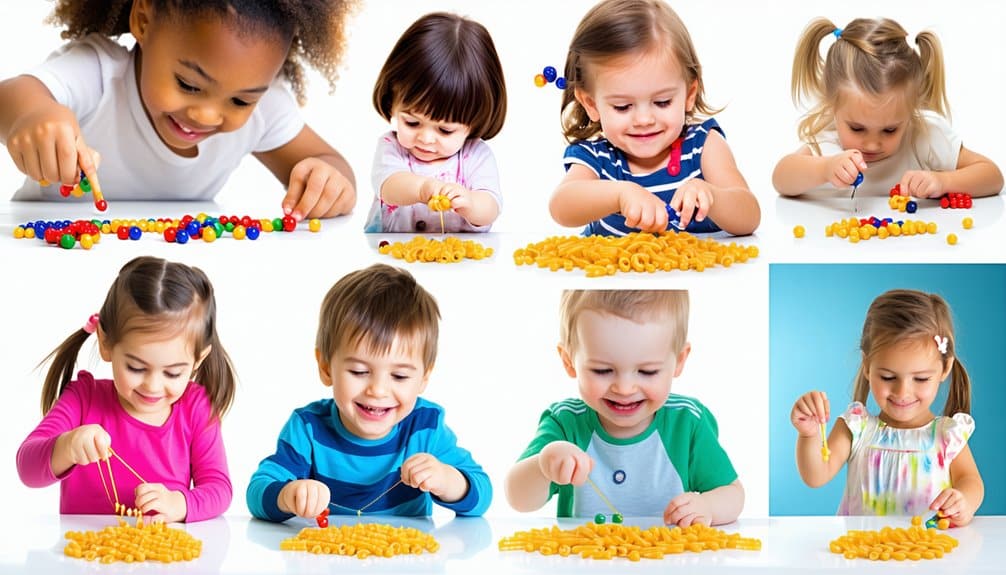
Strengthening your child’s fine motor skills, particularly their pincer grasp, is essential for their development and independence. Pincer grasp exercises improve hand-eye coordination, finger strength, and cognitive development. Activities can range from...
Fine motor skills in toddlers develop at their own pace, but they generally follow a predictable pattern. These skills involve the coordination of small muscles in the hands, fingers, and eyes, helping toddlers grasp objects, stack blocks, and begin drawing. Early...
Children develop fine motor milestones at their own pace, but understanding these key stages can help parents support their growth. Fine motor skills involve the small muscles in the hands and fingers, allowing children to do things like grasp objects, feed...
Fine motor development, a vital aspect of child growth, follows a sequence of milestones. In infancy (0-12 months), children learn to grasp and manipulate small objects. Toddlers (1-3 years) refine these skills by stacking objects and feeding themselves. Preschoolers...
Building fine motor skills during play is an essential part of a child’s comprehensive cognitive and physical development. Skill-boosting activities, from drawing and crafts to interactive games like tangrams, assist in developing fine motor precision, hand-eye...
A fine motor home exercise program designed by a pediatric occupational therapist encourages the development of vital skills in children. These include hand-eye coordination, finger strength, and concentration. Engaging in diverse activities such as building with...