
Expert & Compassionate Pediatric Occupational Therapy in Tampa: Comprehensive Care for Child Development
Pediatric occupational therapy is a clinical discipline that helps children build the skills they need to participate in everyday life, and our expert approach emphasizes family partnership, functional goals, and measurable progress. This article explains what pediatric occupational therapy is, how evidence-informed approaches such as sensory integration and play-based fine-motor work support development, and when families should seek an evaluation. Readers will learn which services address common challenges—sensory processing, fine motor delays, self-care, and social participation—and how therapy delivery (in-office, in-home, in-daycare, telehealth) can be matched to a child’s goals and family routines. The guide maps how assessments create personalized treatment plans, which interventions produce specific outcomes, and how therapists collaborate with parents and schools to carry skills into daily life. Throughout the article, we reference practical service examples and delivery options used by local providers to illustrate, while focusing primarily on the therapeutic mechanisms, expected outcomes, and clear next steps for families seeking support for developmental concerns.
What Services Does Our Expert Pediatric OT Team Provide in Tampa?
Pediatric occupational therapy offers a range of services tailored to address motor, sensory, self-care, and social participation needs; each service targets specific goals through structured assessment, individualized planning, and functional practice. Typical service types include individualized therapy sessions, parent coaching, group social skills classes, school-based consultations, and specialty programs that focus on handwriting, feeding, or sensory regulation. These services are delivered across settings—clinic rooms with adaptive equipment, in-home sessions that train natural routines, in-daycare supports that help school participation, and telehealth for caregiver coaching and activity progression. Below is a concise list of standard services and their primary benefits to help families quickly see which options match their child’s needs.
Pediatric OT services commonly include:
- Individual Therapy: One-on-one sessions focusing on personalized goals such as self-care, coordination, or sensory regulation.
- Group Social Skills Therapy: Peer-based practice to build social cues, turn-taking, and cooperative play.
- Parent Coaching & IEP Support: Education and planning to ensure carryover at home and coordinated school services.
- Specialized Classes (e.g., handwriting programs): Structured curricula that target fine motor and written output skills.
The table below compares typical services, their goals, and who benefits, so parents can compare fit at a glance.
This comparison helps families quickly identify programs that align with their child’s needs and daily goals. After reviewing service types and expected outcomes, families often want examples of how therapy plans are developed and tracked, which the following subsection explains.
How Do Personalized Treatment Plans Support Child Development?

Personalized treatment plans begin with a comprehensive assessment that defines functional challenges, documents strengths, and sets measurable goals in collaboration with caregivers. Assessments combine standardized measures, observation in natural contexts (play, classroom, mealtime), and caregiver interviews to prioritize what matters most for the child’s daily life. Treatment plans translate assessment findings into short- and long-term objectives—such as independently fastening clothing, improving handwriting legibility, or reducing sensory meltdowns—and specify interventions, frequency, and progress markers. Therapists track progress through objective measures and caregiver feedback, adjusting activities to maintain challenge and relevance. Clear goal-setting and regular progress reviews ensure families understand the outcomes and how therapy will support meaningful gains at home and at school.
What Are the Benefits of Flexible Therapy Options: In-Office, In-Home, and Telehealth?

Flexible delivery—clinic-based, in-home, in-daycare, and telehealth—lets therapists tailor the environment and methods to eachchild’ss goals and family routines to maximize carryover. In-office sessions provide access to therapeutic equipment and a controlled space for sensory-motor work and graded challenges. At the same time, in-home visits allow therapists to coach parents within real-life routines, such as dressing or mealtime. In-daycare or school-based sessions focus on participation and accommodations in the learning environment, and telehealth is effective for parent coaching, activity demonstrations, and collaborative planning when travel or scheduling is a barrier. Choosing the correct mode depends on goal specificity, family logistics, and the need for environmental modification, and many plans combine multiple modes to reinforce learning across contexts. Understanding these options helps families and schools select the most efficient way to meet functional goals.
How Does Pediatric Occupational Therapy Address Developmental Delays and Sensory Integration?

Pediatric occupational therapy addresses developmental delays and sensory integration challenges by assessing how children process sensory input and translate that input into motor planning, attention, and adaptive behavior. Therapists use evidence-informed strategies—sensory modulation techniques, graded motor tasks, and play-based interventions—to improve regulation, praxis (motor planning), and fine motor coordination. Interventions are selected to produce practical outcomes such as enhanced dressing independence, better attention in school, smoother transitions at home, and more precise handwriting. The table below maps common conditions to typical OT approaches and expected outcomes so families can see how therapy methods relate to functional change.
Using these interventions, therapists set achievable steps toward functional goals that directly impact a child’s ability to participate at home, school, and in the community. After understanding the approaches, parents often ask specifically about sensory integration therapy—what it is, how it works, and what a typical session looks like—which the following subsection defines in parent-friendly terms.
What Is Sensory Integration Therapy and How Does It Help Children?
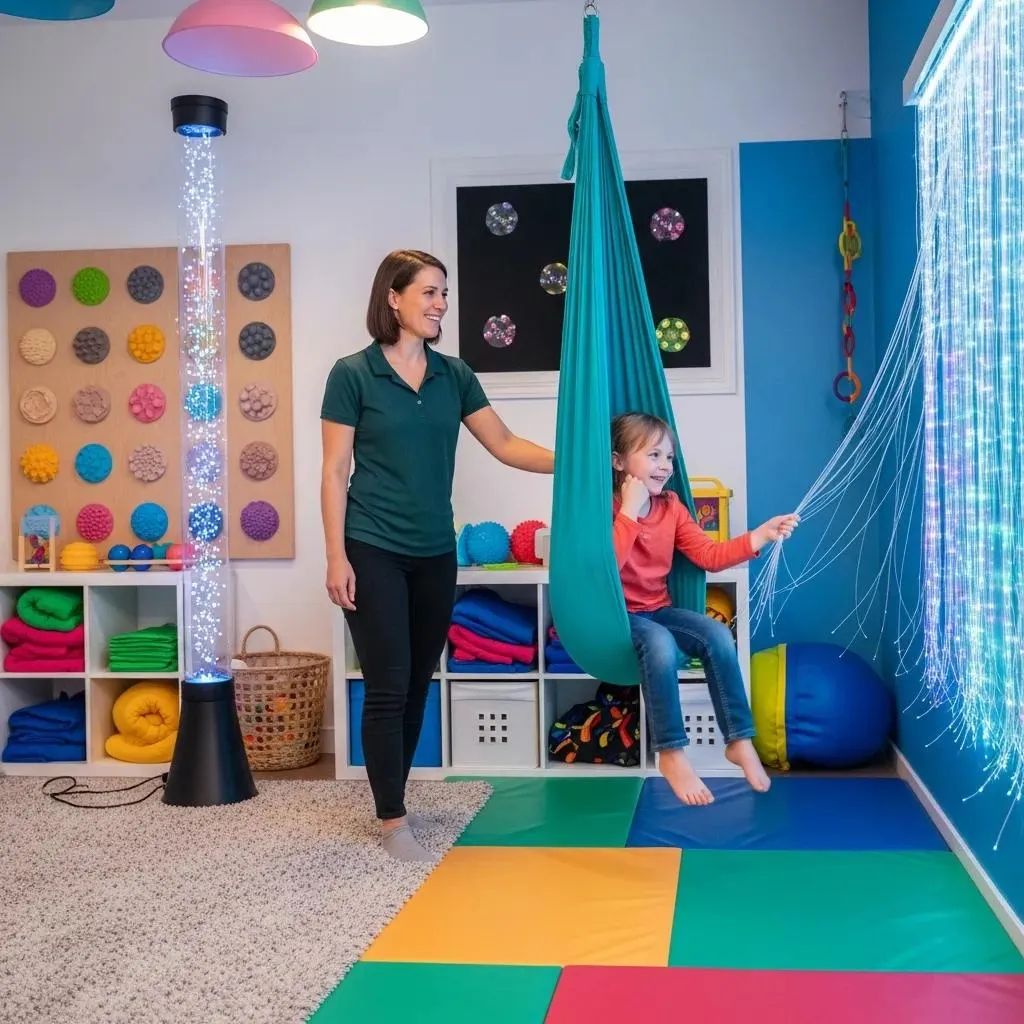
Sensory integration therapy targets how the nervous system receives and organizes sensory information to support goal-directed behavior and learning. Therapy involves structured, playful activities that provide controlled sensory input—such as swinging, deep pressure, or graded tactile tasks—so children can practice regulated responses and build motor planning. The goal is not to eliminate all sensitivities, but to expand a child’s tolerance for sensory experiences and strengthen adaptive strategies for daily tasks such as grooming, classroom participation, and play. Typical session activities are individualized, progress gradually, and always connect to real-life skills to ensure gains transfer beyond the therapy room. Many families see improvements in attention, emotional regulation, and participation after consistent, targeted work.
How Do We Support Fine Motor and Social Skills Development?
Therapists support fine motor development through graded tasks that build hand strength, coordination, and precision, ranging from play-based manipulative activities to systematic handwriting programs that use evidence-informed curricula to scaffold letter formation. Interventions progress from broad motor control to refined precision: gross grasp and shoulder stability, bilateral hand use, isolated finger movements, and then task-specific handwriting or tool-use practice. Social skills are taught through structured group activities that practice turn-taking, reading social cues, and problem-solving; therapists use role-play and peer-mediated tasks to generalize skills. Improvements are measured by functional changes—cleaner handwriting, independent snack-time skills, or more successful peer interactions—so families and teachers can see concrete gains in the child’s everyday participation.
Who Are the Compassionate Occupational Therapists Behind Our Pediatric OT Team?
Occupational therapists in pediatric practice bring a combination of clinical training, specialty education, and a family-centered communication style that together support effective, compassionate care; therapists typically hold professional licensure and pursue pediatric-specific continuing education. Families can expect clinicians who assess both skill and context—how a child’s environment, routines, and relationships influence participation—and who prioritize family goals in treatment planning. Teamwork involves transparent reporting, collaborative goal-setting with parents and teachers, and ongoing coaching to embed therapeutic strategies into daily life. While individual therapist profiles and specialties help families choose the best fit, the most essential features are demonstrated clinical reasoning and consistent communication to keep goals relevant and achievable.
What Qualifications and Expertise Do Our Pediatric Occupational Therapists Have?
Typical pediatric occupational therapists hold an occupational therapy degree and clinical licensure, and many pursue additional training in areas such as sensory integration, feeding, school-based services, and specific curricula, such as handwriting instruction. These credentials indicate the clinician’s knowledge of developmental norms, assessment tools, and intervention techniques appropriate for infants through young adults. Specialty training increases a therapist’s ability to design targeted programs for complex conditions—such as sensory processing differences or coordination disorders—and to collaborate with multidisciplinary teams. For families, knowing therapists have pediatric-focused experience and specialty coursework provides reassurance that interventions are grounded in current practice standards and tailored to developmental needs.
How Does Our Team Communicate and Collaborate with Parents and Schools?
Effective pediatric OT depends on predictable communication: clear initial reports after assessment, goal updates at regular intervals, and actionable home or classroom strategies that caregivers and teachers can implement. Therapists typically share progress through written summaries, goal-tracking charts, and scheduled meetings or telehealth check-ins to review strategy and adjust plans. School collaboration can include IEP support, consultative visits, and recommendations for classroom accommodations that promote access and participation. Parent education and coaching are woven into sessions to ensure families have practical skills for carryover, and consistent communication helps align expectations between home, therapy, and school settings.

Parents should consider pediatric occupational therapy when a child experiences persistent challenges with motor skills, sensory responses, self-care, or social participation that limit daily functioning compared with peers of the same age. Early evaluation is critical when delays impact independence or school readiness, because early intervention leverages neuroplasticity and routine-based learning to produce durable functional gains. The checklist below highlights observable signs across domains that warrant a referral and provides immediate next steps families can take to request an evaluation and start collaborative planning. After reviewing the checklist, the following subsection explains the mechanisms by which early intervention improves developmental outcomes and why timing matters.
Look for these signs that suggest an OT evaluation:
- Motor & coordination concerns: Difficulty throwing, catching, hopping, or frequent trips relative to peers.
- Fine motor delays: Struggles with buttoning, scissors, pencil grip, or messy handwriting beyond expected age norms.
- Sensory over/under-responsiveness: Extreme reactions to sounds, textures, or movement, or an unusual need for sensory input.
- Self-care & school participation issues: Trouble with dressing, feeding, toileting, or staying organized in class.
What Signs Indicate a Child May Benefit from Occupational Therapy?
Early red flags include delays in expected motor milestones, persistent avoidance of typical sensory experiences, difficulty mastering age-appropriate self-care tasks, or social participation that limits access to preschool or classroom activities. Age-specific cues might include a toddler who avoids finger foods and resists textures, a preschooler who cannot manipulate simple fasteners, or a school-age child whose handwriting prevents written output. Parents should prioritize patterns: consistent difficulty across settings (home and school) and lack of progress despite informal practice. Documented examples and observations from teachers and caregivers strengthen the case for a formal OT assessment and make initial goal-setting more efficient.
How Does Early Intervention Improve Developmental Outcomes?
Early intervention harnesses developmental windows of neuroplasticity, enabling targeted practice and environmental adjustments to embed new skills into daily routines. Therapists use repetitive, meaningful activities that progressively increase challenge while coaching caregivers to reinforce strategies across contexts, which accelerates skill generalization. Mechanisms of change include improved motor planning through graded practice, better sensory regulation via controlled exposure, and increased independence through task analysis and chaining. Over time, these changes translate into improved school readiness, social participation, and family routines, reducing long-term reliance on accommodations and enhancing a child’s confidence and autonomy.
Why Choose Skill Point Therapy for Pediatric Occupational Therapy in Tampa?
Skill Point Therapy appears in local service listings as a pediatric occupational therapy provider offering a spectrum of services for children from infancy through young adulthood, and the clinic’s documented strengths align with evidence-based practice priorities: compassionate, family-centered care; personalized treatment plans; community-based service delivery; flexible scheduling across clinical and natural environments; and strong communication with families and schools. Families seeking coordinated supports can expect examples of services similar to those described earlier—individual therapy, group social skills, parent coaching, Writing Without Tears, in-daycare and school consults, and telehealth sessions—delivered with attention to family priorities and goal-driven planning. The table below summarizes how the clinic’s value propositions map to concrete services and benefits for families and schools.
Presenting value propositions this way helps families evaluate fit and understand practical benefits before initiating services. After reviewing these differentiators, families often want to know how compassionate practice translates into better outcomes, which the following subsection explores.
How Does Our Compassionate Care Enhance Therapy Effectiveness?
Compassionate care centers family priorities and reduces barriers to engagement by validating concerns, setting realistic goals, and coaching caregivers in ways that respect routines and cultural context. When families feel heard and involved in decision-making, adherence to home programs improves and practice is more consistent across days and settings, which directly supports skill acquisition. Therapists who offer empathetic coaching also adapt strategies to minimize caregiver burden, creating sustainable routines that become the vehicle for change. By linking clinical techniques to meaningful daily tasks, compassionate practice increases motivation for both children and caregivers, thereby accelerating functional improvements.
What Community-Based Services and Support Do We Offer Families and Schools?
Community-based supports include in-daycare therapy to promote participation during time spent in daycare, school consults to adapt classroom strategies, IEP support for coordinated educational planning, and parent workshops that share practical strategies for home carryover. These services help bridge clinic gains to real-world participation by addressing environmental barriers, training school staff on accommodations, and offering group education that builds caregiver confidence. Families benefit from services that integrate therapy into daily routines, and schools gain practical classroom strategies that improve access and reduce the need for repeated individualized instruction. For families exploring options, connecting assessment goals with community-based supports ensures therapy translates into sustained improvements in participation and independence.
Frequently Asked Questions
What types of assessments are used in pediatric occupational therapy?
Pediatric occupational therapy utilizes a variety of assessments to evaluate a child’s strengths and challenges. These may include standardized tests that measure motor skills, sensory processing, and daily living activities. Additionally, therapists conduct observational assessments in natural settings, such as home or school, to understand how a child interacts with their environment. Caregiver interviews are also integral, as they provide insights into the child’s behavior and routines. This comprehensive approach ensures that the resulting treatment plan is tailored to the child’s unique needs.
How can occupational therapy help with self-care skills?
Occupational therapy can significantly enhance a child’s self-care skills by breaking down tasks into manageable steps and using adaptive strategies. Therapists employ techniques such as task analysis, which involves identifying the components of a self-care activity, such as dressing or grooming. They also introduce tools and methods that make these tasks easier, such as visual schedules or adaptive equipment. By practicing these skills in a supportive environment, children gain confidence and independence, which translates to improved daily functioning at home and in social settings.
What is the role of parent involvement in occupational therapy?
Parent involvement is crucial in pediatric occupational therapy, as it enhances treatment effectiveness. Parents are encouraged to participate in sessions actively, learn therapeutic techniques, and practice skills at home. This collaboration helps reinforce the skills learned during therapy and ensures consistency across different environments. Additionally, therapists provide guidance and resources to parents, empowering them to support their child’s development effectively. Engaging parents fosters a team approach, which can lead to better outcomes and a more positive experience for the child.
How does occupational therapy support social skills development?
Occupational therapy supports social skills development through structured activities that promote interaction and communication among peers. Therapists often use group sessions to facilitate role-playing, turn-taking, and problem-solving exercises, allowing children to practice social cues in a safe environment. These activities are designed to enhance skills such as sharing, empathy, and understanding non-verbal communication. By focusing on real-life scenarios, therapists help children generalize these skills to everyday situations, improving their ability to engage with others in various social contexts.
What can parents do if they suspect their child has developmental delays?
If parents suspect their child has developmental delays, they should seek an evaluation from a qualified pediatric occupational therapist. Early identification is key, as it allows for timely intervention that can significantly improve outcomes. Parents can start by documenting their observations of the child’s behavior and skills compared to peers. They should also communicate their concerns with healthcare providers, who can guide them through the evaluation process. Taking proactive steps ensures that children receive the support they need to thrive in their development.
Are there any specific strategies for managing sensory processing issues at home?
Yes, there are several strategies parents can implement at home to manage sensory processing issues. Creating a sensory-friendly environment is essential; this may include using calming colors, reducing noise, and providing sensory tools like fidget toys or weighted blankets. Establishing a consistent routine can also help children feel more secure andbetter manage sensory input. Additionally, parents can engage their children in sensory activities, such as playdough or water play, to help them practice self-regulation and build tolerance to various sensory experiences.
What age groups can benefit from pediatric occupational therapy?
Pediatric occupational therapy is designed for children from infancy through young adulthood. It addresses developmental challenges that can arise at any age, including motor skills, sensory processing, and social participation. Early intervention is particularly beneficial for infants and toddlers, as it leverages critical developmental windows. However, school-age children and adolescents can also greatly benefit from tailored therapy that supports their unique needs, helping them achieve independence and success in daily activities and educational settings.
How can parents support their child’s therapy at home?
Parents can play a crucial role in supporting their child’s occupational therapy by reinforcing skills learned during sessions. This can include practicing specific tasks at home, such as dressing or handwriting, in a structured yet playful manner. Additionally, maintaining open communication with therapists about progress and challenges allows adjustments to therapy plans. Engaging in activities that promote sensory exploration and fine motor skills, such as arts and crafts, can also enhance the effectiveness of therapy and make learning enjoyable.
What should parents expect during an initial evaluation for occupational therapy?
During an initial evaluation, parents can expect a comprehensive assessment that includes interviews, standardized tests, and observations of their child in various contexts. The therapist will assess the child’s strengths and challenges related to motor skills, sensory processing, and daily activities. This evaluation helps set personalized goals and develop a tailored treatment plan. Parents are encouraged to share their concerns and insights, as their input is vital for creating an effective therapy strategy that aligns with their child’s needs and family routines.
Are there specific conditions that pediatric occupational therapy can address?
Yes, pediatric occupational therapy can address a variety of conditions, including sensory processing disorders, fine motor delays, developmental coordination disorder, and challenges related to self-care and social skills. Each of these conditions can significantly impact a child’s ability to participate in daily activities. Therapists utilize evidence-based approaches to create individualized treatment plans that target specific challenges, helping children develop the skills necessary for independence and successful interaction in their environments.
How do therapists measure progress in pediatric occupational therapy?
Therapists measure progress through a combination of objective assessments, caregiver feedback, and regular goal reviews. They track specific skills and milestones outlined in the personalized treatment plan, using standardized tools and observational data to evaluate improvements. Progress is documented in written summaries and discussed during scheduled meetings with parents. This ongoing assessment allows therapists to adjust interventions as needed, ensuring that therapy remains relevant and effective in meeting the child’s evolving needs.
What role do schools play in a child’s occupational therapy journey?
Schools play a significant role in a child’s occupational therapy journey by providing an environment where skills can be practiced and reinforced. Therapists often collaborate with school staff to implement strategies that support the child’s participation in classroom activities. This may include providing recommendations for accommodations, assisting with Individualized Education Plans (IEPs), and conducting consultative visits. By working together, therapists and educators can ensure that therapeutic gains are integrated into the child’s daily school life, promoting overall success.
Can occupational therapy be effective for children with autism spectrum disorder?
Yes, occupational therapy can be highly effective for children with autism spectrum disorder (ASD). Therapists use tailored interventions to address sensory processing issues, improve social skills, and enhance daily living skills. Therapy may include structured play, sensory integration techniques, and social skills training, all designed to help children with ASD navigate their environments more effectively. By focusing on individual strengths and challenges, occupational therapy can support meaningful participation in both home and community settings, fostering greater independence and confidence.