


DIRFloortimeTracking Your Child’s Speech Development: A Comprehensive Parent’s Guide
Tracking your child’s speech development means systematically observing how their language, sounds, and social communication skills emerge and change over time. This guide explains why tracking matters, how to distinguish receptive language from expressive skills, and what parents can do to document progress so that timely action can be taken when concerns arise. Many caregivers worry about when first words should appear, how babbling turns into two-word phrases, and whether articulation errors are typical; this article provides clear age-based markers, red-flag signs, and practical home activities to support language acquisition. You will learn to recognize signs of speech delay, understand the value of early intervention speech services, and see how occupational therapy can supportoral-motorr and sensory foundations that enable more transparent communication. The guide maps milestones from infancy through school-age, offers easy-to-use tracking tools and checklists, and outlines next steps if screening or evaluation is warranted. Read on to gain the vocabulary and practical steps to observe your child confidently and to take effective action when needed.
What Are the Key Speech Milestones by Age?
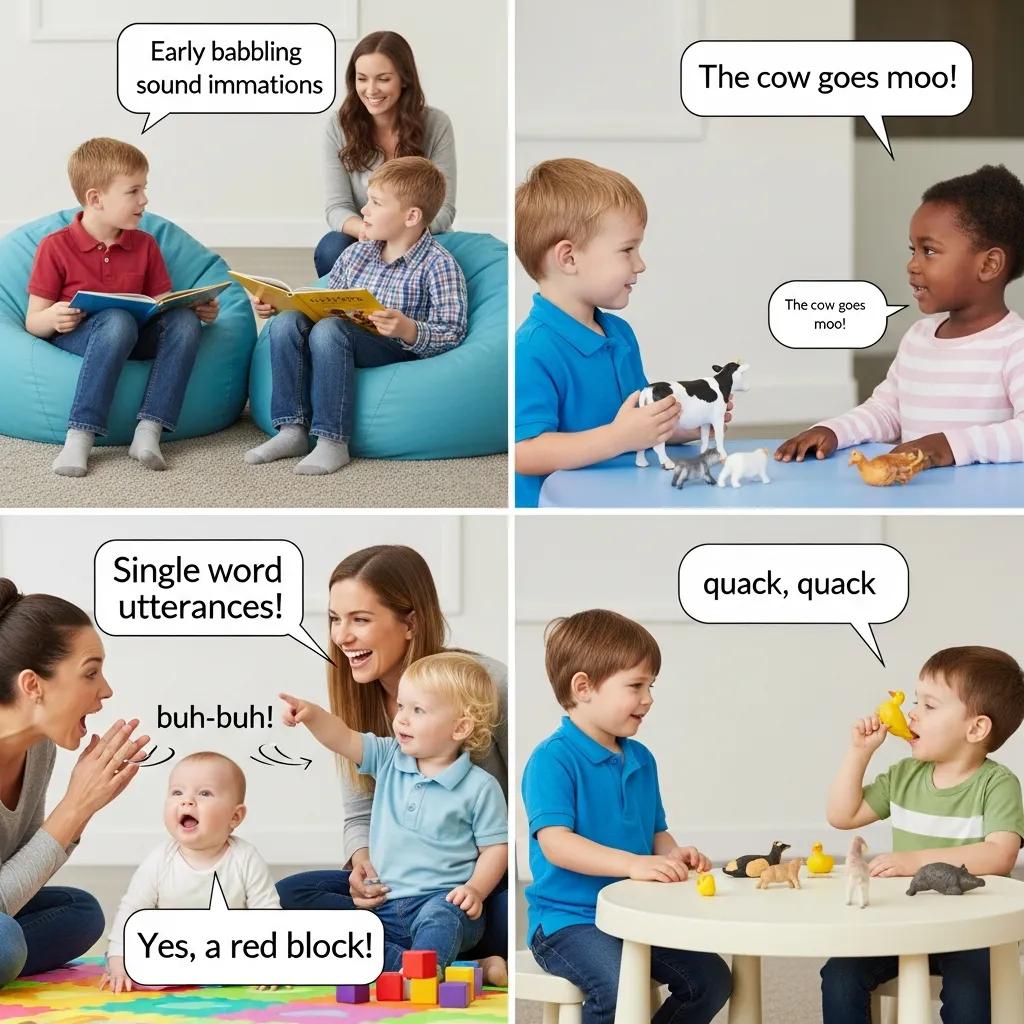
Speech milestones mark predictable changes in receptive and expressive language, vocabulary growth, sentence structure, and oral motor skill development. These milestones are helpful because they link observable behaviors—such as responding to a name or producing first words—to developmental expectations that guide monitoring and referral decisions. Early receptive language skills (listening and understanding) typically precede expressive milestones (speaking and producing sounds), and both sets of skills are essential for successful language acquisition and later school readiness. Below is an age-based milestone chart to help parents quickly identify typical indicators and practical actions to support each stage, and to decide when to monitor more closely.
Different milestones map to core areas of development: receptive language skills in children, expressive language, vocabulary growth, and articulation development. These categories clarify what to watch for and how to support each skill area in everyday routines.
This table connects observable behaviors to immediate parental strategies, preparing caregivers to monitor progress and seek evaluation when typical milestones are not met.
Which Speech Milestones Should I Expect in Infants and Toddlers?
Infants and toddlers progress quickly from social smiling and cooing to purposeful babbling and first words, which are core early markers of language acquisition. In the babbling stage, babies experiment with consonant-vowel sequences (e.g., “ba-ba”) and begin to show turn-taking—an early form of conversational skill that predicts later expressive language. The first words milestone often occurs around 12 months; by 18–24 months, vocabulary expands rapidly, and two-word combinations emerge, which indicate emerging grammar and the ability to combine concepts. Parents can support these shifts by imitating vocal play, labeling objects, using gestures, and engaging in frequent, responsive back-and-forth interaction to reinforce receptive and expressive pathways.
Practical parent-observation tips include noting when your child reliably responds to their name, how many words they use, and whether they use gestures, such as pointing, to request or show interest. These simple observations form a running record you can use during pediatric visits or therapy screenings. Tracking the frequency and variety of vocalizations also helps distinguish typical individual variation from patterns that may need evaluation, such as minimal babbling or persistent lack of gestures.
How Do Preschool and School-Age Children Typically Develop Communication Skills?
Preschool and school-age children refine sentence complexity, narrative skills, and social communication, building the foundation for classroom learning and peer interaction. Between ages 3–5, children typically use longer sentences, tell simple stories with a sequence of events, and show improved grammar; articulation errors reduce as motor planning and oral motor skills mature. As children enter school, expectations shift toward clear pragmatic skills—turn-taking, topic maintenance, and adjusting language for listeners—and higher-level receptive language for following multi-step instructions and understanding age-appropriate academic vocabulary.
Watching how a child tells a story or follows classroom directions gives insight into both expressive language and receptive comprehension. When children show difficulty with sentence structure, limited vocabulary, or ongoing intelligibility issues beyond what is expected for their age, these observations should prompt targeted tracking and possible screening to determine whether interventions such as speech therapy or educational supports are needed.
How Can I Recognize Signs of Speech Delay in My Child?
Recognizing signs of speech delay starts with clear, age-appropriate red flags and an understanding of common underlying causes, such as hearing differences, oral-motor difficulties, or developmental disorders. Early identification relies on observable behaviors—such as a lack of babbling, limited vocabulary, or unintelligible speech—that exceed typical individual variability and persist across settings. Parents should document concerns with simple tracking methods (e.g., usingchecklists, short videos) and follow a recommended sequence of next steps: monitor briefly when concerns are mild, arrange a hearing screening if indicated, and refer to a pediatrician or speech-language pathologist for a formal evaluation when red flags are present. The table below connects common signs to possible causes and recommended next steps.
What Are Common Red Flags for Speech and Language Delays?
Red flags are concise, age-linked indicators that suggest further assessment is needed rather than simple monitoring. For infants: limited eye contact, lack of babbling, or no response to name by 9–12 months warrants discussion with a pediatrician and hearing check. For toddlers: fewer than 50 words by 2 years or no two-word combinations by 24–30 months are signs to consider evaluation. For preschoolers and older children: persistent unintelligibility, difficulty following directions, or trouble with social communication suggests referral to a speech-language pathologist and possibly occupational therapy.
A brief checklist empowers parents to act quickly:
- Monitor vocal play and gestures in infants.
- Track vocabulary counts and phrase use in toddlers.
- Note clarity, sentence length, and social use of language in preschoolers.
Using such a checklist makes it easier to present objective examples during medical or therapy consultations and helps professionals determine whether early intervention speech services will be beneficial.
When Should I Be Concerned About My Child’s Communication Development?
Deciding when to move from observation to evaluation depends on the severity and persistence of red flags and whether concerns affect daily participation. Immediate referral is advised for regression (loss of skills), failure to meet social communication milestones, or signs of hearing loss. Mild delays may be monitored briefly while parents implement language-rich strategies for 4–6 weeks; if progress is limited, seek formal screening. An initial professional evaluation typically includes a hearing test, oral motor exam, and a standardized language assessment to identify receptive vs. expressive language needs and determine whether interdisciplinary input (speech-language pathologist, occupational therapist, audiologist) is appropriate.
Documenting specific examples—times when a child did not follow directions, transcripts of typical utterances, or short video clips—helps clinicians understand the concern and plan assessment efficiently. Clear documentation shortens the diagnostic pathway and leads to earlier, targeted support for language acquisition.
Why Is Early Intervention Important for Speech and Language Development?

Early intervention harnesses neuroplasticity and caregiver coaching to accelerate language acquisition, improve social participation, and reduce later academic challenges. Intervening during critical windows—when neural circuits for language are most malleable—allows targeted therapy to strengthen receptive language skills, expand vocabulary, and remediate articulation or oral motor deficits before they become entrenched. Early services also teach families how to embed language stimulation into daily routines, thereby promoting the generalization of skills across settings and supporting long-term outcomes in communication and learning.
Early intervention yields measurable benefits:
- Improved communication: faster vocabulary growth and more explicit expressive language.
- Better social skills: enhanced turn-taking, sharing, and peer interactions.
- Stronger academic readiness: improved comprehension and classroom participation.
Prompt evaluation and tailored services reduce the risk of cascading difficulties in literacy and social development, making early detection and intervention essential for supporting lifelong success.
For families seeking local evaluation and flexible service options, Skill Point Therapy provides pediatric-focused developmental support that emphasizes compassionate care and personalized treatment plans. Their services include community-based and flexible delivery modes—such as in-home, in-daycare, telehealth, and office locations—and they coordinate closely with families to plan interventions that fit daily routines. This combination of early evaluation and adaptable service delivery helps families access timely support that aligns with best practices for early intervention speech and language care.
How Does Early Intervention Improve Communication and Social Skills?
Early intervention improves communication by delivering intensive, targeted practice and by coaching caregivers to reinforce skills in natural contexts, thereby promoting generalization and retention. Neuroplasticity underlies these gains: repeated, meaningful practice strengthens neural pathways supporting receptive language, expressive vocabulary, and speech motor control. Parent coaching also amplifies treatment effects by increasing the number of learning opportunities each day and by helping caregivers scaffold interactions to match developmental levels.
Typical functional gains include clearer single-word production, increased use of multiword phrases, improved comprehension of age-appropriate instructions, and more effective social exchanges such as initiating play and responding to peers. Understanding these mechanisms clarifies why early, family-centered intervention tends to yield faster and more durable outcomes than delayed therapy.
What Types of Early Intervention Services Are Available?
A range of services address speech and language needs, including speech-language pathology for language and articulation, occupational therapy for oral motor and sensory foundations, multidisciplinary early intervention programs that combine disciplines, and teletherapy options for remote access. Speech-language pathologists focus on expressive and receptive language, articulation development charts, and social communication therapy. At the same time, occupational therapists target oral motor skills for speech, sensory processing, and speech-related participation, as well as fine motor skills that support classroom tasks. Delivery modes vary from clinic-based sessions to in-home coaching, in-daycare collaboration, and telehealth, allowing families to choose formats that fit their schedules and contexts.
Knowing which service to seek depends on observed needs: prioritize SLP assessment for language and articulation concerns, OT for feeding/oral motor or sensory-related communication barriers, and combined services when challenges cross domains. These choices help families access the right supports quickly and efficiently.
How Does Occupational Therapy Support Speech and Communication Skills?

Occupational therapy supports speech indirectly but critically by addressing oral motor strength, sensory processing, praxis (motor planning), and fine motor skills that enable communication tasks. OT interventions improve the physical and sensory foundations necessary for precise articulation, sustained attention during conversations, and participation in play and classroom activities. By targeting these underlying attributes, occupational therapy enhances the effectiveness of direct speech-language therapy interventions and, in some cases, reduces barriers that prevent children from benefiting from language-focused treatment. The table below maps typical OT interventions to communication outcomes, clarifying OT’s role alongside speech therapy.
In What Ways Does Occupational Therapy Enhance Oral Motor and Sensory Integration?
Occupational therapy enhances oral motor skills through targeted play-based exercises that build lips, jaw, and tongue strength and through graded sensory input that helps children tolerate textures and sensations involved in speech and feeding. Techniques may include chewable toys to support jaw stability, facilitated tongue exercises, and sensory dietstot regulate arousal and support optimal attention during communication tasks. These interventions reduce physical barriers to articulation and can decrease sensory avoidance that limits vocal play and social interaction.
Practical examples parents can try at home include structured oral play (blowing bubbles, straw drinking progression) and sensory-based routines that prepare a child for focused communication activities. When combined with speech therapy targeting sound production, OT-based gains in motor control and sensory regulation often accelerate improvements in intelligibility and participation during conversations.
How Can Occupational Therapy Complement Speech Therapy for Children?
Occupational therapy complements speech therapy by aligning goals and co-treating when communication barriers stem from oral motor or sensory challenges, resulting in more efficient progress toward shared outcomes. In co-treatment, an OT may address oral motor readiness while the speech-language pathologist shapes target sounds and language structures, producing simultaneous gains in mechanics and language use. Families benefit from coordinated goal-setting and shared progress tracking, which ensures that interventions target the child’s functional communication across settings.
Typical scenarios for combined services include children with feeding difficulties and limited verbal output, those with sensory regulation challenges that interfere with classroom participation, and kids using augmentative and alternative communication who need fine-motor or positioning support. Effective coordination between disciplines produces clearer functional outcomes and helps families implement consistent strategies at home and in school.
For families in the Tampa area seeking pediatric occupational therapy that supports speech outcomes, Skill Point Therapy specializes in developmental support for children from infancy to 21 years, offering community-based, flexible services including in-home, in-daycare, telehealth, and office-based options. Their approach emphasizes compassionate care, personalized treatment plans, and strong communication with parents, making OT a practical option to complement speech therapy when oral motor or sensory factors are part of a child’s communication profile.
What Activities Can I Do at Home to Encourage My Child’s Speech Development?
Everyday play and routines are powerful contexts for promoting language acquisition, articulation practice, and social communication. Activities that embed repetitive, meaningful language models—such as labeling during play, interactive reading, and turn-taking games—accelerate vocabulary growth and sentence building. Incorporating short, focused articulation drills into fun activities (sound play, puppets, or singing) helps children practice target sounds without pressure, while narrative-building prompts (retell a simple event) build storytelling skills and pragmatic competence. Below are concrete, age-organized activities you can start today.
Practical, play-based activities are easy to layer into daily life and support both receptive and expressive language; the following list provides varied approaches to target vocabulary, sentence structure, and articulation through enjoyable interaction.
- Narration During Routines: Describe actions while dressing or cooking to model vocabulary and sentence structure.
- Sound Play: Use toys or animal sounds to practice target phonemes in short, playful sequences.
- Choice Questions: Offer two choices to encourage words and short phrases (“Do you want an apple or a banana?”).
- Turn-Taking Games: Play simple back-and-forth games to build conversational skills and social communication.
- Storytelling Prompts: Ask your child to tell what happened during their day using picture cues.
- Model and Expand: Repeat your child’s utterance and add one word to expand their phrase (“Car” → “Big car”).
Which Play-Based Activities Stimulate Language Acquisition and Articulation?
Age-appropriate, evidence-informed activities stimulate vocabulary, sentence complexity, and articulation through repetition, modeling, and meaningful context. For infants and toddlers, singing nursery rhymes and using puppet play encourage vocal play and turn-taking; for preschoolers, picture-book retelling and obstacle-course directions strengthen sequencing and receptive language; for school-age children, role-play and reading aloud build narrative and articulation precision. Activities should be short, frequent, and scaffolded to the child’s current level to maintain engagement and to provide frequent correct models.
Varying activities across sensory modalities—visual, tactile, and auditory—support diverse learners and can be especially helpful when sensory processing and speech interact. Combining play-based oral motor tasks with language targets helps children generalize articulation gains into meaningful communication.
How Can I Track My Child’s Communication Progress Effectively?
Effective tracking uses simple, repeatable tools: a short checklist for milestone checks, weekly vocabulary tallies, and periodic 30–60 second video samples that capture natural speech during play. Recording brief videos over time provides objective evidence of changes in intelligibility, sentence length, and the use of new vocabulary, and helps professionals see progress across contexts. A practical tracking schedule might include a monthly checklist of milestones, weekly notes on new words or phrases, and quarterly video snippets summarizing growth; sharing these materials with clinicians streamlines evaluation and goal-setting.
A basic template parents can use includes date, context (play, mealtime), words/phrases observed, clarity percentage (estimate), and any concerns. Regular review of this record—looking specifically for trajectories rather than isolated days—helps determine whether some strategies are effective or whether an assessment is needed.
- Checklist Tracking: Use a short, monthly milestone checklist to monitor significant changes.
- Video Samples: Record 30–60 second clips weekly to document natural speech.
- Vocabulary Logs: Note new words and phrase combinations as they appear.
- Progress Reviews: Summarize progress every 3 months and share with professionals if concerns persist.
For families ready to schedule an evaluation or to explore combined OT and speech supports, Skill Point Therapy in Tampa, Florida, offers pediatric occupational therapy and developmental services across flexible settings—including in-home, in-daycare, telehealth, and office locations—and emphasizes personalized plans and clear parent communication to help families access timely care and next steps.

Nicole Bilodeau, MS, OTR/L, is an occupational therapist and founder of Skill Point Therapy in Tampa and Brandon. She leads a skilled team that provides speech and pediatric occupational therapy, supporting children with autism, ADHD, sensory processing disorders, social skills challenges, and motor development issues. Nicole is dedicated to helping every child reach milestones and thrive at home, school, and in the community