
Pediatric Occupational Therapy in Carrollwood: Comprehensive Care for Children’s Development
Pediatric occupational therapy helps children build the daily skills they need to play, learn, and participate in family and school life. Services are available to families in Carrollwood who need targeted developmental support. This article explains what pediatric occupational therapy is, who benefits, and how evidence-based approaches such as sensory integration, fine motor/handwriting therapy, DIRFloortime, and social skills groups improve function and school readiness. Many parents notice developmental gaps—delays in motor milestones, sensory over- or under-responsivity, or handwriting and self-care struggles—and need clear next steps; this guide maps those signs to practical interventions and timelines. You will also find a breakdown of standard services, what to expect during an evaluation and treatment plan, and concise guidance on early intervention and collaboration with schools and IEP teams. Throughout the article, we use local search terms such as therapy Carrollwood, pediatric OT evaluation process, and in-home occupational therapy for children to make it easy to connect information to local care options. Read on to learn who benefits, what services look like, how to recognize signs your child may need help, and how families can engage in a therapy journey that emphasizes function, play, and measurable progress.
Who Benefits from Pediatric Occupational Therapy in Carrollwood?
Pediatric occupational therapy supports children who struggle with daily tasks due to motor delays, sensory differences, social-emotional challenges, or learning-related fine-motor needs by improving functional skills and independence. OT targets the interaction between the child, the task, and the environment to create measurable gains in school participation, self-care, and play. Families in Carrollwood seeking improvements in handwriting, attention in class, or sensory regulation will find OT strategies that translate clinical goals into real-world outcomes. The following section breaks down the specific conditions commonly treated and how occupational therapy addresses each set of needs.
Children and families who benefit most include:
- Infants and toddlers with delayed motor milestones who need help building foundational mobility and self-care skills.
- Children with Autism Spectrum Disorder who need sensory regulation and social participation strategies to engage at home and school.
- Kids with Sensory Processing Disorder who struggle with modulating touch, sound, or movement may benefit from a sensory integration approach.
- Students with handwriting difficulties, poor pencil control, or fine motor delays that interfere with classroom work and legibility.
These beneficiary groups overlap; the assessment identifies the functional priorities that guide goal-setting and practical interventions for daily routines and school tasks.
What Conditions Does Pediatric Occupational Therapy Address in Children?
Pediatric occupational therapy addresses a range of developmental and behavioral conditions by linking impairment-level findings to task-focused interventions that improve participation. Common conditions include Autism Spectrum Disorder, which often presents with social-communication challenges and sensory differences; Sensory Processing Disorder, which affects how a child registers and responds to sensory input; ADHD, where executive function supports, and sensory strategies improve attention; and developmental delays that slow motor or self-care skill acquisition. Each condition is evaluated through standardized testing, observation, and caregiver interview so the therapist can translate diagnostic findings into functionally relevant goals. Understanding these conditions clarifies why OT emphasizes skill generalization across home, school, and community settings.
How Does Occupational Therapy Support Children with Autism and Sensory Processing Disorder?

Occupational therapy supports children with Autism and Sensory Processing Disorder by providing structured sensory experiences, environmental adjustments, and play-based routines that improve regulation and engagement.
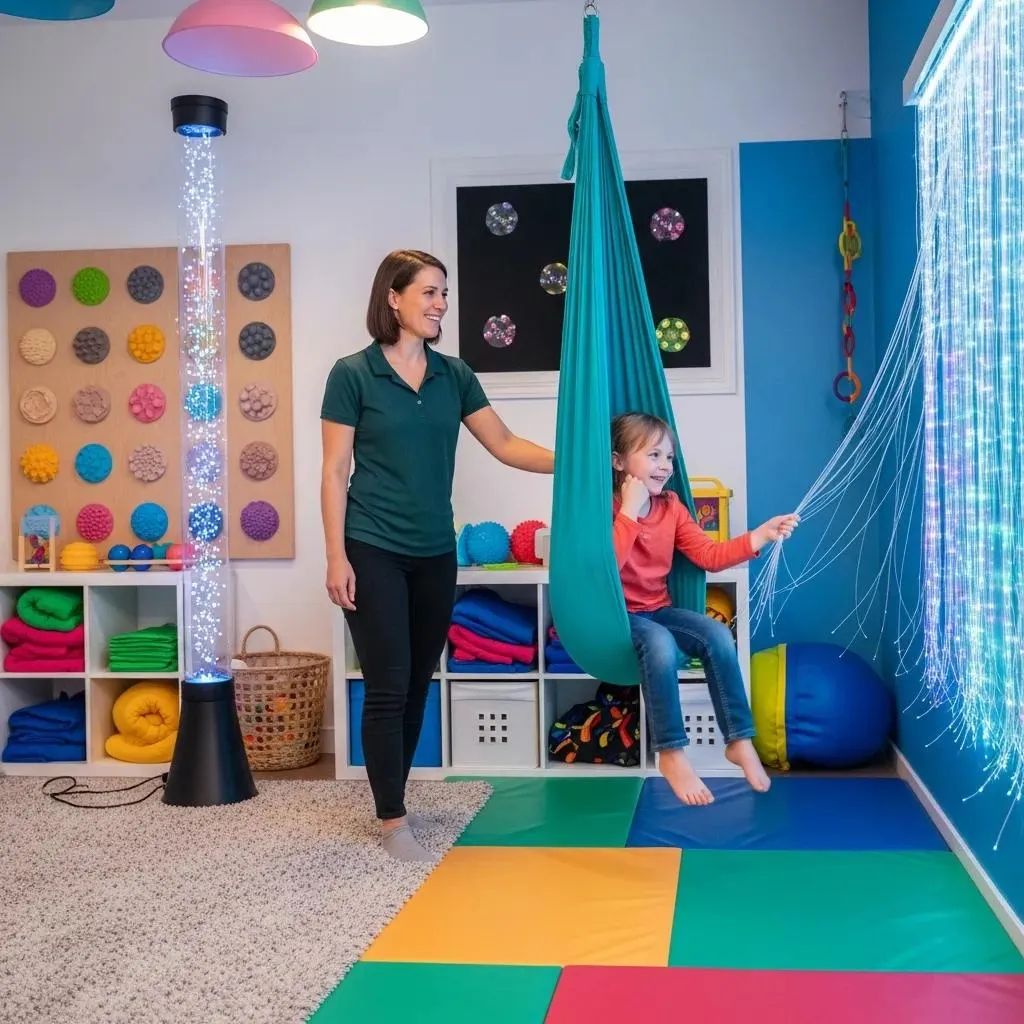
Therapists design sensory diets—planned activities that provide vestibular, proprioceptive, tactile, visual, or auditory input—to help children achieve an optimal arousal state for learning and interaction.
Functional goals commonly focus on self-care (dressing, feeding), attention during classroom tasks, and smoother transitions between activities.
Collaboration with families and educators ensures strategies are embedded across settings so that gains in regulation and participation persist beyond the clinic or therapy session.
What Comprehensive Occupational Therapy Services Does Skill Point Therapy Offer in Carrollwood?
Comprehensive pediatric occupational therapy services combine clinic- and community-based approaches to address sensory, motor, self-care, and school-participation goals for children from infancy through young adulthood. Typical services include sensory integration therapy, fine motor and handwriting programs, DIRFloortime for relationship-based social development, social skills groups for peer interaction, and telehealth or in-home sessions for family-centered carryover. Each intervention links assessment findings to measurable outcomes such as increased endurance for writing tasks, improved self-regulation, or greater independence with daily routines.
Below is a comparative table to help parents see which service typically targets what age or condition and what outcomes to expect.
This table clarifies how a specific service aligns with common functional goals and helps families choose initial areas to address before a formal evaluation.
Skill Point Therapy offers these services with a family-centered, play-based approach that emphasizes clear communication and flexible delivery. The practice prioritizes personalized treatment plans and community-based support, providing in-home, in-daycare, and telehealth options when appropriate to support carryover. Families considering an evaluation can expect a strengths-based plan with measurable goals and parent coaching to embed therapy into daily routines. If you want to discuss scheduling or next steps, contact Skill Point Therapy by phone to connect with the intake staff to review evaluation availability. This local service model supports continuity between home and school and promotes meaningful functional gains for children.
How Does Sensory Integration Therapy Help Children in Carrollwood?
Sensory integration therapy helps children by systematically exposing them to tailored sensory experiences that improve the brain’s ability to process and respond to input, thereby supporting functional skills such as attention, toileting, and play.
The mechanism is modulation of sensory thresholds through controlled activities—swinging for vestibular input, weighted play for proprioception, and tactile exploration for touch desensitization—so the child learns to self-regulate in everyday contexts.
Example activities include obstacle courses to build motor planning, texture play to reduce tactile defensiveness, and calming proprioceptive activities before challenging tasks.
Parents typically see small, cumulative gains in regulation and participation within several months when sensory strategies are consistently applied across settings.
What Are the Benefits of Fine Motor and Handwriting Therapy for Kids?

Fine motor and handwriting therapy focuses on core skills—bilateral coordination, finger isolation, wrist stability, and visual-motor integration—that underpin classroom productivity and written expression.
Interventions often use curriculum-based approaches and targeted programs that progress from pre-writing strokes to letter formation, incorporating activities like clay manipulation, scissor work, and adaptive seating to build endurance and control.
Measurable goals include improved legibility, reduced letter reversals, and faster completion of written assignments, which directly impact academic performance and self-confidence. Teachers and therapists coordinate to provide classroom accommodations and practice strategies so gains carry over to daily school tasks.
What Makes Skill Point Therapy Unique for Pediatric Occupational Therapy in Carrollwood?
Skill Point Therapy emphasizes compassionate, family-centered care that combines personalized treatment planning with community-based service delivery and strong communication between therapists, families, and schools.
This approach centers on the child’s play interests and daily routines when selecting activities, thereby enhancing engagement and increasing the likelihood of functional carryover at home and in the classroom.
Therapists work collaboratively with caregivers to create practical home programs and provide IEP support when school-based services are indicated.
Skill Point Therapy highlights the following unique value points:
- Personalized treatment plans built from thorough evaluation and family priorities.
- Compassionate, play-based therapy that engages children and reduces treatment resistance.
- Flexible delivery across clinic, in-home, in-daycare, and telehealth to support real-world carryover.
How Does Personalized Treatment Enhance Therapy Outcomes?
Personalized treatment enhances outcomes by aligning therapy activities directly with a child’s functional goals, interests, and environmental contexts so gains are meaningful and transferable. The process begins with a detailed evaluation—parent interview, standardized assessments, and observation—followed by collaborative goal-setting that prioritizes everyday tasks such as dressing, handwriting, or playground participation. Therapists then design graded activities that scaffold skill acquisition and include parent coaching to embed strategies into routines, thereby improving adherence and accelerating progress. Because interventions are tailored, children are more engaged, and families see practical improvements that matter to daily life.
What Community-Based and Telehealth Options Are Available for Families?
Community-based services and telehealth expand access by delivering therapy where the child lives and learns, which improves ecological validity and parent participation in sessions.
In-home sessions allow therapists to assess routines and adapt the environment directly, while in-daycare or school visits facilitate classroom modifications and educator collaboration.
Telehealth offers parent coaching, visual demonstrations, and activity planning when in-person sessions are impractical, supporting continuity of care during transitions. Choosing the right delivery mode depends onthe goals: in-home for routine-based work, telehealth for parent coaching as the primary objective, and clinic-based for specialized equipment or direct child-focused treatment.
What Are the Signs Your Child May Need Occupational Therapy?

Parents often ask what to watch for; occupational therapy becomes beneficial when motor, sensory, self-care, or school skills lag behind typical developmental expectations and cause participation difficulties.
Observable indicators include delayed milestones, persistent difficulty with dressing or feeding, frequent emotional meltdowns in response to sensory input, or handwriting that interferes with classroom performance.
The following section offers a practical, scannable checklist linking behaviors to likely underlying issues and recommended next steps.
Use this quick diagnostic checklist to identify potential concerns:
- Delayed motor milestones: Crawler or walker delays that affect mobility and play engagement.
- Sensory over- or under-reactivity: Extreme responses to noise, touch, or movement that limit participation.
- Difficulty with self-care: Trouble with dressing, feeding, or toileting beyond expected age norms.
- Handwriting and school-skill barriers: Illegible writing, slow work completion, or avoidance of fine motor tasks.
- Social-emotional or play delays: Limited reciprocal play, difficulty with transitions, or poor peer interactions.
This checklist helps parents decide whether to monitor or seek a formal evaluation, and the following table maps signs to likely issues and recommended next steps for quicker action.
Which Developmental and Behavioral Indicators Suggest Therapy Is Beneficial?
Specific indicators that often prompt a referral include inconsistent milestone achievement, difficulty with age-appropriate play, persistent clumsiness or low tone affecting coordination, and performance struggles tied to handwriting or classroom endurance. Early identification and a targeted assessment provide a roadmap for measurable goals, and connecting with therapists helps families decide between monitoring and active intervention.
For toddlers, limited independent feeding, poor pincer grasp, or asymmetrical movement patterns are red flags; for school-age children, slow written work and difficulty following multi-step classroom tasks often indicate the need for occupational therapy. The following subsection explains why early intervention matters for long-term outcomes.
How Can Early Intervention Improve YourChild’ss Development?
Early intervention leverages neuroplasticity during critical developmental windows, enabling targeted therapy to alter developmental trajectories and prevent secondary functional difficulties. Research and clinical practice show that early, consistent support for motor and sensory needs improves participation in school and reduces later academic and social challenges.
Practical benefits include faster acquisition of self-care skills, improved classroom readiness, and reduced behavioral escalation tied to sensory dysregulation. Families who engage in early services often see compounded gains because skills learned early form the foundation for higher-level tasks, making timely referral a highly effective strategy for long-term development.
What Can Parents Expect During TheirChild’ss Occupational Therapy Journey in Carrollwood?
The OT journey typically follows a four-phase pathway—evaluation, individualized plan development, intervention sessions, and progress tracking—each with defined activities and clear roles for parents and therapists. Evaluations include caregiver interviews, standardized tests, and functional observation to identify prioritized goals, after which therapists propose measurable objectives and recommend service delivery modes. Treatment blends play-based activities, skill practice, and parent coaching to maximize assessment, and periodic reassessment measures progress and adjusts goals. The EAV-style table below outlines phase responsibilities, typical activities, and parent involvement so families know what to expect in reassessment. reassessmentities
Families can expect an initial evaluation to be comprehensive but family-friendly: intake questions, a focused functional assessment, and discussion of priorities and realistic timelines for progress. After evaluation, therapists define short-term, measurable goals and recommend the frequency and mode of therapy—options often include a mix of in-clinic, in-home, or telehealth sessions tailored to family needs. Progress is tracked through session notes, periodic summaries, and collaboration with educators when school participation is a goal; understanding this process helps families stay engaged and see steady improvement.
If you are ready to explore scheduling an evaluation, Skill Point Therapy can discuss availability and next steps by phone, providing a clear intake pathway to begin services locally.
How Is the Evaluation and Goal-Setting Process Conducted?
An occupational therapy evaluation combines caregiver interview, observation of the child in structured tasks, and appropriate standardized assessments to measure motor, sensory, and self-care abilities. Therapists prioritize functional goals that reflect what the family and child need most—such as independent dressing, improved handwriting, or participation in classroom activities—and translate assessment findings into measurable, short-term objectives.
Evaluation reports outline recommended session frequency and suggested home activities, and families typically move from evaluation to the first treatment session within 1 to 2 weeks, depending on scheduling. This structured approach ensures therapy targets meaningful outcomes and that each session builds toward those prioritized goals.
What Ongoing Support and Progress Tracking Does Skill Point Therapy Provide?
Ongoing support includes weekly session notes, periodic progress summaries, parent coaching to reinforce home programs, and communication with schools for IEP support when appropriate. Progress tracking uses both qualitative observations and measurable metrics—such as handwriting assessments and standardized re-reassessments- to demonstrate change over time and to update goals as skills develop. Therapists provide caregiver training to embed strategies into routines and offer guidance for classroom accommodations to support continued success. Families benefit from this coordinated approach because regular reporting and proactive communication keep everyone aligned on the child’s trajectory and next steps.
What Frequently Asked Questions Do Parents Have About Pediatric Occupational Therapy in Carrollwood?
Parents commonly ask what occupational therapy can realistically change, how to know if their child needs services, and what types of treatment best match diagnoses like ADHD or autism; concise answers help families take practical next steps. Occupational therapy focuses on making everyday activities easier and more successful by addressing underlying sensory, motor, or cognitive barriers to participation. The following short Q&A entries answer common parent concerns and suggest where to begin when considering evaluation or referral.
Parents often ask whether OT helps with attention and classroom behavior; the answer is that OTs use executive function supports, sensory strategies, and task modification to improve sustained attention and task completion. For children with ADHD and developmental delays, therapists implement task segmentation, visual supports, and environment changes to reduce cognitive load and support success. Social skills groups and DIRFloortime are frequently asked about; groups teach pragmatic interaction skills and turn-taking, while DIRFloortime focuses on the emotional and relational foundations of learning and communication for children with social-pragmatic needs. These concise answers help families choose the subsequent evaluation or program path that matches their child’s profile.
How Does Occupational Therapy Help Children with ADHD and Developmental Delays?
Occupational therapy helps children with ADHD and developmental delays by structuring tasks, teaching organizational strategies, and embedding sensory supports to improve attention and task completion. Techniques include breaking down multi-step tasks into manageable parts, using timers and visual schedules to cue transitions, and integrating movement breaks that provide proprioceptive or vestibular input to stabilize attention. OTs also collaborate with teachers to implement classroom accommodations that reduce distractions and scaffold executive function. When these strategies are consistently applied across home and school, children often demonstrate improved independence and academic performance.
What Are the Benefits of Social Skills Groups and DIRFloortime Therapy?
Social skills groups and DIRFloortime address peer interaction and emotional development through complementary approaches: groups provide a structured setting to practice pragmatic skills and peer play, while DIRFloortime emphasizes building relationships and emotional regulation through child-led interactions.
Social groups help children learn conversational turn-taking, perspective-taking, and cooperative play in a guided environment, producing observable improvements in peer acceptance and classroom behavior. DIRFloortime fosters emotional development by following the child’s lead, expanding play, and supporting deeper social reciprocity; it is particularly effective for children who need intensive relational scaffolding. Choosing between group-based formats and DIRFloortime depends on the child’s profile—groups suit children ready to practice peer skills, while DIRFloortime benefits those who need foundational relationship-building.
- Next steps: If you recognize signs in the checklists above, request a pediatric OT screening to clarify needs and options.
- Documentation: Bring school samples (handwriting, teacher notes) and lists of daily routine concerns to the evaluation to help prioritize goals.
- Consistency: Expect meaningful change when therapy strategies are practiced across settings with caregiver support.
Conclusion
Pediatric occupational therapy in Carrollwood offers essential support for children facing developmental challenges, helping them engage in daily activities and thrive in school environments. By utilizing evidence-based strategies tailored to individual needs, families can expect measurable improvements in skills such as handwriting, self-care, and social interaction. If you recognize any signs that your child may benefit from therapy, consider reaching out to Skill Point Therapy for a comprehensive evaluation. Take the first step towards empowering your child’s development today.