
Creative play activities, like drawing, finger painting, or building blocks, nurture essential hand-eye coordination in children. This complex form of cognitive talent greatly influences physical and mental development as it enhances fine motor skills and visual processing necessary for reading, writing, and other everyday tasks. Children can boost hand-eye coordination through creative pursuits, boosting focus, problem-solving abilities, and self-confidence.
Parents can monitor their child’s advancement through developmental milestones, offering clues for tailored activity modifications. Discover how the bean bag toss, chalkboard creations, or Lego construction boost hand-eye coordination. Encouraging these fun and engaging activities can help children who struggle with motor skills and improve their hand-eye coordination effectively.
Key Takeaways
- Creative activities such as finger painting, building blocks, threading, and coloring enhance kids’ hand-eye coordination and stimulate creativity.
- Playing cricket, baseball, and basketball can help develop children’s hand-eye coordination while promoting physical development.
- Tracking and celebrating children’s progress in hand-eye coordination activities can boost their confidence and foster continuous skill development.
- Bean bag toss is a creative, multi-faceted activity that can improve children’s hand-eye coordination, motor skills, spatial awareness, and concentration.
- Drawing exact shapes with different mediums can refine children’s hand-eye coordination, visual processing, and fine motor skills.
Understanding Hand-Eye Coordination
Delving into hand-eye coordination, it becomes apparent that this complex cognitive ability, which involves synchronizing visual input with hand movements, plays a vital role in a child’s development, enhancing their focus, problem-solving skills, and overall cognitive prowess. This essential skill contributes significantly to a child’s fine motor skills and visual processing, evolving gradually with growth and practice in specific activities.
Instructive activities aimed at fostering hand-eye coordination are particularly beneficial. They stimulate the child’s brain to create neural pathways that support the integration of visual information with motor responses, thereby refining their overall coordination. Observing a child’s progress in these activities can provide invaluable insights into their developmental trajectory and enable appropriate adjustments to their learning environment to optimize their potential.
Moreover, mastering hand-eye coordination activities cultivates confidence and resilience in children. It prepares them to handle future challenges more easily, equipping them with the necessary skills to navigate their world effectively. Therefore, understanding and nurturing hand-eye coordination in children is a crucial aspect of their cognitive and motor development.
Benefits of Hand-Eye Activities
Building upon the importance of hand-eye coordination, it’s worth exploring the multi-faceted benefits children gain from engaging in active activities to enhance this skill. These activities are crucial to a child’s physical and cognitive development. They strengthen fine motor skills, such as buttoning clothes or holding a pencil.
Moreover, hand-eye coordination activities aid in refining a child’s visual processing abilities. This function is crucial in deciphering and interpreting visual information swiftly and accurately, a skill that is foundational to reading, writing, and even participating in sports.
Additionally, these exercises provide a platform for children to improve focus and concentration, fostering an environment that encourages problem-solving. This, in turn, cultivates resilience and perseverance, essential qualities for maneuvering life’s challenges.
Furthermore, involving caregivers in these activities promotes bonding, adding a dimension of sentimental growth to the physical and cognitive benefits. These activities boost a child’s sense of achievement, enhance their self-esteem, and instill a positive attitude towards learning and self-improvement. To conclude, hand-eye coordination skills are fundamental to a child’s thorough development and should be nurtured early.
Tracking Child’s Coordination Progress
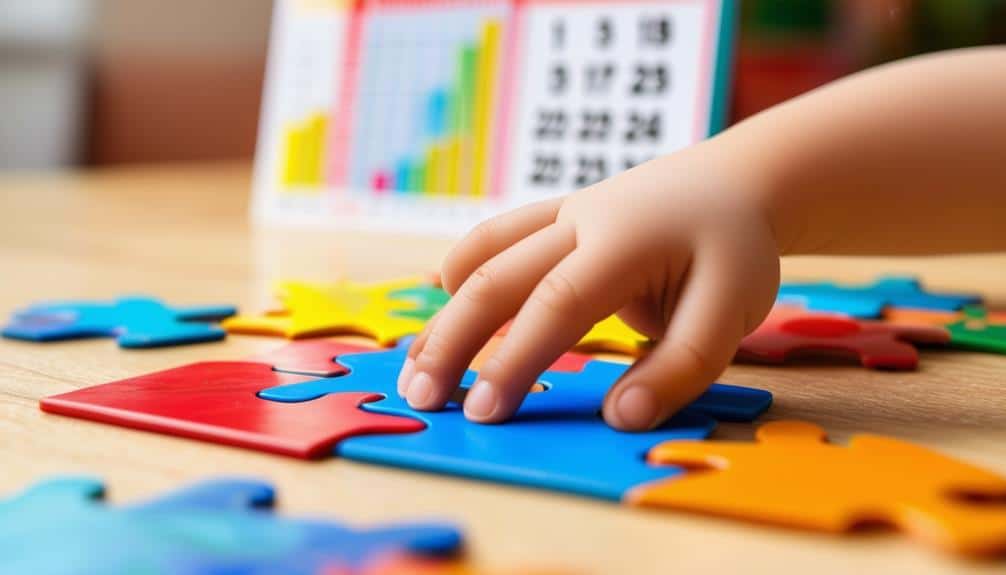
As parents and educators, tracking a child’s hand-eye coordination progress is essential to their developmental success. This involves observing their proficiency in specific tasks, such as catching a ball or drawing shapes, and adjusting activities to challenge them further. Also, recognizing and celebrating their accomplishments can boost their confidence, reinforcing their desire to improve in this critical area.
Monitoring Developmental Milestones
Observing your child’s ability to perform tasks such as catching and throwing a ball, drawing simple shapes, or completing puzzles can be a reliable method to track their progress in hand-eye coordination. These activities, integral to their developmental milestones, provide essential insight into improving their fine motor skills.
When monitoring these milestones, it’s important to celebrate achievements, such as increased precision in drawing or improved accuracy in throwing. These accomplishments signify enhancing your child’s hand-eye coordination, a vital development aspect. But it’s equally important to note areas that require further refinement. For example, if your child struggles with threading beads or cutting with scissors, these could indicate gaps in their fine motor skills that need to be addressed.
Always remember that each child is distinct and develops at their own pace. Therefore, it’s essential not to compare your child’s progress with others. Instead, focus on their journey, identifying their strengths and areas of improvement. By doing so, you can effectively support their hand-eye coordination progress, fostering their growth and paving the way for their future success.
Adjusting Coordination Activities
While celebrating accomplishments and identifying areas for enhancement are pivotal steps in monitoring your child’s hand-eye coordination progress, it’s equally crucial to adapt the coordination activities to their skill level. Understanding their present capability will allow you to tailor the tasks accordingly, fostering continuous growth without exceeding their boundaries.
Adapting coordination activities should be dynamic, considering the child’s progress indicators. This approach guarantees that the tasks stay challenging yet attainable, striking a balance that maintains the child’s interest and drive. Consistent practice is vital, as it reinforces acquired skills and encourages gradual enhancement in hand-eye coordination.
Celebrating Achievements
Celebrating achievements plays a crucial role in enhancing your child’s hand-eye coordination. Acknowledging and applauding your child’s progress boosts their self-esteem and motivates them to develop their skills further. Setting achievable goals and rewarding your child’s efforts create a positive environment that encourages continuous improvement.
Progress tracking is an essential part of celebrating these achievements. By documenting improvements, you can effectively identify the milestones your child has reached and areas that require further development. This observation method provides invaluable insights into your child’s coordination progress over time, offering a clear picture of how they are advancing in their journey of skill acquisition.
Moreover, the use of positive reinforcement and encouragement cannot be overstated. Children respond well to positive feedback; it motivates them to practice and improve their hand-eye coordination skills. When your child makes noticeable progress, celebrate their achievements and underscore the importance of their efforts in reaching their goals. This approach enhances their coordination skills and nurtures a growth mindset, setting them up for success in all facets of life.
Hand-Eye Coordination Examples
Hand-eye coordination is integral in performing simple everyday tasks and more complex activities in a child’s life. This skill is constantly at work, from the simplicity of tying shoelaces to the complexity seen in sports, such as catching a ball or batting in cricket. Even creative tasks like drawing demand a high level of coordination, emphasizing its foundational status in a child’s cognitive and physical development.
Everyday Coordination Examples
Children’s routine activities, such as threading a needle, tying shoelaces, or brushing hair, are practical examples of hand-eye coordination. These activities facilitate the development of fine motor skills as they require precision and control. The child’s visual perception guides their hand movements and enhances gross and fine motor skills.
Grasping an object, such as a toy or a utensil, is another everyday example of hand-eye coordination. This seemingly simple task requires the child’s eyes to guide their hands toward the object accurately. Similarly, when a child is writing a sentence or drawing shapes, their eyes are constantly working with their hands to produce the desired result.
Moreover, activities that may seem merely entertaining, like playing musical instruments, dancing, or building with blocks, significantly contribute to the development of hand-eye coordination. These tasks require the child to process visual information and execute precise hand movements simultaneously.
Sports and Coordination
Delving into the realm of sports, we can identify numerous instances where hand-eye coordination plays an integral role in executing precise movements and reactions. For example, batting a ball in cricket requires a child to contact a rapidly moving object. This demands precise hand-eye coordination, honing their ability to judge distance and speed.
Similarly, catching a ball in sports like baseball or basketball necessitates quick coordination to react and grab the ball. This task enhances the child’s reflexes and reinforces their spatial awareness. Hand-eye coordination is even more critical in sports such as tennis or badminton. Here, children must track the ball’s movement and make timely contact with the racket. This activity requires the child to coordinate visual cues with hand movements, a valuable skill for overall motor development.
Shooting a basketball into a hoop is another sport-related activity that relies heavily on hand-eye coordination. The child must accurately aim and release the ball, which requires a well-coordinated effort of their vision and hand movements. These examples from sports underline the importance of promoting activities that foster coordination in children, specifically hand-eye coordination, to aid their physical and cognitive development.
Coordination in Creative Tasks
Hand-eye coordination is vividly demonstrated in creative tasks, such as threading a needle, drawing detailed illustrations, and batting a ball in baseball. These examples, among others, underscore the crucial role of coordination in a child’s physical and cognitive growth.
Hand-eye coordination Activities extend beyond conventional games. Tasks like painting, playing a musical instrument, and building with blocks require precise coordination between the eyes and hands. These activities offer an engaging and effective way of enhancing the child’s hand-eye skills while fostering creativity.
Furthermore, digital games have also been used to develop hand-eye coordination in children. Video games that focus on timing, precision, and spatial awareness can be beneficial additions to traditional activities. The key is guaranteeing a healthy balance between screen time and physical engagement.
Importance in Child Development
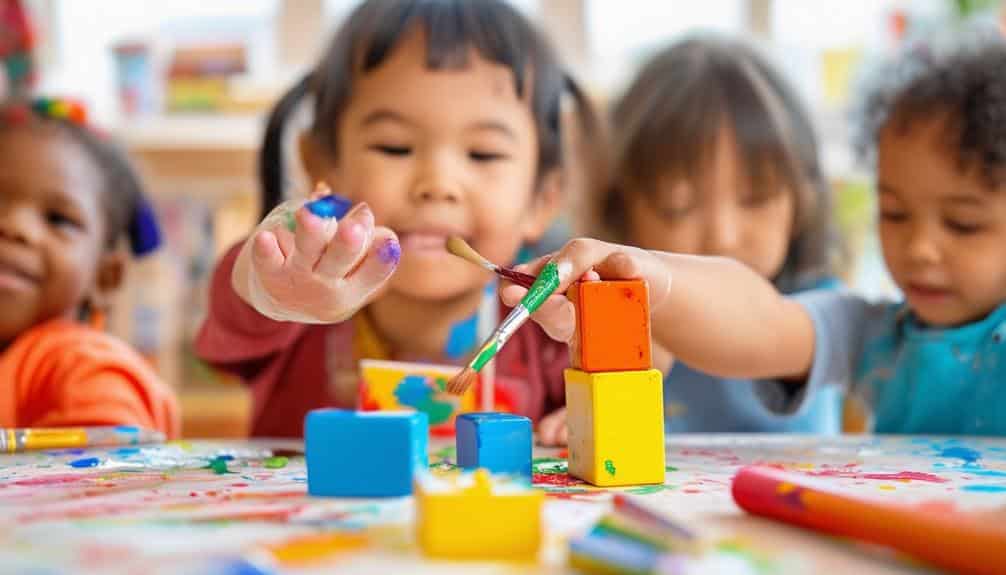
Undeniably, hand-eye coordination plays a crucial role in a child’s development, underpinning a wide range of essential tasks such as drawing, writing, and engaging in sports. It facilitates fine motor development, enabling children to perform delicate tasks requiring precise small muscle movement control. Consequently, visual tracking, a skill that allows children to follow moving objects with their eyes, is greatly enhanced.
The importance of hand-eye coordination in children extends beyond mere physical activities. Research indicates a correlation between this skill and academic performance. Children with well-developed hand-eye coordination often exhibit superior cognitive abilities, as this skill aids in processing information rapidly and accurately.
Furthermore, hand-eye coordination instills confidence in children. As they become adept at various tasks, they gain a sense of accomplishment, boosting their self-esteem. This positive reinforcement may encourage them to embrace challenges and strive for excellence.
Lastly, hand-eye coordination offers long-term benefits. Skills honed in early childhood can translate into many advantages in later life, from professional success to general well-being. Thus, fostering this essential coordination in children is paramount for holistic development.
Improving Hand-Eye Coordination
Improving hand-eye coordination in children is paramount as it directly impacts their cognitive and physical development. This can be achieved by engaging children in activities that challenge and refine their coordination skills, such as drawing, ball games, and construction play. Regularly practicing such activities enhances their fine motor and visual processing abilities and fosters problem-solving, concentration, and an affirmative learning attitude.
Importance of Coordination
Hand-eye coordination, an essential skill for activities ranging from drawing to sports, plays a pivotal role in a child’s overall development. It enables children to perform tasks that require precise movements based on visual input. Good hand-eye coordination forms the basis for motor skill development and cognitive abilities, contributing significantly to a child’s progression.
The importance of coordination is manifold and extends to different aspects of a child’s life. For instance, it aids in improving academic performance by bolstering skills such as writing and drawing. Further, it enhances athletic abilities, paving the way for potential future successes in sports or other physically demanding activities.
| Benefits of Good Hand-Eye Coordination | Examples |
|---|---|
| Enhances motor skills | Enables precise movements like writing, drawing |
| Boosts cognitive abilities | Facilitates processing of visual input effectively |
| Improves academic and athletic performance | This leads to better handwriting, excelling in sports |
Engaging Coordination Activities
Engaging children in activities such as threading, lacing, dribbling a ball, finger painting, and building with blocks provides them with an entertaining learning environment. It fosters the development of their hand-eye coordination. These activities and games offer visual cues that help children align their motor responses with their perceptual system, enhancing their fine motor skills.
Threading and lacing activities, for instance, enable children to practice controlled movements and improve their coordination between eyes and fingers. Meanwhile, dribbling a ball around cones develops their coordination and agility while using props like plastic bottles, which can add a core layer of challenge and fun.
Finger painting activities provide a creative sensory experience, fostering the development of not only eye-hand coordination but also encouraging creativity and motor skills. Building with blocks or Lego sets takes this a step further. It bolsters fine motor skills and promotes creativity, imagination, and learning.
Through these engaging coordination activities, children can learn, play, and develop essential skills in a fun and interactive manner, aiding their overall growth and development.
Fun Coordination Games and Activities
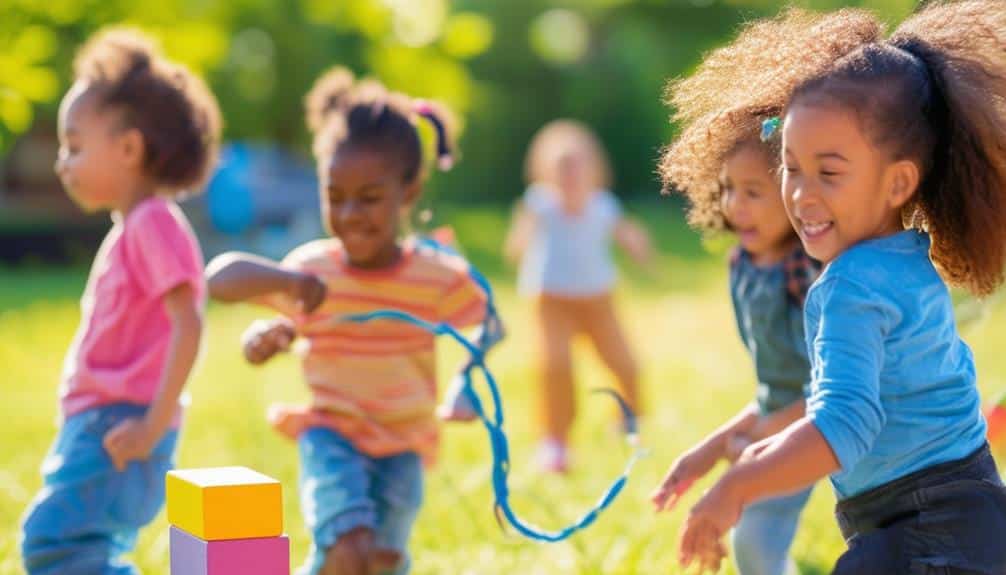
Exploring a variety of fun coordination games and activities, such as playing catch with a softball or engaging in balancing games, can significantly enhance a child’s hand-eye coordination skills. These activities provide an enjoyable experience for children and contribute significantly to their physical and cognitive development.
Here are four examples of such activities:
- Playing Catch: This simple game encourages children to track the ball visually and coordinate their hand movements accordingly, strengthening their hand-eye coordination skills.
- Balancing Games: Activities, such as walking on a balance beam, require both physical balance and visual-motor coordination, offering a fun challenge for children.
- Pegboard Play: This activity involves inserting pegs into a board, which demands precision and coordination. It is fun and educational.
- Puzzles and Building Blocks: These activities require children to fit pieces together based on visual cues, enhancing visual-motor coordination.
Additional Creative Activities
Introducing extra innovative activities such as finger painting, building with blocks, and threading and lacing can often stimulate a child’s imagination and significantly improve their hand-eye coordination and fine motor skills. Finger painting is a remarkable activity that allows children to express their creativity while enhancing coordination. This fun, tactile experience also contributes to sensory development.
Building blocks serve a dual purpose. They facilitate imaginative constructions as a creative outlet, while their physical manipulation is a practical Hand-Eye Coordination Game. These toys require precision, concentration, and controlled movements, all contributing to developing fine motor skills.
Threading and lacing activities further enhance these benefits. By threading beads or lacing cards, children hone their focus and improve their coordination in a fun, engaging manner.
Coloring is another activity worth exploring. Please provide your child with coloring materials to spark their imagination and artistic expression, all while reinforcing hand-eye coordination. Organizing an egg and spoon race can also be enjoyable yet beneficial.
These additional creative activities nurture creativity and play a significant role in developing essential skills in children.
Bean Bag Toss Activities
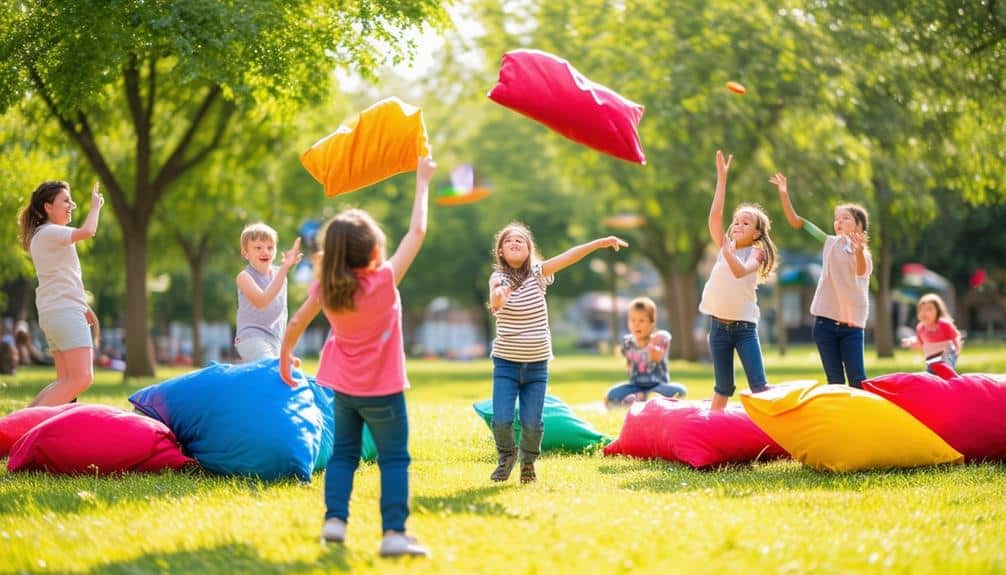
Bean bag toss activities offer many benefits for children’s hand-eye coordination. These enjoyable games, which come in various forms, require precision, control, and an understanding of space and depth. Children can significantly enhance their coordination and fine motor skills through regular practice.
Bean Bag Toss Benefits
Engaging in bean bag toss activities offers numerous benefits, primarily enhancing hand-eye coordination in children through the development of precise aiming and throwing skills. These games are fun but provide a practical method to cultivate essential motor skills. Using bean bags in these activities is a crucial component, as it adds a tangible element that children can easily manipulate, fostering spatial awareness and hand-eye coordination.
- Improves Hand-Eye Coordination: As children aim for targets, they learn to synchronize their hand movements with their visual perception, improving hand-eye coordination.
- Enhances Motor Planning and Coordination: Deciding where and how hard to toss the bean bag encourages children to plan and coordinate their movements.
- Develops Spatial Awareness and Depth Perception: Tossing bean bags into a target helps children understand the concept of distance and space, honing their spatial awareness and depth perception.
- Boosts Reaction Time: Catching a bean bag in the air requires quick thinking and fast reactions, challenging and enhancing their reaction time.
Fun Toss Game Variations
Diversifying the traditional bean bag toss game with various fun and challenging variations can significantly enhance children’s hand-eye coordination, motor skills, and spatial awareness. Aiming and throwing bean bags require precision, focus, and control, all contributing to developing these essential skills. Introducing variations like tossing bean bags into different-sized baskets or catching them with one hand adds complexity and engagement to the activity.
Incorporating these variations into regular play routines supports the development of fine motor skills and promotes spatial awareness. Children learn to judge distances, calculate trajectories, and adjust their actions accordingly, making bean bag toss activities a multi-faceted development.
Adapting these activities for both indoor and outdoor play further broadens their versatility, offering children a more comprehensive range of experiences and challenges. Whether aiming for a hula hoop in the garden or a basket in the living room, the bean bag toss game keeps children active, focused, and entertained while enhancing their hand-eye coordination and motor skills.
Improving Skills With Toss
In light of the numerous benefits and versatility of these activities, it’s clear that improving skills with the tool of bean bag toss games present a multifactorial approach to hand-eye coordination in children. The principles behind these games are simple; they engage children in interactive play that is fun yet cognitively challenging and physically stimulating.
- Sharpens Motor Skills: Bean bag toss activities demand precision and control, refining motor skills. Throwing and catching the bean bag engages both gross and fine motor skills.
- Advances Hand-Eye Coordination: Tossing a bean bag into a target requires synchronizing visual input with hand movement, boosting hand-eye coordination.
- Nurtures Visual Tracking Abilities: Catching the tossed bean bag develops visual tracking abilities, an essential aspect of hand-eye coordination.
- Promotes Concentration and Spatial Awareness: These games necessitate focus and a keen understanding of space, encouraging concentration and spatial awareness in children.
In essence, bean bag toss activities provide a multifactorial approach to faceted hand-eye coordination, presenting an effective, enjoyable method for fostering this crucial skill in children.
Drawing for Coordination Enhancement
Using drawing as a coordination-enhancement tool, children can significantly enhance their hand-eye coordination by creating precise shapes and lines. This practice develops fine motor skills as they learn to grasp and control drawing utensils. Exposing an image from their mind onto paper stimulates creativity and encourages visual processing and spatial awareness, fundamental skills for understanding the world around them.
Moreover, different mediums and techniques can further challenge and refine this coordination. For instance, using pencils for detailed work, crayons for broader strokes, or markers for bold lines requires unique control and precision. Regularly engaging in these drawing activities can significantly impact a child’s cognitive skills, focus, and creativity, making it a diverse tool for development.
As caregivers and educators, it is essential to incorporate drawing activities into children’s routines. This will infuse joy and creativity into their lives and equip them with the hand-eye coordination and fine motor skills necessary for their growth and development.
Chalkboard and Chalk Activities
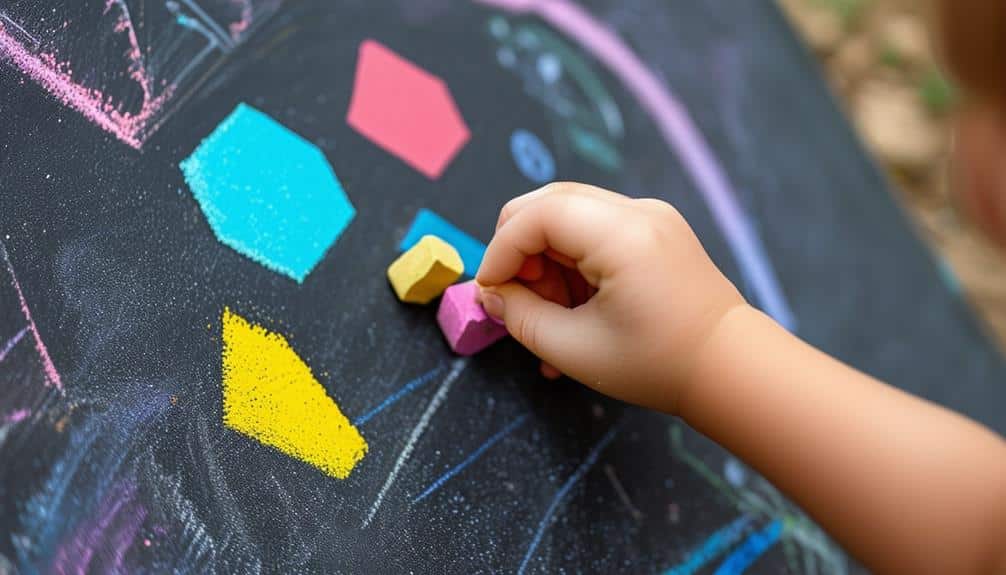
While drawing on paper enhances fine motor skills, chalkboard and chalk activities offer a unique opportunity for children to develop midline crossing ability and considerable muscle coordination. These activities engage children in a distinct sensory experience that stimulates creativity, promotes motor skills development, and fosters eye-hand coordination.
- Midline Crossing Ability: Chalkboard activities aid in developing the midline crossing ability, which is essential for motor development. Drawing on a large chalkboard surface encourages children to reach across their bodies, enhancing this vital skill.
- Considerable Muscle Coordination: These activities also improve muscle coordination, as children can control their arm and body movements while drawing.
- Fine Motor Skills: Holding and maneuvering the chalk to create shapes and lines contributes significantly to developing fine motor skills.
- Eye-Hand Coordination: Children improve their eye-hand coordination by focusing on their hands as they draw, a fundamental aspect of motor development.
With these benefits, chalkboard and chalk activities serve as an effective and enjoyable method for enhancing children’s motor skills, proving once more that play can be a powerful tool for learning.
Dribbling and Coordination
Mastering the art of dribbling the ball around cones presents an enjoyable and dynamic activity that significantly enhances coordination and agility in children. By incorporating various shapes and patterns with the cones, children can be challenged to navigate the ball with precision and control, thereby improving their coordination skills. Using a cricket or baseball bat for dribbling further enhances hand-eye coordination and is an exciting activity variation.
The beauty of this exercise lies not only in its simplicity but also in its adaptability. For instance, using plastic bottles as cones provides an affordable way to practice dribbling at home or in parks. This flexibility makes it accessible to children from all socioeconomic backgrounds.
Moreover, dribbling also fosters a spirit of camaraderie and friendly competition among peers. It encourages children to collaborate and compete healthily, thus promoting teamwork. Consequently, this fun activity not only boosts hand-eye coordination but also contributes to the overall social development of children. So, let’s encourage kids to dribble their way to better coordination and a fitter, happier childhood!
Finger Painting and Creativity
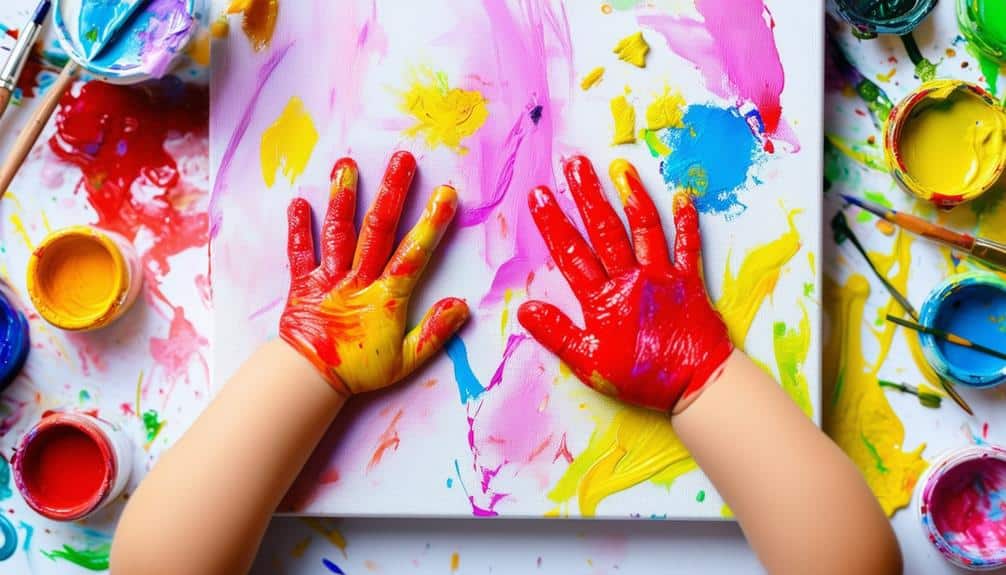
In addition to ball sports, finger painting provides colorful and creative avenues for children to enhance hand-eye coordination. It offers a tactile, sensory experience that can be fun and educational, and its benefits extend beyond mere entertainment.
- Development of Fine Motor Skills: Finger painting encourages children to use controlled movements, which helps to build their fine motor skills. It requires coordination between eyes and fingers, which fosters the development of hand-eye coordination.
- Enhancement of Creativity: Using different mediums for finger painting can enhance artistic expression. It encourages children to experiment with colors and patterns, promoting creative play.
- Improvement of Hand-Eye Coordination: The process of creating art with fingers requires children to observe their hands while they move, which is a fundamental aspect of hand-eye coordination.
- Sensory Stimulation: Finger painting provides a multi-sensory experience, stimulating sight, touch, and smell. This sensory immersion can enhance a child’s overall cognitive development.
Building With Blocks or Lego
Engaging children in constructing activities with blocks or Legos provides an enjoyable playtime experience and an effective tool for enhancing their attention span, fine motor skills, and hand-eye coordination. The process of stacking, balancing, and arranging blocks involves the use of both hands and eyes, thereby stimulating hand-eye coordination. The fine motor skills are honed as children grasp, move, and fit these blocks together.
Investing in good-quality blocks can open a world of learning opportunities for children. They encourage creative thinking, problem-solving, and spatial awareness while keeping them engaged and entertained.
Here is a simple table to illustrate the benefits of building with blocks:
| Benefits | Description | Impact |
|---|---|---|
| Hand-Eye Coordination | It involves using hands and eyes in a coordinated manner | Boosts overall motor performance |
| Fine Motor Skills | Involves precise movements of hands and fingers | Enhances writing, eating, and dressing skills |
| Cognitive Skills | Encourages problem-solving and creative thinking | Promotes academic and life success |
Frequently Asked Questions
How to Boost Hand-Eye Coordination in Kids?
Improving hand-eye coordination in children can be achieved through engaging activities like throwing games, drawing, coloring, building with construction toys, and threading exercises. These methods develop motor skills and playfully enhance coordination.
What Are Three Examples of Toys That Help Develop Hand-Eye Coordination in a Child?
Building blocks, puzzles, and musical instruments are three compelling toys that enhance a child’s hand-eye coordination and foster their cognitive and physical development through engaging and enjoyable playtime activities.
What Is an Example of an Activity That Exemplifies Hand and Eye Coordination?
One activity that exemplifies hand-eye coordination is assembling a jigsaw puzzle. This task requires precise alignment of puzzle pieces based on visual cues, fostering the development of this essential motor skill in children.
What Is the Game for Hand-Eye Coordination for Kids?
The bean bag toss game is an excellent choice for enhancing hand-eye coordination in children. It involves aiming and throwing, improving a child’s accuracy and coordination skills.