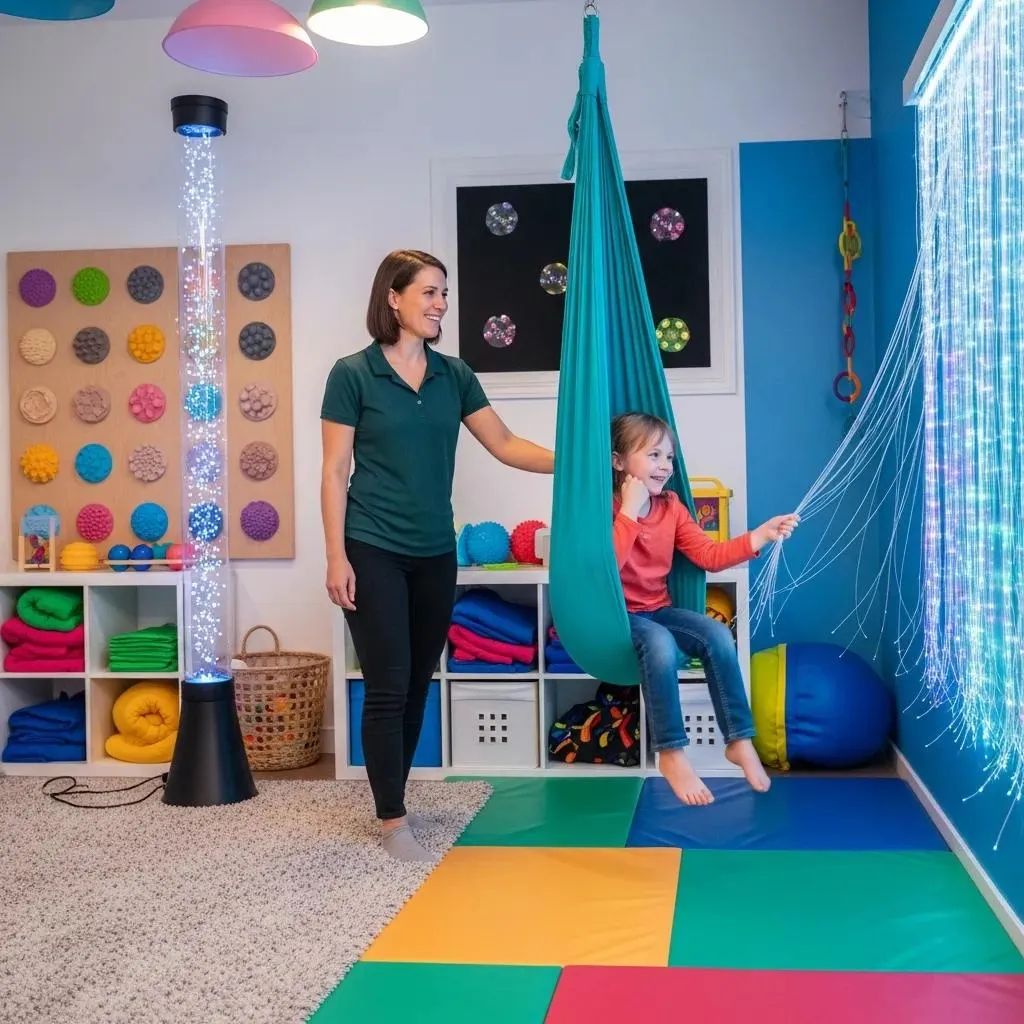

Boosting Focus with Therapeutic Listening
Therapeutic Listening is a sound-based intervention that uses filtered and modified music to stimulate the auditory and vestibular systems, supporting improved attention and emotional regulation in children. This article explains how Therapeutic Listening works, the neural and sensory mechanisms behind its effects, and practical ways families and clinicians can apply it to help children who struggle with focus, sensory overload, or regulation. Many caregivers observe that children with attention challenges, auditory processing differences, or sensory sensitivities respond better to interventions that organize sensory input; Therapeutic Listening offers a structured, evidence-informed approach to reshape sensory gating and support neural plasticity. Readers will find clear explanations of mechanisms, condition-specific benefits, program structure, home exercises, equipment guidance, and how a personalized plan might look when delivered by pediatric occupational therapy providers. We begin by defining Therapeutic Listening and its science, then examine attention and regulation outcomes, target populations, program components, caregiver strategies, and equipment selection to give families practical next steps.
What is Therapeutic Listening and How Does It Support Attention and Regulation?
Therapeutic Listening is a therapeutic approach that delivers modified, filtered music through calibrated headphones to influence neural processing and sensory integration, thereby improving attention and regulation. The mechanism centers on auditory stimulation that engages the auditory cortex and vestibular pathways, promoting sensory gating and neural plasticity, which in turn support better focus and calmer arousal states. Practically, sessions pair listening with movement or play-based activities so the brain links organized auditory input to functional regulation in daily tasks. Understanding this sensory-to-behavior pathway clarifies why Therapeutic Listening is often integrated into broader occupational therapy plans for children who need improved auditory processing and self-regulation.
Skill Point Therapy offers Therapeutic Listening as part of pediatric occupational therapy services and can evaluate whether this sound-based intervention fits a child’s needs; evaluations guide individual plans and determine whether in-clinic, community-based, in-home, or telehealth delivery is most suitable. For families considering this option, a review typically focuses on listening and sensory profiles, attention and regulation goals, and coordination with school or other providers. The following section explains the core biological mechanisms by which Therapeutic Listening influences brain function and observable behavior.
How Does Therapeutic Listening Use Sound to Improve Brain Function?

Therapeutic Listening uses filtered and modified music to deliver patterned auditory input that stimulates the auditory pathways and indirectly engages vestibular systems, enhancing neural connectivity and sensory gating. This patterned stimulation encourages neural plasticity by repeatedly activating auditory networks and associated attentional circuits, thereby strengthening the brain’s ability to filter irrelevant stimuli and prioritize essential signals. The approach also leverages rhythmic entrainment—where neural oscillations sync with rhythmic sound—to promote calmer autonomic states and improved task persistence. Children often show quicker orienting to verbal cues and smoother transitions after consistent, programmatic exposure, illustrating the functional link between auditory stimulation and daily attention.
What Are the Key Benefits of Therapeutic Listening for Children?
Therapeutic Listening produces several interrelated benefits that support learning and daily function through improved sensory processing and regulation. Children commonly experience enhanced selective and sustained attention, reduced sensory overload, more apparent auditory discrimination, improved motor planning during listening-based tasks, and increased ability to participate socially and follow multi-step instructions. These gains stem from improved signal-to-noise processing, better sensory gating, and stronger integration between auditory input and motor or emotional responses. Below is a compact Entity-Attribute-Value style table that maps primary benefit areas to mechanisms and expected outcomes for clarity.
Different benefits map to specific mechanisms and functional outcomes in pediatric practice.
This comparison highlights how distinct mechanisms contribute to practical improvements in classroom and home settings, and sets up the next section on attention-specific effects.
How Does Therapeutic Listening Improve Attention Skills in Children?
Therapeutic Listening improves attention by strengthening the brain’s ability to select relevant auditory input, maintain neural activation for tasks, and resist distraction through improved sensory gating. The method repeatedly presents structured auditory cues that train selective attention and increase the efficiency of neural networks involved in sustained attention and task persistence. Over time, children often demonstrate more consistent task initiation, improved follow-through on multi-step directions, and fewer off-task behaviors during structured activities. These functional changes make Therapeutic Listening a valuable adjunct to classroom strategies, behavioral supports, and individualized educational plans.
Therapeutic Listening targets several attention components that map to everyday behaviors and learning outcomes. Below is a short list summarizing key attention improvements families and educators commonly see after a coordinated Therapeutic Listening program.
- Selective Attention: Improved ability to focus on teacher instructions despite background noise.
- Sustained Attention: Longer periods of task engagement with fewer adult prompts.
- Task Persistence: Increased willingness to complete multi-step activities without immediate reinforcement.
These attention improvements are observable and measurable through teacher reports and direct behavioral tracking, which clinicians use to set therapy goals and monitor progress. The following subsection explains how specific attention components change in real life.
In What Ways Does Therapeutic Listening Enhance Focus and Sustained Attention?
Therapeutic Listening enhances focus by improving selective attention—helping children tune into relevant sounds—and by strengthening sustained attention through repeated activation of attentional networks. Practically, this can mean a child requires fewer verbal reminders to remain on task, completes homework with less redirection, and tolerates more extended periods of structured learning. Recommended program cadence is individualized, but conceptual session patterns often include several weeks of regular listening paired with focused activities to reinforce transfer to functional tasks. As attention stability increases, clinicians and families can shift goals from tolerance of tasks toward independent completion and deeper learning.
How Does Therapeutic Listening Help Filter Distractions and Support Auditory Processing?
Therapeutic Listening supports auditory filtering by improving the brain’s signal-to-noise processing, making it easier for children to pick out important speech from background sounds. This enhanced auditory discrimination helps children follow classroom conversations, respond to teacher prompts, and participate in group activities with less confusion. For children with auditory processing challenges, this results in clearer speech perception in noisy settings and improved communication confidence. Tracking outcomes often involves classroom observations and simple speech-in-noise checks to document functional gains tied to the program.
How Can Therapeutic Listening Foster Emotional and Behavioral Regulation?

Therapeutic Listening fosters emotional and behavioral regulation by influencing the balance of the autonomic nervous system and reducing hyperarousal through rhythmic auditory input. By providing predictable auditory patterns and calibrated stimulation, Therapeutic Listening can lower baseline arousal, shorten recovery after stress, and reduce the frequency and intensity of sensory meltdowns. When combined with coping strategies and sensory diets, listening programs help children develop more adaptive responses to sensory challenges and social demands. The following paragraphs break down the physiological calming mechanisms and practical caregiver strategies that support emotional control.
Therapeutic Listening complements other calming strategies and is often paired with sensory diets, deep-pressure activities, and breathing exercises to create a comprehensive regulation plan. Below is a brief list of calming mechanisms and how caregivers can use them in daily routines.
- Rhythmic Entrainment: Syncs physiological rhythms to promote calm breathing and reduced heart rate.
- Predictable Stimulation: Reduces surprise-driven arousal and improves tolerance of transitions.
- Paired Regulation Activities: Listening combined with slow movement or joint attention activities strengthens coping skills.
These mechanisms support gradual improvements in mood stability and adaptive behavior, and they set the stage for the subsection explaining nervous system effects in more detail.
How Does Therapeutic Listening Calm the Nervous System and Reduce Overwhelm?
Therapeutic Listening calms the nervous system by promoting rhythmic entrainment and enhanced sensory predictability, which together reduce sympathetic overdrive and support parasympathetic recovery. This effect makes it easier for children to return to baseline after sensory challenges and reduces the frequency of dysregulated episodes. Observable outcomes include smoother transitions, less escalation during crowded or noisy situations, and improved tolerance for routine changes. Integrating Therapeutic Listening with occupational therapy-led sensory strategies amplifies these benefits and ensures gains translate into functional behavior.
What Role Does Therapeutic Listening Play in Supporting Emotional Control?
Therapeutic Listening supports emotional control by linking improved sensory processing to better top-down regulation; when sensory input becomes more manageable, cognitive resources are freed to use coping strategies and problem-solving. Children often show increased ability to use learned calming techniques after listening sessions, such as asking for a sensory break or following a teacher’s calming script. This change in behavior is typically reflected in reduced incident reports and improved participation in group tasks. Coordinated goal-setting with caregivers and educators ensures emotional control gains are practiced across settings.
Who Benefits Most from Therapeutic Listening?
Therapeutic Listening benefits a range of children, particularly those with auditory processing differences, attention disorders, sensory processing challenges, and specific developmental profiles in which listening and regulation affect daily functioning. Typical candidates include children with Auditory Processing Disorder (APD), Attention Deficit Hyperactivity Disorder (ADHD), Autism Spectrum Disorder, and generalized sensory sensitivities that interfere with learning or social participation. Timing, individual variability, and co-occurring conditions determine responsiveness, so multidisciplinary evaluation is essential to set realistic goals and measure progress. The following table maps conditions to typical challenges and the mechanisms by which Therapeutic Listening helps address them.
This table summarizes common target populations, presents challenges, and explains how Therapeutic Listening addresses specific needs.
How Does Therapeutic Listening Help Children with Auditory Processing Disorder?
For children with Auditory Processing Disorder, Therapeutic Listening targets the core difficulty of extracting relevant speech from background noise by training auditory discrimination and timing. Repeated exposure to filtered and modified music helps the auditory system refine temporal processing and enhances neural synchrony, both of which are essential for decoding speech. Functionally, this may translate to fewer missed instructions, better reading comprehension in noisy classrooms, and reduced listening fatigue. Clinicians typically combine listening with targeted speech-language and classroom accommodations to maximize skill transfer.
What Are the Effects of Therapeutic Listening on Children with ADHD and Autism?
Children with ADHD often show gains in sustained attention, reduced impulsivity during tasks, and improved task initiation after structured Therapeutic Listening programs. In contrast, children on the autism spectrum may display reduced sensory-driven reactivity, greater tolerance for social activities, and enhanced participation in routines. The differences in outcomes reflect distinct mechanisms: attention modulation for ADHD and sensory modulation for autism, both mediated by improved sensory gating and autonomic balance. Individualized plans account for co-occurring needs and coordinate with behavioral, educational, and speech-language supports to measure meaningful progress.
What Does a Personalized Therapeutic Listening Program at Skill Point Therapy Include?
A personalized Therapeutic Listening program at Skill Point Therapy begins with a comprehensive intake and sensory evaluation to identify attention, auditory processing, and regulation goals; this evaluation guides an individualized listening curriculum and home program. Program components typically include scheduled listening sessions paired with therapeutic activities, calibrated equipment selection, caregiver coaching for home practice, and regular progress reviews using observational and standardized measures. Session frequency, duration, and delivery setting (in-clinic, community, in-home, or telehealth) are tailored to the child’s needs and family routines to ensure consistency and functional carryover. The following table clarifies program components, descriptions, and parent role expectations.
Families receive a clear outline of program components and what caregivers will be asked to support.
What to Expect During Therapeutic Listening Sessions and Home Programs?
During sessions, children wear calibrated headphones and engage in therapist-led activities that pair listening with movement, play, or focused tasks designed to reinforce attention and regulation gains. Each session typically includes a brief warm-up, the listening period, targeted activities that practice listening-in-action, and a short debrief with caregiver coaching to translate gains to home or school routines. Home programs are concise, often consisting of short daily listening blocks and 2–3 simple reinforcement activities that are easy to integrate into family life. Progress is tracked through observational logs, caregiver and teacher reports, and periodic reassessments to adjust goals and session structure.
How Is Therapeutic Listening Integrated with Other Pediatric Therapies?
Therapeutic Listening is most effective when integrated into a multidisciplinary plan that may include occupational therapy for sensory integration, speech-language therapy for listening and language goals, and behavioral supports for executive function. Integration is coordinated through shared goals, regular communication among providers, and practical strategies that tie listening gains to classroom accommodations and home routines. For example, pairing Therapeutic Listening with speech-language targets improves auditory comprehension, while combining it with movement-based occupational therapy builds motor planning alongside listening skills. This coordinated approach ensures gains in the therapy room translate into functional improvements across settings.
How Can Parents and Caregivers Support Therapeutic Listening at Home?
Parents and caregivers play a central role in supporting Therapeutic Listening by creating consistent routines, setting up a distraction-managed environment, and using simple reinforcement activities that reinforce listening gains. Home support includes scheduling short, predictable listening sessions, supervising safe headphone use, and pairing listening with calming or focused activities such as drawing, puzzles, or slow movement. Caregivers also track observations—changes in attention, fewer meltdowns, or improved classroom behavior—to share with therapists to support program adjustments. The following list provides practical, actionable steps families can implement to support Therapeutic Listening at home.
- Establish a brief daily routine: Schedule 10–20 minute listening sessions at a consistent time each day.
- Create a low-distraction space: Use a quiet corner with comfortable seating and minimal visual clutter.
- Pair listening with a focused activity: Combine listening with drawing or fine-motor tasks to reinforce transfer.
- Track and share observations: Keep a simple log of attention and regulation changes to inform therapy adjustments.
These steps build structure and consistency, which are critical for consolidating sensory and attention gains achieved during formal sessions. Next, we describe concrete exercises caregivers can use during or around listening sessions.
What Are Effective Therapeutic Listening Exercises for Home Use?
The following exercises are caregiver-friendly activities designed to reinforce listening gains and support attention and regulation during home practice. Each activity is adaptable by age—shorter repetitions for younger children and more complex versions for older children—and complements daily listening blocks to encourage functional transfer.
- Focused Drawing: Play a listening track while the child completes a short drawing task for 10–15 minutes to practice sustained attention.
- Sound Scavenger Hunt: During listening, name sounds in the environment and have the child identify or point to them to build auditory discrimination.
- Slow Movement Sequence: Pair listening with a two- or three-step slow movement routine (e.g., reach, bend, clap) to link auditory patterns to motor planning.
- Story Follow-Along: After listening, read a short story and ask two comprehension questions to practice auditory memory and attention.
These exercises support gradual skill-building; caregivers should adjust duration and complexity based on the child’s response and communicate observations to the therapy team for ongoing plan refinement.
How to Choose the Right Therapeutic Listening Equipment for Children?
Choosing the right Therapeutic Listening equipment involves balancing program fidelity (properly filtered music and calibrated delivery) with safety, comfort, and family practicality. Equipment typically includes professionally prepared, filtered music tracks, a comfortable, child-sized headset that isolates sound without causing discomfort, and a reliable playback device with volume controls and usage tracking, where available. Safety considerations include relaxed fit, safe volume limits, and easy cleaning for shared use. The short list below helps families evaluate essential equipment features before making a purchase or accepting a clinic recommendation.
Evaluate equipment based on function, comfort, and support for therapeutic goals.
- Filtered Music Source: Use professionally developed Therapeutic Listening programs rather than generic playlists to preserve intended frequency shaping.
- Comfortable Headset: Select a child-sized, padded headset that provides a stable but gentle fit for the session duration.
- Volume and Controls: Ensure volume limits and precise controls are present, so caregivers or therapists can set safe listening levels.
When in doubt, please ask for professional recommendations and formulations from therapists trained in Therapeutic Listening to ensure program fidelity and safe use; Skill Point Therapy clinicians can advise families on equipment selection and program setup as part of their individualized evaluation and service planning.
This final practical guidance helps families choose devices that support consistent use, therapeutic integrity, and child comfort; careful selection also reduces barriers to implementing home programs and increases the likelihood of meaningful gains.
Frequently Asked Questions
What types of children benefit most from Therapeutic Listening?
Therapeutic Listening is particularly beneficial for children with conditions such as Auditory Processing Disorder (APD), Attention Deficit Hyperactivity Disorder (ADHD), Autism Spectrum Disorder, and sensory processing challenges. These children often struggle with attention, sensory overload, and emotional regulation. The program is tailored to address specific needs, making it essential to conduct a thorough evaluation to determine the best approach for each child. By focusing on individual profiles, Therapeutic Listening can effectively support their unique developmental challenges.
How can parents track progress during Therapeutic Listening?
Parents can track progress by maintaining observational logs that document changes in their child’s attention, emotional responses, and behavior during daily activities. Regular communication with therapists is crucial, as sharing these observations can help adjust the Therapeutic Listening program to better meet the child’s needs. Additionally, parents can use feedback from teachers and caregivers to assess improvements in classroom behavior and social interactions, providing a comprehensive view of the child’s development over time.
What are some common challenges families face when implementing Therapeutic Listening at home?
Families may encounter challenges such as maintaining a consistent routine, managing distractions during listening sessions, and ensuring the child is engaged with the activities. Additionally, some children may initially resist wearing headphones or participating in structured tasks. To overcome these obstacles, caregivers can create a calming environment, establish a predictable schedule, and incorporate fun, engaging activities that reinforce listening skills. Open communication with therapists can also provide strategies to address specific challenges as they arise.
How does Therapeutic Listening integrate with other therapies?
Therapeutic Listening is most effective when integrated into a multidisciplinary approach that may include occupational therapy, speech-language therapy, and behavioral supports. This integration allows for shared goals and coordinated strategies that enhance the overall therapeutic experience. For instance, combining Therapeutic Listening with speech-language targets can improve auditory comprehension, while pairing it with movement-based activities can enhance motor planning. This holistic approach ensures that gains made in one area support progress in others, leading to more comprehensive development.
What should families consider when selecting Therapeutic Listening equipment?
When selecting Therapeutic Listening equipment, families should prioritize comfort, safety, and program fidelity. This includes choosing professionally prepared filtered music, a child-sized headset that fits comfortably, and a reliable playback device with volume controls. It’s essential to ensure that the equipment is easy to clean and maintain, especially if shared among multiple users. Consulting with therapists for recommendations can help families make informed choices that align with their child’s therapeutic needs and improve the program’s effectiveness.
Can Therapeutic Listening be used in conjunction with other interventions?
Yes, Therapeutic Listening can be effectively used alongside other interventions, such as behavioral therapy, sensory integration therapy, and academic support programs. This complementary approach allows for a more comprehensive treatment plan that addresses various aspects of a child’s development. By coordinating with other professionals, caregivers can ensure that Therapeutic Listening aligns with the overall therapeutic goals, enhancing the child’s ability to generalize skills learned in therapy to everyday situations.
Conclusion
Therapeutic Listening offers a structured, evidence-based approach to enhance children’s focus, emotional regulation, and sensory processing. By integrating auditory stimulation with movement and play, this method supports measurable improvements in attention and daily functioning. Families are encouraged to explore personalized Therapeutic Listening programs to unlock their child’s potential. Discover how Skill Point Therapy can help you implement this transformative intervention today.