

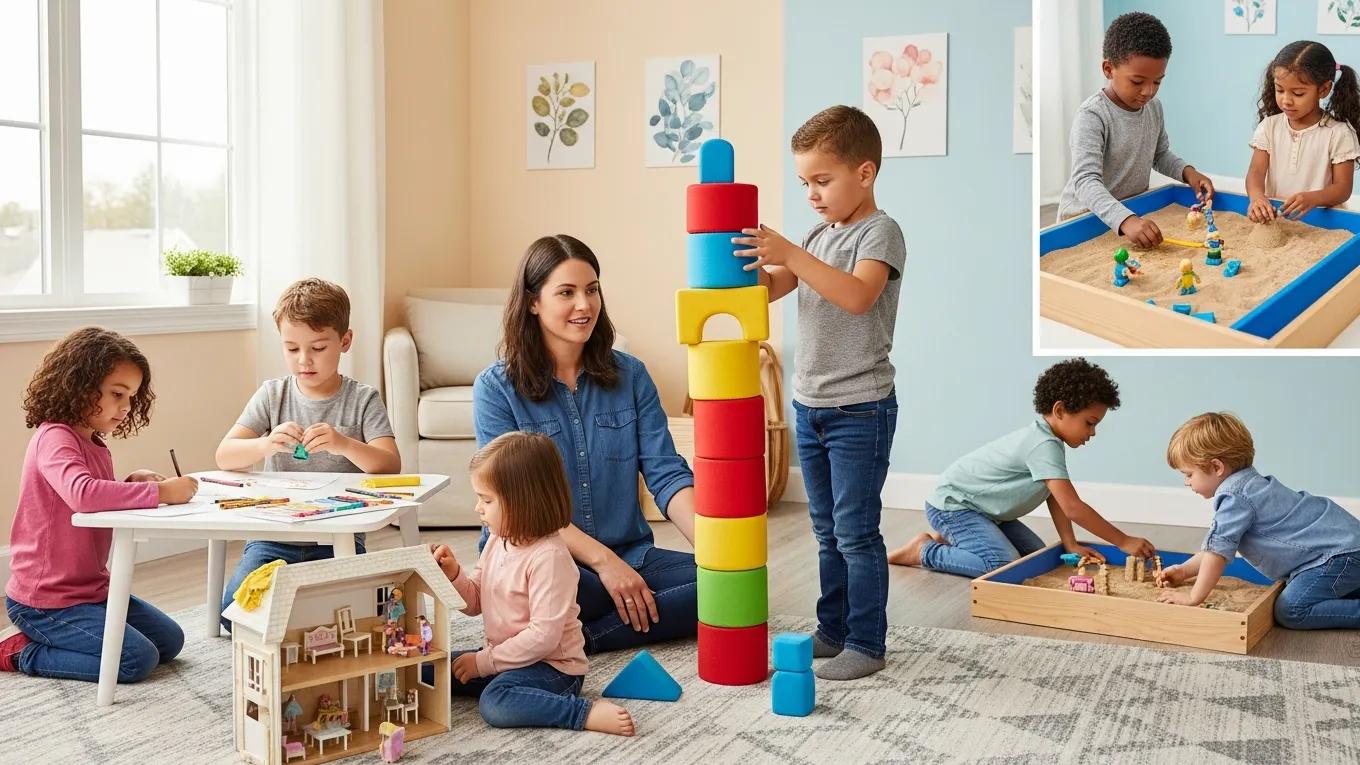
Play-Based Therapy: Practical Strategies for Children’s Occupational Therapy
Play-based therapy integrates structured play into pediatric occupational therapy, enabling children to build measurable skills across physical, emotional, and cognitive domains. Below we outline effective strategies used in play-focused treatment, introduce the child-led DIRFloortime approach, and offer practical ideas parents can use at home. Families near our Skill Point Therapy locations in Tampa and Brandon, Florida, will find helpful guidance to support their child’s development. If you’re wondering where can I find play-based therapy near me, our centers are equipped with skilled therapists ready to help.
Key Takeaways
- Play-based therapy uses purposeful play to strengthen children’s motor, emotional, and thinking skills within occupational therapy.
- Pediatric occupational therapy targets independence in daily tasks, better motor coordination, and improved sensory processing.
- Parents should consider therapy when developmental milestones are delayed or when children struggle with emotional or social regulation.
- Therapy sessions combine guided play, sensory activities, and positive reinforcement to keep children engaged while building useful skills.
- The DIRFloortime model centers on child-led play and emotional connection to support whole-child development.
- Play-based methods build intrinsic motivation, rather than relying on external rewards that may only produce short-term compliance.
- Parents can reinforce progress at home by establishing playful routines and consistently repeating therapeutic activities.
- Frequent communication with therapists helps monitor progress and refine therapy plans for the best outcomes.
- Play-based therapy is adaptable for different ages and needs, focusing on each child’s strengths and a manageable pace of learning.
What Is Pediatric Occupational Therapy and How Does Play-Based Therapy Integrate?
Pediatric occupational therapy helps children develop the everyday skills they need to participate in home, school, and play. It focuses on independence, motor skills, and sensory processing so kids can take part more fully in daily life. Play-based therapy supports those goals by using meaningful, engaging play that encourages learning in context (American Occupational Therapy Association, 2020). This therapeutic approach is carefully designed to promote growth across several areas of child development.
Defining Pediatric Occupational Therapy and Its Core Objectives
This work centers on goals that increase a child’s ability to adapt, participate, and grow skills over time. Common aims include improving independence with self-care, refining motor coordination, and addressing sensory challenges. Therapists design interventions around each child’s unique strengths and needs.
Role of Play-Based Therapy in Enhancing Child Development
Play-based therapy encourages exploration, action sequencing, and emotional regulation through enjoyable, supported activities. Because it feels natural and motivating, play helps children practice skills in real-life contexts. With guided play, therapists create moments that turn fun into meaningful learning.
When Should Parents Seek Pediatric Occupational Therapy for Their Child?
Spotting early signs that a child may need support can lead to timely, effective interventions. Parents are often the first to notice developmental differences, and seeking help early can make a big difference. Our Skill Point Therapy teams in Tampa and Brandon are available to work with families who have questions or concerns. If you’re asking how play-based occupational therapy helps my child, our therapists can provide personalized assessments and guidance.
Recognizing Developmental Milestones and Early Intervention Indicators
Developmental milestones give useful benchmarks for motor, communication, and social progress. Parents can look for milestones like rolling, babbling, or beginning to play with peers. When a child consistently misses expected milestones, a professional evaluation can help identify next steps. Early intervention is key to enhancing outcomes (Centers for Disease Control and Prevention, 2021).
Common Signs That Suggest the Need for Therapy Evaluation

Signs that warrant evaluation include difficulty regulating emotions, withdrawing from social situations, or struggling with everyday tasks like dressing or feeding. When these patterns appear, a specialist can assess needs and recommend supports. Early evaluation helps families connect with the right resources sooner.
What Happens During a Play-Based Occupational Therapy Session?
Therapists lead children through structured play activities planned around specific developmental goals. Sessions commonly run 30 to 60 minutes—long enough to learn but short enough to match a child’s attention span. These activities are playful by design but focused on building functional skills.
Structure and Techniques Used in Therapy Sessions
Each session is planned with games, crafts, and sensory experiences that promote targeted growth. Therapists use guided play, encouragement, and positive reinforcement to promote participation and skill-building. This approach helps children stay motivated and engaged while they learn.
How Play-Based Strategies Support Motor and Sensory Development
Play-based strategies layer graded motor tasks with multisensory input to strengthen coordination and sensory integration. Activities are scaled to a child’s ability and advanced as the child builds confidence. This gradual challenge helps children safely gain real-world skills.
Understanding the Philosophy of DIRFloortime: A Child-Led, Play-Based Therapy Approach
DIRFloortime focuses on child-led interactions that promote development through warm, back-and-forth relationships. It prioritizes following a child’s interests and building on their strengths as pathways to learning. The approach creates a supportive space where growth feels motivating and natural. For parents asking what DIRFloortime therapy is, this model emphasizes emotional connection and relational engagement as foundational to development (Greenspan & Wieder, 2006).
Emphasizing Relational Engagement and Emotional Connection
DIRFloortime puts emotional connection at the center of development. By responding to a child’s cues with attuned interactions, caregivers and therapists build trust and motivation.
That trusting relationship gives children the confidence to explore and try new skills. When kids feel seen and safe, learning becomes more joyful and effective.
Supporting Integrated Development Through Play
Play is the vehicle through which thinking, social skills, and emotions develop together in DIRFloortime. Child-led play lets each child move at their own pace while adults follow and support their interests.
This responsive, integrated learning encourages steady, meaningful progress across many areas of development.
Comparing Play-Based Therapy with Reward-Based Approaches
Some methods use external rewards to motivate children to complete tasks. While rewards can prompt short-term cooperation, they don’t always address underlying developmental or sensory needs. At Skill Point Therapy in Tampa and Brandon, we favor approaches that support long-term growth.
Relying mainly on rewards can lead children to perform tasks for the prize rather than develop real understanding or motivation. Play-based therapy, by contrast, cultivates warm, attuned relationships that nurture internal drive and problem-solving.
Through these relationships, children learn to engage because it feels meaningful—not just to earn something. That deeper motivation supports lasting progress through ongoing developmental challenges.
Play-Based Therapy Strategies and Developmental Milestones: A Handy Reference Table
Knowing common milestones helps parents and therapists choose activities that best match a child’s stage. The table below offers examples of developmental goals and play-based ideas families near Skill Point Therapy in Tampa and Brandon can try at home.
How Can Parents Support Their Child’s Development at Home?

Parents are key partners in turning therapy goals into everyday habits. Setting consistent routines and a playful, supportive space lets children practice new skills daily. Families who work alongside Skill Point Therapy clinicians in Tampa and Brandon often see stronger, quicker gains. If you’re looking for the best occupational therapy for kids in Tampa and Brandon, consider partnering with our experienced team to create a customized plan.
Practical Tips for Reinforcing Therapy Strategies
Create a corner of the home that invites exploration and creativity. Fold therapeutic tasks into daily routines so practice feels natural—bath time, mealtime, and dressing are easy chances to reinforce skills.
Offer encouragement and specific praise to keep motivation high. Small, consistent steps build confidence and make learning feel rewarding.
Recognizing Progress and When to Consult Therapists
Keep a simple log of behaviors and skill changes to notice steady improvements. Regular check-ins with your child’s therapist make it easier to tweak goals and activities as progress unfolds.
If gains stall or new concerns arise, reach out to your therapy team—early adjustments help keep development on track.
Frequently Asked Questions
What types of activities are typically included in play-based therapy sessions?
Sessions often include games, arts and crafts, and sensory-rich experiences chosen to match each child’s goals. Activities are fun but intentional, targeting specific developmental skills.
How can parents identify if their child is making progress in therapy?
Look for better performance on daily tasks, smoother social interactions, and improved emotional regulation. Regular conversations with the therapist give a clearer picture of progress and next steps.
Are there specific age groups that benefit most from play-based therapy?
Play-based therapy works across ages. Therapists adapt activities to match a child’s developmental stage, from toddlers through school age and beyond.
What role do parents play in the success of play-based therapy?
Parents are essential partners—reinforcing skills at home and keeping routines consistent boosts the effectiveness of therapy. Your involvement helps carry learning into everyday life.
Can play-based therapy be effective for children with special needs?
Yes. Play-based approaches are flexible and can be tailored to support children with a range of developmental differences, building on strengths and pacing learning to each child’s needs.
How does play-based therapy differ from traditional therapy methods?
Rather than relying on drills or external rewards alone, play-based therapy embeds learning in child-centered, enjoyable activities. It prioritizes engagement and intrinsic motivation while still targeting concrete skills.
Conclusion
Play-based therapy blends therapeutic goals into meaningful play to support motor, sensory, emotional, and social development. When parents and therapists work together, children get the consistent, nurturing support they need to grow. Families near Skill Point Therapy’s Tampa and Brandon centers are encouraged to explore these compassionate, effective approaches to help their children reach their potential.
References
- American Occupational Therapy Association. (2020). Pediatric Occupational Therapy: Scope of Practice.
- Centers for Disease Control and Prevention. (2021). Learn the Signs. Act Early.
- Greenspan, S. I., & Wieder, S. (2006). The DIRFloortime Approach: Overview and Clinical Practices. Interdisciplinary Council on Development and Learning.

Nicole Bilodeau, MS, OTR/L, is an occupational therapist and founder of Skill Point Therapy in Tampa and Brandon. She leads a skilled team that provides speech and pediatric occupational therapy, supporting children with autism, ADHD, sensory processing disorders, social skills challenges, and motor development issues. Nicole is dedicated to helping every child reach milestones and thrive at home, school, and in the community