
Children with autism experience the world in unique and meaningful ways, and daily routines can play a significant role in their growth. With the proper guidance and consistent practice, families can use practical OT and speech tips at home, school, and during play to help children gain confidence and independence. Parents’ involvement makes a lasting impact—especially when combined with professional support, such as occupational therapy near me in Tampa or Brandon.
Occupational therapy encourages children to build real-world skills through everyday activities. Two simple yet often overlooked strategies include using a spray bottle to strengthen hand muscles for writing or using cooking tasks, such as stirring batter, to build coordination and sensory awareness. These fun, natural moments teach children how to focus, follow steps, and feel successful in their daily lives.
Two creative aspects of speech therapy also thrive when woven into daily routines. Examples include having your child “host” a pretend talk show to practice turn-taking and expression, or using a mirror during play to explore facial movements and emotions together. By combining home-based activities with practical OT & speech tips, parents can help their children communicate more clearly, stay engaged, and enjoy learning in every setting.
Key Takeaways
- Establish structured daily routines to enhance self-sufficiency in grooming, cooking, and budgeting skills for children with autism.
- Utilize augmentative communication tools and strategies to support expressive language needs, ensuring equitable access and professional guidance.
- Engage in role-playing and social stories to teach core conversation skills and improve social interactions among peers.
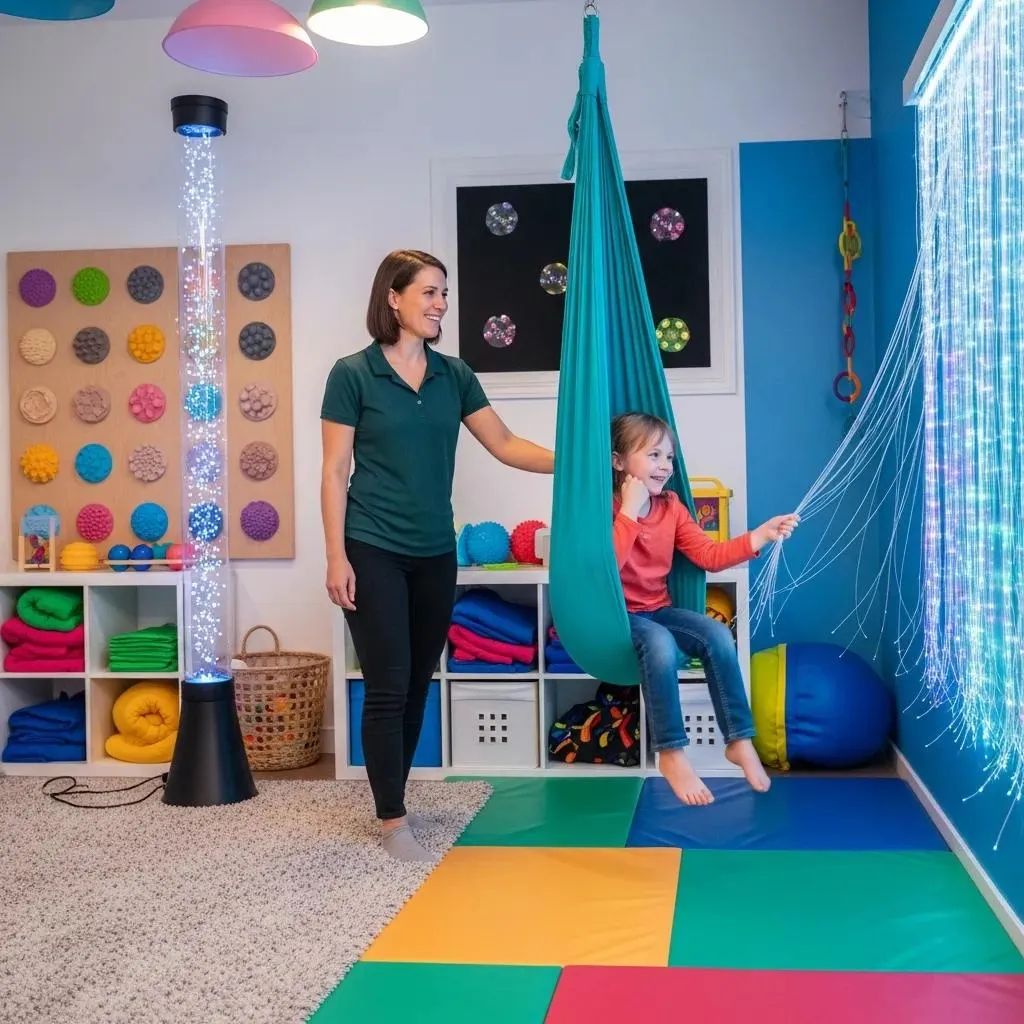
- Create sensory-friendly environments with calming colors and adjustable lighting to enhance focus and reduce anxiety during therapy sessions.
- Involve families in developing personalized communication strategies that reinforce positive behaviors and ensure consistency across home and school settings.
Daily Living Skills: Encouraging Independence in Children With Autism
While fostering independence in children with autism may seem challenging, developing daily living skills is vital for promoting self-sufficiency and enhancing overall quality of life. Children with autism often face barriers in daily routines, such as self-care, home management, and money skills, which can hinder their independence milestones. Implementing structured daily routines can significantly enhance these skills, enabling children to navigate tasks such as grooming, cooking, and budgeting more effectively.
Engaging in adaptive skills training, such as life skills classes and behavior management techniques, provides essential support for learning practical problem-solving abilities. Additionally, incorporating sensory integration therapy can help children with autism better manage sensory processing challenges that may affect their daily routines. By prioritizing the mastery of daily living skills, caregivers can enable children with autism to gradually increase their independence, fostering a sense of accomplishment and preparing them for future challenges.
Research indicates that daily living skills are crucial for the functional independence of adults with autism, highlighting the importance of early intervention.
Enhancing Communication Through Speech Therapy Strategies
Enhancing communication in children with autism involves employing augmentative communication tools to support their expressive language needs. Social skills development is essential in facilitating meaningful interactions and fostering connections with peers and family members. Collaborating with family members ensures that strategies remain consistent and effective across different environments, ultimately enabling the child to progress in their communication path.
Additionally, early intervention is crucial for maximizing the benefits of speech therapy and improving overall communication skills. Implementing a sensory diet can also support communication by providing necessary sensory input that helps children focus and engage during therapy sessions.
Augmentative Communication Tools
As many children with autism spectrum disorder face challenges in verbal communication, augmentative and alternative communication (AAC) tools can provide crucial support for expressing thoughts and needs. Research highlights the effectiveness of AAC, showing that one-third to half of minimally verbal children benefit significantly from AAC interventions. High-tech devices, such as speech-generating devices, often yield better results than low-tech aids, facilitating earlier progress in spoken language. However, AAC barriers persist, including disparities in access based on socioeconomic factors and knowledge gaps among healthcare providers.
Addressing these challenges is fundamental to ensuring equitable AAC availability and maximizing the communicative potential of all children with ASD. Sensory integration processes enhance social interaction and daily routines, contributing to the overall development of these children. Integrating AAC effectively requires consistent support from professionals familiar with these technologies.
Social Skills Development
Effective social skills development is essential for children with autism spectrum disorder, enabling them to navigate everyday interactions with greater ease and confidence. Structured activities, such as role-playing scenarios, serve as practical tools, providing a safe space for practice and effective feedback. Visual supports, including social stories and visual schedules, help demystify social situations and reduce anxiety.
This approach promotes the development of core conversation skills, including initiating discussions and recognizing emotions in others. Additionally, engaging in social skills development can significantly enhance the overall quality of life for children by providing them with the tools to connect meaningfully with their peers and family members. Play-based interventions can also enhance motor coordination and body awareness, resulting in more effective social interactions.
- Role-playing reinforces understanding of social norms through repeated practice.
- Visual supports improve engagement and retention of learned skills.
- Positive reinforcement encourages the generalization of social skills in diverse environments.
Together, these strategies enable children to foster meaningful connections.
Family Collaboration Strategies
Collaboration among family members greatly enriches the communication experience for children with autism. By actively engaging in family discussions, caregivers can foster an environment that encourages effective communication strategies. Families can promote active listening by minimizing distractions and validating their child’s feelings, which reinforces the child’s communication attempts.
Positive reinforcement techniques, such as verbal praise or physical rewards, boost motivation and participation. Intentional communication opportunities, like offering choices, encourage children to express themselves.
Furthermore, integrating speech therapy strategies into daily routines helps reinforce skills learned in therapy. By creating a supportive atmosphere that prioritizes family engagement, caregivers can significantly improve communication outcomes, enabling their child to thrive in diverse environments. Additionally, recognizing that autism affects communication can help families tailor their approaches to meet their child’s unique needs.
Understanding individual sensory needs is essential for creating an environment that supports effective communication.
Sensory Integration Techniques for Better Daily Function
Numerous persons with autism face daily challenges related to sensory integration, which can significantly impact their functioning and general quality of life. Employing sensory integration techniques can help persons respond more adaptively to sensory input.
- Implement personalized sensory diets to address distinct needs and sensitivities. These diets can enhance self-regulation and attention, which are vital for navigating everyday tasks.
- Incorporate calming techniques, such as deep breathing or designated “calm down” areas, to foster self-regulation.
- Create a supportive environment by adjusting sensory stimuli, such as lighting and noise levels, to enhance comfort and wellbeing. Sensory functions are considered fundamental for developmental skills, and these practices can considerably improve a child’s ability to navigate daily activities, ensuring they feel more comfortable and engaged. Collaboration among families, teachers, and therapists is crucial for continually adapting strategies that support compelling sensory experiences for individuals with Autism Spectrum Disorder.
Developing Motor Skills for Play and School Success

Motor skills play a significant role in daily activities for children with autism, affecting everything from play to classroom participation. With 72% children with autism experiencing motor milestone delays, targeted motor skill activities are vital for fostering independence and engagement. Incorporating gross motor activities, such as running or throwing, alongside fine motor tasks like writing, can improve play engagement and academic performance. Engaging in sensory exercises can also enhance focus and body awareness, further supporting skill development.
Early intervention, primarily through occupational therapy, is beneficial in addressing these delays and promoting the development of skills. Research shows that motor delays can also lead to earlier autism diagnoses, highlighting the importance of recognizing these challenges. By emphasizing personalized strategies and ongoing assessments, caregivers and educators can support children in mastering motor skills essential for both social interactions and learning environments, ultimately enhancing their overall quality of life.
Social Skills Training: Building Peer Relationships
While guiding social interactions can be especially challenging for children with autism, structured social skills training provides critical support in building positive peer relationships. These approaches teach essential skills for starting and maintaining friendships within safe, encouraging environments. Peer-mediated activities also strengthen this growth by helping children connect more naturally through shared play and communication.
- Promotes natural learning through actual-time interaction and modeling of appropriate behaviors. Additionally, play-based therapy can enhance social skills by providing engaging opportunities for emotional expression and communication.
- Encourages meaningful peer support, increasing acceptance, and reducing social rejection.
- Improves confidence and competence, leading to an enhanced quality of life and increased independence. Additionally, peer support involves training typically developing peers to assist children with autism in social interactions.
Through collaborative efforts among caregivers, educators, and peers, children acquire the tools necessary for forming and maintaining fulfilling and lasting relationships.
Practical Tips for Implementing Therapy at Home

Creating an effective therapy environment at home is essential for children with autism to thrive. Designating a specific therapy space, maintaining consistency, and minimizing distractions can significantly improve the home therapy experience. Implementing visual schedules and striking a balance between fun and structure enables smoother transitions between activities.
| Element | Description |
|---|---|
| Dedicated Therapy Space | Recognizable area for therapy sessions |
| Consistent Daily Schedule | Routine including therapy and playtime |
| Communication Practice | Every day, there are opportunities for interaction |
| Sensory Play Integration | Activities to support affective regulation |
Utilizing these strategies not only fosters an ideal therapy environment but also integrates therapy into daily routines, encouraging growth and development. Caregivers can enhance the effectiveness of treatment through consistent engagement and support. Additionally, incorporating sensory integration techniques during play can significantly improve emotional regulation and social bonding.
Creating Sensory-Friendly Environments for Learning and Play
Designing sensory-friendly environments for learning and play is crucial for supporting individuals with autism in their daily activities. Effective spaces can significantly reduce anxiety and create opportunities for successful engagement. Key features of these environments include:
- Utilization of calming colors that promote tranquility and focus, minimizing overstimulation.
- Creation of sensory spaces equipped with adjustable lighting and soft furnishings to improve comfort and accessibility.
- Incorporation of user feedback from autistic persons, ensuring the environment meets their distinct sensory needs.
Frequently Asked Questions
What Are Some Practical OT and Speech Tips for Everyday Routines?
Start by turning ordinary moments—such as mealtime, dressing, or playtime—into interactive learning experiences. Please encourage your child’s curiosity, follow their lead, and use natural conversation to help build skills that last beyond the therapy room.
How Can Parents Track Their Child’s Progress in Therapy?
Parents can track their child’s progress in therapy through regular progress monitoring, using behavior tracking sheets and apps, documenting therapy milestones, and combining quantitative data with qualitative feedback from therapists to guarantee thorough evaluations.
What Role Do Siblings Play in Supporting Children With Autism?
Siblings often act as a bridge, providing essential sibling support through shared activities. Their interactions can significantly enhance social skills and overall wellbeing, promoting adaptive behaviors in children with autism and fostering healthier family dynamics.
Are There Specific Apps for Autism Support?
Numerous app recommendations exist for autism support, featuring adaptable interfaces, visual communication tools, and interactive social skills training. These features enhance communication, emotional regulation, and daily functioning, providing users with tailored strategies to improve their quality of life.
How Do I Find Qualified Therapists in My Area?
In a lush forest teeming with diverse flora, seeking a wise guide entails delving into therapist directories and referral networks. These pathways lead to skilled professionals, ensuring that each traveler finds the support they need to flourish.
What Strategies Help Reduce Anxiety During Transitions?
To reduce anxiety during changes, implementing visual schedules and calming techniques, such as deep breathing or sensory tools, fosters predictability and affective security, helping persons navigate changes with greater ease and confidence.
Conclusion
In a world that often celebrates sameness, children with autism remind us that there are many beautiful ways to learn, play, and connect. With consistent support and encouragement, families can use practical OT & speech tips at home, school, and beyond to help their child thrive in daily life. Even small, playful moments—such as sorting toys by size or practicing self-care routines—can become powerful opportunities for growth, especially when supported by professional guidance through occupational therapy near you in Tampa or Brandon.
Occupational therapy encourages independence by turning ordinary experiences into learning tools. Two creative examples include letting your child water plants with a minor pitcher to improve motor control or using painter’s tape on the floor to create “balance paths” that build coordination and focus. These activities strengthen key skills while keeping therapy fun, active, and rewarding for both parent and child.
Speech therapy also offers many ways to make communication easier and more enjoyable. Try narrating your day together like a story to model expressive language, or use rhythm and music to help your child playfully practice new words. If you have questions about which OT or speech techniques might work best for your child, contact Skill Point Therapy—we’re here to help you turn everyday moments into meaningful progress.
References
- https://www.skillpointtherapy.com/helping-kids-with-autism-5-dynamic-ways-ots-boost-skills/
- https://caliberautism.com/blog/Occupational-Therapy-at-Caliber-Autism
- https://www.autismspeaks.org/occupational-therapy
- https://www.abspectrum.org/sensory-integration-therapy-autism-guide/
- https://www.usa.edu/blog/occupational-therapy-for-autism/
- https://weespeaktlc.com/unlocking-potential-occupational-therapy-strategies-for-autism/
- https://www.motivity.net/blog/occupational-therapy-for-autism
- https://www.yellowbusaba.com/post/how-many-adults-with-autism-live-independently
- https://www.abtaba.com/blog/adults-with-autism-live-independently
- https://www.goldenstepsaba.com/resources/how-many-adults-with-autism-live-independently