


Does My Toddler Need Speech Therapy? Helpful Signs Brandon, Florida Parents Shouldn’t Ignore
Watching your child learn new sounds and words is one of parenting’s bright moments — and it can also bring worry. Catching a speech or language delay early makes a real difference. This guide outlines common warning signs, explains why an early evaluation matters, and shows how to find pediatric speech therapy in Brandon, Florida, and in nearby neighborhoods such as Valrico, Riverview, Seffner, Lithia, and FishHawk Ranch. By the end, you’ll have clear next steps and feel more confident supporting your child’s speech development.
What Are the Typical Toddler Language Development Milestones?
Toddler language grows in stages. By about age two, most children are building a word bank and following simple directions. Knowing these milestones helps you track progress without worrying about normal timing differences.
Age-Specific Speech Milestones for Toddlers
Seeing what to expect at different ages makes it easier to tell if your child is on track. Below are common milestones for three key age ranges:
12 to 18 Months
At this age, toddlers often use a handful of words, such as “mama,” “dada,” “ball,” or “no.” They make sounds such as “ba,” “da,” and “ma” to get attention, enjoy songs and stories, and begin copying simple sounds. They typically understand a few words and can follow easy requests like “come here.”
18 to 24 Months
Between 18 and 24 months, many children expand their vocabulary to about 20–50 words and begin joining two words, for example, “more juice” or “go car.” Sounds like “p,” “b,” “m,” “t,” and “d” are often clearer. They can name familiar people and objects and follow simple directions, such as “give me the toy.”
2 to 3 Years
From ages 2 to 3, toddlers typically grow their vocabulary quickly — often to 200+ words. They combine three or more words into short sentences, such as “I want a cookie,” and are usually understood by family members most of the time. They ask questions, tell short stories, and use many speech sounds correctly.
Which Speech and Language Skills Should Toddlers Have by Age 2?

By age two, many toddlers know roughly 50 words and begin putting two words together (for example, “more milk” or “mommy up”). They usually follow simple directions such as “come here” or “give me the ball.” These early skills support everyday communication and play.
How Do Developmental Milestones Indicate Normal Speech Progress?
Milestones are useful checkpoints, not strict deadlines. Children develop at different rates, but falling well behind expected ranges — for example, not using basic words or phrases for age — is a reason to request an evaluation. Look for ongoing signs such as a minimal vocabulary or difficulty following simple directions.
What Are the Common Signs of Speech Delay in Toddlers?
Early recognition matters. If you notice the same patterns over time, they can point to a need for support sooner rather than later.
Which Speech Delay Symptoms Should Brandon, Florida, Parents Watch For?
Red flags include little or no babbling or word use, speech that’s hard to understand, and having fewer than 50 words by age two. If your toddler rarely combines words into short phrases, prefers gestures over talking, or pulls back from trying to speak, bring these concerns to a professional.
How Can Early Signs of Speech Delay Affect Toddler Communication?
Left unaddressed, delays can cause frustration and reduce a child’s willingness to speak or play with others. Early speech therapy often lowers frustration, improves clarity and vocabulary, and supports social and learning skills before differences grow bigger.
When Should Parents Seek a Speech Therapy Evaluation for Their Toddler?
If you have ongoing concerns about your child’s speech or language, scheduling an evaluation is a sensible next step. The sooner you check, the sooner you can get support if it’s needed.
What Does a Pediatric Speech Therapy Evaluation Involve?
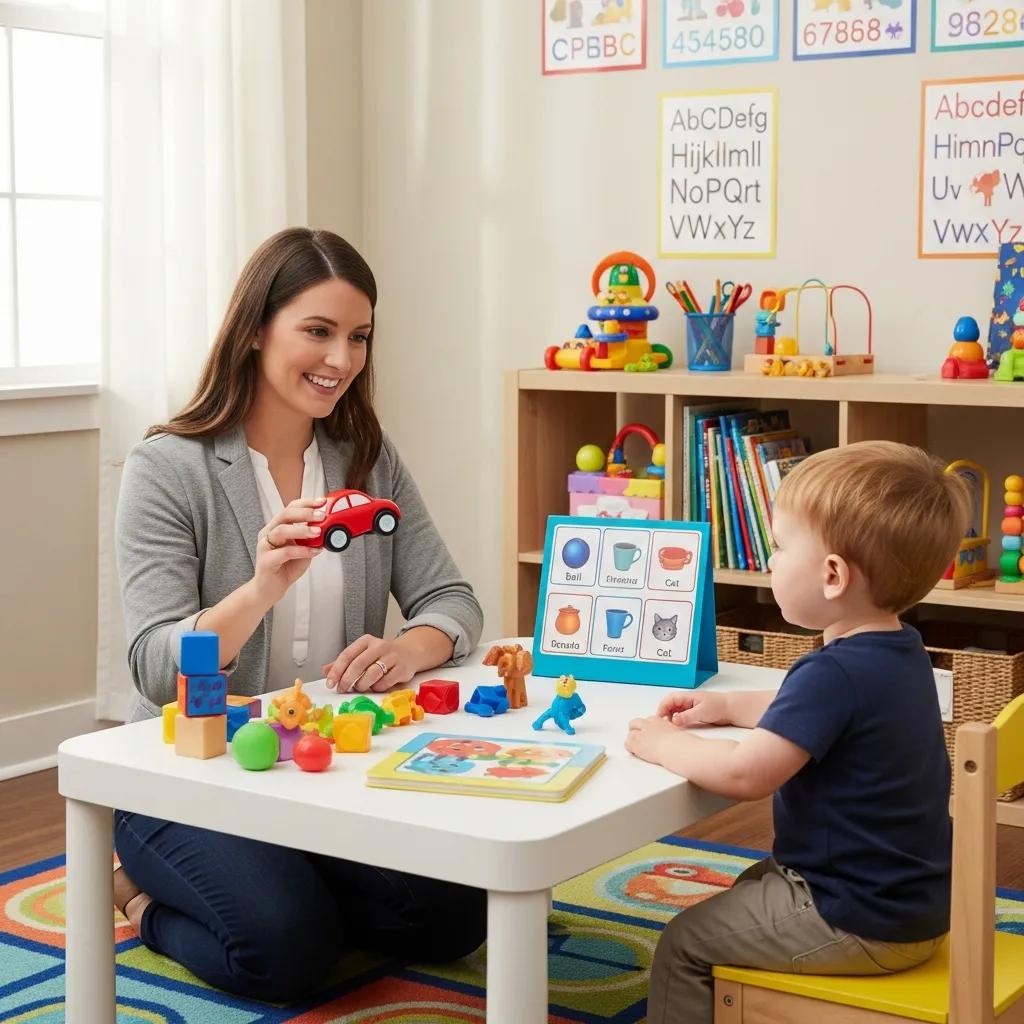
An evaluation looks at how your child understands and uses language. It commonly includes standardized checks, play-based observation, and a conversation with you about communication at home. Knowing what to expect can help you feel more comfortable and valuable.
What Happens During a Speech Therapy Evaluation at Skill Point Therapy in Brandon?
If you’re nervous, we’ll walk you through everything. Our team at Skill Point Therapy aims to make both you and your child comfortable. Assessments typically take 45–60 minutes. During that time, the therapist will observe your child’s play, listen to how your child uses sounds and gestures, and note your child’s listening and understanding skills.
The therapist will also ask you about your child’s speech and language at home to understand strengths and challenges. We use playful, child-friendly tasks to see how your child understands words and attempts to say them — so the process feels like play, not a test.
After the evaluation, the therapist will review observations with you and explain whether your child would benefit from ongoing speech services or short-term home strategies. We’ll give clear, practical next steps and answer your questions. Our goal is to make this a positive, helpful experience for your family.
How Does Early Intervention Speech Therapy Benefit Toddlers?
Early therapy helps children speak more clearly, grow their vocabulary, and feel more confident socially. Individualized plans focus on each child’s needs and give families everyday strategies to use at home. Starting early usually leads to faster, more lasting progress.
How to Find a Qualified Pediatric Speech Therapist Near Me in Brandon, Florida?
Finding the right therapist matters. Look for clinicians with pediatric experience, clear goals, and a commitment to involving caregivers — these elements help children make steady gains. Families in Brandon and nearby communities such as Valrico, Riverview, Seffner, Lithia, and FishHawk Ranch often prefer local therapists who understand their communities’ needs.
What Makes Skill Point Therapy a Trusted Brandon, Florida Pediatric Speech Therapy Provider?
Skill Point Therapy focuses on pediatric care and early speech and language needs. We design individualized plans, emphasize early intervention, and partner closely with families so progress continues between sessions — an approach parents across Brandon, Valrico, Riverview, Seffner, Lithia, and FishHawk Ranch rely on.
How Can Parents Support Toddler Speech Development at Home?
You have the most significant role in helping your child. Read together, sing, narrate daily routines, and ask simple questions to invite speech. Stay face-to-face, limit screens, and model clear, patient language. Small, consistent moments add up to stronger language habits over time.
DIRFloortime Approach at Skill Point Therapy
We also use DIRFloortime as part of many therapy plans — a play-based, relationship-focused method that follows your child’s interests to promote communication.

At Skill Point Therapy in Brandon, DIRFloortime (Developmental, Individual Differences, Relationship-based) guides how we work with toddlers. Therapists join your child in play, follow their lead, and use those shared moments to build communication and emotional connection.
This approach keeps therapy fun and child-led. By following your child’s interests and emotions, therapists create safe, motivating moments in which new words and sounds emerge naturally.
With DIRFloortime, our therapists help toddlers open up, try new words, and develop social and communication skills one meaningful step at a time.
This table highlights key signs to watch. Noticing these patterns early helps you move quickly to an evaluation and support, which often leads to better outcomes.
Knowing when to act gives your child the best chance for progress. If these points match your experience, reaching out for an evaluation is a proactive step you can take today.
Simple Activities Parents in Brandon Can Do at Home to Help Toddler Speech Development
Supporting your toddler’s speech can be simple—and fun. Below are more than 10 easy activities you can use every day to boost your child’s speech and language skills:
- Read Together Daily: Pick colorful picture books and read aloud. Point to images and name them: “Look, a dog!”
- Sing Songs: Sing simple tunes like the ABCs during bath time or in the car. Songs help children hear rhythm and sounds.
- Narrate Daily Activities: Talk about what you’re doing. While folding laundry, say, “Here’s a sock. Now a shirt.”
- Ask Simple Questions: Use easy prompts like “Where is your nose?” or “What color is this?” to invite responses.
- Use Gestures: Pair words with gestures, such as waving or pointing, to help your child link words to actions.
- Play Sound Games: Make animal noises or vehicle sounds and encourage your child to copy you.
- Describe Objects: While playing, describe toys’ colors, shapes, and actions: “The red ball is big.”
- Encourage Turn-Taking: Take turns making sounds or words during play to build back-and-forth conversation.
- Limit Screen Time: Choose face-to-face interactions over screens to encourage real-time language practice.
- Repeat and Expand: When your child says a word, repeat it and add one more word: Child: “car.” You: “Yes, big car.”
- Use Everyday Routines: Talk through routines like mealtime or getting dressed: “Time to put on your shoes.”
- Play Pretend: Use dolls or stuffed animals to act out short stories and invite your child to join with words or sounds.
These games and routines make practicing speech feel natural and pressure-free. Try to weave them into your daily life so progress happens step by step.
Frequently Asked Questions
What are the long-term effects of untreated speech delays in toddlers?
Without support, speech delays can affect reading, writing, classroom learning, and social confidence. Children may have trouble expressing themselves or connecting with peers. Early therapy reduces these risks and supports better academic and emotional outcomes.
How can I encourage my toddler to speak more at home?
Make talk part of your routine: read aloud, sing, and use open-ended prompts like “What did you see?” Praise attempts, model short sentences, and turn daily moments into language-rich chances to communicate.
Are there specific activities that can help improve my toddler’s speech skills?
Yes—play-based activities work very well. Try pretend play, naming games, describing pictures, and interactive songs. Use toys and everyday tasks to prompt words and short phrases, keeping things fun and low-pressure.
What should I do if I suspect my child has a speech delay?
Start by noting specific concerns and examples of your child’s speech. Talk with your pediatrician or contact a licensed speech–language pathologist for an evaluation. Early assessment helps you know whether therapy or monitoring is the right step.
How can I find support groups for parents of children with speech delays?
Check local hospitals, community centers, or pediatric clinics for resources. Online parenting groups and professional organizations, such as the American Speech–Language–Hearing Association (ASHA), also list support networks and helpful materials for families.
What role do pediatricians play in addressing speech delays?
Pediatricians track developmental milestones at well visits and can refer you to a speech–language pathologist when concerns arise. They help coordinate care and advise on next steps—so the process often starts with your child’s pediatrician.
Insurance Coverage for Speech Therapy in Brandon, Florida
Many insurance plans cover speech therapy, making treatment more affordable. When you call your insurer, ask these questions:
- Does my plan cover speech therapy for toddlers?
- Are there limits on the number of therapy sessions?
- Do I need a referral from my pediatrician?
- What are my co-pays or out-of-pocket costs?
- Are there specific providers I must use?
Early intervention services for young children may be free or low-cost through state programs. Ask about eligibility and how to apply.
At Skill Point Therapy, we know payment questions can be stressful. Ask us about insurance billing and payment options — we’ll help you understand your benefits and find a plan that works for your family. Our goal is to make therapy accessible so your child can get the support they need.
Conclusion
Spotting a possible speech delay early gives your child the best chance to develop strong communication skills. If the signs here match your child, consider scheduling an evaluation — and remember you don’t have to do this alone. Skill Point Therapy provides personalized pediatric speech services in Brandon, Florida, and partners with families across Brandon, Valrico, Riverview, Seffner, Lithia, and FishHawk Ranch to create practical, effective plans. Take the first step today toward clearer, more confident communication for your child.

Nicole Bilodeau, MS, OTR/L, is an occupational therapist and founder of Skill Point Therapy in Tampa and Brandon. She leads a skilled team that provides speech and pediatric occupational therapy, supporting children with autism, ADHD, sensory processing disorders, social skills challenges, and motor development issues. Nicole is dedicated to helping every child reach milestones and thrive at home, school, and in the community