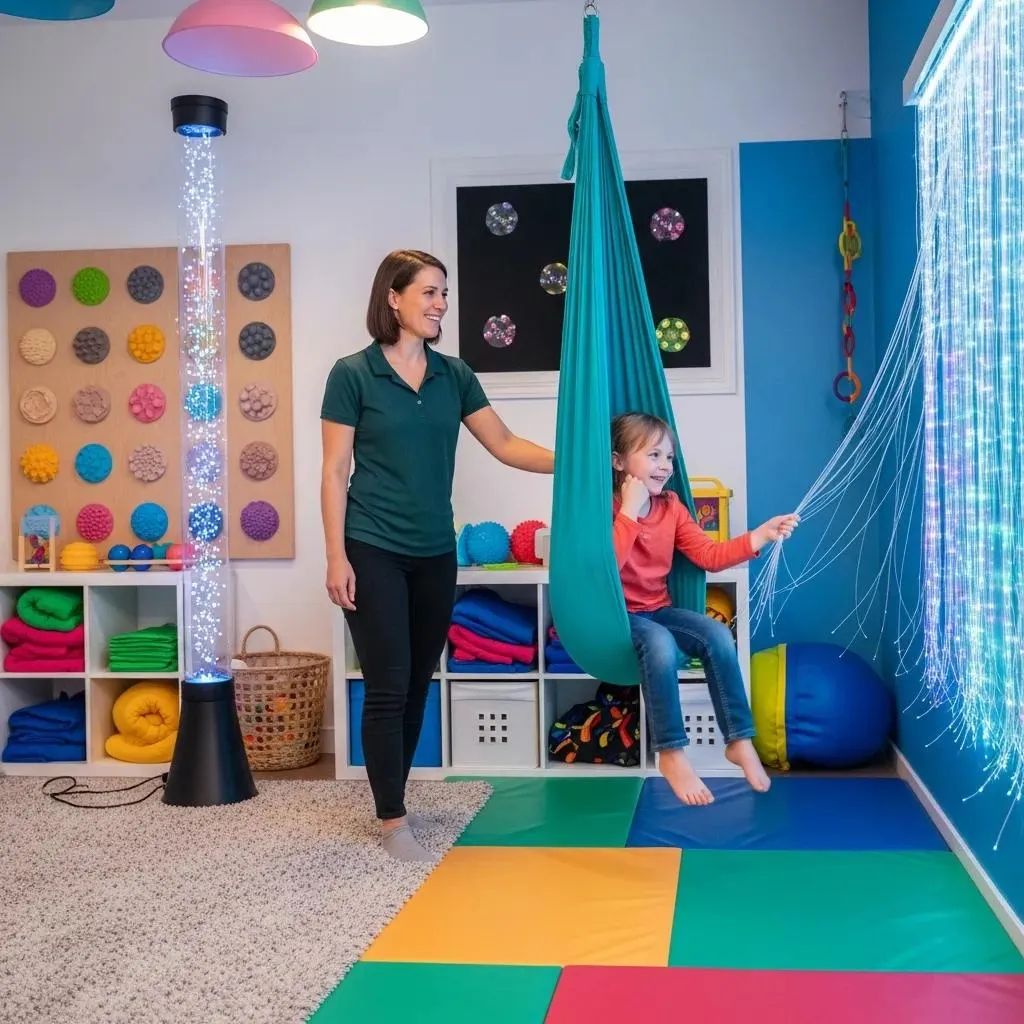

Engaging speech therapy activities for toddlers encompass a variety of play-based approaches that improve communication skills through interactive methods. Gross motor activities, oral-facial imitation exercises, and structured play all contribute to vocabulary expansion and articulation. Collaborative efforts between parents and speech therapists further reinforce learning at home. Utilizing interactive games and dynamic storytelling promotes sustained interest, while sensory-focused activities cater to personal needs. Exploring these strategies can lead to improved outcomes in speech development and confidence.
Key Takeaways
- Incorporate gross motor activities, such as articulation flashcard trails, to enhance language skills through movement and sound practice.
- Utilize interactive speech therapy games to boost motivation and engagement in toddlers during speech development.
- Engage in pretend play activities that promote vocabulary expansion and articulation in a fun, relatable context.
- Foster peer interaction through group games, enhancing conversational skills and turn-taking in a playful environment.
- Encourage parental involvement through shared activities, ensuring consistency and natural language use at home.
Gross Motor Activities to Enhance Speech Skills
Although speech development in toddlers is often viewed in isolation, research indicates that gross motor skills greatly influence language acquisition. Integrating gross motor activities into speech therapy sessions for toddlers significantly improves their communication skills. Activities such as articulation flashcard trails, where children hop or scoot between cards, effectively combine movement with sound practice.
Furthermore, using stability balls encourages verbal production while improving coordination. Targeted sensory activities support the unique needs of children during these engaging play sessions, fostering language development in a fun and engaging environment. Group games, such as line jumping, accompanied by spoken directions, stimulate motor sequencing and promote speech accuracy.
Outdoor play involving running and jumping, with descriptive verbal interactions, enriches contextual language use. These dynamic approaches not only foster speech development but also enhance social interactions, providing a comprehensive method for addressing communication challenges in young children. Therefore, both gross and fine motor skills contribute to the development of language from infancy to early childhood.
Fun Sound and Word Play for Toddlers
Fun sound and word play activities are vital for fostering language development in toddlers. These activities integrate play with targeted speech practice, improving articulation and vocabulary acquisition. Examples include using toys to teach action words and engaging in sound-related word games.
Additionally, incorporating play-based speech therapy into sessions can enhance learning in a fun, interactive environment. Engaging in these activities can also help develop sensory processing skills, which are crucial for effective communication.
| Activity | Description | Purpose |
|---|---|---|
| Toy Interaction | Use animals or cars to practice action words. | Develops core vocabulary. |
| Sound Games | Engage toddlers in charades or word association. | Expands verbal skills. |
| Flash Cards | Pair images with words for pronunciation practice. | Improves visual and auditory links. |
| Singing Rhymes | Sing repetitive songs to enhance phonetics. | Aids memory and fluency. |
| Tongue Twisters | Practice phrases to refine speech clarity. | Strengthens articulation. |
Collectively, these strategies create an engaging environment conducive to learning fundamental language skills.
Play-Based Therapy Techniques for Effective Learning

Effective play-based therapy techniques are essential for fostering language development in toddlers. These methods often utilize symbolic and pretend play, involving dolls or puppets to enhance articulation and vocabulary while promoting the expression of emotions. Play enhances sensory integration by organizing neurological responses, which further supports language acquisition in young children.
Social interaction games, such as modified Simon Says, boost conversational skills and understanding of speech pragmatics through turn-taking. Language modeling during play provides scaffolding for vocabulary expansion, enabling children to practice new words in context. Moreover, cognitive tasks that promote problem-solving stimulate critical thinking alongside language use.
For children facing developmental challenges, play-based approaches support personalized learning, facilitating consistent engagement and progress. By creating enjoyable and relevant interactions, these techniques promote holistic growth in communication skills, effectively addressing diverse developmental needs. Research shows that play has a significant impact on cognitive, social, emotional, and linguistic development.
Interactive Speech Therapy Games
Interactive speech therapy games represent a valuable approach to playful learning activities, fostering engagement in toddlers during their speech development path. These digital engagement tools provide a dynamic platform for practicing articulation and enhancing language skills in a fun and motivating environment. By integrating gamified elements, therapists can cultivate sustained interest and improve therapy outcomes for young children.
Interactive games can also help children with attention challenges actively participate in their therapy sessions, making the learning process more enjoyable and effective. Additionally, these activities can support cognitive growth by encouraging exploration and understanding of language through sensory experiences.
Playful Learning Activities
While traditional methods of speech therapy often present challenges for toddlers, playful learning activities, particularly those involving interactive games, have shown promise in enhancing engagement and participation. These gamified lessons integrate articulation practice with enjoyable tasks and puzzles, mainly benefiting children with attention challenges. By fostering a positive attitude towards speech practice, speech therapy games promote articulation, vocabulary, and language comprehension through an enjoyable format.
They often include multiple difficulty levels and reward systems, further motivating children to practice. Additionally, the use of animated videos and auditory feedback enhances understanding and the replication of speech sounds. Collaborative efforts between parents and therapists optimize effectiveness, ensuring that playful activities align with therapeutic goals while maintaining children’s interest throughout their speech development expedition.
Moreover, early diagnosis and treatment are crucial in addressing speech sound disorders effectively, making these interactive games even more valuable for toddlers. Engaging in play-based therapy can further enhance children’s cognitive and emotional development during these activities.
Digital Engagement Tools
Digital engagement tools, particularly in the form of interactive speech therapy games, have emerged as significant resources in the treatment of speech disorders among toddlers. Approximately 59% of these games are developed in English, with 48% designed for child-parent interaction, facilitating practice outside clinical settings. Mobile devices serve as the primary platform, enhancing accessibility and convenience.
Research indicates that these games markedly improve motivation, attention, and articulation, making therapy more engaging and reducing psychological distress. Parental involvement is crucial, as younger children often require support and guidance to develop effectively. Personalization of game content is vital for individual efficacy, allowing speech-language pathologists to integrate these tools into therapy sessions meaningfully, ultimately supporting a child’s developmental progress toward improved communication skills.
The incorporation of digital games helps address challenges like maintaining motivation and providing effective feedback during therapy. Understanding sensory dysregulation can further enhance the effectiveness of these tools by addressing the individual sensory needs of each child.
Structured Language Development Through Play

A robust framework for structured language development through play significantly strengthens toddlers’ communication skills—language-rich environments, including storytelling materials and interactive tools, foster vocabulary acquisition. Incorporating props into play, such as pretend kitchens, promotes targeted language learning by introducing relevant vocabulary in a meaningful context. In a meaningful context, Peer interaction within structured play settings improves cooperative language use and social skills—regular conversational engagement during play bolsters sentence construction and narrative abilities.
Guided play activities focused on vocabulary, sentence formulation, and storytelling align with developmental milestones. Role-play enriches authentic language context, while open-ended questions stimulate complex language expression. Adult scaffolding during play supports toddlers in achieving superior language outcomes.
Structured play offers a framework for engaging in meaningful language, thereby enhancing toddlers’ overall communication skills. Additionally, understanding sensory needs can further improve engagement and focus during language activities. This multidimensional approach lays a solid foundation for ongoing language development and communication proficiency.
Utilizing Digital Games in Speech Therapy
The integration of digital games in speech therapy presents a creative approach to improve motivation through interactive play. By employing advanced speech recognition technologies, these games provide immediate feedback and foster parental involvement, making therapy more engaging and effective. This multifaceted approach addresses traditional barriers, promoting sustained participation and better therapeutic outcomes for toddlers.
Innovative methods, such as video game biofeedback, have proven to enhance learning, demonstrating the potential of gamification in speech therapy. Additionally, incorporating sensory modulation techniques can further support toddlers’ engagement by helping them regulate their responses to sensory stimuli during treatment.
Motivation Through Interactive Play
While traditional speech therapy can often feel laborious to young children, interactive play through digital games has emerged as a powerful tool in enhancing motivation during treatment. These digital games substantially increase children’s motivation to engage with speech exercises, transforming them into enjoyable activities rather than intimidating tasks. The integration of continuous auditory and visual stimuli, along with playful characters, captures attention and sustains interest.
Furthermore, the potential for parent-assisted gameplay fosters deeper engagement. Implementing adaptive difficulty levels ensures that challenges are matched to personal skills, thereby mitigating frustration. Immediate feedback further encourages correct pronunciation, thereby reinforcing the learning process.
By leveraging these interactive elements, digital games become invaluable assets in motivating toddlers during speech therapy sessions, promoting both participation and progress. Additionally, incorporating sensory activities can further enhance engagement and emotional regulation, making the learning experience even more effective.
Speech Recognition Technologies
Digital games have increasingly incorporated speech recognition technologies to improve speech therapy for toddlers. The use of algorithms, such as Mel-Frequency Cepstral Coefficients (MFCC) and the PocketSphinx engine, improves immediate speech processing. These games are designed to accommodate speech sound disorders and hearing impairments by adapting to the child’s speech patterns. However, challenges such as environmental noise and pronunciation variability can impact accuracy.
| Feature | Description |
|---|---|
| Algorithms | MFCC and PocketSphinx for immediate processing |
| Game Progression | From consonants to sentences for gradual skill acquisition |
| Visual Feedback | Engaging animations to sustain attention |
| Tailoring | Customization improves engagement |
| Technical Considerations | Adjustments needed for noise and interaction clarity |
Parental Involvement Importance
Effective speech therapy for toddlers often necessitates the active participation of parents, particularly when utilizing digital games as therapeutic tools. Engaging parents in this process improves therapy outcomes and fosters communication development.
- Motivation Increase: Digital games considerably raise toddlers’ motivation to participate in speech therapy.
- Structured Practice: Parent involvement helps to organize consistent home practice and adherence to therapy goals.
- Real-Time Feedback: Games provide parents with feedback on their child’s progress, enabling them to offer tailored support.
- Shared Learning: Interactive gameplay fosters shared experiences, facilitating the natural use of language in a specific context.
Through these roles, parents become integral to their child’s speech therapy experience, creating a collaborative environment that improves learning and communication skills.
Parent Involvement for Promoting Speech Practice
Although the role of parents in speech therapy is often underappreciated, their involvement is crucial for enhancing children’s communication skills. Active parental participation greatly accelerates progress, with regular home practice ensuring skill retention and generalization. By integrating speech activities into daily routines, such as mealtimes and play, parents create a natural learning environment.
Utilizing visual aids fosters engagement, while modeling clear speech encourages children to do the same. Critical feedback from parents enables therapists to tailor interventions effectively. Additionally, ongoing communication between parents and speech-language pathologists (SLPs) reinforces collaborative efforts, ensuring that therapy aligns with the child’s evolving needs.
Ultimately, supportive parental attitudes motivate children, cultivating a positive atmosphere that is fundamental for effective communication development.
Engaging Activities for Vocabulary Expansion

Engaging activities play a critical role in vocabulary expansion for toddlers. Techniques such as interactive storytelling, identification games with everyday objects, and emotion-driven vocabulary activities foster language development in dynamic and meaningful contexts. These methods encourage active participation, making learning both enjoyable and effective for young learners.
Interactive Storytelling Techniques
When storytelling incorporates interactive techniques, toddlers are more likely to engage deeply, which promotes vocabulary expansion and language development. Practitioners can employ diverse methods to improve storytelling experiences:
- Expressive Voices and Gestures: Use varied voices and body language to make stories more enthralling, thereby enhancing both auditory and visual learning.
- Encourage Retelling: Prompt toddlers to retell stories, fostering memory and verbal confidence while expanding vocabulary.
- Visual Supports and Props: Integrate picture books, props, and visual aids to make narrative elements more straightforward and reinforce comprehension.
- Play-based Techniques: Incorporate puppetry and role-play, inviting active participation and exploration of emotions, which enriches language skills.
Engaging toddlers through these interactive storytelling techniques greatly supports their linguistic growth and understanding.
Everyday Object Identification Games
Everyday object identification games serve as valuable tools for improving toddlers’ vocabulary and language development. These activities foster engagement through play while enriching language skills. Games like “I Spy” and charades invite toddlers to describe and identify objects, promoting cognitive and vocabulary growth.
| Game Type | Benefits |
|---|---|
| I Spy | Improves color recognition and descriptive vocabulary. |
| Blindfolded Guessing | Enhances tactile exploration and object recognition. |
| Simon Says | Supports comprehension of body parts and following directions. |
Emotion-Driven Vocabulary Activities
Feeling-driven vocabulary activities play a crucial role in improving toddlers’ linguistic capabilities while simultaneously fostering emotional awareness. These activities serve as a means to introduce and expand emotion-related vocabulary, which can significantly benefit early emotional development.
- Introduce Emotion Words: Teach one to two emotion words at a time, linking them to real-life situations that illustrate their meaning.
- Encourage Emotional Expression: Create a safe environment for toddlers to discuss their feelings by using relatable experiences and open-ended questions that foster genuine conversation.
- Utilize Stories and Media: Analyze emotions of characters in stories to contextualize vocabulary and deepen empathy.
- Implement Play-Based Activities: Engage toddlers through games, songs, and role-playing to practice emotional vocabulary in interactive ways.
Playful Ways to Encourage Oral-Facial Imitation

Engaging toddlers in oral-facial imitation activities can significantly enhance their verbal communication skills and overall oral motor development. Imitation serves as a foundation for verbal interaction; mirroring a child’s movements encourages them to investigate their own vocalizations. Fun exercises, such as blowing bubbles or making “fish lips,” promote muscle strength and coordination crucial for speech.
Incorporating mirrors can improve self-awareness and accuracy during practice. Simple reciprocal actions, like playful pretend eating, spark engagement and establish communication cues. Utilizing tactile prompts can support children struggling with initiation, fostering gradual skill development. Consistent practice and patient reinforcement drive mastery of these vital oral-facial skills, paving the way for increased verbal abilities in toddlers.
Building Confidence Through Group Play and Singing
Group play and singing are frequently used in speech therapy to enhance toddlers’ confidence in their communication skills. These activities provide a supportive environment where children can practice speaking without fear of judgment.
- Enhances Social Interaction: Encourages peer observation and imitation of speech.
- Fosters Turn-Taking: Develops conversational skills and waits patiently for responses.
- Boosts Self-Esteem: Positive feedback from peers reduces anxiety and promotes engagement.
- Reinforces Language Skills: Songs with repetitive phrases aid in vocabulary acquisition and pronunciation.
Frequently Asked Questions
How Can Parents Support Speech Therapy Goals at Home?
Parents can support their child’s speech therapy goals by fostering patience, utilizing positive reinforcement, incorporating speech practice into daily routines, engaging in interactive play, and maintaining consistent collaboration with speech therapists to improve their child’s communication skills effectively.
What Age Should Toddlers Start Speech Therapy?
Toddlers should ideally begin speech therapy between the ages of 1 and 3 years. Early intervention—especially before 18 months—enhances communication development, addressing delays effectively to foster crucial social and cognitive growth in subsequent years.
How Do I Know if My Child Needs Speech Therapy?
Signs indicating a child’s need for speech therapy include delayed babbling, limited vocabulary, difficulty combining words, and lack of response to familiar voices. Consultation with a pediatrician is advised if multiple milestones are missed.
Are There Specific Milestones for Speech Development in Toddlers?
Speech development milestones for toddlers include producing meaningful words, expanding vocabulary to 20-100 words by 18 months, and forming simple phrases by age two, indicating their growing communicative competence and the progression from comprehension to production.
What Are Some Easy Speech Therapy Activities for Daily Routines?
Simple activities, such as naming objects during grocery shopping or singing nursery rhymes while driving, can turn everyday moments into valuable speech practice. These approaches make learning natural and stress-free, helping toddlers pick up new words quickly.
Can Speech Therapy Work for Children With Different Learning Styles?
Yes, speech therapy can effectively accommodate children with diverse learning styles, utilizing tailored techniques that cater to auditory, visual, kinesthetic, and reading/writing approaches. Personalization enhances engagement, enabling children to achieve better communication outcomes tailored to their unique needs.
Conclusion
In the delicate balance between playful exploration and purposeful learning, engaging speech therapy activities for toddlers play a vital role in fostering language growth. These activities spark joy while nurturing essential communication skills, guiding little ones from early sounds to confident expression. Through both structured practice and spontaneous play, toddlers strengthen vocabulary, build confidence, and develop the tools they need to share their world.
If you have specific concerns about your child’s speech or communication milestones, we’d be happy to discuss them with you and explore how our therapists can provide the necessary support.
References
- https://www.apraxia-kids.org/apraxia_kids_library/speech-therapy-for-younger-children/
- https://connectedspeechpathology.com/blog/speech-therapy-for-toddlers
- https://www.usa.edu/blog/speech-therapy-activities/
- https://napacenter.org/activities-for-language-development/
- https://pmc.ncbi.nlm.nih.gov/articles/PMC9061057/
- https://www.frontiersin.org/journals/psychology/articles/10.3389/fpsyg.2019.02670/full
- https://leader.pubs.asha.org/do/10.1044/reasons-and-ways-to-use-gross-motor-equipment-in-articulation-treatment/full/
- https://pmc.ncbi.nlm.nih.gov/articles/PMC12263047/
- https://pmc.ncbi.nlm.nih.gov/articles/PMC9856286/
- https://districtspeech.com/understanding-gross-motor-skills/