
Comprehensive Pediatric Occupational Therapy Services in Northdale: Helping Your Child Thrive
Pediatric occupational therapy helps children develop the skills they need to participate fully at home, school, and in the community by targeting motor skills, sensory processing, self-care, and social participation. This article explains what pediatric occupational therapy is, how it supports development, which conditions it treats, and practical steps families and schools can take to access local services in Northdale. Parents will learn about common therapy approaches—such as sensory integration, DIRFloortime, aquatic therapy, and handwriting support—and how individualized plans translate assessment findings into measurable goals. The guide also outlines flexible delivery options, including in-office, in-home, in-daycare, and telehealth sessions, so families can choose what fits their routine and the child’s needs. Read on for precise, actionable information evaluations, expected progress timelines, and ways parents and educators can collaborate with therapists to support generalization across settings.
What Is Pediatric Occupational Therapy and How Does It Benefit Children in Northdale?
Pediatric occupational therapy (OT) is a healthcare service that helps children develop functional skills for everyday tasks by addressing fine and gross motor abilities, sensory processing, activities of daily living (ADLs), and social participation. OT uses task analysis, graded practice, sensory strategies, and environmental modification to reduce barriers and build independence, thereby improving school performance, handwriting, play, and self-care. For Northdale families, pediatric OT connects clinical assessment to practical at-home and classroom strategies so progress transfers to real-world settings. The following list highlights core, measurable benefits parents commonly see after targeted pediatric OT.
This list summarizes primary, evidence-informed benefits parents can expect:
- Improved Fine Motor Control: Better pencil grasp, scissor use, and buttoning skills that support classroom participation.
- Enhanced Sensory Regulation: Reduced meltdowns and improved attention through sensory diets and environmental adjustments.
- Greater Independence in ADLs: More consistent dressing, feeding, and toileting routines leading to daily-life confidence.
These benefits often emerge through consistent practice and collaborative goal-setting with caregivers and teachers, creating routines that reinforce skills across home and school environments. After families understand these outcomes, many ask where to start locally and what a first evaluation typically looks like in Northdale.
How Does Occupational Therapy Support Child Development and Daily Skills?
Occupational therapy supports development by breaking complex tasks into teachable steps and adapting activities to a child’s current abilities while incrementally increasing challenge. Therapists use activity-based interventions—play, crafts, and school tasks—to target underlying skills such as bilateral coordination, hand strength, and sequencing, which, in turn, improve functional outcomes. For example, handwriting practice may combine posture work, fine-motor strengthening, and visual-motor integration activities to help the child write legibly during class. Therapists also coach parents and teachers on how to embed strategies into routines, ensuring skills practiced in therapy generalize to classrooms and playgrounds. Understanding these mechanisms clarifies why consistent, contextual practice accelerates progress and supports long-term independence.
What Are the Key Benefits of Pediatric OT for Sensory Processing and Motor Skills?

For children with sensory processing differences, pediatric OT uses sensory integration strategies to improve a child’s ability to register and respond to sensory input in productive ways that support attention and participation. Motor planning and strength-building exercises help children develop the coordination required for playground play, handwriting, and self-care tasks, with progress measured through standardized tests and observable functional gains. Practical examples include creating a sensory diet to enhance regulation before school tasks and graded obstacle courses that build balance and coordination for safe playground play. These targeted interventions reduce task avoidance and increase engagement, enabling better learning and peer interaction during everyday routines. Over time, improved sensory processing and motor skills lead to more consistent participation across home and school environments.
Which Conditions Does Occupational Therapy Treat in Northdale Children?
Pediatric occupational therapy addresses a range of developmental, neurological, and sensory conditions by focusing on the child’s functional needs and the environments in which they participate. Common conditions seen in pediatric OT include Autism Spectrum Disorder (ASD), Sensory Processing Disorder (SPD), ADHD, developmental delays, cerebral palsy, and other motor or learning-related challenges. OT tailors interventions—sensory strategies, motor planning, ADL training, social skills work—based on each condition’s primary functional barriers to daily participation and school success. The table below helps parents quickly scan conditions, the OT’s focus for each, and typical outcomes families can expect from targeted intervention.
This table summarizes typical OT focus areas and outcomes for common pediatric conditions:
This comparison clarifies how OT adapts to a child’s diagnosis while always emphasizing functional gains and measurable progress that matter at home and in school. Families can use these distinctions to determine whether an OT referral aligns with their child’s daily challenges.
How Does OT Address Sensory Processing Disorder and Autism Spectrum Disorder?
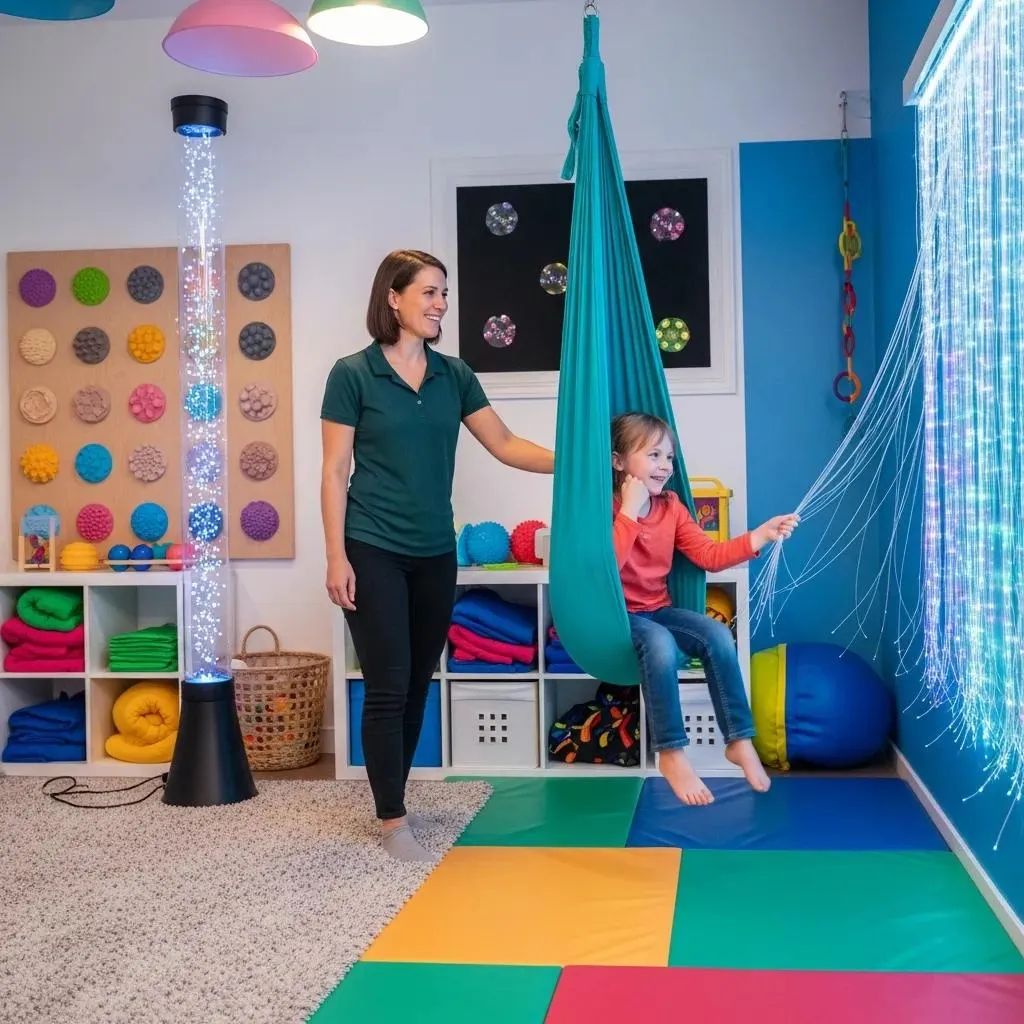
When supporting children with SPD and ASD, occupational therapists perform structured sensory assessments to identify under- or over-responsivity patterns and design individualized sensory diets and environmental changes. Interventions may include deep-pressure activities, proprioceptive input, swing or vestibular work, and carefully graded exposures to sensory stimuli to expand tolerance and improve regulation. For children with ASD, OT integrates social-pragmatic goals—such as turn-taking and joint attention—into play-based sessions, often coordinating with speech and behavioral supports to create consistent learning opportunities. Therapists also provide caregivers and teachers with concrete strategies—such as schedules, visual supports, and sensory breaks—to help maintain regulation and participation throughout the day. These approaches aim to reduce avoidance behaviors and increase functional engagement in the classroom and social settings.
What Support Does OT Provide for ADHD, Developmental Delays, and Cerebral Palsy?
For children with ADHD, OT focuses on self-regulation strategies, environmental adjustments, and task segmentation to improve sustained attention and reduce impulsivity during academic tasks. Developmental delays receive milestone-focused interventions emphasizing gross and fine motor skill acquisition, adaptive play, and caregiver training to build competence across core developmental domains. In cerebral palsy and other motor disorders, OT emphasizes motor planning, adaptive equipment recommendations, and strength and coordination exercises to maximize independence in transfers, mobility, and hand function. Across these conditions, therapists set short-term, measurable goals—such as independent dressing steps or improved in-hand manipulation—and regularly reassess progress to adjust strategies and supports. Families receive home programs and school recommendations to ensure skills generalize across contexts and routines.
These targeted approaches demonstrate how OT adapts techniques to meet each child’s functional needs while collaborating with families and schools to reinforce gains.
How Does Skill Point Therapy Personalize Occupational Therapy Services in Northdale?
Skill Point Therapy personalizes pediatric occupational therapy through a structured process of comprehensive evaluation, collaborative goal-setting, and family-centered treatment planning that emphasizes measurable functional gains. Assessments combine caregiver history, observation, and standardized measures to identify priorities across motor skills, sensory processing, ADLs, and school participation; therapists then translate findings into individualized plans with clear short- and long-term goals. The practice uses a variety of evidence-informed approaches—including sensory integration, DIRFloortime, aquatic therapy, social skills groups, and handwriting support—selected based on each child’s profile and family priorities. Skill Point Therapy emphasizes strong communication with caregivers and schools, flexible service delivery in multiple settings, and regular progress reviews to adjust plans, helping families track meaningful improvements over time.
The table below describes core services, who typically benefit, and what a typical session structure looks like:
This service menu shows how different approaches target specific functional needs while keeping the child’s daily routines and school demands central to planning. If families want an evaluation or tailored plan, Skill Point Therapy can be contacted by phone to discuss next steps and scheduling options.
What Therapy Approaches Are Used: DIRFloortime, Aquatic Therapy, and Social Skills Groups?
DIRFloortime focuses on building relational and social-emotional skills by following the child’s lead, tuning into interests, and gradually expanding interactive complexity to support emotional regulation and symbolic play. A typical DIRFloortime session involves caregiver coaching, therapist-guided play routines, and targeted opportunities to practice joint attention and flexible thinking, helping children build social reciprocity. Aquatic therapy uses buoyancy and resistance to create a supportive environment for motor planning, balance training, and graded strengthening, often benefiting children with coordination or postural challenges. Social skills groups bring peers together in structured activities that practice pragmatic language, turn-taking, and problem-solving with therapist-mediated feedback. These approaches are chosen based on assessment findings and family goals to ensure therapy directly impacts everyday participation and school readiness.
How Are Individualized Treatment Plans Developed for each child’s unique needs?
Individualized treatment plans begin with a comprehensive evaluation that combines caregiver interviews, standardized assessments, and functional observation to establish a clear baseline and priority areas. Therapists collaborate with families and, when appropriate, school staff to set measurable short-term goals (e.g., improved pencil grasp) and longer-term participation goals (e.g., independent classroom self-care). Plans include specific intervention approaches, recommended session frequency and settings, and home or classroom activities to reinforce learning between sessions. Progress is tracked with goal-attainment scaling, outcome measures, and regular reviews so therapists can adapt interventions responsively as the child develops. This structured, collaborative process helps families see how each therapy component contributes to meaningful, everyday outcomes.
This table reinforces how individualized planning links assessment findings to practical session design and school supports, ensuring therapy is both purposeful and measurable.
What Service Delivery Options Are Available for Pediatric Occupational Therapy in Northdale?
Pediatric OT in Northdale is available across flexible settings—in-office clinics with specialized equipment, in-home visits for context-specific intervention, in-daycare or in-school sessions for naturalistic practice, and telehealth for caregiver coaching and follow-up. Each setting offers different advantages: clinics provide diagnosis and specialized tools, home visits enable therapist-guided routines in the child’s environment, school-based work supports IEP goals and classroom participation, and telehealth extends access through coaching and remote monitoring. Families should weigh convenience, goals, and the child’s needs when choosing a setting so therapy maximizes real-world carryover and minimizes logistical barriers. The table below outlines what to expect in each setting and family-centered benefits to simplify decision-making.
This comparison helps families select the setting that best supports their priorities and reduces barriers to consistent care. Many families combine settings over time—starting in-office for assessment and then shifting to home or school sessions for carryover.
How Do In-Home, In-Office, In-Daycare, and Telehealth Sessions Work?
In-home sessions require a safe, predictable space and caregiver involvement so therapists can observe routines and coach caregivers on embedding strategies into daily activities. Sessions often last 30–60 minutes, depending on goals and age.
In-office sessions typically use specialized equipment for sensory integration and structured fine motor tasks, with therapists conducting standardized assessments and implementing targeted activities to build specific skills.
In daycare or school sessions, focus on collaboration with teachers, embedding interventions into classroom routines, and ensuring IEP recommendations are practical and sustainable in the learning environment.
Telehealth sessions combine live video coaching and activity demonstrations, so caregivers practice evidence-based strategies under therapist guidance, making telehealth particularly useful for follow-up, parent training, and situations where in-person sessions are limited.
What Are the Benefits of Flexible Therapy Settings for Families and Schools?
Flexible settings increase access to care by reducing travel time, aligning therapy with natural routines, and supporting rapid generalization of skills across contexts, which improves long-term carryover. For example, practicing dressing during an in-home session directly targets thechild’ss actual clothing and environment. In contrast, school-based sessions allow therapists to address handwriting or classroom behaviors where they occur. Telehealth extends services to families who need schedule flexibility or live farther from clinic sites and offers concentrated caregiver coaching that sustains gains between in-person visits. These options together form a continuum of care that respects family logistics while ensuring consistent, meaningful progress across home, school, and community settings.
Key advantages of flexible delivery settings include:
- Reduced travel and scheduling burden for families.
- Faster skill generalization when therapy occurs in natural contexts.
- Stronger school collaboration when therapists work directly with teachers.
Flexible delivery ultimately improves access and outcomes by tailoring not only the therapy plan but also the delivery settings and methods.
How Can Parents and Schools Collaborate with Skill Point Therapy for Optimal Outcomes?

Effective collaboration starts with clear communication channels and shared goals that align home routines, classroom expectations, and therapy priorities to support consistent practice across environments. Skill Point Therapy emphasizes regular progress notes, caregiver coaching, and coordinated planning with educators to ensure IEP and classroom strategies reinforce therapy goals and daily functioning. Parents can request structured communication—brief weekly check-ins, written home programs, or scheduled meetings—that enable teachers and therapists to adjust supports responsively. Establishing a simple, shared plan with concrete strategies for transitions, sensory breaks, and homework practice creates continuity, accelerating skill generalization and reducing conflicting demands on the child.
The following list provides practical collaboration steps parents and schools can implement:
- Set shared, measurable goals: Ensure teachers and therapists use the same functional language and target behaviors.
- Schedule regular check-ins: Brief weekly or monthly updates keep teams coordinated and responsive.
- Use consistent strategies: Implement agreed-upon sensory supports and task modifications across home and school.
What Role Does Communication Play in SupportingChildren’ss Therapy Progress?
Communication provides the backbone for coordinated care: clear progress notes, timely updates, and caregiver coaching ensure everyone reinforces the same strategies across settings. Therapists can share practical home programs and classroom accommodations. At the same time, teachers provide real-time observations about task demands and response to supports, creating a two-way data flow that refines intervention. A sample communication plan might include a weekly brief email summary, monthly goal reviews, and at least one joint meeting per term to adjust the plan based on observed progress. Consistent documentation and agreed check-in cadences make it easier to measure outcomes and adapt interventions, which improves the likelihood of meaningful, timely progress.
How Does OT Support Handwriting, Social Skills, and Self-Care Development?
Occupational therapy supports handwriting by combining posture and shoulder-stability work, fine-motor strengthening, and visual-motor practice to improve letter formation, spacing, and speed. Social skills are taught through structured practice—role-play, small-group problem-solving, and pragmatic language exercises—so children learn turn-taking, perspective-taking, and flexible play strategies. Self-care interventions focus on sequencing, task analysis, and adaptive techniques (e.g., button hooks, simplified routines) to promote independence with dressing, feeding, and hygiene. Therapists provide short, actionable home practice routines and classroom strategies that parents and teachers can implement daily, turning isolated clinic gains into reliable everyday skills.
What Should Families Expect During an Occupational Therapy Evaluation in Northdale?
An occupational therapy evaluation is a structured process that combines caregiver interview, observation across tasks, standardized testing when appropriate, and functional assessment to identify priorities and develop measurable goals tailored to a child’s daily routines. The evaluation begins with gathering background information and specific concerns, followed by direct observation of motor, sensory, and daily living tasks; therapists may use standardized measures as needed to quantify baseline performance. After assessment, therapists review findings with caregivers, propose a treatment plan with suggested frequency and settings, and outline short-term goals and expected timelines for review. This transparent process helps families understand how assessment results translate into targeted interventions and supports decision-making about service delivery.
The evaluation process can be summarized in practical steps for families:
- Intake and history: Caregivers describe concerns, medical history, and the impact on daily routine.
- Direct assessment: Therapist observes and tests motor, sensory, and functional skills.
- Goal-setting: Therapist and family prioritize measurable functional goals.
- Plan and next steps: Recommendations for session frequency, setting, and home strategies are provided.
How Is a Pediatric OT Evaluation Conducted and What Does It Assess?
A pediatric OT evaluation assesses motor skills, sensory processing, activities of daily living, handwriting, and social participation through caregiver interview, observation, and selected standardized tests as needed to capture baseline functioning. Families should bring examples of the child’s daily routines, school reports, and any prior evaluations to inform clinical decision-making and goal selection. The therapist typically spends time observing play and task performance, asking targeted questions about feeding, dressing, school challenges, and sensory responses to build a comprehensive picture of functional strengths and barriers. After assessment, the therapist discusses findings in clear, actionable terms and provides an initial set of recommended goals and possible service delivery options.
When Will Families See Progress and How Is Therapy Success Measured?
Therapy success is measured through a combination of goal-attainment scaling, standardized outcome measures, and caregiver and teacher reports that track functional changes in real-world tasks over time. Short-term progress—improvements in task performance, reduced caregiver assistance, or better regulation—can often be seen within weeks to a few months with consistent practice, while longer-term developmental gains accumulate over months to years, depending on the child’s needs and starting point. Therapists set measurable benchmarks and periodically reassess to document gains and refine strategies, ensuring that goals remain realistic and meaningful for day-to-day participation. Families who engage in home programs and school collaboration typically see faster generalization and more sustained outcomes.
For families ready to schedule an evaluation or discuss individualized plans, Skill Point Therapy is available to answer questions and arrange assessments; interested caregivers can call the practice directly to start the process and learn about available delivery options.
Frequently Asked Questions
What qualifications should I look for in a pediatric occupational therapist?
When seeking a pediatric occupational therapist, it’s essential to ensure they hold a master’s or doctoral degree in occupational therapy and are licensed to practice in your state. Also, please look for therapists with specialized training in pediatric care, particularly in areas that address your child’s needs, such as sensory processing or developmental delays. Experience working with children with similar conditions can also be beneficial. Certifications from recognized organizations, such as the American Occupational Therapy Association (AOTA), can further indicate a commitment to professional development and best practices.
How can I support my child’s therapy at home?
Supporting your child’s therapy at home involves creating a consistent environment that reinforces the skills learned during sessions. Engage in daily activities that promote fine motor skills, such as arts and crafts, cooking, or playing with building blocks. Incorporate sensory activities, like playing with textured materials or engaging in outdoor play, to enhance sensory processing. Additionally, follow any home programs or strategies provided by the therapist, and maintain open communication with them to ensure you are aligned on goals and methods. Consistency and encouragement are key to reinforcing progress.
What is the typical duration of occupational therapy sessions?
Occupational therapy sessions for children typically last between 30 and 60 minutes, depending on the child’s age, attention span, and specific goals. Younger children may benefit from shorter sessions to maintain engagement, while older children may handle longer sessions that allow for more complex activities. The frequency of sessions can vary, with some children attending therapy once a week, while others may require multiple sessions per week based on their individual needs and treatment plans. Regular assessments will help determine the optimal duration and frequency for each child.
How can I tell if my child is making progress in therapy?
Progress in occupational therapy can be assessed through indicators, such as improvements in specific skills, increased independence in daily activities, and positive changes in behavior or emotional regulation. Therapists often use goal-attainment scaling and standardized assessments to quantify progress quantitatively. Also, regular communication with your therapist can help you understand your child’s development and any adjustments needed in the treatment plan. Observing your child’s ability to apply skills learned in therapy to everyday situations is also a strong indicator of progress.
Are there any specific activities I can do with my child to enhance their therapy outcomes?
Yes, engaging in targeted activities at home can significantly enhance your child’s therapy outcomes. Activities like playing with playdough can improve fine motor skills, while obstacle courses can enhance gross motor skills and coordination. Incorporating sensory play, such as sand or water play, can help with sensory processing. Additionally, practicing self-care tasks, such as dressing or brushing teeth, can promote independence. Please always consult your therapist to determine specific activities that align with your child’s goals and needs, ensuring they complement the therapy sessions effectively.
What should I do if I have concerns about my child’s progress in therapy?
If you have concerns about your child’s progress in therapy, the first step is to communicate openly with the occupational therapist. Could you schedule a meeting to discuss your observations and any specific issues you have noticed? The therapist can provide insights into your child’s progress and may suggest adjustments to the treatment plan. It’s important to remember that progress can vary widely among children, and some may take longer to achieve their goals. Collaborating with the therapist will help ensure that your child’s needs are being met effectively.