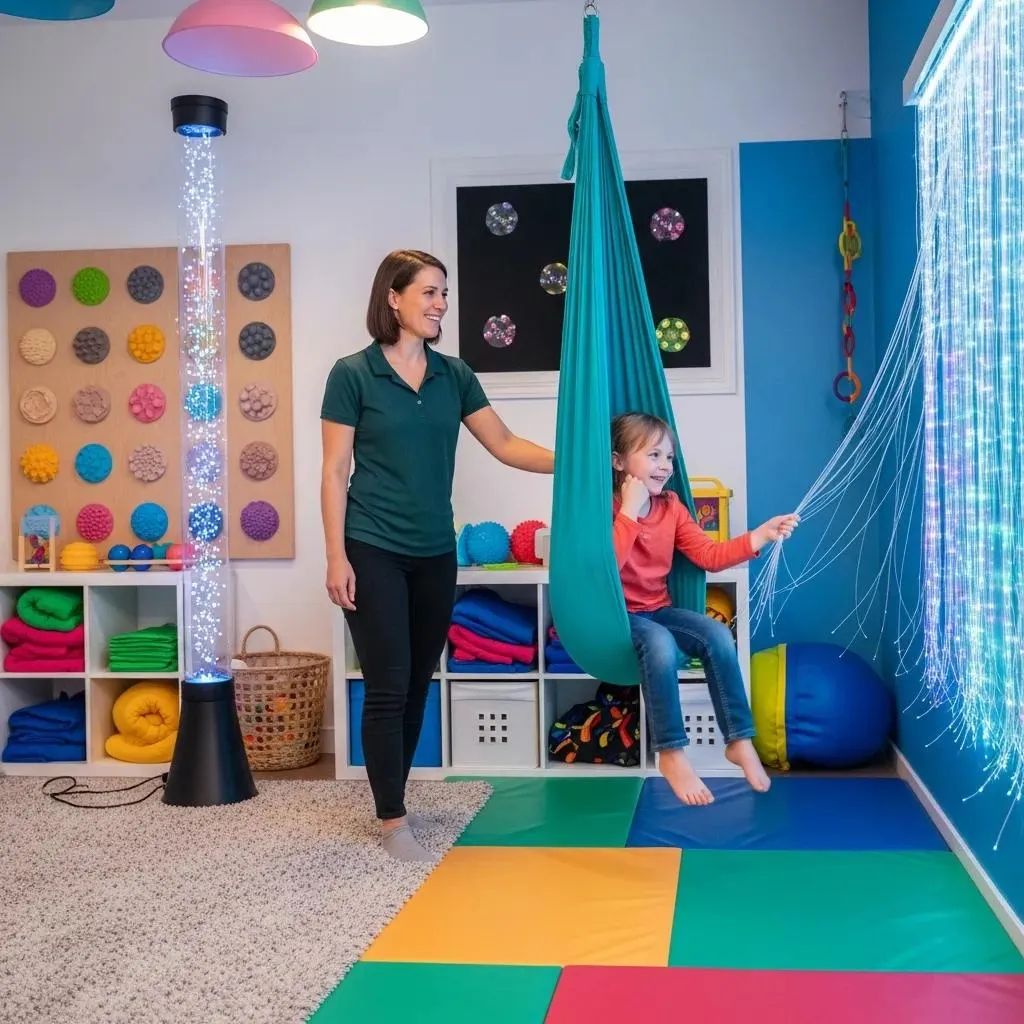

Collaborative Group Pediatric Occupational Therapy Sessions for Kids: Enhancing Social Skills and Development
Collaborative group pediatric occupational therapy (OT) uses therapist-led, peer-centered activities to develop social skills, sensory regulation, and daily living competencies for children. This article explains how group occupational therapy for kids leverages peer interaction therapy, play-based learning, and sensory integration group activities to promote social learning and skill generalization across settings. Many families seek group OT to address difficulties with turn-taking, emotional regulation, and cooperative play; group sessions create naturalistic opportunities for practice while therapists scaffold learning and measure progress. Below you’ll find clear definitions, practical examples of group OT activities, evidence-informed benefits, profiles of children who thrive in group settings, and actionable guidance for parents and schools to support carryover. Each section integrates concrete strategies and semantic connections—peer modeling → prompts → improved interaction—so you can decide whether collaborative group pediatric OT may be right for your child and how to prepare for enrollment.
What Are Collaborative Group Pediatric OT Sessions and How Do They Support Child Development?
Collaborative group pediatric OT sessions are structured therapeutic groups where children work toward individualized goals while engaging in shared activities that promote peer interaction and social learning. The mechanism relies on peer modeling, therapist scaffolding, and repeated, contextual practice so that skills learned in group play generalize to home and school environments. By practicing routines such as greeting peers, turn-taking in games, and cooperative problem-solving, children develop communication, emotional regulation, and adaptive play skills. The group format also offers efficient practice opportunities and natural peer reinforcement, making it especially useful for pediatric OT social skills group interventions.
Skill Point Therapy personalizes group sessions by embedding individualized goals into each group activity and offering flexible delivery options, including in-home, in-daycare, and telehealth. Provides pediatric occupational therapy in Tampa and surrounding communities; serves children from infancy to 21 years; emphasizes compassionate, personalized care; offers community-based services including in-home, in-daycare, and telehealth options; lists social skills groups and group settings among services; specialties include DIRFloortime, aquatic therapy, social skills groups, and IEP support.
Defining Group Pediatric Occupational Therapy and Its Core Principles
Group pediatric occupational therapy combines the objectives of pediatric occupational therapy with the dynamics of group therapy to teach functional skills in social contexts. Core principles include peer modeling—where one child’s successful strategy is noticed and imitated by others—scaffolding by the therapist, and the use of sensory integration strategies to support participation. For example, a therapist may set up a turn-taking craft activity where one child models asking for a tool while peers practice the same script; the therapist fades prompts as children become more independent. These principles translate into measurable goals such as initiating play, sustaining attention during brief tasks, and improving cooperative problem-solving, which, in turn, support broader developmental milestones.
Therapists structure sessions around predictable routines and clear visual cues, which support children who need additional processing time and reduce anxiety about social demands. This structured predictability naturally leads to selecting specific group activities and monitoring progress through observable behaviors during play, which we’ll describe next.
How Skill Point Therapy Personalizes Group Sessions for Children
Personalization in group OT means that each child attends to shared activities while working on clinically meaningful, individualized goals set by the therapist and family. Skill Point Therapy implements this by embedding individualized objectives—such as increasing spontaneous greetings or improving sensory modulation—into cooperative games and role-playing exercises, ensuring each child receives targeted practice. Therapists maintain appropriate therapist-to-child ratios, track progress with observation and brief measures, and adapt tasks by using visual supports, shortened task segments, or additional sensory tools for children who need them.
Personalized delivery can occur across settings, so goals practiced in a clinic group may be reinforced during in-daycare activities, during telehealth coaching sessions with parents, or in in-home follow-ups; this flexibility promotes skill generalization across environments. Clear communication between therapists and caregivers ensures that home and school environments align with therapeutic strategies, paving a smoother path to functional gains.
What Are the Key Benefits of Pediatric Group Occupational Therapy for Kids?

Group occupational therapy for kids delivers multiple interrelated benefits through social learning, sensory supports, and repeated practice in natural contexts. Mechanisms include peer-mediated prompts, therapist-guided scaffolding, and opportunities for real-time feedback—all of which accelerate skill acquisition and confidence. Parents and educators commonly observe improvements in social initiation, turn-taking, emotional regulation, and the ability to apply learned strategies in different environments. The group setting also reduces isolation and allows for more efficient therapy time than individual sessions alone.
Group OT provides distinct advantages:
- Social learning in authentic contexts: Peer interaction therapy encourages imitation, spontaneous communication, and social problem solving.
- Emotional regulation practice: Children practice coping strategies with peers and receive immediate therapist coaching.
- Functional generalization: Skills practiced during group activities are more likely to transfer to the classroom and playground settings.
These benefits can be tracked through observable metrics, such as the frequency of initiations, reduced tantrum duration, and increased successful cooperative plays, which help families see measurable progress and inform ongoing goal-setting.
Introductory table: this table maps how specific social skills develop through group mechanisms and what parents can expect.
This comparison highlights how group dynamics serve as the active mechanism that transforms practice into observable developmental gains. The following section explains, in practical terms, how group OT improves peer interaction.
How Does Group OT Improve Social Skills and Peer Interaction?
Group OT improves social skills by creating repeated, low-stakes opportunities for children to practice interpersonal routines under therapist guidance. Through naturalistic social opportunities—like cooperative building tasks or small-group snack routines—children learn social scripts, pragmatic language, and nonverbal cues while receiving immediate feedback. For instance, a turn-taking game teaches patience through a visible timer, while cooperative problem-solving tasks build perspective-taking and negotiation skills.
Parents can monitor progress using simple metrics: the number of spontaneous initiations per session, successful exchanges without adult prompts, and instances of conflict resolved through peer negotiation. These observable metrics serve as a basis for adjusting goals and for transitioning skills from group to classroom settings, which we will discuss when covering suitable candidates for group OT.
In What Ways Does Group Therapy Enhance Emotional Regulation and Confidence?
Group therapy enhances emotional regulation by providing safe, scaffolded situations in which children encounter manageable frustration and learn coping strategies alongside peers. Therapists coach children in brief, evidence-informed calming strategies—such as sensory breaks or breathing techniques—during tasks that naturally provoke emotion, helping children practice self-control in context. Peer feedback and modeled coping also reinforce adaptive strategies, thereby strengthening self-efficacy and reducing reliance on adult intervention.
Over time, repeated successes in group activities build confidence: a child who completes a cooperative game will be more likely to volunteer in future interactions, creating a positive feedback loop between competence and social participation. This dynamic underpins both emotional resilience and broader social engagement.
Who Can Benefit from Collaborative Group Pediatric OT Sessions?
Collaborative group pediatric OT sessions support a range of children who need social learning, sensory regulation, or peer-based practice to reach functional goals. Typical populations include children with autism spectrum disorder (ASD), attention-deficit/hyperactivity disorder (ADHD), sensory processing challenges, developmental language delays, and social anxiety. Group OT is designed to accommodate varying skill levels through adaptive supports, visual cues, and therapist-led scaffolding that align with individual readiness and family goals.
A practical condition-to-goal mapping helps families identify fit and expected outcomes.
This table illustrates how group occupational therapy for ADHD, ASD, and sensory challenges translates into targeted, measurable goals. Next, we consider characteristics of children who typically thrive in group formats and necessary screening considerations.
Which Children with Developmental Conditions Thrive in Group OT Settings?
Children who thrive in group OT often demonstrate some readiness for peer interaction—such as tolerating brief shared activities and following simple instructions—and show motivation to engage with peers. Those with mild to moderate social deficits, a willingness to attend to adult prompts, and the ability to participate in short, structured tasks typically make substantial gains in group settings. Therapists screen for sensory or attention needs and incorporate adaptations—like sensory breaks, visual schedules, or movement-based transitions—to maximize participation for diverse learners.
If a child has more intensive behavioral or safety needs, clinicians may recommend a blended approach that includes individual therapy to build prerequisite skills before integrating into a group. Understanding these readiness indicators helps families choose the right balance of personal and group therapy for sustained progress.
How Does Group Therapy Support Children with Autism Spectrum Disorder and ADHD?
For children with ASD, group OT supports social communication through visual supports, social scripts, and predictable routines that reduce anxiety and clarify expectations. Activities are broken into short, explicit steps with therapist modeling and peer demonstrations to promote imitation and joint attention. For children with ADHD, group formats incorporate movement, clear roles, and short activity bursts to channel attention into goal-directed tasks; therapists use immediate reinforcement and transitions to sustain engagement.
Both conditions benefit from structured feedback and consistent practice: the therapist highlights successes, fades prompts as skills emerge, and sets incremental goals—creating a measurable pathway from guided participation to independent peer interaction.
What Activities Are Included in Pediatric Group Occupational Therapy Sessions?
Group occupational therapy sessions use a repertoire of play-based, sensory integration, cooperative, and role-playing activities that target social, emotional, and motor skills. Activities are selected for their ability to provoke natural social exchanges while enabling therapists to scaffold and reinforce targeted behaviors. Standard session components include sensory stations for regulation, obstacle courses to promote motor planning and turn-taking, cooperative art projects to encourage sharing, and role-play scenarios to practice social scripts.
Below is a practical activity-to-target map to help families understand the typical session structure and age- and group-size guidelines.
This table provides a quick reference connecting activities to therapeutic targets and practical logistics. The following paragraphs describe specific play-based and cooperative activities that foster social learning.
What Play-Based and Sensory Integration Activities Foster Social Learning?

Play-based and sensory integration activities create contexts where children practice communication, regulation, and cooperation while engaged in meaningful tasks. Examples include sensory bins that invite shared exploration and verbal labeling, small-group obstacle courses that require cooperative problem solving and turn-taking, and group cooking or snack-time routines that teach sequencing and social rules. Therapists often pair sensory strategies—like weighted vests or proprioceptive input—with social tasks to increase tolerance and focus during peer interactions.
These activities are intentionally designed to be motivating and inherently social, so children can rehearse skills in ways that feel natural rather than forced, thereby improving retention and generalization across settings.
(List) Practical examples of sensory and play activities used in group OT:
- Sensory bin turn-taking: Children take turns finding themed items while narrating discoveries.
- Cooperative building challenge: Small teams plan and construct a structure using shared materials.
- Role-play snack routine: Children practice requesting, sharing, and cleaning up with visual cues.
How Do Cooperative Games and Role-Playing Enhance Peer Interaction?
Cooperative games and role-playing create immediate social goals—such as sharing a resource, solving a common problem, or following a collective rule—that compel children to communicate and negotiate. Mechanics such as assigned roles, shared end-goals, and visual turn-taking cues reduce ambiguity and provideexplicitr scaffolding for interaction; therapists use prompts and modeled language to guide exchanges. For example, a cooperative art project assigns each child a step in a sequence, which requires verbal requests and praise for contributions, reinforcing both social language and task completion.
Therapists also script role-play scenarios that mirror real-life situations (e.g., playground conflict resolution), then gradually fade supports so children internalize appropriate responses. These practices encourage perspective-taking, problem-solving, and the confidence to initiate interactions outside therapy sessions.
How Can Parents and Schools Support Children in Collaborative Group OT?
Parents and schools play complementary roles in reinforcing group OT goals by providing consistent practice, environmental supports, and collaborative progress tracking. When caregivers use the same cues, visual schedules, and reinforcement strategies at home and in school, children experience seamless generalization of skills. Schools can align IEP supports with therapist goals by incorporating short group practice times, visual supports in classrooms, and staff coaching to carry forward therapist strategies.
Below is an actionable list that outlines what parents and school teams can do to support carryover and collaboration.
- Share goals with school staff: Communicate specific, observable goals and recommended classroom supports.
- Implement short home routines: Practice 5–10 minute activities that reinforce session objectives.
- Use consistent visual cues: Apply the same timers, prompts, and social scripts used in therapy.
- Track progress collaboratively: Use simple logs to document initiations, turn-taking, and incidents of regulation.
- Coordinate transition planning: Work with therapists to embed goals into IEP or 504 plans when appropriate.
This checklist creates a shared framework between families and educators that strengthens practice opportunities and ensures consistent expectations, which we will expand upon in the parent-specific section.
What Is the Role of Parents in Reinforcing Therapy Goals at Home?
Parents are essential partners who translate therapeutic strategies into daily routines, increasing the frequency and relevance of practice opportunities. Specific actions include setting brief, predictable practice times, modeling targeted social phrases, using the same visual supports and timers, and providing immediate positive reinforcement for attempts. A five-step home practice checklist helps parents structure reinforcement without overwhelming the child or family schedule.
- Create a predictable daily practice routine of 5–10 minutes, focusing on one target.
- Use the therapist-provided visual cues and scripts.
- Incorporate sensory supports before challenging tasks to improve regulation.
- Praise specific behaviors (e.g., “You waited your turn!”) to reinforce skills.
- Record brief notes about successes to share with the therapist weekly.
These steps enable steady progress and provide the therapist with data to adjust goals and strategies, ensuring alignment across settings.
How Do School-Based Group OT Programs Complement Therapy Sessions?
School-based group OT programs extend clinic-based gains into the academic environment by embedding functional goals into classroom routines and recess activities. Typical school supports include scheduled small-group sessions during resource time, teacher-provided visual supports at the student’s desk, and brief peer-mediated activities that replicate clinic games. Effective collaboration includes sharing goal progress, offering brief staff coaching sessions, and aligning reinforcement schedules so that gains from clinic groups are reinforced throughout the school day.
Successful collaboration often uses concise communication templates—such as a one-page goal summary or brief observation notes—that help teachers implement consistent strategies without adding excessive workload. This coordinated approach enhances the likelihood that skills learned in the group will be functional and durable.
What Should Parents Know About Preparing to Enroll in Pediatric OT?
Enrooping in group pediatric OT involves preparation, realistic expectations for early sessions, and a plan to measure meaningful outcomes over time. Parents should expect an initial screening or evaluation to determine readiness and individualized goals, followed by placement in a group matched by developmental level and target skills. Early sessions focus on establishing routines, teaching social scripts, and building rapport; measurable improvements often emerge after several consistent sessions as children generalize strategies.
Below are practical steps parents can take to prepare, what to expect early on, and how to move from evaluation to scheduling.
How to Prepare Your Child for Collaborative Group Occupational Therapy?
Preparing a child for group OT reduces anxiety and increases engagement by using social stories, short practice sessions, and familiarization opportunities. A seven-point preparation checklist includes: visiting the space, if possible; introducing social scripts; practicing shared activities at home; establishing a short pre-session routine; packing familiar sensory supports; setting clear expectations about behavior; and discussing the therapist’s role in favorable terms. These steps build predictable structures that help children enter group sessions ready to learn.
- Read a simple social story about attending a group and what to expect at each step.
- Practice a one-minute turn-taking game at home to warm up attention.
- Introduce the therapist’s role as a helper who supports everyone’s learning.
- Bring a preferred calming item or sensory tool to the first few sessions.
- Establish a simple arrival routine (e.g., greet, hang up coat, choose activity).
- Use visual timers to practice short waiting periods.
- Celebrate small wins after each practice to build confidence.
These preparatory actions reduce transition stress and increase the likelihood of a productive early therapy experience.
What Are Common Questions About Group OT Sessions and Their Outcomes?
Parents often ask about timelines, group size, privacy, and how to choose between individual and group therapy; concise answers help them make decisions. Typical FAQs include: progress timelines (observable changes often appear within weeks but meaningful generalization takes months), ideal group sizes (small groups of 3–6 enable individualized attention), and when to prefer individual therapy (if safety or intensive behavioral supports are required). Clear metrics—such as increased initiations per session or fewer adult prompts—help determine whether goals are being met.
- How soon will my child improve? Observable skill use can appear in several weeks; durable generalization often develops over months.
- What group size is optimal? Small groups (3–6) balance peer exposure with therapist attention.
- When choose individual therapy? Consider individual sessions if the child needs intensive behavior supports or skill-building before participating in group.
Skill Point Therapy can assist families with evaluations and determining the right mix of individual and group services; caregivers may contact Skill Point Therapy to discuss assessments, group placement, or scheduling. Skill Point Therapy provides pediatric occupational therapy in Tampa and surrounding communities, serving children from infancy to 21 years with compassionate, personalized care offered through community-based services, including in-home, in-daycare, and telehealth options.
Frequently Asked Questions
What age range is suitable for collaborative group pediatric OT sessions?
Collaborative group pediatric occupational therapy sessions are designed for children from infancy up to 21 years old. The specific age range for participation often depends on the child’s developmental goals and individual needs. Typically, younger children engage in sensory exploration and play-based activities, while older children participate in more structured tasks focused on social skills and emotional regulation. It’s essential to assess each child’s readiness and developmental level to ensure they benefit from the group format.
How can parents track their child’s progress in group OT?
Parents can track their child’s progress in group occupational therapy by observing specific metrics during sessions. These may include the frequency of social initiations, successful turn-taking, and instances of emotional regulation. Keeping a simple log of these behaviors can help parents communicate effectively with therapists about their child’s development. Additionally, therapists often provide feedback and progress updates, which can help parents reinforce skills at home and adjust goals as needed.
Are there any specific challenges that children with ADHD face in group OT?
Children with ADHD may face challenges in group occupational therapy, such as difficulty sustaining attention, impulsivity, and managing transitions between activities. To address these challenges, therapists often incorporate movement-based activities, clear roles, and structured tasks that cater to shorter attention spans. Visual supports and immediate reinforcement can also help maintain engagement and focus. By tailoring the group experience to these needs, therapists can create an environment where children with ADHD can thrive and develop essential social skills.
What role do parents play in the success of group OT?
Parents play a crucial role in the success of group occupational therapy by reinforcing therapeutic strategies at home. This includes practicing targeted skills during daily routines, using consistent visual supports, and providing immediate positive feedback for attempts. By fostering a supportive environment and maintaining open communication with therapists, parents can help ensure that skills learned in therapy are generalized to other settings, thereby enhancing the overall effectiveness of the treatment.
How do therapists ensure that group OT sessions are inclusive for all children?
Therapists ensure that group occupational therapy sessions are inclusive by adapting activities to meet the diverse needs of all participants. This may involve using visual supports, modifying tasks for varying skill levels, and providing sensory tools to accommodate sensory processing differences. Therapists also monitor group dynamics and adjust interactions to promote participation from all children, ensuring that each child can engage meaningfully and benefit from the collaborative learning environment.
What should parents consider when choosing between group and individual therapy?
When choosing between group and individual therapy, parents should consider their child’s specific needs, goals, and readiness for peer interaction. Group therapy is beneficial for children who require social skills development and can engage in shared activities. In contrast, individual therapy may be more appropriate for those with intensive behavioral needs or who require focused skill-building before joining a group. Consulting with therapists can help families make informed decisions based on their child’s unique circumstances.