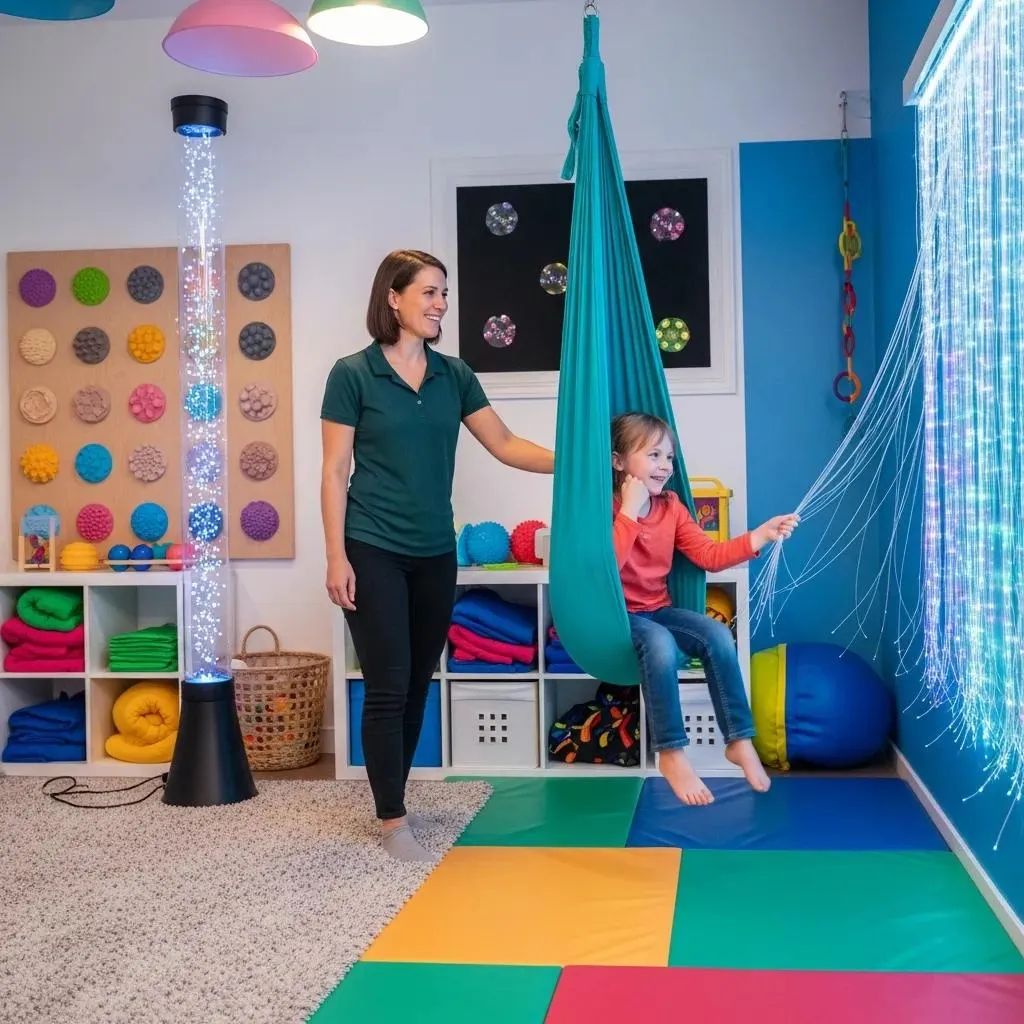

Social Skills Therapy Tampa: Comprehensive Programs to Enhance Children’s Social Development
Social skills therapy helps children learn the practical behaviors, communication strategies, and emotional regulation needed to connect with peers, form friendships, and participate confidently in school and community settings. These programs combine guided practice, modeling, and structured feedback so children can rehearse social interactions in a low-stakes environment, build communication skills, and generalize new behaviors to everyday contexts. This article explains what social skills enhancement programs are, why early and targeted intervention matters for child social development in Tampa, and which evidence-informed approaches produce measurable gains. You will learn how group-based practice supports peer interaction, how therapies adapt for autism, ADHD, and anxiety, and practical steps families can take at home to reinforce progress. The piece also outlines the types of pediatric social skills programs available locally and clarifies how to access evaluations and group placement. Throughout, readers will find actionable strategies, checklists, and comparisons designed for parents, educators, and clinicians interested in improving pediatric social and communication outcomes in Tampa.
What Are Social Skills Enhancement Programs and Why Are They Important?
Social skills enhancement programs are structured interventions that teach children practical interpersonal skills—such as greeting, turn-taking, perspective-taking, and conflict management—through systematic instruction and practice. They work by breaking complex social behaviors into teachable steps, providing modeling and rehearsal, and using immediate feedback to reinforce successful strategies, which yields improved peer interaction and greater classroom participation. These programs matter because social competence supports emotional regulation, academic success, and long-term mental health; recent research shows early social-emotional learning predicts better school engagement and peer relationships. Families and schools benefit when children gain predictable social routines and tools they can use across settings, which is especially important for children with developmental or attention differences. Below is a concise list of core benefits families can expect from well-designed social skills programs in Tampa.
Social skills programs deliver several direct benefits:
- Improved peer interaction and friendship formation through guided practice and role-play.
- Enhanced communication skills, including verbal and nonverbal cues, are essential for conversation.
- Better emotional regulation and coping strategies that reduce conflict and anxiety in social settings.
- Practical problem-solving skills for managing disagreements and group tasks successfully.
These advantages set the stage for targeted programming; the next section explains how group formats specifically support children’s peer interaction and communication.
How Do Social Skills Groups Support Children’s Peer Interaction and Communication?

Social skills groups support peer interaction by creating a predictable context where children practice targeted behaviors with peers under therapist guidance. Groups use mechanisms like modeling, role-play, and scaffolding so children see desired behaviors, rehearse them with prompting, and receive corrective feedback that is immediately reinforced. For example, a group activity might use cooperative building tasks to practice turn-taking and role negotiation, followed by a short reflection in which the therapist highlights successful communication moments and sets individual practice goals. Over several sessions, children typically show improved greetings, more precise conversational turns, and greater ability to join ongoing play, which teachers and parents can observe in everyday interactions. This stepwise practice translates into more confident peer approaches and smoother classroom participation.
- Key mechanisms used in groups:
Modeling: therapists and peers demonstrate social routines.Role-play: safe rehearsal of specific scenarios like resolving conflicts.Feedback and reinforcement: immediate, specific praise and corrective guidance.
These mechanisms directly lead to observable social milestones, which the next subsection connects to social-emotional learning activities used in therapy.
What Benefits Do Social Emotional Learning Activities Provide for Kids in Tampa?
Social-Emotional Learning (SEL) activities integrated into therapy teach emotional literacy, self-regulation, and empathy through concrete practice and reflection, resulting in measurable gains in classroom behavior and peer relationships. SEL exercises—such as feeling charts, social stories, and problem-solving ladders—help children label emotions, predict others’ reactions, and select adaptive responses, thereby reducing reactive behavior and improving cooperation. In Tampa schools and clinics, SEL-informed therapy supports academic readiness by strengthening attention and task persistence, along with social skills, making it easier for children to engage in group lessons. Typical SEL activities are easily adapted for home practice, allowing caregivers to reinforce emotion vocabulary and coping strategies between sessions. Understanding how SEL connects emotion recognition to social action prepares families for program selection and home reinforcement strategies described later.
Everydayon SEL activities used in therapy:
- Social stories that model alternative behaviors in challenging scenarios.
- Emotion recognition games that increase vocabulary and reading facial cues.
- Problem-solving ladders that teach stepwise conflict resolution.
These SEL practices strengthen emotional awareness and provide a foundation for more advanced social problem-solving work in group and individual sessions.
Which Pediatric Social Skills Programs Does Skill Point Therapy Offer in Tampa?

Pediatric social skills programs typically vary by age and developmental needs; below is an overview of common program structures and goals families can expect when exploring services in the Tampa area. Programs focus on age-appropriate curricula that range from play-based turn-taking for toddlers to peer negotiation and friendship skills for teens, and they often combine occupational therapy elements, such as sensory integration, when attention or regulation affects social performance. Families evaluating options should look for transparent assessment processes, measurable goals, and flexible delivery modes—such as in-office groups, in-home sessions, daycare-based supports, and teletherapy—that increase access and generalization. Skill Point Therapy provides local Social Skills Group programming as one example of a pediatric therapy provider offering these age-banded services; families can review program descriptions, request an evaluation, and learn how groups align with therapeutic goals.
What Are the Features of Social Skills Groups for Toddlers and Preschoolers?
Early-intervention groups for toddlers and preschoolers are play-centered and include caregiver coaching to support generalization of social routines into daily life. Sessions are typically short and highly structured, combining sensory supports, repetitive play scripts, and guided interactions that focus on joint attention, imitation, and simple turn-taking. Therapists use caregiver involvement to model language scaffolds and to coach parents on prompting strategies, which accelerates carryover at home and in daycare settings. Targeted outcomes include more consistent initiation of social play, longer joint attention episodes, and emerging expressive language for requesting and sharing. These group features make early enrollment valuable because small gains at this stage often translate into smoother transitions into preschool and kindergarten social demands.
- Typical session components include:
Short, predictable routines to support regulation and attention.Sensory-informed activities to reduce overstimulation and support engagement.Caregiver coaching segments to build home carryover.
These features lay the groundwork for more complex social learning in elementary-aged programming.
How Do Social Skills Programs Address the Needs of Elementary and Teen Children?
Programs for elementary-aged children emphasize cooperative games, perspective-taking exercises, and explicit conversation skills. At the same time, teen groups shift toward nuanced friendship skills, social problem-solving, and real-world role-play. Elementary curricula often include structured play and conflict-resolution steps that teachers and parents can reinforce, leading to gains in classroom cooperation and peer invitations to play. Teen programming integrates socio-cognitive elements—such as interpreting social cues, understanding digital communication norms, and setting boundaries—and uses role-play and peer feedback to rehearse authentic scenarios, such as planning outings or managing social media tensions. Progress is typically tracked through individualized goal-setting, teacher input, and parent-report measures that capture improvements in peer interactions and reduced social friction. As children mature, these programs focus increasingly on autonomy, perspective-taking, and the social reasoning skills necessary for healthy adolescent relationships.
- Measurement strategies used: Goal-based tracking with observable benchmarks.Parent and teacher feedback cycles for a multi-environment perspective.Periodic skill probes to document generalization to school settings.
Families looking for specific program matches should consider a formal evaluation to identify precise targets and placement.
How Are Social Skills Therapies Tailored for Autism, ADHD, and Anxiety in Tampa?
Effective social skills therapy adapts core approaches to each child’s diagnostic profile—modifying pace, supports, and scaffolds to align with learning needs while maintaining clear, functional social goals. For autism, therapists emphasize visual supports, structured peer models, and play-based engagement to build joint attention and reciprocity. For ADHD, interventions incorporate executive function scaffolds, sensory regulation strategies, and brief, high-engagement practice blocks to maintain focus and facilitate skill acquisition. For social anxiety, graded exposure, rehearsal with cognitive approaches, and scaffolded social exposures are central to reducing avoidance and building confidence. The table below summarizes condition-specific methodologies and how they directly support social skill gains.
What Specialized Approaches Support Autism Social Skills Training?
Autism-focused social skills training uses approaches like DIRFloortime, visual supports, social stories, and structured peer-interaction models that combine sensory-informed strategies with targeted reciprocity practice. DIRFloortime emphasizes following the child’s lead to build engagement and shared attention, which therapists pair with social stories and visual schedules to create predictable social scripts. Structured peer models borrow elements from evidence-based curricula—such as scripted practice and modeling—to help children rehearse conversational turns and joint activities with peers. Sensory integration strategies are integrated when sensory differences interfere with social engagement, ensuring the environment supports attention and comfort. These specialized methods contribute to gains in social reciprocity, more apparent intent during interaction, and increased spontaneous initiation over time.
- Example session activity: a caregiver-supported play routine where the child leads a game, the therapist models a social script, and peers practice turn-taking with visual cues.
How Does Therapy Adapt for Children with ADHD and Social Anxiety?
For children with ADHD, therapists structure sessions with clear routines, executive function supports like visual checklists and stepwise prompts, and sensory breaks to maintain focus during social practice. Activities are brief, highly engaging, and include immediate reinforcement to capitalize on attentional strengths, while therapists explicitly teach self-monitoring and impulse-control strategies tied to social goals. For social anxiety, clinicians use graded exposure that progressively increases social challenge, combined with role-play and anxiety-management techniques such as breathing and cognitive reframing to reduce avoidance behaviors. Both approaches emphasize measurable, short-term goals and frequent review to reinforce progress across settings; therapists adjust pacing and stimulus intensity based on observed tolerance and skill acquisition. This adaptive approach ensures therapy meets the child where they are and builds confidence incrementally.
- Practical examples:ADHD: a 10-minute cooperative game with a visual turn-taking chart and a short sensory break.Social anxiety: rehearsed greetings in session, then brief in-school exposures supported by a therapist or caregiver.
What Makes Skill Point Therapy’s Social Skills Programs Unique in Tampa?
Skill Point Therapy emphasizes compassionate, individualized pediatric occupational therapy that integrates social skills work with sensory and fine motor goals when relevant, offering flexible delivery options across Tampa and surrounding areas. Their approach focuses on personalized treatment planning, family communication, and practical coaching so that gains in therapy translate to home, school, and community environments. The practice offers multiple delivery modes—including in-office groups, in-home visits, in-daycare supports, and teletherapy—which helps families choose formats that maximize consistency and generalization. Below is a table that highlights core value propositions, what they mean in practice, and the benefits families can expect when enrolling.
How Does Personalized Treatment and Compassionate Care Enhance Outcomes?
Personalized treatment enhances outcomes by aligning therapy targets with a child’s functional needs and by tracking small, incremental goals that are meaningful to families and teachers. Therapists collaborate with caregivers to set measurable objectives, use data-driven progress monitoring, and adjust strategies when needed, which increases the likelihood that practiced behaviors will carry over to school and home. Compassionate care—demonstrated through consistent communication, empathy for family constraints, and coaching that respects family routines—encourages caregiver participation and daily practice, both of which are strong predictors of sustained improvement. Anonymized case summaries from practice show that children with engaged caregivers and individualized plans typically reach social milestones more quickly than those without structured follow-up. This collaborative model builds trust and ensures families feel equipped to support carryover between sessions.
- Tangible family-facing benefits: Clear, short-term goals that parents can reinforce each day. Regular updates that translate therapy progress into practical home strategies. A predictable plan for transitions between service types or settings.
What Flexible Service Delivery Options Are Available for Families?
Flexible delivery options allow therapy to meet families where they are, supporting skill generalization and consistent attendance by reducing logistical barriers. In-office groups provide a structured setting with access to peers and therapy materials, ideal for focused skill acquisition. At the same time, in-home or in-daycare sessions promote real-world practice and faster carryover into daily routines. Teletherapy offers continuity when transportation or scheduling constraints limit in-person attendance and works well for coaching caregivers and for practicing conversational or cognitive strategies. Each format has pros and cons: in-office maximizes controlled practice with peers, in-home maximizes generalization to routines, and teletherapy maximizes accessibility and caregiver coaching opportunities. Families can choose a blended approach over time to combine the strengths of each delivery mode for optimal outcomes.
- Delivery-mode recommendations: In-office groups: best for structured peer practice and social coaching.In-home/in-daycare: best for generalizing skills within natural routines.Teletherapy: best for caregiver coaching and continuity during disruptions.
How Can Parents Support TheirChild’ss Social Skills Development at Home?
Parents play a central role in reinforcing social skills between sessions by creating low-pressure practice opportunities, modeling desired behaviors, and providing consistent feedback. Simple, daily routines—like role-playing greetings before school or structured playdates with one or two peers—allow children to apply learned strategies in natural contexts. Tracking small, specific goals and celebrating incremental progress helps children internalize skills and reduces performance pressure; using simple charts or brief notes to record successful attempts supports motivation. The checklist below offers practical, evidence-informed strategies parents can implement to complement therapy and encourage steady carryover of new skills.
Practical checklist for home practice:
- Schedule short, focused practice sessions (10–15 minutes) that target one social skill at a time.
- Use role-play to rehearse specific scenarios (greetings, sharing, asking to join play).
- Coach emotion labeling with feeling charts and follow-up discussion after events.
- Arrange brief, structured playdates with clear roles and adult facilitation.
- Provide immediate, specific praise for attempts and a simple visual chart for progress.
These strategies help normalize practice and make skill-building part of daily life rather than an added burden. Consistent home practice combined with therapist coaching significantly increases the rate and durability of social gains.
What Are Common Signs That Indicate a Child Needs Social Skills Support?
Common indicators that a child may benefit from social skills intervention include difficulty initiating or sustaining play, frequent misunderstandings with peers, trouble interpreting nonverbal cues, or intense worry about social situations. For toddlers, red flags include limited joint attention, minimal social imitation, or lack of interest in shared play. Elementary-aged children who struggle may display repeated conflicts, inability to take turns, or limited peer invitations, while teens might avoid social activities, show persistent loneliness, or misinterpret social nuance. When families observe these patterns across settings—home, school, and community—it is often appropriate to seek screening or a complete evaluation to determine targeted supports. Early identification and intervention increase the likelihood of meaningful improvements in social functioning.
Suggested immediate actions:
- Discuss observations with the child’s pediatrician or teacher.
- Request a developmental or occupational therapy screening.
- Consider an evaluation to identify specific skill targets and appropriate services.
Timely steps help families access supports that prevent escalation and promote adaptive social development.
Which Parent Resources and Strategies Complement Therapy Sessions?
A set of focused resources and a simple weekly practice plan can help parents reinforce therapy goals without overwhelming daily routines. Recommended resources include social stories tailored to specific situations, simple board or cooperative games that require turn-taking, and short apps or printable feeling charts to prompt emotion labeling. A weekly plan might allocate three 10–15-minute practice sessions—two focused on role-play and one on in-situ practice, like a walk-and-talk—plus a brief caregiver reflection journal to note wins and challenges. Therapists often coach parents on how to use these tools effectively and measure carryover through goal check-ins. These combined strategies ensure consistent reinforcement and make progress visible to both families and clinicians.
- Sample weekly practice schedule:Monday: 10-minute role-play (greetings/conversations).Wednesday: 15-minute cooperative game with turn-taking.Friday: Real-world practice during a short playdate or community outing.Weekend: Caregiver reflection and notes for therapist.
Regular, brief practice sessions are more effective than infrequent, long drills and support gradual, sustainable gains.
Where and How Can Families Access Social Skills Enhancement Programs in Tampa?
Families can access social skills enhancement programs through local pediatric therapy providers offering in-office groups, in-home services, in-daycare supports, and teletherapy to meet diverse logistical needs across Tampa, Brandon, and Ruskin areas. The typical pathway to enrollment includes an initial contact or intake, a formal evaluation to identify social goals, placement into an age-appropriate group or individualized plan, and regular progress monitoring with caregiver communication. Below is a clear, step-by-step guide families can follow to get started, including what to prepare and what to expect from an initial evaluation.
Follow these steps to get started:
- Contact a pediatric therapy provider to discuss concerns and request intake information.
- Complete intake forms and share observations from home and school to inform the evaluation.
- Schedule and attend a comprehensive evaluation to identify skills, barriers, and recommendations.
- Review recommended program options, select a delivery mode, and begin sessions with agreed goals.
These steps help families move quickly and transparently from concern to actionable programming. For families seeking local evaluations and flexible delivery options, providers in the Tampa area—including offices that serve Brandon and Ruskin and those offering teletherapy—can explain intake procedures and group scheduling.
What Are the Locations and Teletherapy Options Offered by Skill Point Therapy?
Skill Point Therapy serves families in the Tampa area. It provides service delivery across Tampa, Brandon, and Ruskin, offering in-office, in-home, in-daycare, and teletherapy options to increase access and support skill generalization. In-office groups are ideal for structured peer practice and access to therapy materials. At the same time, in-home and in-daycare services prioritize real-world carryover and convenience for families managing busy schedules. Teletherapy is offered to maintain continuity when transportation or scheduling make in-person visits challenging, and it works exceptionally well for caregiver coaching and conversational practice. Families preparing for teletherapy should have a quiet space, a reliable device with video capabilities, and simple materials such as toys or picture cards to support activities.
These flexible options make it easier for families to choose formats that match logistical needs and therapeutic goals, enabling more consistent engagement and faster progress.
How Can Parents Schedule Evaluations and Join Social Skills Groups?
Scheduling an evaluation and joining a group typically follows a straightforward process that ensures the right match between a child’s needs and program format; below is a practical checklist parents can use when contacting a provider. Gather relevant developmental history, teacher observations, and any prior assessments to streamline intake and make the evaluation most informative. Providers will use this information to recommend an age-appropriate group or individualized plan and to set measurable goals for progress monitoring. If families have questions about delivery modes or group pacing, asking for examples of session structure during intake helps set realistic expectations.
Steps to schedule and enroll:
- Call or message the provider to request intake forms and describe primary concerns and preferred delivery modes.
- Submit intake information and any school or pediatrician notes that highlight social skill challenges.
- Complete the scheduled evaluation, which includes structured play-based observations and a caregiver interview.
- Review recommendations, select a program or group, and schedule regular sessions with periodic progress reviews.
For families ready to start, contacting a local pediatric therapy provider begins the process of tailored evaluation and placement into the right social skills program.