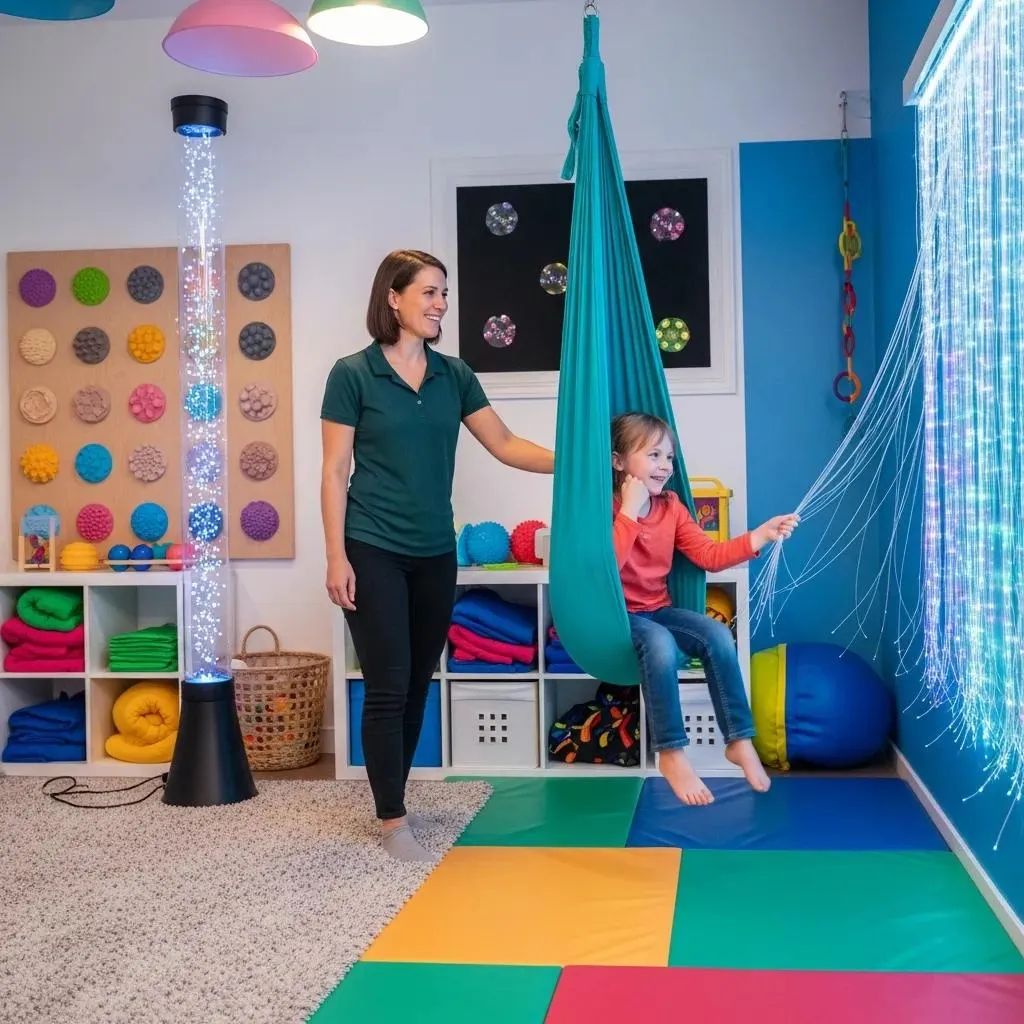

DIRFloortime for kids with ADHD is a fun, play-based therapy that helps children in Tampa and Brandon grow emotionally and socially. Through child-led play, therapists guide children to improve focus, communication, and self-control. For example, a child might build a tower with blocks while learning to take turns, or role-play a story to practice expressing feelings.
This therapy also teaches skills that parents can use at home between sessions, making progress part of everyday life. Simple activities like following a child’s lead during play or using playful routines at mealtime can reinforce learning. Research shows that children with ADHD can see measurable improvements in attention and social behavior when therapy is consistent.
Families often notice better routines and more independence in daily tasks, from getting dressed to completing schoolwork. DIRFloortime strengthens parent-child relationships while helping children gain confidence and emotional control. By combining guidance from trained therapists with home-based strategies, this approach supports long-term growth in a caring, supportive way.
Key Takeaways
- DIRFloortime therapy fosters child-led play, promoting emotional and social growth in children with ADHD in Tampa and Brandon.
- The approach enhances communication skills by encouraging spontaneous language use and social interactions through engaging activities.
- Families experience improved daily routines and greater independence in self-care skills, thanks to structured and adaptive play-based strategies.
- Research supports DIRFloortime’s effectiveness in improving language function and social communication in children with ADHD.
- Caregiver involvement is essential for success, ensuring a nurturing environment that enhances learning and development for children in therapy.
Understanding DIRFloortime Therapy
While many therapeutic approaches offer structured interventions, DIRFloortime therapy stands out by emphasizing the importance of interpersonal connections in fostering developmental growth. Rooted in DIRFloortime principles, this therapy blends developmental, personal, and relationship-based components to cater to each child’s distinct needs. Through child-led play, adults engage with children at their developmental level, promoting affective and social growth.
DIRFloortime employs therapeutic techniques that target six emotional milestones, aiding in self-regulation, communication, and creative thinking. By recognizing personal differences, therapists tailor interactions to each child’s sensory and affective processing patterns, ensuring adequate support. This model posits that nurturing relationships serve as the foundation for learning, allowing children the opportunity to thrive through attuned, responsive engagement.
Furthermore, the therapy emphasizes supporting individuals in reaching their fullest potential through caregiver involvement, as it also enhances social engagement and emotional connection, which are crucial for healthy development. Notably, DIRFloortime has shown significant improvements in communication abilities and quality of parent-child interactions, leading to long-term benefits for families.
Emotional and Cognitive Growth in Children
Frequently, affective and cognitive growth in children manifests through carefully structured, interactive experiences, specifically in therapeutic settings like DIRFloortime. This approach targets critical sentimental milestones crucial for healthy development, such as calm regulation and intentional communication. By fostering child-led interactions, DIRFloortime validates feelings, allowing children to form valuable connections and improve their emotional capacities, such as empathy and self-awareness.
Simultaneously, cognitive development flourishes through play-based activities that encourage complex problem-solving and idea creation. These experiences cultivate executive functions, such as attention control and flexible thinking, which promote significant improvements in children’s cognitive abilities. The integration of sentimental and cognitive growth ultimately lays a solid foundation for mental health, enabling children to navigate their social environments with increased confidence and resilience.
Furthermore, DIRFloortime encourages long-term developmental improvements in children, making it a highly effective therapy for enhancing both emotional and cognitive skills. Additionally, the therapy’s emphasis on emotional security provides children with a safe environment to explore their feelings and develop healthy relationships, which is essential for social-emotional development.
Enhancing Social Skills Through Play

In the context of DIRFloortime, play serves as a significant medium for fostering interaction and enhancing communication skills among children. By engaging in child-led activities, children are encouraged to express themselves, listen actively, and participate in meaningful exchanges. This playful approach not only cultivates fundamental social abilities but also builds a foundation of trust and understanding, critical for successful peer interactions.
Additionally, following the child’s lead in play allows for a more personalized experience that meets the child’s unique developmental needs. Through this method, therapists can address sensory regulation to help children better engage in social situations, and practical strategies utilized in DIRFloortime can further enhance verbal and non-verbal communication skills.
Play Promotes Interaction
Play serves as an essential catalyst for social interaction, especially for children with ADHD who often face challenges in developing fundamental social skills. Through playful engagement, children improve their understanding of social dynamics, learning vital practices such as turn-taking and sharing. DIRFloortime utilizes child-led play sessions to promote natural interactions, allowing children to navigate affective responses and recognize social cues effectively.
This therapeutic approach builds joint attention, a precursor to meaningful social exchanges, while fostering empathy through affective play. As children investigate their feelings in a safe environment, they develop better self-regulation and coping strategies. Ultimately, play not only nurtures connections among peers but also boosts confidence, paving the way for stronger, more fulfilling relationships.
DIRFloortime is particularly effective in creating a supportive environment tailored to each child’s unique needs, which enhances their development. Additionally, programs that focus on social skills development can significantly improve children’s interpersonal dynamics over time. Furthermore, parent training in interventions equips families with practical skills to support their children’s growth and emotional wellbeing.
Building Communication Skills
How can children with ADHD cultivate practical communication skills through engaging interactions? Utilizing DIR/Floortime, children can improve their communication strategies while playing. This approach fosters social-emotional engagement, enabling spontaneous language use and vocabulary expansion.
Through child-led play, interactive techniques encourage the development of essential conversational skills, such as turn-taking and joint attention. Additionally, parents trained in DIR/Floortime observe a marked improvement in the frequency and quality of communicative exchanges with their children. By creating sensory-rich environments and employing positive reinforcement, families can nurture expressive and receptive language skills.
Supporting children in a non-judgmental atmosphere bolsters their confidence and willingness to engage, laying the foundation for meaningful social interactions and long-term developmental success. Moreover, this holistic approach respects each child’s unique strengths and challenges, enhancing their growth in communication skills. Furthermore, the integration of speech and occupational therapy within DIR/Floortime enhances therapeutic collaboration, promoting better communication outcomes for children with ADHD.
Research shows that early intervention programs are critical for shaping a child’s developmental trajectory, providing a strong foundation for communication success.
Improving Daily Life and Adaptive Behaviors
Improving daily life for children with ADHD involves enhancing self-care skills and ensuring smoother shifts throughout the day. DIRFloortime therapy fosters these crucial adaptive behaviors by guiding children in manageable, play-based activities that align with their natural interests. As a result, families often report a more harmonious routine and increased independence in their children’s daily activities.
Additionally, this approach emphasizes emotional regulation as a vital component, allowing children to navigate their feelings more effectively in various situations. Incorporating sensory integration techniques can also support children in managing their sensory sensitivities, further enhancing their ability to adapt to daily challenges.
Enhanced Self-Care Skills
When children with ADHD receive DIRFloortime therapy, they often experience significant improvements in their self-care skills, which can profoundly impact their daily lives. Enhanced affective regulation fosters better coping mechanisms, allowing children to handle frustrations associated with self-care routines. Improvements in executive function enable task sequencing, crucial for completing multi-step activities like dressing or grooming independently.
As children engage with structured routines, parental involvement in task breakdown further supports their development. Visual schedules and consistent reinforcement of these self-care skills reduce reliance on adult prompts, fostering autonomy. This therapeutic approach relies on developmental models that prioritize caregiver responsiveness and promote social communication.
Altogether, DIRFloortime enables children with ADHD to navigate individual care tasks with greater confidence and efficiency, enriching their everyday experiences and adaptive behaviors.
Smoother Daily Transitions
Smoother daily changes can be markedly achieved through DIRFloortime therapy, which equips children with ADHD with essential emotional management skills. This play-based approach fosters emotional regulation, enabling children to navigate changes with greater ease. By developing adaptive behaviors through tailored interactions, children learn effective transition strategies, reducing resistance during shifts like playtime to homework.
The emotional support provided by caregivers during therapy improves attachment security, building confidence as children anticipate and adapt to changes in routine. Additionally, enhanced sensory regulation helps them manage overstimulation, allowing for calmer transitions. Ultimately, DIRFloortime promotes the skills necessary for smoother daily changes, resulting in a more manageable and harmonious environment for both children and their families.
Moreover, the model considers Functional Emotional Developmental Capacities as critical markers for evaluating emotional development, comprehensively addressing individual differences in emotional, social, and cognitive growth.
Research Evidence Supporting DIRFloortime

Research evidence supporting DIRFloortime demonstrates its effectiveness in improving developmental outcomes for children with ADHD and associated conditions. Randomized controlled trials have shown significant improvements in language function, social communication, and affective engagement among children who undergo DIRFloortime interventions. This play-based approach promotes critical skills, facilitating deeper connections between children and parents.
Studies indicate that early intervention is crucial in yielding positive results, making DIRFloortime a valuable approach for children with developmental challenges.
| Key Outcomes | DIRFloortime Effects |
|---|---|
| Social Interaction | Improved affective reciprocity |
| Language Development | Enhanced speech and functional communication |
| Family Benefits | Strengthened child-parent relationships |
These findings highlight the integral role of DIRFloortime in fostering a supportive environment for children, laying the groundwork for long-term affective and cognitive growth. The blend of personalized techniques and parental involvement signifies its potential to transform lives.
Potential Limitations of the Approach
While DIRFloortime offers promising benefits for children with ADHD, it is vital to recognize several potential limitations inherent in the approach. One significant DIRFloortime challenge is the substantial time commitment required from parents and caregivers, which may conflict with their daily responsibilities. Moreover, the model may not suit all ADHD profiles, as some children struggle to engage consistently in play-based interactions critical to the therapy.
In addition, existing research exhibits limitations, with small sample sizes and a focus primarily on autism, questioning its generalizability for ADHD. Socioeconomic factors also affect how families can participate, potentially impacting the therapy’s effectiveness. These therapy limitations warrant careful consideration for families exploring DIRFloortime as an intervention for ADHD.
Local Resources in Tampa and Brandon

Guiding the resources available for DIRFloortime therapy in Tampa and Brandon can be crucial for families seeking effective interventions for their children with ADHD. Many therapy centers in Florida offer DIRFloortime, providing play-based programs designed to support the unique needs of children with developmental differences. These facilities seamlessly integrate DIRFloortime principles within their speech and occupational therapy programs.
Community support initiatives further improve accessibility by offering parent consultations and caregiver education, enabling families to implement therapeutic strategies at home. Online directories like DIRDirectory and Beaming Health make it easy for families to find qualified providers. Through collaboration and active participation, therapists and families aim to foster meaningful connections that promote positive developmental outcomes.
Parent Involvement and Its Benefits
Effective parental involvement in DIRFloortime therapy can significantly improve developmental outcomes for children with ADHD. When parents actively engage, they foster a supportive environment that benefits the whole family. The following highlights the benefits of parent involvement:
- Enhanced Skills: Increased parent engagement correlates with improved cognitive, affective, and social skills in children.
- Affective Security: Active co-play strengthens trust and attachment, promoting better emotional regulation.
- Consistency: Regular practice of DIRFloortime strategies in daily life helps generalize skills learned in therapy.
- Reduced Stress: Family engagement reduces total stress, creating a more connected atmosphere.
This parent encouragement enables families to navigate ADHD challenges effectively, leading to long-term positive outcomes.
Integrating Dirfloortime With Other Therapies

Parental involvement in DIRFloortime lays a solid foundation for children with ADHD, enabling them to thrive both at home and in therapeutic settings. Integrating DIRFloortime with other therapies improves communication, motor skills, and supportive care through collaborative approaches.
| Therapy Type | Benefits | DIRFloortime Strategies |
|---|---|---|
| Speech Therapy | Improves communication skills | Play-based interactions |
| Occupational Therapy | Enhances sensory integration | Adapted sensory activities |
| Educational Integration | Supports a collaborative learning environment | Teacher training in DIRFloortime |
This holistic integration underscores the importance of targeted parental strategies, fostering a nurturing environment that promotes developmental growth and enriched learning experiences for children with ADHD.
Frequently Asked Questions
Can DIRFloortime for Kids with ADHD Be Used Alongside Occupational Therapy?
Yes, DIRFloortime pairs seamlessly with occupational therapy, enhancing sensory processing, fine motor skills, and adaptive behaviors. Combining both approaches allows therapists to address emotional, social, and functional development in a coordinated, child-centered plan.
What Are the Benefits of Combining DIRFloortime with Occupational Therapy?
Combining DIRFloortime with occupational therapy supports holistic growth, reinforcing emotional regulation while developing practical skills for daily life. This integrated approach helps children gain confidence, independence, and a stronger ability to navigate school and social environments.
How Can I Get Started With DIRFloortime Therapy for My Child?
To begin DIRFloortime therapy, parents should engage a qualified therapist, participate in assessments, and actively learn DIRFloortime techniques. This approach facilitates play-based interactions that promote sentimental connection and growth while nurturing their child’s distinct developmental path.
What Age Is Appropriate for Starting Dirfloortime Therapy?
DIRFloortime therapy is appropriate for any age, as long as developmental milestones guide the approach. Age recommendations emphasize early intervention, but treatment effectively supports children across different stages, adapting to their distinct developmental needs.
How Long Does It Typically Take to See Improvements?
Improvements typically emerge within a few weeks to months, with an effective therapy timeline varying among persons. Continuous engagement fosters progress, enhancing social interactions and affective regulation, thereby affirming the therapy’s general effectiveness in supporting development.
Are There Any Specific Qualifications for Dirfloortime Therapists?
What qualifications guarantee effective DIRFloortime therapy? Therapists must complete DIRFloortime training, acquire certifications, and possess relevant experience to promote a thorough understanding and skills necessary for supporting children’s developmental needs through this empathetic, play-based approach.
Can Dirfloortime Be Combined With Other Treatment Approaches or Therapies?
DIRFloortime can effectively be combined with other treatment approaches, embodying multimodal strategies. Therapy integration improves emotional control, social skills, and cognitive function, providing thorough support that caters to the diverse needs of children with neurodevelopmental challenges.
Conclusion
DIRFloortime gives children with ADHD in Tampa and Brandon a caring, play-based way to grow socially, emotionally, and mentally. Children learn essential skills while having fun, and parents can easily practice techniques at home between sessions. This approach helps kids build confidence, improve routines, and strengthen relationships with their families.
If you want to learn more about how DIRFloortime can help your child, contact Skill Point Therapy today. Our team can answer questions or talk with you about specific areas of concern. We are here to guide you and your child every step of the way toward lasting growth and success
References
- https://www.wondirfulplay.com/blog/dir-floortime-therapy-for-adhd-kids
- https://www.wondirfulplay.com/blog/floortime-adhd-support
- https://irl.umsl.edu/dissertation/1090/
- https://www.skillpointtherapy.com/dirfloortime-works/
- https://asatonline.org/for-parents/becoming-a-savvy-consumer/is-there-science-behind-that-dir-floortime/
- https://pmc.ncbi.nlm.nih.gov/articles/PMC10275467/
- https://www.icdl.com/research
- https://www.skillpointtherapy.com/is-dirfloortime-better/
- https://www.wondirfulplay.com/blog/core-principles-of-dir-floortime-therapy-for-autism
- https://therapyworks.com/blog/autism/dir-floortime/