
Expert Sensory Integration Therapy in Tampa, Florida: Comprehensive Guide for Parents and Caregivers
Sensory integration therapy helps children regulate and respond to sensory information from their environment, enabling them to participate more successfully in daily life. This guide explains what sensory integration therapy is, how it works, and why early, targeted intervention improves self-regulation, attention, motor skills, and social participation for children in Tampa. Parents and caregivers will learn how to recognize signs of sensory processing disorder (SPD) across ages, what evaluations typically involve, and practical strategies—such as sensory diets and therapeutic listening—that families can use at home and in community settings. The article also walks through who benefits from pediatric occupational therapy, how DIRFloortime complements sensory work, and what to expect from individualized treatment plans. Along the way, local options are noted: Skill Point Therapy is a Tampa-based pediatric occupational therapy provider offering sensory integration therapy and flexible delivery; details on their personalized plans and how to request an evaluation appear later in the guide.
What Is Sensory Integration Therapy and How Does It Help Children in Tampa?
Sensory integration therapy is a pediatric occupational therapy approach that provides structured, graded sensory experiences to help a child form adaptive responses to sensory input. The mechanism is exposure plus guided practice: therapists create challenges that match the child’s sensory thresholds, thereby strengthening neural pathways for processing vestibular, proprioceptive, tactile, auditory, visual, and interoceptive input over time. The specific benefits include improved regulation of emotions and arousal, better motor planning and coordination, increased tolerance of sensory experiences, and enhanced participation in routines at home and school. Current research and clinical practice recognize that therapy that targets sensory systems produces measurable functional gains when goals are individualized and progress is monitored.
Sensory integration benefits can be summarized:
- Improved self-regulation and emotional control.
- Greater attention and engagement in learning and play.
- Enhanced fine and gross motor skills and coordination.
- Reduced avoidance or distress around sensory experiences.
These benefits form the basis for screening and referral decisions, which lead to common signs of SPD that parents and pediatricians should watch for.
What Is Sensory Processing Disorder and Its Common Signs?

Sensory Processing Disorder (SPD) is a condition in which the brain has difficulty organizing sensations from the body and the environment, leading to atypical reactions that interfere with daily functioning. SPD appears across a spectrum: some children show hyperresponsivity (overreactive to touch, sound, or movement), while others show hyporesponsivity (underresponsive or seeking intense input). Common signs by age include infants with feeding or soothing difficulties, toddlers with strong aversions to clothing or textures, and school-age children who struggle with handwriting, attention, or peer interactions due to sensory overload. When parents notice consistent patterns that impact safety, daily routines, or learning, a pediatric occupational therapy evaluation is a recommended next step.
How Does Sensory Integration Therapy Improve Sensory Processing and Development?
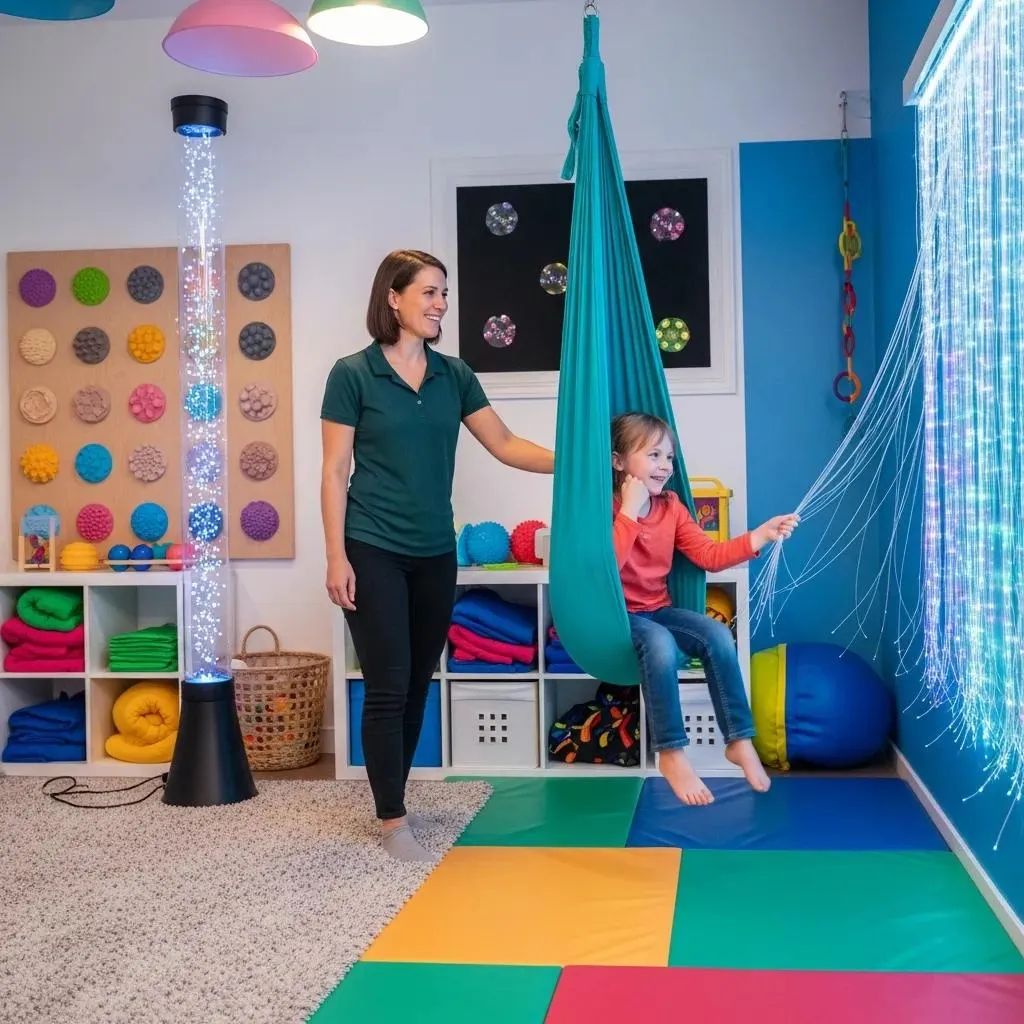
Sensory integration therapy improves processing by providing adaptive, repetitive sensory experiences that encourage the nervous system to register, modulate, and integrate input more effectively. Therapists grade activities so that challenges are neither overwhelming nor under-stimulating, promoting successful adaptive responses that translate into daily skills. For example, proprioceptive activities—like weighted play or push/pull tasks—help organize body awareness and motor planning, while vestibular activities—such as controlled swinging—support balance and postural control. Over time, improvements in sensory modulation yield better focus, reduced anxiety in sensory-rich environments, and smoother transitions in routines.
This comparison clarifies how core sensory systems map to observable dysfunction and therapy-derived gains.
Different sensory systems can create distinct functional challenges and therapeutic targets:
Reviewing these system-level changes helps families understand the therapy focus and expected outcomes, which naturally leads to who benefits most from these approaches.
Who Can Benefit from Pediatric Occupational Therapy and SPD Treatment in Tampa?
Pediatric occupational therapy with sensory integration supports children whose sensory differences affect daily activities, learning, or social participation. Typical referrals include children with suspected SPD, autism spectrum differences, attention challenges, developmental delays, or specific functional concerns like handwriting difficulties and feeding aversions. The age range commonly served extends from infancy through young adulthood, allowing for continuity of care as needs and school supports evolve. Families seeking IEP input, in-daycare accommodations, or community-based strategies also find OT-led sensory work beneficial because therapists translate clinic gains into practical routines.
Who benefits can be broken down into clear criteria and examples:
- Children with consistent sensory-related distress that limits daily routines or learning.
- Children whose motor skills or self-care tasks are delayed relative to peers.
- Children with social or emotional regulation challenges are linked to sensory input.
These criteria guide decisions on referral and evaluation, yielding more specific candidate profiles that clinicians use when planning individualized therapy.
Which Children Are Ideal Candidates for Sensory Integration Therapy?
Ideal candidates are children who exhibit persistent sensory-based difficulties that interfere with participation rather than isolated, transient behaviors. Examples include a child who avoids the playground due to vestibular discomfort, a student whose tactile aversion prevents independent dressing, or a toddler whose sensory-seeking behaviors jeopardize safety. Screening prompts parents to note patterns (e.g., consistent overreaction to grooming, chronic chewing or crashing behaviors, or ongoing feeding challenges). When multiple settings (home, school, community) show similar struggles, a structured evaluation by a pediatric occupational therapist is usually warranted.
How Does DIRFloortime Complement Sensory Integration Therapy?
DIRFloortime is a relationship-centered developmental approach that builds emotional regulation, social engagement, and communication through play-based interaction. When combined with sensory integration therapy, DIRFloortime supports the child’s ability to use improved sensory regulation within social interactions and routines. For example, after vestibular and proprioceptive work reduces dysregulation, DIRFloortime activities can expand joint attention, reciprocity, and symbolic play. Integrating both methods creates a bridge between physiological regulation and social-emotional development, helping children apply sensory gains in real-world relationships.
What Are Skill Point Therapy’s Personalized Sensory Integration Treatment Plans?

Skill Point Therapy offers assessment-driven, family-centered pediatric occupational therapy services in Tampa, including sensory integration therapy, therapeutic listening, fine motor/handwriting interventions, DIRFloortime, and adaptable delivery options. Plans begin with a targeted evaluation and progress through measurable goals and home programming so gains generalize across settings. Families can expect collaborative goal-setting, periodic reassessment, and communication focused on practical strategies that fit daily routines. For parents seeking local providers, Skill Point Therapy is presented as a Tampa-based resource that offers flexible service delivery and a pathway to schedule evaluations or treatment planning.
Below is a compact comparison of common plan elements and the delivery settings in which families typically receive those services.
This table clarifies how core components map to practical delivery options and helps families choose services that align with their logistics and goals. If families want to proceed, the next step is to contact Skill Point Therapy to request an evaluation; the practice emphasizes compassionate, individualized plans and flexible delivery in Tampa.
How Are Individualized Therapy Plans Developed for Each Child?
Individualized plans start with a thorough intake that combines family history, teacher or caregiver reports, and standardized or observational assessments to identify sensory profiles and functional goals. Therapists translate assessment data into measurable objectives that target prioritized skills—such as dressing independence, handwriting legibility, or tolerance of noisy environments—then establish a timeline and methods for monitoring progress. Family input shapes meaningful goals, and therapists train caregivers to embed practice into daily routines. Regular progress reviews allow for plan adjustments, ensuring therapy remains responsive to developmental changes and family priorities.
What Flexible Therapy Delivery Options Are Available in Tampa?
Families often choose from in-clinic sessions, in-home visits, in-daycare consultations, and telehealth coaching, depending on logistical needs and therapeutic priorities. In-clinic sessions provide specialized equipment and controlled challenges; in-home visits allow therapists to analyze routines and coach caregivers directly; in-daycare consultations support classroom accommodations and IEP collaboration; telehealth is beneficial for parent coaching and progress check-ins. Each option has trade-offs: clinic access to equipment versus home-context specificity. Families and therapists weigh these factors to select a hybrid approach that maximizes carryover and convenience.
How Can Parents Support Their Child’s Sensory Development at Home?
Parents can use practical strategies—such as consistent sensory diets, environmental modifications, and scheduled regulation activities—to support therapy gains between sessions. The goal is to create predictable sensory supports that match the child’s needs and reinforce adaptive responses. Recent best-practice guidance emphasizes collaboration with therapists to design safe, developmentally appropriate activities and to monitor responsiveness and tolerance over time. These home strategies empower caregivers to reduce meltdowns, improve daily routines, and strengthen skills like handwriting and self-care.
A simple framework helps families structure home supports:
- Start with a brief environment review to identify sensory triggers.
- Implement a few daily regulation activities that provide consistent proprioceptive or vestibular input.
- Use child-preferred routines to scaffold participation and build independence.
Putting predictable supports in place at home leads naturally to designing a sensory diet tailored to the child’s profile.
What Is a Sensory Diet and How to Create One?
A sensory diet is a planned schedule of activities that provides targeted sensory input throughout the day to support regulation, attention, and participation. To build one, caregivers identify the child’s sensory profile with a therapist, choose safe activities that provide the needed input (for example, heavy work for proprioception or calm vestibular input to decrease arousal), and integrate brief sensory supports into routines such as before school, during transitions, and at bedtime. Monitoring involves tracking the child’s response and adjusting intensity or timing to avoid overstimulation. When uncertainty arises, therapists refine the plan to keep it practical, developmentally appropriate, and aligned with family life.
Key steps to create and monitor a sensory diet include:
- Could you collaborate with a therapist to identify sensory needs and goals?
- Select 3–6 activities that match those needs and fit daily routines.
- Schedule the activities around predictable stress points (e.g., mornings, transitions).
- Observe and adjust frequency/intensity based on the child’s response.
When implemented consistently, a sensory diet supports smoother days and more apparent progress during therapy.
Where to Find Sensory-Friendly Activities and Resources in Tampa Bay?
Tampa Bay families can look for parks with open spaces for proprioceptive play, community centers offering adaptive classes, sensory-friendly event listings, and local parent groups that share practical strategies. When planning outings, families benefit from anticipating triggers, creating quiet breaks, and packing preferred calming items or movement breaks. Online resources and national organizations also offer activity ideas and printable planners that therapists can adapt to local settings. Combining local, structured programs with therapist-guided home activities creates a balanced approach to community participation.
Practical planning tips improve outing success:
- Scout quieter hours or low-traffic entrances for visits.
- Bring familiar sensory supports (headphones, fidget tools) to new venues.
- Use brief, predictable activities during transitions to reduce distress.
These tactics increase the likelihood that community experiences contribute to skill-building rather than to avoidance.
What Should Families Expect During the Sensory Integration Therapy Process?
Families typically move through a transparent process: intake and evaluation, goal-setting and planning, regular therapy sessions with parent coaching, and periodic reassessment to measure progress and adjust plans. The evaluation phase identifies sensory patterns and functional priorities; therapy sessions apply graded sensory experiences and track adaptive responses; and therapists coach parents to generalize gains across settings. Typical timelines vary, but families should expect consistent parent-therapist communication, practical home programming, and measurable objectives tied to daily activities. Understanding this flow helps families prepare and set realistic expectations for when and how improvements may appear.
The following table outlines typical steps, timing, and parent roles to clarify expectations for families beginning therapy.
This progression clarifies responsibilities and outcomes so families can actively participate in meaningful change, and it then moves on to what an SPD evaluation specifically looks like.
How Is an SPD Evaluation Conducted at Skill Point Therapy?
At Skill Point Therapy, an SPD evaluation typically begins with a structured intake and family interview to gather developmental history and daily challenges, followed by standardized assessments and clinician observation in tasks that reveal sensory modulation and motor planning. The process usually includes caregiver questionnaires, direct play-based assessment, and guided trials of sensory activities to identify thresholds and adaptive responses. After evaluation, therapists provide a feedback session that summarizes findings, presents recommended goals, and outlines options for therapy delivery and home supports. Families are encouraged to ask questions and to plan next steps in collaboration with the therapist.
What Happens in Typical Therapy Sessions and Parent Involvement?
Typical sensory integration sessions include a warm-up to organize the child’s state, targeted activities that challenge specific sensory systems, and a cooldown or transition to support skill application. Therapists use equipment and play-based tasks to provide precise vestibular and proprioceptive input while coaching the child toward adaptive responses. Parent involvement varies by age and goals: for young children, parents are coached hands-on in sessions, while school-age children often have caregiver-focused coaching and home programs. Consistent caregiver implementation between sessions amplifies clinical gains and supports generalization into daily routines.
Why Choose Skill Point Therapy for Sensory Integration Therapy in Tampa?
Skill Point Therapy positions itself as a pediatric occupational therapy resource in Tampa, providing compassionate, family-centered care with flexible delivery options across clinic, home, daycare, and telehealth settings. The practice emphasizes individualized treatment plans—combining sensory integration, therapeutic listening, DIRFloortime, and fine motor support—so that therapy targets both physiological regulation and real-world participation. Communication with families is highlighted as a core value so parents remain central collaborators in goal-setting and progress monitoring. For families seeking local evaluation and treatment pathways, Skill Point Therapy offers an accessible entry point to evidence-informed pediatric OT services in the Tampa area.
Key value points that families frequently weigh include:
- Personalized plans that align with daily routines and school needs.
- Flexible delivery options allow clinic-based or in-context interventions.
- A family-centered communication model that supports caregiver confidence.
These attributes, combined with evidence-based methods, form the basis for contacting the practice to request an SPD evaluation or to discuss therapy next steps.
What Experience and Expertise Do Our Pediatric Occupational Therapists Offer?
The practitioners at Skill Point Therapy provide pediatric occupational therapy services, including sensory integration therapy, DIRFloortime, therapeutic listening, fine motor and handwriting programs, and social skills group work. Clinicians prioritize family-centered assessment and goal-setting to ensure therapy targets meaningful functional outcomes for each child. The practice also highlights flexible delivery—clinic, home, daycare, telehealth—to meet family needs and support generalization. Families value clear communication and collaborative planning as therapists translate clinical progress into practical strategies for home and school environments.
What Success Stories Demonstrate the Effectiveness of Our Therapy?
Outcome-focused examples from clinical practice typically follow a problem → intervention → result sequence: a child with tactile aversion who progressed to independent dressing after graded tactile exposure and a tailored sensory diet; a student with vestibular-based dysregulation who showed improved classroom attention following combined sensory integration and teacher strategies; and toddlers who achieved calmer feeding routines after parent coaching and home-based proprioceptive supports. These anonymized summaries highlight measurable functional changes rather than simply symptom reduction and point to the importance of consistent caregiver implementation. Families interested in similar outcomes are invited to contact Skill Point Therapy to discuss evaluation and individualized planning.
For compassionate, coordinated support in Tampa, reach out to Skill Point Therapy to arrange an initial evaluation or discuss how sensory integration therapy could be tailored to your child’s needs. Therapists can explain next steps and available delivery options, so families choose the path that best fits their routines and goals.
Frequently Asked Questions
What age groups can benefit from sensory integration therapy?
Sensory integration therapy is designed for children from infancy through young adulthood. It is particularly beneficial for those experiencing sensory processing disorder (SPD), autism spectrum differences, developmental delays, or specific functional challenges. Early intervention is crucial, as it can significantly improve a child’s ability to engage in daily activities, learning, and social interactions. Pediatric occupational therapists tailor their approaches to meet children’s evolving needs as they grow, ensuring continuity of care and support across developmental stages.
How can I identify if my child needs sensory integration therapy?
Parents can look for consistent patterns of sensory-related distress that interfere with daily routines, learning, or social interactions. Signs may include extreme reactions to sensory stimuli, difficulties with motor skills, or challenges in emotional regulation. If a child avoids specific environments or activities due to sensory discomfort, it may indicate a need for evaluation. Consulting with a pediatric occupational therapist can provide clarity and guidance on whether sensory integration therapy is appropriate for your child’s specific needs.
What role do parents play in the therapy process?
Parents play a crucial role in the sensory integration therapy process by collaborating with therapists to set goals, implement strategies at home, and monitor progress. They are often involved in sessions, especially with younger children, where they learn techniques to support their child’s development. Regular communication with therapists helps parents understand their child’s needs and adjust home activities accordingly. This partnership enhances the effectiveness of therapy and ensures that gains made during sessions are generalized to everyday life.
Are there any specific activities I can do at home to support my child’s sensory development?
Yes, parents can implement a variety of activities at home to support their child’s sensory development. Creating a sensory diet tailored to the child’s needs is essential. This may include activities like jumping on a trampoline for vestibular input, using weighted blankets for proprioceptive feedback, or engaging in calming breathing exercises. Consistent routines that incorporate these activities can help reinforce adaptive responses and improve self-regulation. Collaborating with a therapist can provide additional ideas and ensure activities are developmentally appropriate.
What should I expect during the initial evaluation for sensory integration therapy?
During the initial evaluation for sensory integration therapy, a pediatric occupational therapist will conduct a comprehensive assessment that includes gathering developmental history, observing the child in various tasks, and using standardized measures. This process helps identify sensory processing patterns and functional challenges. Parents will be asked to provide insights about their child’s behavior and daily routines. Following the evaluation, the therapist will discuss findings, recommend goals, and outline a personalized therapy plan tailored to the child’s specific needs.
How can I find sensory-friendly activities in Tampa Bay?
Families in Tampa Bay can discover sensory-friendly activities by exploring local parks, community centers, and libraries that offer adaptive programs. Online resources and local parent groups can also provide valuable information about upcoming sensory-friendly events. Additionally, planning outings during quieter times and bringing familiar sensory supports can enhance the experience. Collaborating with therapists can help families identify suitable activities that align with their child’s sensory needs, ensuring enjoyable and beneficial community participation.