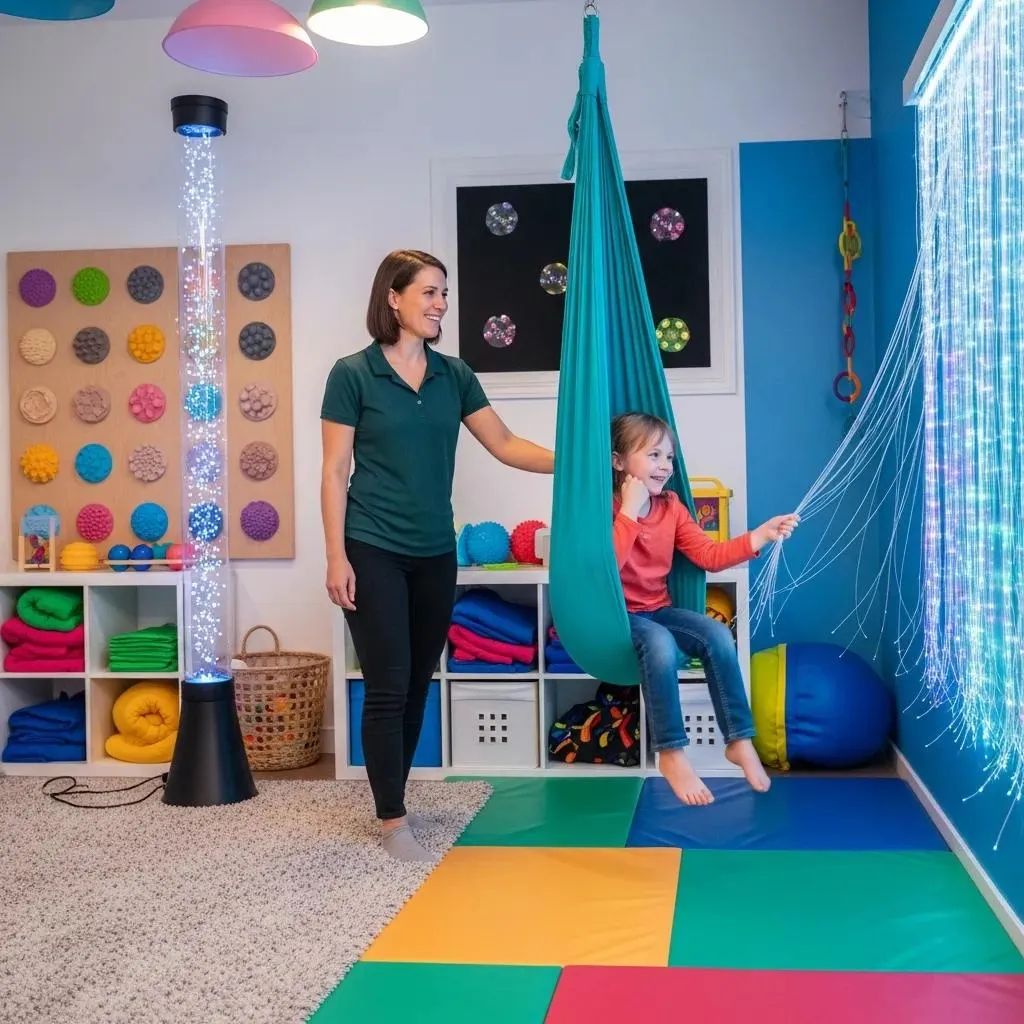

As a pediatric occupational therapist with decades of experience, I’ve seen firsthand how early intervention autism benefits can change a child’s life. When we begin therapy early, especially using relationship-based approaches like DIRFloortime, we help children with autism build the foundation they need to connect, communicate, and grow. The benefits of early intervention for autism are evident not just in childhood, but across an entire lifetime.
By supporting development during the toddler and preschool years, we give children their best chance to learn key skills, such as using words to express their needs or playing with others. For example, I worked with a 3-year-old who struggled to make eye contact or follow directions. With consistent early intervention and parent involvement, he began using gestures and words, which opened the door to friendships and learning opportunities.
Another child I supported was susceptible to sound and avoided touch. Through play-based DIRFloortime sessions, we helped her become more comfortable over time, and eventually, she was able to sit through circle time at preschool and enjoy group activities. These kinds of early intervention benefits—improved communication, social confidence, and emotional growth—build a strong foundation for independence. No matter where your child starts, proper support can help them reach their fullest potential.
Key Takeaways
- Early intervention has been shown to significantly boost cognitive abilities, with an average IQ increase of 18 points compared to no intervention.
- Enhanced language skills from early intervention lead to improved academic outcomes and effective communication.
- Targeted programs develop crucial social skills that foster meaningful relationships and enhance the overall quality of life for children with autism.
- Improved daily living skills from early intervention promote independence and better self-regulation for managing sensory experiences.
- Early intervention sets the foundation for successful transitions to adulthood, enhancing autonomy and community participation for individuals with ASD.
Cognitive Gains From Early Intervention
Cognitive development in children with autism can be profoundly affected by early intervention, presenting significant opportunities for growth and advancement. Research indicates that interventions initiated as early as 12 to 18 months can yield an average IQ increase of 18 points when compared to those who do not receive early support. The Early Start Denver Model (ESDM), which integrates behavioral and developmental strategies, shows substantial improvements in cognitive outcomes.
Additionally, early intervention is correlated with improved adaptive functioning and accelerated progress during the initial months of therapy. These early intervention benefits for autism are crucial, as they lay a solid foundation for cognitive, language, and adaptive skill development, ultimately increasing the likelihood of long-term success and independence in later life. The study emphasizes the importance of immediate action upon diagnosis to optimize the effectiveness of these interventions.
Furthermore, early intervention strategies can also enhance daily living skills, which are essential for overall independence and quality of life.
Enhancing Social Skills Through Targeted Programs
Targeted programs for enhancing social skills play a crucial role in developing joint attention, which is foundational for effective communication in children with Autism Spectrum Disorder. By facilitating increased social engagement, these interventions can foster meaningful peer relationships that contribute to holistic emotional and social growth. As a result, participants not only improve their interactions but also lay the groundwork for lasting social competence in diverse environments.
Additionally, early social skills training significantly enhances the overall quality of life for children with autism. Implementing structured play activities can further support the development of these essential skills in a supportive setting.
Joint Attention Development
How can improving joint attention (JA) significantly impact social skills development in children with Autism Spectrum Disorder (ASD)? Research indicates that JA serves as a critical predictor of cognitive and language outcomes, fostering key social skills. Interventions utilizing techniques such as modeling, prompting, and reinforcing JA behaviors effectively augment these fundamental capabilities. By advancing JA, children demonstrate better language acquisition and adaptive functioning.
Those with stronger JA exhibit the ability to engage in shared experiences, paving the way for richer social interactions. Given that roughly 50% of young children with ASD show JA impairments, early intervention becomes essential. Early identification of joint attention impairments can significantly improve language, communication, and social engagement, laying a foundation for lifelong success in social relationships.
Additionally, enhancing JA can lead to improved self-regulation skills, enabling children to manage their sensory experiences better and interact more effectively with peers.
Social Engagement Boost
Building on the foundational role of joint attention in social skill development, improving social engagement through tailored programs can yield significant improvements in children with Autism Spectrum Disorder (ASD). Targeted interventions foster self-awareness and self-esteem, which are crucial for engaging actively in social settings. Fun and nurturing environments can increase a child’s willingness to engage with peers, while structured training increases the frequency of social communication initiations.
Incorporating sensory integration therapy helps children develop the skills needed to navigate social interactions more effectively.
- Enhanced social motivation leads to positive mental health outcomes.
- Role-playing and modeling teach individuals how to respond appropriately and adhere to social norms.
- Reducing interfering behaviors opens pathways for better social interactions.
- Additionally, these programs help address social impairment by breaking down complex social rules into manageable components.
Peer Relationship Building
Although social skills development can be particularly challenging for children with Autism Spectrum Disorder (ASD), structured programs that focus on peer relationship building provide essential support. Training typically developing peers fosters empathy and reduces stigma, creating a more inclusive environment. Engaging in group activities and sports improves social interactions, allowing autistic students to experience a sense of belonging and increased academic engagement.
Research indicates that early peer interactions, particularly in community and classroom settings, greatly enhance social communication skills. Incorporating augmentative and alternative communication strategies further facilitates these engaging interactions. Ultimately, these peer-supported initiatives not only strengthen immediate social competence but also lay a foundation for lifelong success, promoting positive self-esteem and ongoing academic involvement.
Additionally, incorporating sensory processing therapy into these programs can further support social skills development by addressing sensory challenges that may affect interactions.
Developing Daily Living and Adaptive Skills
Developing daily living and adaptive skills is vital for individuals with autism spectrum disorder (ASD) to achieve greater independence and self-sufficiency. Focused early intervention improves functional capabilities, enabling individuals to tackle fundamental tasks such as personal hygiene and money management. As adolescents with ASD often exhibit skill deficits, targeted programs utilizing creative techniques have proven beneficial.
- Intervention methods, including picture prompting and video-game training, effectively engage learners. Incorporating sensory-based interventions can further enhance the effectiveness of these methods by addressing learners’ unique sensory processing needs.
- Adaptability in group settings facilitates skill acquisition through communal learning experiences.
- Assessing progress using tools like the Vineland Adaptive Behavior Scales guarantees tailored skill development. In a study focused on treatments for successful transition, autistic teens received targeted support to enhance their life skills.
Through these strategies, individuals with ASD are better prepared for adulthood, promoting greater autonomy, social responsibility, and successful changes into independent living.
Improvements in Motor Skills and Physical Development

Improvements in motor skills are crucial for children with autism spectrum disorder (ASD), as fine and gross motor advancements greatly influence their daily functioning and general development. Early intervention strategies can effectively target these areas, leading to increased proficiency in tasks that require coordination and strength. Such progress not only benefits physical growth but also holds potential for augmenting social interactions and cognitive skills, thereby fostering a more integrated experience for these children.
Parent involvement in institutions enhances both the child’s experience and the family’s overall support network. Additionally, occupational therapy can help improve the development of these skills.
When early interventions target fine motor skills in children with autism spectrum disorder (ASD), they can lead to significant improvements in both physical and communication development. Studies indicate that 80% of children with ASD exhibit fine motor impairments, often associated with poorer verbal abilities. Recognizing these challenges early enables the implementation of tailored interventions that can improve outcomes.
Early detection and intervention can optimize child outcomes and enhance understanding of etiological mechanisms. Additionally, occupational therapy plays a vital role in promoting independence through skill development in daily activities.
- Improved motor skills facilitate better daily function.
- Advancements in fine motor abilities correlate with stronger verbal communication.
- Early intervention can lead to long-term benefits in social development.
These targeted strategies not only improve fine motor skills but also foster a greater sense of autonomy and social interaction, ultimately contributing to lifelong success for persons with ASD.
Gross Motor Improvements
While fine motor skills play a crucial role in communication and daily functioning, gross motor skills are also significant for children with autism spectrum disorder (ASD), impacting their overall physical development. Many children with ASD experience considerable gross motor delays, which can hinder their ability to engage in activities and social interactions. Early intervention targeting these motor deficits improves gross motor capabilities, leading to enhanced participation in physical activities and fostering social connections.
By addressing gross motor challenges promptly, caregivers and professionals can optimize developmental outcomes, reduce long-term mobility issues, and promote lifelong physical health. Tailored interventions delivered through a multidisciplinary approach ensure that the child’s unique needs are met, ultimately supporting their path to independence and overall well-being.
Long-Term Outcomes and Reduction of Symptoms
Early intervention for children with Autism Spectrum Disorder (ASD) is crucial not only for immediate development but also for fostering long-term positive outcomes. Research indicates that early intervention leads to considerable improvements in cognitive abilities, adaptive behaviors, and general quality of life. The lasting impact of these interventions often includes a reduction in core autism symptoms, with younger children experiencing more pronounced benefits.
- Improved social skills and communication
- Sustainable gains are maintained over time
- Improved academic and psychological stability
These outcomes emphasize the importance of consistent, tailored support and engagement from families and communities, as they significantly contribute to the successful long-term trajectory for persons with ASD.
Features of Effective Early Intervention Programs

Effective early intervention programs are characterized by a range of core components and strategies that optimize developmental outcomes for children with Autism Spectrum Disorder (ASD). These features encompass techniques such as Applied Behavioral Analysis (ABA), personalized treatment plans, and multidisciplinary collaboration. By focusing on tailored interventions, children benefit from structured interactions and regular progress evaluations.
| Core Component | Therapeutic Strategy | Benefits |
|---|---|---|
| Applied Behavioral Analysis (ABA) | Personalized Treatment Plans | Improved IQ and Language Skills |
| Early Start Denver Model (ESDM) | Positive Reinforcement | Improved Social Interaction |
| Speech and Physical Therapy | Task Breakdown | Increased Independence |
| Nutrition Services | Regular Progress Evaluation | Reduced Problematic Behaviors |
These strategies collectively work towards fostering independence, academic readiness, and comprehensive well-being.
The Role of Parent Training and Involvement
Parent training and involvement play a crucial role in improving the developmental outcomes of children with Autism Spectrum Disorder (ASD). Systematic reviews indicate that these interventions enhance social interaction and communication for children, while also benefiting parents significantly.
- Improved engagement in therapy leads to better skill generalization and effective management in children.
- Parent training fosters stronger interactions, which in turn contribute to children’s psychological development.
- Involvement in training increases parental confidence and competence, allowing families to navigate challenges more effectively.
A child’s parents’ participation in tailored training not only supports a child’s growth but also nurtures a more resilient family unit, underscoring the critical connection between parent training and child success.
Timing and Early Diagnosis for Maximum Impact

Timely diagnosis and intervention for children with Autism Spectrum Disorder (ASD) can significantly influence developmental trajectories and general outcomes. Research indicates that children diagnosed before 2.5 years are three times more likely to show considerable improvements in social symptoms compared to those identified later. The American Academy of Pediatrics advocates for screening between 18 and 30 months to facilitate early detection.
Studies reveal that interventions commenced before age three yield more notable advancements in social communication abi; ities—however, the average diagnosis age in the U.S. hovers around five years, which postpones critical support. Addressing screening disparities and promoting awareness can considerably impact the effectiveness of early intervention, ultimately fostering better developmental outcomes for children with ASD.
Lifelong Benefits of Early Intervention Strategies
While many may underestimate the profound impact of early intervention strategies, research consistently demonstrates their lifelong benefits for children with Autism Spectrum Disorder (ASD). These strategies not only improve cognitive and adaptive abilities but also bolster communication and social skills. As children engage with tailored interventions during critical developmental windows, they often experience enduring advantages well into adulthood.
- Improved cognitive abilities and adaptive behaviors continue long after therapy ends.
- Enhanced language skills support better academic and vocational outcomes.
- Strengthened social-emotional competencies lead to greater independence.
Ultimately, early intervention fosters a foundation that supports lifelong growth, enabling children with ASD to thrive and participate fully in their communities. The long-term quality of life experienced by these persons can significantly improve through timely, practical support.
Frequently Asked Questions
What Age Should Early Intervention Begin for Optimal Effectiveness?
The ideal effectiveness of early intervention typically begins between 2 and 6 years of age, although initiating interventions as early as 12 months can yield significant benefits, enhancing cognitive, language, and social skills in young children.
Are There Risks Associated With Early Intervention Strategies?
In a fast-paced world, early intervention strategies hold both promise and risk. Concerns such as misdiagnosis, high parental stress, and potential over-intervention underscore the need for tailored, supportive approaches to ensure the best outcomes for children.
What is the RSchools’ Intervention?
“An intervention is worth a pound of cure.” Schools play a crucial role in early intervention by identifying signs, facilitating the coordination of tailored services for children, engaging families, and supporting changes that promote children’s successful development.
Can Early Intervention Benefit Children Outside the Autism Spectrum?
Early intervention can particularly benefit children beyond the autism spectrum, enhancing developmental skills across multiple neurodevelopmental disorders. Tailoring strategies to personal needs fosters improved communication, cognitive abilities, and social integration, promoting lifelong positive outcomes for all involved.
What Are the Long-Term Early Intervention Autism Benefits?
Early intervention autism benefits include stronger academic readiness, improved social connections, and a reduced need for intensive services later in life. These advantages empower children to reach their full potential with confidence and support.
Conclusion
Every child with autism has their unique strengths and learning styles, and the earlier we support them, the better their outcomes can be—early intervention isn’t just about catching up; it’s about helping each child shine in their unique way. With the right tools and guidance, small steps often lead to significant progress.
Families play a crucial role in this journey, and approaches like DIRFloortime create opportunities for deeper connections between parents and children. By focusing on emotional engagement and shared joy, this method supports development in a way that feels genuine and respectful. It’s relationship-building that helps children feel safe and understood, preparing them for growth. If you’re wondering where to start, consider reaching out to a pediatric occupational therapist who understands both autism and the power of DIRFloortime. Having the proper support early on can make all the difference for a family’s journey ahead.
References
- https://www.autismspeaks.org/science-news/early-intervention-toddlers-autism-highly-effective-study-finds
- https://pmc.ncbi.nlm.nih.gov/articles/PMC9457367/
- https://behavioral-innovations.com/blog/critical-early-intervention-children-autism-spectrum-disorder/
- https://www.nichd.nih.gov/health/topics/autism/conditioninfo/treatments/early-intervention
- https://www.connectncareaba.com/blog/early-intervention-autism-success-rate-statistics
- https://www.frontiersin.org/journals/psychiatry/articles/10.3389/fpsyt.2022.835580/full
- https://www.frontiersin.org/journals/pediatrics/articles/10.3389/fped.2021.785762/full
- https://pmc.ncbi.nlm.nih.gov/articles/PMC9857540/
- https://www.kutestkids.com/blog/the-benefits-of-early-social-skills-training-for-children-with-autism
- https://pmc.ncbi.nlm.nih.gov/articles/PMC7350882/