

Outdoor Play: How Nature-Based Activities Encourage Exploration and Growth in Children
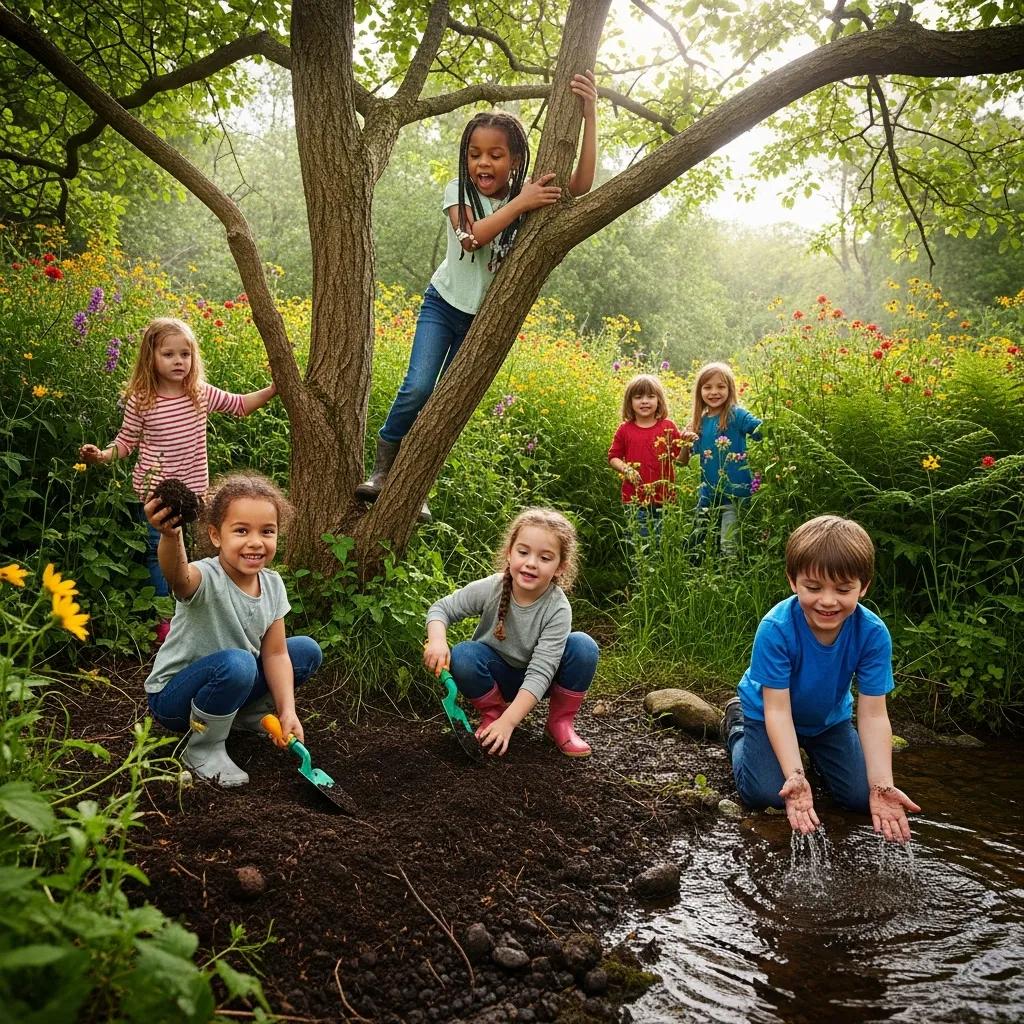
Outdoor play describes child-led and guided activities that take place in natural or semi-natural settings—yards, parks, creeks, or gardens—where children move, explore, and interact with varied sensory input from soil, water, plants, and uneven ground. These experiences engage multiple systems—vestibular, proprioceptive, tactile, auditory, and visual—producing physical and emotional changes that support whole-child development. Research shows that nature play boosts strength, sensory integration, attention, problem-solving, and emotional regulation, making it a valuable complement to early learning and therapeutic intervention.
In this article, we explain how outdoor play advances gross and fine motor skills, supports sensory regulation and emotional growth, and strengthens cognition and creativity. You’ll find practical checklists and activity ideas for different ages and abilities, plus tables that link activities to measurable outcomes for clinicians and families. We also outline how pediatric occupational therapy can intentionally use nature-based experiences, and when families in Tampa, FL, might consider an evaluation with a local pediatric OT.
What Are the Physical Development Benefits of Outdoor Play for Children?
Outdoor play promotes physical development by putting children in settings that require whole-body movement, force modulation, and precise object handling; these demands build muscle, increase endurance, and refine motor planning. Irregular terrain and varied surfaces increase weight-bearing activity and proprioceptive feedback, improving balance and bilateral coordination, while natural materials like sticks and pebbles invite fine motor practice through grasping, pinching, and sorting. The outcome is observable progress in gross motor milestones (running, jumping, climbing) and fine motor tasks (pincer grasp, in-hand manipulation) that transfer to daily self-care and classroom activities. The table below compares common outdoor activities, the motor skills they develop, and age-appropriate adaptations.
This comparison shows how outdoor movement maps to motor development and how small adaptations make activities accessible. The next section explains how repeated, progressive outdoor challenges produce specific gross and fine motor gains.
How Does Outdoor Play Enhance Gross and Fine Motor Skills?
Outdoor play develops gross motor skills by repeatedly exposing children to multi-planar movement and force-generation tasks—climbing, jumping, pushing—that increase strength, coordination, and cardiovascular capacity. For example, climbing a slope recruits hip extensors and trunk stabilizers, while balancing on a log refines ankle and knee control; regular practice helps children reach age-appropriate milestones. Fine motor improvements come from hands-on play—picking up pebbles, making nature crafts, or using tongs—which strengthens intrinsic hand muscles and sharpens the pincer grasp used for writing and dressing. Therapists grade these activities by adjusting object size, tool weight, or precision requirements to match a child’s current abilities and create measurable progressions. With that framework, parents and clinicians can design balance and coordination activities that progressively challenge children outdoors.
Which Outdoor Activities Support Balance and Coordination in Kids?
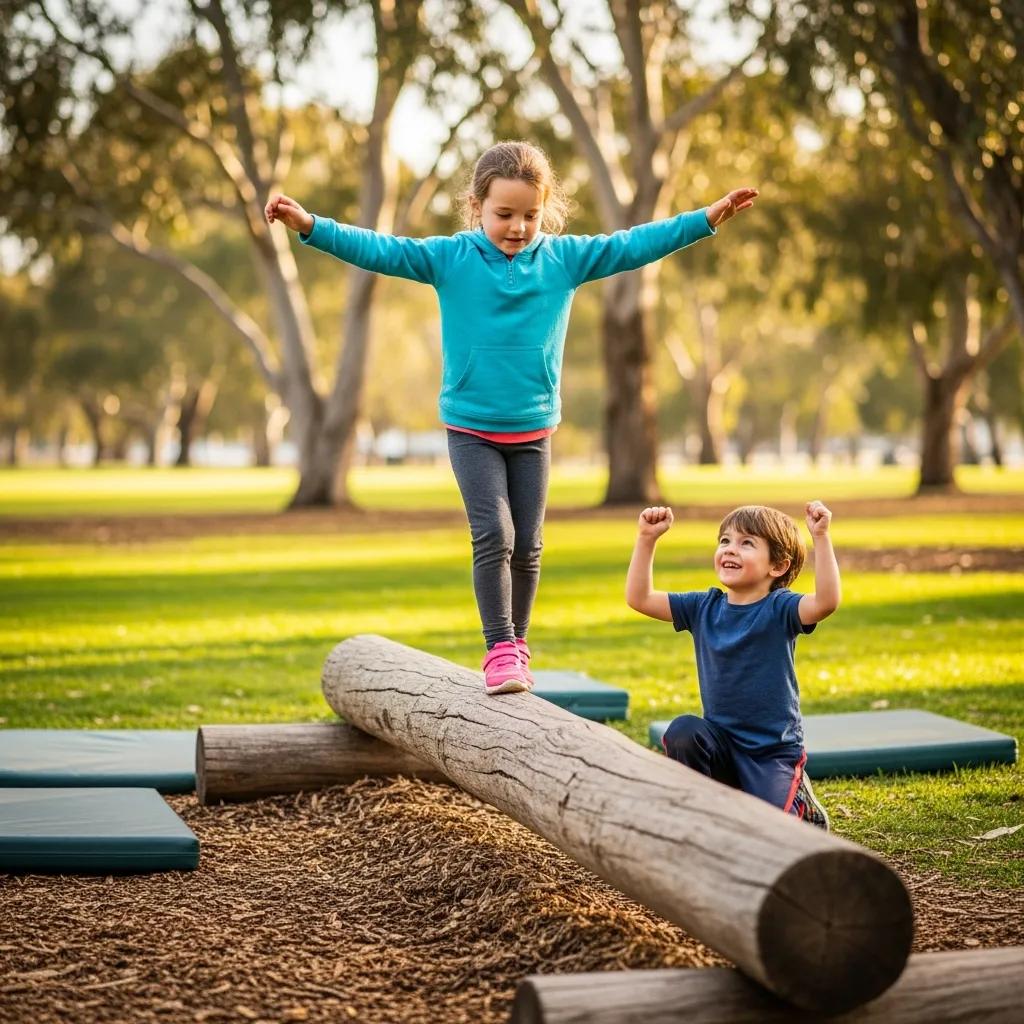
Balance and coordination improve when children practice tasks that challenge their center of gravity and require bilateral use, such as log-walking, rock-hopping, beam-walking, and tandem stepping over uneven ground. Start with wide, low surfaces and progress to narrower or higher elements, while adding tasks such as carrying a small bucket or catching a ball to introduce cognitive-motor demands. Prioritize safety with close supervision, soft landing zones, and age-appropriate heights; offer hand-over-hand support or shortened distances for children who need it. A simple progression might be: stationary standing balance → walking on a wide log → walking while carrying an object → hopping across stones. Parents and therapists can measure improvement by distance covered, repetitions completed, or reduced assistance. These balance challenges also prime sensory systems that support emotional regulation when combined with calming natural stimuli.
How Does Nature Play Support Sensory Integration and Emotional Regulation?
Nature play supports sensory integration by delivering multimodal input—textured surfaces, slopes, flowing water, bird calls, and changing light—that helps organize sensory processing and improve modulation. The mix of vestibular (movement), proprioceptive (body awareness), tactile (touch), and auditory/visual inputs promotes adaptive neural responses that reduce over- or under-reactivity and support calmer arousal states. Emotionally, time spent in green spaces lowers stress markers and improves attention and mood, creating a setting where children can practice self-regulation and engage in safe risk-taking. The next section lists sensory-rich outdoor activities and suggestions for adapting them to small spaces or different sensory needs.
Effective sensory outdoor play integrates targeted inputs while keeping structure clear and safety predictable.
- Mud kitchen play engages tactile and smell senses while building graded mess tolerance.
- Log- or rock-balancing provides vestibular and proprioceptive input that enhances body awareness.
- Sensory scavenger hunts combine visual search with fine-motor picking and tactile exploration.
- Water-pouring stations offer temperature and tactile feedback through repetitive, calming actions.
Each activity can be adapted for small yards or balconies using containers, textured mats, and portable balance beams. These sensory strategies help children practice modulation and prepare for social and classroom settings.
This set of ideas gives families options to try right away; the table below links activities to the sensory systems they target and key therapeutic considerations.
This table clarifies which sensory channels each outdoor activity targets and provides a combination of predictable structure with rich input, allowing children to practice safety notes for families and clinicians. Next, we describe specific sensory outdoor play ideas that are effective across ages and needs.
What Are Effective Sensory Outdoor Play Ideas for Children?
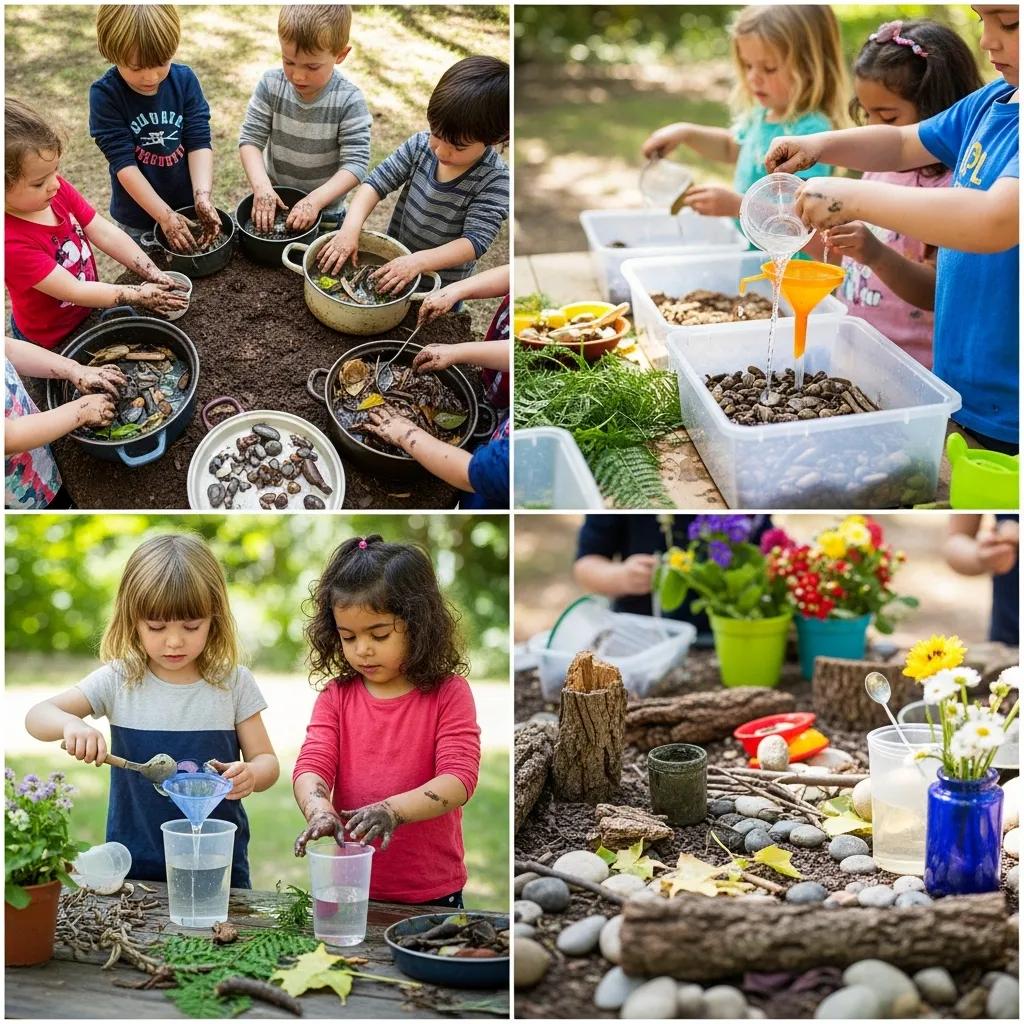
Effective sensory outdoor play combines predictable structure with rich input, allowing children to explore thresholds and practice regulation safely. Ideas include a tactile bin filled with leaves and pinecones, a portable water station for pouring and measuring, a balance course made from foam beams or low logs, and a quiet sensory nook for decompression after active play. In small spaces, use buckets, textured trays, and small stepping stones to recreate vestibular and tactile challenges; for children with sensitivities, offer noise-reducing headphones, visual timers, or gradual exposure plans. Therapists recommend short, repeated sessions that gradually increase in complexity and intensity—these produce more durable gains in regulation than infrequent, long exposures. These strategies also support social opportunities that arise from shared outdoor tasks.
How Does Outdoor Exploration Help with Emotional and Social Growth?
Outdoor exploration supports emotional and social development by providing low-stakes contexts for problem-solving, shared risk-taking, and role negotiation among peers. Building a fort, sharing tools at a mud kitchen, or navigating a group obstacle course allows children to practice cooperation, perspective-taking, and conflict resolution while managing excitement and disappointment. Adults can scaffold interactions with simple prompts—“How can we move this log together?” or “Who will carry the next bucket?”—which also support language development and executive function. Observable outcomes include a greater willingness to take on new challenges, improved peer cooperation, and better self-calming after frustration. These social-emotional gains make outdoor play an intentional setting for targeted development and therapy goals.
What Cognitive Benefits Do Children Gain from Outdoor Exploration?
Outdoor exploration supports cognitive development by offering novelty, complex sensory input, and open-ended problems that stimulate attention networks, working memory, and executive function. The dynamic nature of outdoor settings requires planning, cognitive flexibility, and sustained attention to navigate routes, manipulate materials, and solve problems—skills that transfer directly to classroom tasks. Nature-based learning also fuels creativity and curiosity by encouraging hypothesis testing (for example, “what happens if I dig here?”) and iterative experimentation. The following sections describe scaffolded activities that target problem-solving and attention, as well as activities that spark creativity and inquiry.
Outdoor time supports several cognitive domains:
- Attention and focus: Nature reduces directed-attention fatigue and improves sustained attention.
- Problem-solving: Open-ended tasks require planning and adaptive strategies.
- Executive function: Activities such as building or sequencing strengthen working memory and inhibitory control.
These cognitive pathways explain why educators and clinicians increasingly include nature-based learning in early childhood programs.
How Does Nature-Based Learning Enhance Problem-Solving and Attention?
Nature-based learning deepens problem-solving by presenting children with real-world tasks that require goal setting, tool choice, sequencing, and reflection—for example, building a simple rain-capture system involves measurement, prediction, and adjustment. Attention improves because natural environments reduce screen-related overstimulation and offer softly fascinating stimuli that restore cognitive resources, allowing children to focus longer on chosen tasks. Scaffolded options include multi-step treasure hunts with planning phases for preschoolers and citizen-science observations for older children, where they record results over time. Simple measures—task duration, number of successful trials, or fewer adult prompts—can document cognitive gains and guide progressive challenges.
Which Outdoor Activities Stimulate Creativity and Curiosity in Kids?
Certain activities reliably boost creativity and curiosity by encouraging divergent thinking and material repurposing: loose-parts play with sticks and stones, storytelling circuits along a trail, and nature-inspired art using leaves and natural dyes. These experiences invite children to invent, experiment, and narrate imaginative scenarios that strengthen symbolic play and language. To nurture sustained curiosity, use open-ended prompts (“What could we make with these sticks?”) and allow unstructured time instead of directing every step. Tracking curiosity can be as simple as noting increased project complexity or spontaneous plans the child initiates—both clear signs of deeper engagement and creative growth.
How Can Parents Encourage Outdoor Play and Exploration at Home?
Parents can encourage outdoor play by creating predictable opportunities, removing barriers to messy or risky play, and modeling curiosity—steps that increase both the frequency and developmental quality of outdoor experiences. Start with short, daily outdoor windows that include a simple invitation (such as a sensory bin, a balance task, or a nature walk) and gradually extend the time as interest grows. Reduce friction with a “play-ready” kit—spare clothes, a bucket, a trowel, and a magnifier—and use a brief safety checklist; urban families can replicate many inputs with containers, textured mats, and balcony-friendly water bins. The checklist below gives practical, immediate actions parents can take.
Practical checklist to encourage outdoor play:
- Assemble a small, always-ready play kit with spare clothes and basic tools for spontaneous outings.
- Schedule short, consistent outdoor windows each day to build a habit and set expectations.
- Allow graded risk-taking: start low and supervised, then increase challenge as competence grows.
- Use open-ended prompts and avoid over-instruction to preserve child-directed exploration.
These steps reduce logistical barriers and emphasize process over perfection, supporting sustained exploratory behavior. Families who want more structured support can work with local resources and therapists to tailor plans to a child’s needs.
Which Local Outdoor Resources in Tampa, FL Support Child Development?
Families in Tampa, FL, have access to parks, playgrounds, school green spaces, and community nature programs that offer varied settings for exploration. Local pediatric occupational therapy teams provide in-home, in-daycare, and telehealth consultations to help caregivers adapt nearby outdoor spaces for specific goals. Look for places with diverse terrain, water-play options, and naturally bounded areas where children can safely test their balance and explore. Community programs often run groups that emphasize social skills and sensory play—useful complements to home activities that can speed observable gains.
This overview of local options leads into a discussion of how pediatric occupational therapy intentionally incorporates outdoor play into individualized treatment plans to achieve measurable progress.
For families seeking professional guidance, Skill Point Therapy offers pediatric occupational therapy in Tampa for children from infancy through 21 years, with community-based options including in-home, in-daycare, and telehealth. Their programs use approaches such as DIR/Floortime, aquatic therapy, and social skills groups, and therapists design personalized treatment plans focused on functional outcomes and compassionate care. A pediatric OT can help translate outdoor opportunities into measurable goals and practical home programs tailored to your child.
How Does Pediatric Occupational Therapy Integrate Outdoor Play for Child Growth?
Pediatric occupational therapy uses outdoor play as a therapeutic medium, turning goals into graded, measurable activities that target motor skills, sensory integration, executive function, and social participation. Therapists design tasks such as cooperative obstacle courses for bilateral coordination, sensory stations for tactile modulation, and nature-based fine-motor crafts to strengthen in-hand manipulation. Progress is tracked with objective measures—greater independence in ADLs, improved balance scores, or fewer verbal prompts during tasks. The table below shows examples of therapy activities, the OT goals they support, and measurable outcomes clinicians use.
This table highlights that outdoor tasks can serve as objective interventions with measurable outcomes to guide treatment progression. The next section lists concrete outdoor therapy activities clinicians commonly use to meet specific goals.
What Outdoor Therapy Activities Are Used to Support Developmental Goals?
Common outdoor therapy activities include graded climbing to build core strength, water-based tasks for bilateral coordination and proprioceptive feedback, sensory scavenger hunts to support attention and discrimination, and group problem-solving tasks that reinforce social communication and executive skills. Each activity is scaffolded—climbing tasks are adjusted for slope, handholds, and cues—so they match a child’s current abilities and provide progressive challenge. Therapists record objective markers such as reduced assistance, faster task completion, or greater independence, which inform goal updates and caregiver coaching. These outdoor interventions build on play-based learning and prepare children for the everyday demands of school and the community.
How Does Skill Point Therapy Personalize Outdoor Play in Treatment Plans?
Skill Point Therapy personalizes outdoor play by assessing each child’s strengths and challenges, then designing community- and home-based programs that fit family routines and local environments. Their pediatric OT services include in-home and in-daycare sessions, telehealth follow-ups, and group options such as social skills groups and aquatic therapy, making interventions accessible and relevant. Therapists focus on measurable functional outcomes and coach caregivers to translate gains in clinic into daily outdoor practice. Families can expect individualized goals, collaborative planning, and practical strategies to embed outdoor play into everyday life.
Why Is Outdoor Adventure Play Important for Holistic Child Development?
Outdoor adventure play—both structured and unstructured, risk-positive activities—supports whole-child development by promoting autonomy, resilience, and a calibrated sense of risk that prepares children for real-world decisions. Adventure play pairs physical challenge with choice and responsibility, letting children test limits, recover from minor setbacks, and gain confidence in their judgment. Neurodevelopmentally, managed risk stimulates adaptive stress responses and executive skills such as problem-solving and impulse control; socially, it builds leadership and negotiation skills. The list below summarizes key developmental contributions of adventure play.
- Builds resilience through manageable challenges and recovery from small setbacks.
- Promotes decision-making and risk assessment, strengthening executive function.
- Supports social problem-solving through cooperative negotiation and shared responsibility.
These benefits show why adding adventure elements to outdoor play enriches physical, emotional, and cognitive development. The next section offers practical adventure-play ideas.
How Does Risk-Taking in Outdoor Play Foster Resilience and Confidence?
Risk-taking in outdoor play builds resilience by exposing children to manageable uncertainty where they learn to assess danger, make choices, and experience consequences in a controlled setting. Successfully navigating a supervised challenge—planning how to climb a medium-height log or choosing a safe path across stepping stones—boosts self-efficacy and coping skills. Adults support growth by using protective supervision, praising strategy and effort instead of only outcomes, and encouraging reflection on what worked and what to try next. Over time, these experiences generalize into a greater willingness to try new tasks, better recovery from setbacks, and improved emotion regulation under stress.
What Are Safe and Stimulating Adventure Play Ideas for Kids?
Safe adventure play balances challenge with protective measures and adult scaffolding: low-rope courses with spotters, dens built from loose parts within clear boundaries, supervised creek-edge exploration with life jackets when appropriate, and simulated fire-building using safe materials. For every activity, set clear rules, provide proper protective equipment or soft landings, and increase complexity only after competence is shown. Follow-up reflections—asking what strategies worked or how to make the activity safer next time—turn risk into a learning opportunity. These practices keep adventure stimulating and developmentally productive rather than hazardous.
For families in Tampa, FL, who want a tailored plan that blends adventure and nature play into therapy goals, Skill Point Therapy offers evaluations and community-based treatment to align outdoor activities with measurable development outcomes. Contact Skill Point Therapy at 813-491-8300 to ask about pediatric OT evaluations, in-home or in-daycare services, telehealth follow-ups, and group options like social skills groups and aquatic therapy.
This call to action invites families to seek an evaluation and individualized planning when motor, sensory, or social-emotional challenges would benefit from professional support.
Frequently Asked Questions
At what age is it best to introduce the development of social skills and outdoor play to children?
Outdoor play can start as early as infancy. Even babies benefit from fresh air and natural stimuli that support sensory development. Activities should grow in complexity as children develop: infants enjoy safe tummy time on a blanket outdoors, toddlers explore crawling on grass or playing with sand, and preschoolers can try climbing and running with supervision. The key is to match activities to the child’s developmental stage and keep safety and engagement in mind.
How can outdoor play support the development of social skills?
Outdoor play creates natural opportunities for peer interaction—team games, cooperative building, and shared exploration—where children practice communication, negotiation, and conflict resolution. These informal settings help kids learn to share, take turns, and understand others’ perspectives. Because play often involves joint goals and role negotiation, it’s an effective environment for building friendships and essential social skills.
Are there specific safety measures to consider during outdoor play?
Yes—safety should always guide outdoor play. Check play areas for hazards such as sharp objects, toxic plants, or unstable surfaces, and supervise activities involving climbing or water. Use appropriate safety gear (helmets for biking, life jackets for water play) and teach children clear rules for safe play. Simple precautions and supervision let kids take developmentally appropriate risks while minimizing injury.
How can parents adapt outdoor play for children with sensory sensitivities?
Adapt outdoor play by creating safe retreat spaces, gradually introducing sensory-rich activities, and letting the child set the pace. Tools like noise-canceling headphones, visual timers, or weighted items can help manage sensory input. Design activities that isolate or emphasize specific senses—tactile play with sand or water, for example—so the child can practice tolerance and regulation in a controlled way.
What role does nature play in enhancing children’s creativity?
Nature offers varied textures, colors, and materials that spark imaginative play and experimentation. Activities like building with loose parts, making art from leaves and stones, or storytelling on a trail encourage divergent thinking and invention. Because outdoor settings are open-ended, children have space to test ideas, iterate, and develop creative problem-solving skills.
How can outdoor play be integrated into daily routines?
Make outdoor play a habit by scheduling short, regular sessions—a walk after dinner, a play window before school, or a weekend nature outing. Keep a “play-ready” kit with outdoor tools and spare clothes to reduce friction, and involve children in planning activities to boost engagement. Small, consistent steps build lasting routines and a lifelong connection to nature and movement.
What are some community resources for outdoor play in Tampa, FL?
Tampa offers parks, playgrounds, school green spaces, and community nature programs that support outdoor learning and play. Local pediatric occupational therapy providers can help families adapt these environments to a child’s needs. Exploring community events and nature programs can enrich outdoor experiences and support overall development.
Conclusion
Outdoor play delivers wide-ranging benefits—physical, emotional, and cognitive—by letting children explore, move, and create in natural settings. By encouraging regular outdoor time, parents and caregivers can foster strength, regulation, curiosity, and social skills. For personalized guidance, consider working with local pediatric occupational therapy services to build outdoor routines that match your child’s needs. Start small, stay consistent, and watch nature become a powerful tool for growth.

Nicole Bilodeau, MS, OTR/L, is an occupational therapist and founder of Skill Point Therapy in Tampa and Brandon. She leads a skilled team that provides speech and pediatric occupational therapy, supporting children with autism, ADHD, sensory processing disorders, social skills challenges, and motor development issues. Nicole is dedicated to helping every child reach milestones and thrive at home, school, and in the community