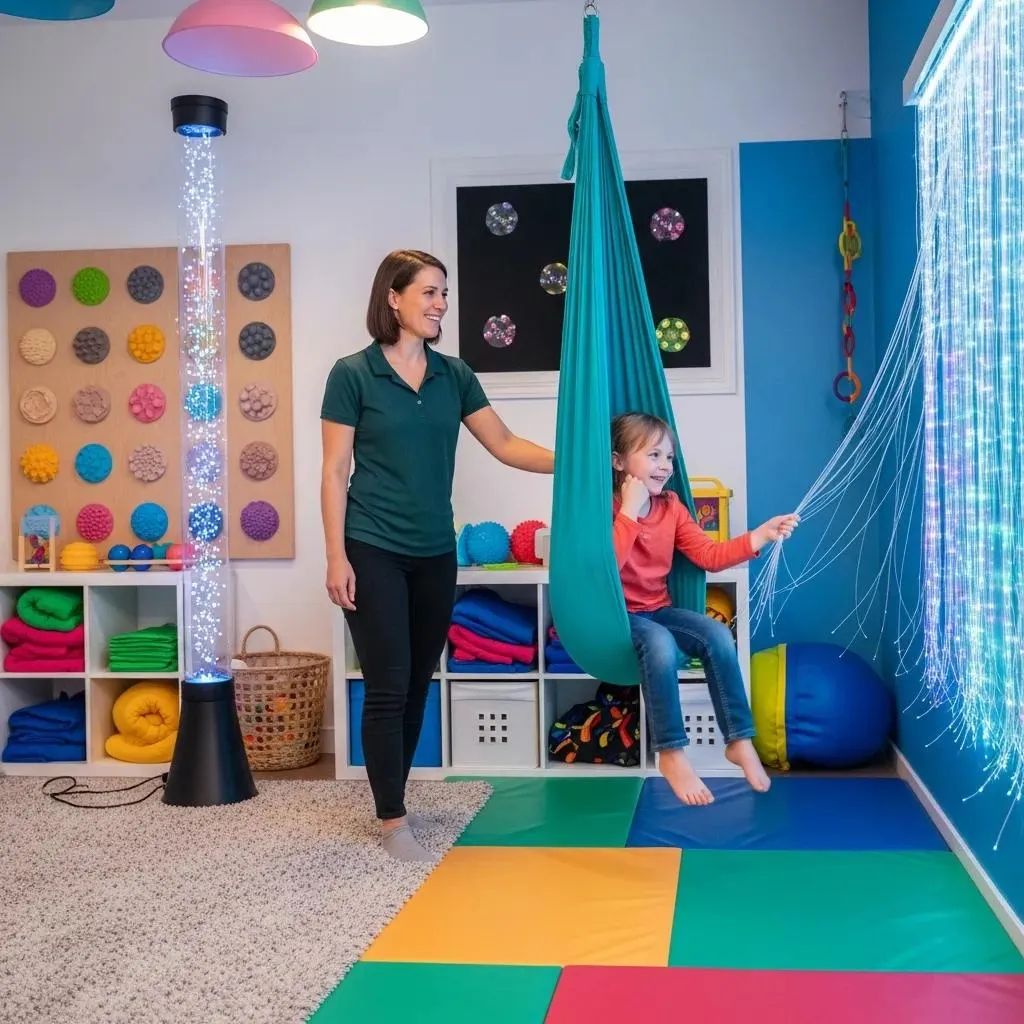

Sensory integration therapy is a clinical approach that helps children process and respond to sensory input more effectively, improving daily function, emotional regulation, and participation in school and play. This article explains what sensory integration therapy is, how it supports child development, who benefits in Brandon, Florida, and how families can begin care. Readers will learn the sensory systems involved, evidence-based outcomes, common functional challenges, and practical steps for evaluation and treatment planning. The focus is educational and practical: expect clear definitions, therapeutic mechanisms, examples of sensory diet activities, and guidance for finding therapy options locally. Throughout, we reference current research perspectives and practical strategies for parents seeking pediatric occupational therapy and sensory integration therapy in Brandon, while briefly describing how Skill Point Therapy delivers family-centered services and flexible delivery options.
What is Sensory Integration Therapy and How Does It Support Child Development?
Sensory integration therapy (SIT) is a hands-on, developmentally informed occupational therapy approach that organizes sensory input so a child can build adaptive responses, develop motor skills, and regulate behavior. The mechanism relies on supporting the brain’s ability to integrate information from multiple sensory systems—such as vestibular and proprioceptive input—so children form coordinated motor plans and more predictable emotional responses. Clinically, therapists use graded challenges, play-based activities, and repetitive sensory experiences to promote neural organization and functional gains. Understanding these mechanisms helps parents see why therapy targets play, routine, and school participation rather than isolated drills.
This section highlights core mechanisms that produce meaningful change.
- Sensory modulation: Graded sensory input helps the child learn thresholds for calm versus alert states.
- Sensory discrimination: targeted activities improve the ability to detect and interpret tactile, visual, and auditory cues.
- Praxis and motor planning: vestibular and proprioceptive challenges build coordinated movement and task planning.
These mechanisms translate into better self-regulation, smoother motor skills, and improved social participation, which leads to a closer look at what SIT means in pediatrics and how the eight sensory systems are engaged in therapy.
Definition and Importance of Sensory Integration Therapy in Pediatrics
Sensory integration therapy is an occupational therapy approach that helps children whose brains struggle to organize sensory input, enabling more effective learning, play, and self-care. It matters because early sensory differences can cascade into challenges with attention, dressing, feeding, and social participation; early, targeted intervention reduces those downstream barriers. For example, a child overwhelmed by clothing textures may avoid dressing tasks, so a therapist will introduce graded tactile experiences and integrate proprioceptive activities to build tolerance. Current research indicates that individualized sensory interventions, when embedded in play and daily routines, support improvements in functional tasks and family routines. Recognizing signs early—persistent feeding aversions, extreme responses to noises, or motor coordination delays—guides timely assessment and intervention that emphasize meaningful daily outcomes.
The Eight Sensory Systems and Their Role in Therapy

Therapists assess and target eight sensory systems to create a balanced intervention plan: visual, auditory, tactile, gustatory, olfactory, proprioceptive, vestibular, and interoception. Each system contributes different kinds of information—visual and auditory guide attention and safety, tactile provides touch feedback, proprioceptive supplies body-in-space cues, vestibular informs balance and rhythm, and interoception supports internal state awareness. Treatment uses hyponyms, such as vestibular therapy and proprioceptive activities, and meronyms, such as tactile input and auditory processing, to describe parts of the intervention. Typical therapy activities map to systems: swinging or rolling for vestibular input, heavy work for proprioception, and graded textures for tactile integration. Understanding these components clarifies why a sensory diet combines multiple system inputs to produce durable functional gains and naturally leads to the question of who benefits from such tailored work.
Who Benefits from Sensory Integration Therapy in Brandon?
Sensory integration therapy benefits a wide range of children who experience difficulty processing sensory information, improving participation at home, school, and community settings. Local pediatric occupational therapy in Brandon serves infants through young adults up to age 21, addressing developmental trajectories with age-appropriate goals. Families commonly seek therapy for sensory processing differences that underlie behavioral, attentional, motor, and social skills deficits, and targeted therapy supports functional independence and quality of life. Understanding which diagnoses and presentations respond to sensory-based intervention helps families prioritize evaluation and early action.
Children and families commonly pursue therapy for these conditions and presentations:
- Sensory Processing Disorder (SPD) and sensory modulation challenges make daily routines difficult.
- Autism Spectrum Disorder (ASD), where sensory differences often affect communication, play, and transitions.
- ADHD and attentional regulation concerns with sensory-seeking or sensory-avoidant behaviors.
- Developmental delays or motor coordination difficulties that interfere with self-care and school tasks.
Children with Sensory Processing Disorder, Autism, ADHD, and Developmental Delays
Children with SPD, ASD, ADHD, and developmental delays often show distinctive sensory profiles that guide individualized goals and interventions. For instance, a child with ASD who avoids playground textures may benefit from graded tactile exposure combined with social play routines to support peer interactions. A child with ADHD who seeks intense movement can use proprioceptive “heavy work” to reduce distractibility and improve sitting tolerance in class. Therapy goals are customized: increase tolerance for textures, reduce meltdowns during transitions, or improve bilateral coordination for handwriting. Clinicians use clinical reasoning and standardized observation to select activities that promote transfer of skills to home and school settings, and family coaching ensures consistent implementation across environments.
Common Challenges Addressed: Emotional Regulation, Motor Skills, and Social Interaction
Sensory integration therapy targets three broad functional domains that most impact daily life: emotional regulation, motor development, and social participation. Therapists match challenges to sensory systems and interventions using an EAV-style approach to clarify expectations and treatment focus. Common interventions include sensory diets, vestibular-proprioceptive activities, and tactile desensitization—all intended to produce predictable, measurable changes in behavior and skill. Parents can expect gradual reductions in emotional reactivity, improved coordination, and increased confidence in social settings. The following concise mapping shows typical challenge → sensory target → therapy response for quick reference.
- Emotional dysregulation → Interoception + vestibular → Mindful movement and body-awareness exercises to improve self-monitoring.
- Motor delays → Proprioceptive + vestibular → Heavy work and graded balance tasks to enhance motor planning.
- Social withdrawal or avoidance → Tactile + social play → Play-based exposure that pairs sensory success with social rewards.
How Does Skill Point Therapy Deliver Compassionate and Personalized Sensory Integration Care?
Skill Point Therapy provides pediatric occupational therapy in Brandon, emphasizing personalized treatment plans, compassionate communication, and community-based services that support holistic development. Their approach prioritizes family partnership: therapists assess sensory profiles, set functional goals with caregivers, and recommend sensory diet activities that fit daily routines. Service delivery is flexible—offered in clinic, in-home, in-daycare, and via telehealth—so interventions can be embedded where children live, learn, and play. This combination of personalized planning and multiple delivery options supports consistent progress and real-world skill carryover.
Play-Based and DIRFloortime Approaches Tailored to Each Child
Play-based and DIRFloortime approaches center on the child’s interests to build regulation, communication, and problem-solving through sensory-rich interaction. Therapists intentionally use scaffolding—matching support to the child’s current level and gradually increasing complexity—to promote sustained engagement and new skill acquisition. Typical session activities might include turn-taking games that incorporate tactile challenges or sensory obstacle sequences that develop motor planning and frustration tolerance. Family coaching is integrated to help caregivers replicate strategies at home, reinforcing consistency across settings. This approach emphasizes natural contexts and relationship-based learning, which supports durable functional change.
Flexible Service Options: In-Clinic, In-Home, Daycare, and Telehealth
Offering therapy across clinic, home, daycare, and telehealth settings allows interventions to target thechild’ss real-life environments and routines, thereby improving generalization. In-clinic sessions provide access to a sensory gym and equipment for controlled grading of sensory input. At the same time, in-home visits allow therapists to adapt strategies to family routines and physical space. Daycare consults support classroom-level modifications and staff coaching, and telehealth enables caregiver coaching and remote program updates when in-person sessions are not feasible. Each setting has trade-offs—clinics offer equipment, homes offer contextual relevance—but combining the two increases access and continuity of care. Families can work with clinicians to choose the mix that best supports their goals and daily schedule.
What Are the Proven Benefits and Outcomes of Sensory Integration Therapy?
Sensory integration therapy can produce measurable improvements in regulation, motor skills, and participation when interventions are individualized and functionally focused. Recent reviews and clinical practice resources indicate that children often show gains in self-regulation, improved motor coordination, and increased engagement in daily tasks after structured sensory-based OT. Outcomes are most reliable when therapy includes clear goals, caregiver involvement, and consistent practice across environments. Measuring progress uses both standardized tools and goal-attainment scaling to capture meaningful functional change for each child.
Improvements in Social Skills, Emotional Regulation, and Motor Development
Therapy targets domain-specific gains that translate into daily-life improvements: smoother transitions and reduced meltdowns (emotional regulation), better handwriting and playground skills (motor development), and more successful peer interactions (social skills). Clinicians measure these gains with a mix of standardized assessments, observational data, and family-reported goal attainment scales to capture both performance change and participation. Small-case examples commonly reported in practice include reduced morning routine resistance after a sensory diet and increased independent dressing following proprioceptive sequencing. These functional changes reinforce therapy goals, and families often see practical benefits within months when programs include consistent home strategies and school coordination.
Evidence-Based Research Supporting Therapy Effectiveness
Current research and systematic reviews through 2023 indicate that sensory integration approaches can benefit children with sensory processing challenges when implemented with fidelity and individualized goals. Meta-analyses and controlled studies emphasize the importance of treatment intensity, caregiver involvement, and therapist training in producing consistent outcomes. At the same time, the literature notes variability in response—individual factors and comorbidities affect progress—, so clinicians rely on iterative assessment to refine plans. For families, the implication is clear: evidence supports targeted sensory-based occupational therapy as part of a comprehensive plan, and ongoing measurement ensures interventions remain aligned with functional priorities.
How Can Parents Get Started with Sensory Integration Therapy at Skill Point Therapy?
Families begin by contacting Skill Point Therapy to discuss concerns and arrange an initial evaluation; the clinic serves children from infancy through 21 years and offers multiple delivery options to fit family needs. The evaluation process typically includes a developmental history, parent interviews, sensory profile measures, and direct observation of the child across tasks. From this assessment, therapists develop a personalized treatment plan that outlines functional goals, recommended frequency of sessions, and a family-centered sensory diet. Clear communication with caregivers is a hallmark of the practice, emphasizing collaboration and measurable outcomes.
- Initial contact and intake: Share concerns and developmental history to help clinicians prioritize evaluation targets.
- Comprehensive evaluation: Complete standardized questionnaires and in-person or virtual observations to build a sensory profile.
- Personalized plan development: Receive a treatment plan with functional goals and suggested session frequency.
- Therapy and home integration: Begin sessions and implement a sensory diet with caregiver coaching for carryover.
Evaluation Process and Personalized Treatment Planning
The evaluation typically includes a structured history, caregiver questionnaires, direct observation of play and functional tasks, and informal sensory testing to identify thresholds and triggers. Therapists translate assessment findings into a plan that lists measurable goals, recommended activities, and a proposed reassessment timeline. Parents can expect clear explanations of why specific activities were chosen, how they support targeted outcomes, and what progress indicators will be used.
Scheduling Therapy Sessions and Family Involvement
Typical therapy frequency ranges from once to several times per week, depending on goals, intensity needs, and family capacity, with sessions commonly lasting 30–60 minutes. Families play an active role through caregiver training, implementation of a home sensory diet, and collaboration with schools and daycare to reinforce strategies. Telehealth sessions can supplement in-person work by focusing on caregiver coaching and routine adaptations when remote support is needed. Regular progress reviews and collaborative goal adjustment help maintain momentum and ensure that therapy translates into everyday improvements for the child.
What Local Sensory-Friendly Resources and Support Are Available in Brandon, Florida?

Brandon families benefit from a range of sensory-friendly community resources, inclusive play opportunities, and support networks that help generalize therapy gains beyond clinic walls. Identifying local playgrounds with quiet zones, attending sensory-friendly events, and connecting with parent support groups support social participation and community inclusion. Clinicians often provide resource lists and visit tips to help families plan outings that match their child’s sensory needs. Knowing where and how to access these supports increases opportunities for practice and community belonging.
Inclusive Playgrounds and Community Events for Children with Sensory Needs
Local inclusive playgrounds and sensory-friendly events offer structured settings where children can practice motor skills, noise tolerance, and social routines in supportive environments. When planning visits, families benefit from choosing off-peak hours, bringing familiar calming tools, and scouting quiet spaces for breaks. Therapists often provide simple checklists—what to pack, expected crowd levels, and strategies for transitions—to help families prepare. These strategies reduce unpredictability and build confidence for both child and caregiver, encouraging more consistent community participation.
- Inclusive playgrounds offer a variety of equipment for vestibular and proprioceptive play.
- Sensory-friendly events often designate quiet rooms or low-sensory hours for participants.
- Planning visits during off-peak times reduces sensory overload and increases positive experiences.
Support Groups and Educational Partnerships in the Brandon Area
Support groups, parent networks, and school partnerships create collaborative pathways for referrals, classroom strategies, and coordinated care that benefits children with sensory needs. Families can access peer-led groups for shared strategies, educational outreach for individualized education programs (IEP) support, and clinician-facilitated workshops for caregivers and teachers. Clinicians often coordinate with schools to share strategies and support classroom implementation of sensory diets and accommodations. Engaging these community resources strengthens the ecological approach to intervention and ensures therapy gains transfer into everyday settings.
- Parent support groups offer practical tips and emotional support for navigating services.
- School partnerships enable classroom strategies and consistent goal reinforcement.
- Community workshops provide training for caregivers and educators to implement sensory strategies.
Frequently Asked Questions
1. What age groups can benefit from sensory integration therapy?
Sensory integration therapy is designed for children from infancy through age 21. It addresses a wide range of developmental challenges, including sensory processing disorders, autism spectrum disorder, ADHD, and motor coordination difficulties. The therapy is tailored to meet the specific needs of each age group, ensuring that interventions are age-appropriate and relevant to their developmental stage. This flexibility allows therapists to create individualized treatment plans that support each child’s unique growth trajectory.
2. How can parents support their child’s sensory integration therapy at home?
Parents can play a crucial role in their child’s sensory integration therapy by implementing a sensory diet at home. This involves incorporating specific sensory activities into daily routines that align with the child’s therapy goals. Caregiver training is often provided during therapy sessions, equipping parents with strategies to reinforce skills learned in therapy. Additionally, maintaining open communication with therapists about progress and challenges can help ensure that home practices are practical and supportive of the child’s development.
3. What types of activities are included in a sensory diet?
A sensory diet consists of a variety of activities tailored to meet a child’s sensory needs. These may include tactile experiences, such as playing with different textures; proprioceptive activities, such as heavy lifting or pushing; and vestibular activities, such as swinging or spinning. The goal is to provide a balanced mix of sensory input that helps the child regulate their responses and improve their overall functioning. Activities are often integrated into daily routines to promote consistency and skill generalization.
4. How do therapists measure progress in sensory integration therapy?
Progress in sensory integration therapy is typically measured using a combination of standardized assessments, observational data, and family-reported outcomes. Therapists set clear, measurable goals during the evaluation process and regularly review them to assess progress. Tools such as goal-attainment scaling help track specific achievements, while ongoing communication with families ensures that therapy remains aligned with the child’s functional priorities and daily challenges.
5. Are there any risks associated with sensory integration therapy?
While sensory integration therapy is generally safe, it needs to be conducted by trained professionals who can tailor interventions to each child’s needs. Risks may arise if activities are not appropriately matched to the child’s sensory profile or if supervision is inadequate. Parents should communicate openly with therapists about any concerns and ensure therapy is conducted in a supportive, controlled environment to minimize potential risks.
6. What should families expect during the initial evaluation process?
During the initial evaluation process, families can expect a comprehensive assessment that includes gathering developmental history, completing sensory profile questionnaires, and observing the child in various tasks. This thorough approach helps therapists identify sensory patterns and establish a baseline for intervention. Following the evaluation, therapists will develop a personalized treatment plan outlining specific goals and recommended activities, ensuring families are actively involved in the planning process.
7. How can families find local sensory-friendly resources in Brandon?
Families in Brandon can access a variety of sensory-friendly resources through local community centers, inclusive playgrounds, and support groups. Therapists often provide resource lists that include sensory-friendly events and activities tailored for children with sensory needs. Engaging with local parent networks and educational partnerships can also help families discover additional support and strategies to navigate community resources effectively, thereby enhancing their child’s social participation and overall wellbeing.
Conclusion
Engaging in sensory integration therapy offers children in Brandon, Florida, the opportunity to enhance emotional regulation, motor skills, and social participation through tailored interventions. By understanding each child’s unique sensory profile, families can foster meaningful progress in daily activities and overall quality of life. Taking the first step towards therapy can lead to transformative outcomes for both children and their families. Contact Skill Point Therapy today to explore personalized options that fit your child’s needs.