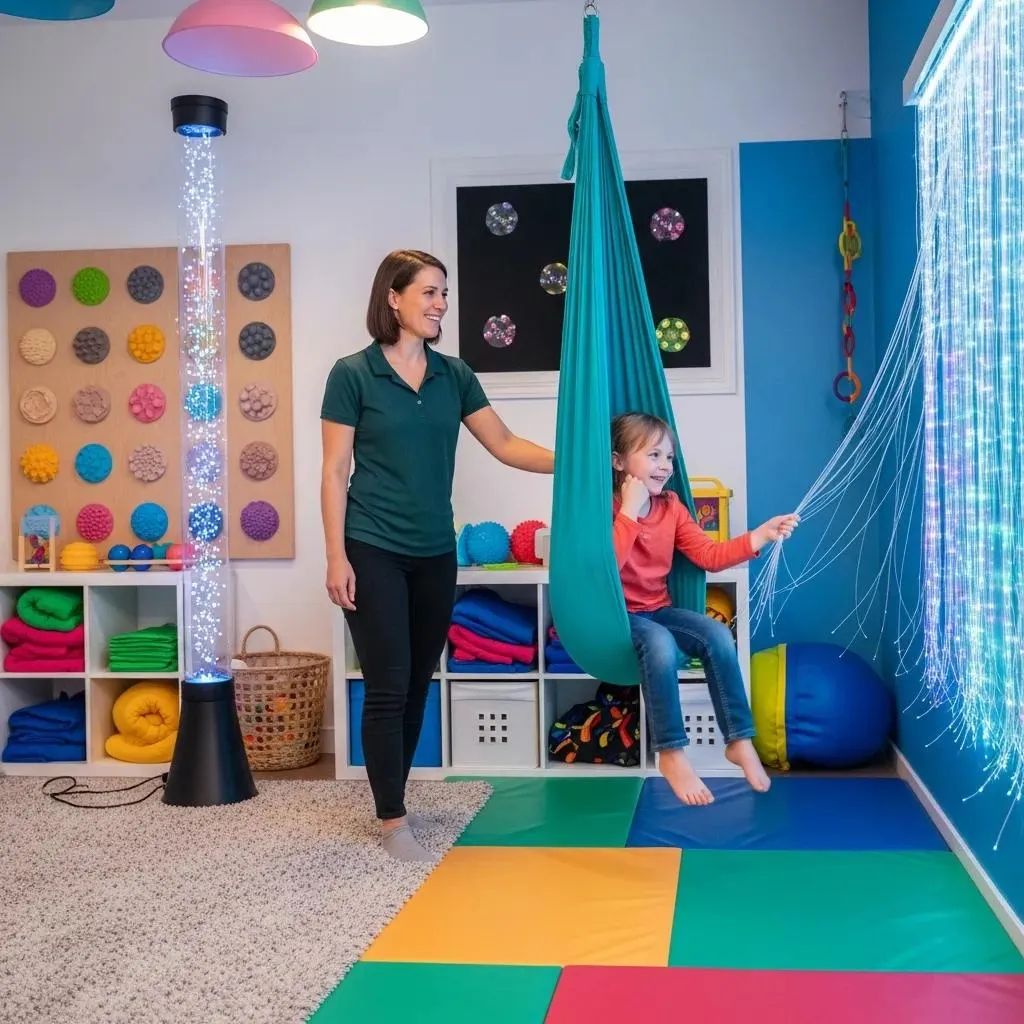

Watching your child struggle with big emotions can be heartbreaking, especially when those emotions stem from managing disappointment. For many children with autism, even small changes—like a favorite toy breaking, a canceled playdate, or leaving the park too soon—can feel overwhelming. As a parent, it’s natural to feel frustrated and wish for tools that help your child cope in calmer, more positive ways.
DIRFloortime therapy offers children a safe space to practice managing these moments through play and connection. Instead of pushing through the frustration, the therapist follows the child’s lead, helping them understand emotions and try new coping skills. Research indicates that children who acquire these strategies early are more likely to develop resilience and enhance social interactions over time.
At Skill Point Therapy in Tampa and Brandon, we guide both children and parents in these learning experiences. Through child-led play, families discover how to turn daily challenges into opportunities for growth and bonding. With patience, practice, and the proper support, children can develop the confidence they need to face life’s challenges with strength and resilience.
Key Takeaways
- DIR/Floortime therapy promotes emotional regulation, enabling children to manage disappointment in a supportive, relationship-based environment.
- Play routines created in therapy provide predictability, helping children prepare for changes that may lead to disappointment.
- Safe spaces within DIR/Floortime allow children to practice self-soothing strategies, enhancing their ability to cope with disappointment.
- Shared play moments during therapy strengthen emotional connections, fostering trust and security, which is crucial in managing disappointment.
- Gradual challenges to emotional responses within therapy help build resilience, teaching children how to handle disappointment more effectively.
How DIRFloortime Helps With Managing Disappointment
DIRFloortime therapy gives children a safe and playful way to practice managing disappointment. When a child leads the play, they are free to explore feelings and test out coping strategies with support. Over time, these guided experiences prepare them to handle real-life challenges with more confidence.
By using child-led techniques, therapists can turn everyday frustrations into learning opportunities. A safe, predictable environment allows children to practice calming down, problem-solving, and trying again when things don’t go as planned. This playful practice helps children build emotional flexibility that carries over into home, school, and social settings.
Parents play a crucial role in this process. When families participate in the sessions, children feel supported and understood, which in turn strengthens their progress. Together, parents and therapists help children build social skills, emotional connections, and healthier ways of coping with disappointment.
The Role of Emotional Regulation in Disappointment Management
Sentimental regulation plays a pivotal role in helping children with autism manage disappointment, as it directly influences their capacity to navigate challenging sentimental experiences. Through DIR/Floortime therapy, children develop affective awareness by recognizing and validating their feelings within a supportive environment. This approach enhances coping mechanisms, enabling individuals to process feelings of disappointment more effectively.
Play routines foster predictability, allowing children to prepare for changes while promoting adequate joint attention with caregivers. By tailoring activities to individual differences, therapy creates a safe space for practicing and developing self-soothing strategies. Ultimately, improved affective regulation not only helps children cope with disappointment but also nurtures their social skills, paving the way for healthier interpersonal connections and emotional resilience.
Furthermore, the active parental involvement in DIR/Floortime therapy reinforces these strategies, making the coping process more effective. Incorporating sensory integration techniques during treatment can further enhance children’s ability to manage their emotions and respond to disappointment.
Enhancing Social Interaction Skills Through Play

Enhancing social interaction skills in children with autism can be significantly achieved through child-initiated play opportunities. This approach strengthens communication while fostering emotional connections that enable children to engage more deeply with those around them. By creating a playful setting centered on the child’s interests, DIRFloortime encourages natural interactions that support the growth of lasting social and relational skills.
Moreover, prioritizing child-led play helps in nurturing a sense of agency and confidence in children as they explore social interactions. Engaging in multisensory play not only supports sensory integration but also enhances children’s ability to process social cues effectively.
Child-Initiated Play Opportunities
How can child-initiated play serve as a powerful tool for improving social interaction skills in children with autism? This approach facilitates spontaneous engagement, allowing children to investigate social cues within a motivating context. Through child-initiated inquiry, these opportunities foster vital skills, such as joint attention and turn-taking, which are crucial for building peer relationships.
When children lead play, they engage in symbolic and pretend scenarios that boost imagination and social reciprocity. Additionally, consistent engagement in these types of games markedly reduces solitary behaviors, promoting on-task social interactions. Ultimately, child-initiated play creates a rich environment where children with autism can practice and refine their social skills, paving the way for deeper connections with peers and enhanced social understanding.
Furthermore, incorporating structured play activities can further improve these social skills by providing clear frameworks for interaction. Engaging in sensory play activities can also stimulate cognitive growth, making play more interactive and enriching.
Enhancing Communication Skills
Child-initiated play lays a robust foundation for advancing communication skills among children with autism. By fostering reciprocal interactions, play scenarios enhance language development through practiced turn-taking and initiating responses, which are essential for engaging in social conversations. Caregivers utilize effective communication strategies to expand on children’s attempts, reinforcing both verbal and nonverbal skills.
Furthermore, engaging in symbolic play helps children grasp abstract language concepts, while joint attention during shared activities promotes focus and comprehension. Emotion recognition is also nurtured as children learn to interpret social cues via facial expressions and body language. Encouraging spontaneous communication initiations through interests motivates these exchanges, ultimately promoting confidence and flexibility in varied social contexts vital for cohesive communication development.
DIRFloortime therapy also emphasizes following the child’s lead during play to enhance engagement and emotional connections. Additionally, utilizing diverse play therapy techniques can further support children’s communication growth by addressing individual needs and fostering holistic wellbeing.
Strengthening Emotional Connections
Sentimental connection serves as a crucial cornerstone for fostering meaningful social interactions in children with autism. Through DIRFloortime therapy, affective attunement during play improves the child’s sense of safety and trust. By recognizing and validating feelings, caregivers promote emotional regulation and the ability to interpret social cues. Shared moments in play create opportunities for reciprocal interactions, enabling turn-taking and joint attention.
Following the child’s lead respects their personal differences, which reduces resistance and encourages engagement. Moreover, therapists can introduce gradual challenges to emotional responses, strengthening self-regulation and empathy. In this supportive environment, children can learn to navigate social dynamics, reinforcing their emotional connections and ultimately enriching their social interaction skills.
Establishing a calm atmosphere during therapy supports sensory regulation, a crucial aspect of effective interaction. Additionally, incorporating nature exposure can further enhance emotional regulation, providing a tranquil backdrop that promotes social engagement.
Cognitive and Developmental Benefits of DIR/Floortime

While many therapeutic approaches focus solely on behavioral modifications, DIR/Floortime stands out by fostering cognitive and developmental advancements in children with autism through a relational and playful framework. This approach promotes cognitive flexibility by encouraging exploration and experimentation during play, enabling children to adapt to new situations and build resilience against disappointment. Additionally, DIR/Floortime cultivates problem-solving strategies by meeting children at their developmental level and engaging them in interactive activities that are tailored to their individual needs.
The therapy enhances communication skills, emotional regulation, and adaptive behaviors, providing a holistic growth experience. Consequently, children participating in DIR/Floortime show measurable developmental progress, fostering crucial skills that enable them to navigate social interactions and everyday challenges more effectively, thereby enriching their quality of life. Furthermore, integrating sensory modulation techniques can enhance the therapeutic experience by addressing sensory difficulties that may arise during play and interaction.
The Importance of Parent and Caregiver Involvement
Recognizing the developmental benefits of DIR/Floortime therapy underscores the pivotal role that parents and caregivers play in fostering children’s growth. Caregiver engagement is crucial, as self-awareness and emotional regulation enable them to respond calmly and effectively during therapy sessions. By utilizing collaborative strategies, parents can align their goals with their child’s interests, creating meaningful interactions that improve engagement and skill acquisition.
Active participation in therapy not only strengthens emotional connections but also facilitates the integration of therapeutic techniques into daily life. Additionally, high levels of parental involvement are associated with improved developmental outcomes, underscoring the importance of equipping caregivers with education and resources to support the child’s unique needs. This nurturing environment fosters holistic growth and strengthens family bonds.
Moreover, understanding individual sensory needs can significantly enhance the effectiveness of interventions provided during therapy sessions.
Cost-Effectiveness and the Need for Early Intervention

Understanding the financial side of DIRFloortime therapy shows why it is often one of the most cost-effective options for children with autism, especially when started early in development. Early support helps children grow socially and emotionally, which can reduce the need for more intensive services later on. This not only builds independence but also helps limit future challenges and extra costs for families.
While insurance coverage can vary, many plans do cover DIRFloortime when provided by a pediatric occupational or speech therapist. Parent-led approaches at home also make the therapy more affordable by reducing the number of clinic-based hours needed. Families who participate in this process often find that it brings both financial relief and stronger emotional connections with their child.
Planning with DIRFloortime involves considering both the long-term benefits and the short-term progress. By creating a supportive environment and incorporating simple tools, such as sensory routines at home, parents can enhance the effectiveness of therapy. This early investment in care often leads to lasting growth, better outcomes, and peace of mind for families.
Frequently Asked Questions
How does DIRFloortime support children in managing disappointment?
DIRFloortime creates a safe space where children can process frustration through guided play and emotional connection. This helps them gradually build the skills needed to handle disappointment with more flexibility and confidence.
What Age Group Benefits Most From DIR/Floortime Therapy?
Toddlers and preschoolers benefit most from DIR/Floortime therapy, as these age groups experience significant improvements in their affective capacities and social engagement through tailored, play-based interactions that foster development in key relational and communicative skills.
How Long Does DIR/Floortime Therapy Typically Last?
In this modern epoch, DIR/Floortime therapy typically endures around 20 hours weekly, with session frequencies varying from two to five hours daily. This personalized approach caters to each child’s unique developmental trajectory and progress.
Can DIR/Floortime Be Combined With Other Therapies?
DIR/Floortime can be effectively combined with other therapies to create integrative approaches that improve developmental outcomes. Therapy combinations bolster affective engagement, improve communication skills, and promote holistic support for children with autism in their daily lives.
Is DIR/Floortime Therapy Suitable for Non-Verbal Children?
DIR/Floortime therapy is indeed suitable for non-verbal children, focusing on non-verbal communication and the expression of feelings. Its child-led, play-based approach fosters meaningful interactions that support emotional development and improve communication skills tailored to each child’s distinct needs.
How Can I Find a Certified DIR/Floortime Therapist?
To find a certified DIRFloortime therapist, one can utilize resources provided by the ICDL. The certification process involves verifying credentials and ensuring completion of the requisite training to ensure the therapist is equipped to support child development effectively.
Conclusion
In summary, DIRFloortime provides children with autism a safe and supportive environment in which to practice managing disappointment. By slowing down and working through emotions in play, children learn how to manage their feelings, express themselves effectively, and form deeper connections with others. These small steps build confidence that carries into everyday life.
The involvement of parents and caregivers makes a powerful difference. When families participate in the process, children feel understood and supported, which in turn strengthens both emotional regulation and social growth. Together, this teamwork helps create consistency at home, school, and in therapy sessions.
Investing early in DIRFloortime can open the door to lasting progress and brighter futures. Every child has unique strengths, and with the proper guidance, they can learn to turn challenges into opportunities for growth. If you would like to ask a question or talk through a specific concern about your child, our team at Skill Point Therapy in Tampa and Brandon is here to support you.
References
- https://asatonline.org/for-parents/becoming-a-savvy-consumer/is-there-science-behind-that-dir-floortime/
- https://www.wondirfulplay.com/blog/effectiveness-of-dir-floortime-therapy
- https://www.icdl.com/research
- https://www.wondirfulplay.com/blog/dir-floortime-therapy-proves-effective-in-recent-studies
- https://pmc.ncbi.nlm.nih.gov/articles/PMC10275467/
- https://www.wondirfulplay.com/blog/core-principles-of-dir-floortime-therapy-for-autism
- https://therapyworks.com/blog/autism/dir-floortime/
- https://www.wondirfulplay.com/blog/what-is-floortime-therapy-for-autism
- https://www.achievingstarstherapy.com/blog/core-principles-of-floortime-therapy-for-autism
- https://www.icdl.com/floortime