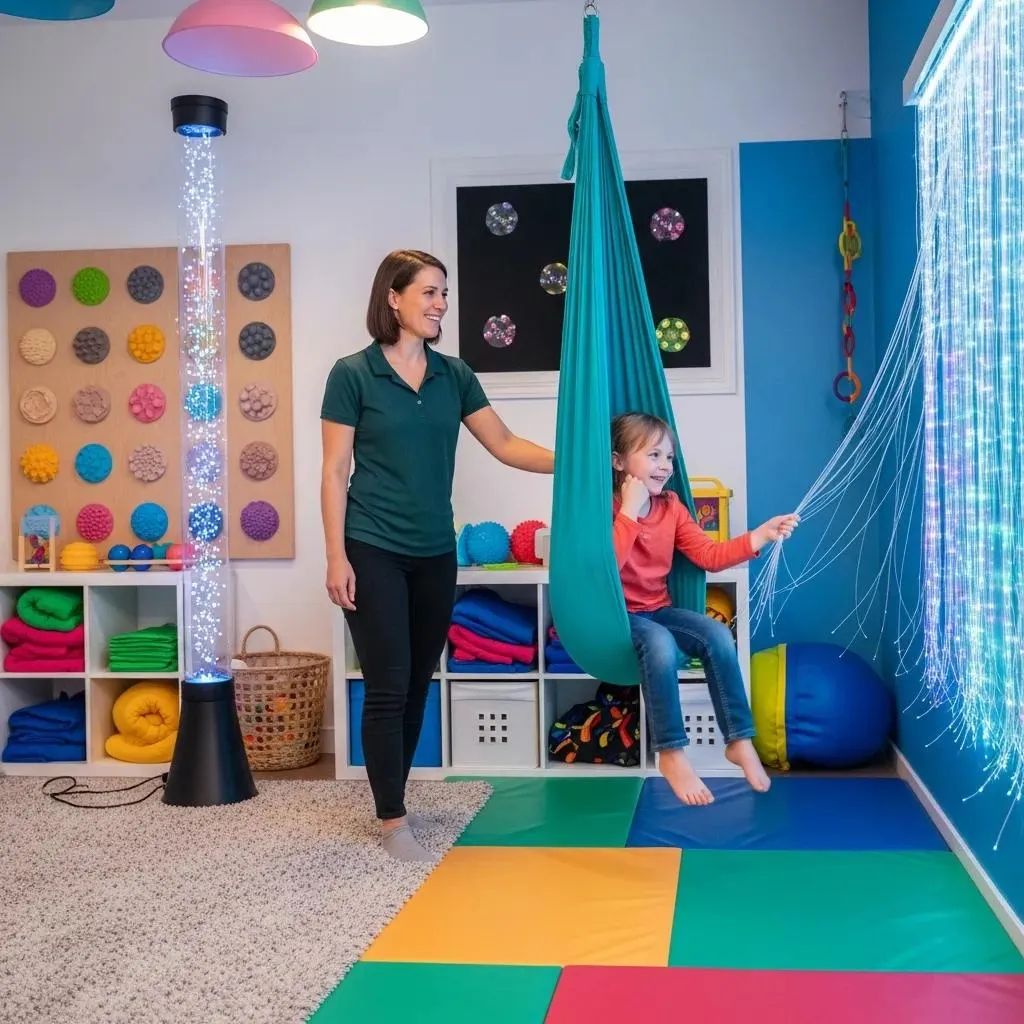

Occupational Therapy and Speech Therapy often work side by side to help children who struggle with sensory processing. Many therapy centers use the DIRFloortime approach, which focuses on building emotional connection and playful learning to support growth in all areas. Families searching for an occupational therapist near me often find that combining both therapies helps their child feel calmer, more focused, and more confident.
When occupational and speech therapists work together, children benefit from a full-circle plan that supports both their bodies and minds. For example, a child who becomes easily overwhelmed by noise may learn sensory calming techniques from the occupational therapist while practicing language skills with the speech therapist in a safe, supportive setting. Another child might use sensory play, such as blowing bubbles or using a straw, to strengthen oral-motor muscles while learning new words and sounds.
Research shows that up to 40% of children with sensory processing challenges also have communication delays, highlighting the importance of collaborative care. Through shared goals, joint sessions, and open communication, therapists help children make progress faster and with greater confidence. Families see the best results when therapy feels connected, consistent, and fun—assisting children to reach their full potential in school, play, and everyday life.
Key Takeaways
- Occupational therapy (OT) and speech-language pathology (SLP) collaborate to address overlapping therapy goals, enhancing sensory regulation and communication skills for children.
- Joint assessments and unified planning between OT and SLP professionals improve functional outcomes and promote holistic support for children’s developmental needs.
- Co-treatment sessions allow simultaneous targeting of sensory needs and communication goals, fostering engagement and adaptive behaviors across settings.
- Sensory diets, developed collaboratively, provide tailored strategies to help children manage sensory processing challenges while enhancing their communication abilities.
- Regular communication and team reviews between OT and SLP professionals ensure therapy techniques are reinforced and adjusted effectively based on each child’s progress.
Foundations of Occupational Therapy and Speech-Language Pathology Collaboration
The collaboration between occupational therapy (OT) and speech-language pathology (SLP) is fundamentally grounded in their complementary roles, both of which aim to improve clients’ functional outcomes. In settings such as occupational and speech therapy in Tampa, professionals use shared goals for children facing speech and sensory challenges. Research shows that 70% of therapy objectives overlap, making it essential for OT and SLP practitioners to work together in addressing communication and sensory needs.
This integrated approach not only improves functional communication and daily living skills but also provides sensory processing support in Hillsborough. By employing joint assessments and unified planning, both disciplines effectively strengthen each other’s interventions, ensuring thorough care tailored to each client’s distinct needs.
Furthermore, approximately 34% of students in special education require both OT and speech therapy, highlighting the necessity for collaborative service delivery. This partnership can significantly enhance early intervention outcomes for children experiencing developmental delays. Additionally, early diagnosis of ASD enhances the effectiveness of both OT and SLP interventions, as it allows for timely support in addressing functional independence.
Understanding Sensory Integration Theory
Sensory modulation is essential for developing adaptive behaviors, as it directly influences a person’s ability to respond appropriately to their environment. People with sensory processing difficulties may exhibit challenges in motor coordination, attention, and affective regulation, which can hinder their participation in daily activities. Understanding these sensory integration principles allows therapists to create targeted interventions that promote effective sensory processing and improve overall functional outcomes.
These principles are the basis for sensory integration therapy, which aims to enhance the brain’s ability to process and organize sensory information. Implementing individualized sensory opportunities can significantly boost a child’s motivation and engagement in therapeutic activities. Moreover, early intervention strategies can lead to better sensory processing outcomes, ultimately fostering adaptive behaviors in children.
Sensory Modulation Importance
Understanding sensory modulation is fundamental for enabling people to engage meaningfully in daily activities, particularly for those with sensory processing challenges. Sensory modulation involves the ability to regulate and organize responses to sensory input, which is vital for ideal participation in diverse environments. Poor sensory modulation can lead to difficulties in attention, behavior, and affect regulation.
Occupational therapy near me focuses on improving this skill by using strategies such as sensory diets and tailored activities to enhance daily functioning. Evidence demonstrates that targeted modulation interventions not only foster better self-regulation but also boost engagement in routines, shifts, and social interactions. By addressing sensory needs, occupational therapists can greatly support persons on their path towards improved comprehensive wellbeing.
Furthermore, these interventions often draw upon sensory integration techniques that emphasize enhancing sensory experiences. Additionally, incorporating sensory diets into therapy plans can further tailor interventions to meet individual needs. Consistent implementation of sensory strategies across diftings ensures effectiveness and continuity in interventions.
Adaptive Behaviors Development
Exploring the nuances of adaptive behavior development reveals the critical interplay between sensory experiences and effective functioning. Sensory Integration Theory emphasizes that adaptive responses to sensory input are fundamental for neuronal plasticity and the development of complex skills. These responses enable children to adapt to environmental demands, fostering growth in motor, cognitive, and social domains. Below is a concise overview of these mechanisms:
| Aspect | Description |
|---|---|
| Adaptive Behavior | Adjusting actions based on sensory input and situational demands. |
| Elicitation | Stimulated through sensory-rich, customized experiences. |
| Therapeutic Environment | Calibrated to provide “just-right challenges” for engagement. |
| Outcomes | Improves participation in daily activities and general wellbeing. |
Additionally, implementing personalized sensory diets can significantly enhance children’s ability to self-regulate their responses to sensory input. This is particularly important as sensory integration therapy can lead to improved emotional control and better social interactions.
The Importance of Sensory Regulation in Communication
Effective communication relies heavily on managing sensory experiences, particularly for individuals with sensory processing challenges. Sensory regulation impacts attention, emotional control, and social engagement, directly influencing communication effectiveness. Children with sensory sensitivities often experience reduced social participation, avoiding group interactions due to overwhelming stimuli such as noise.
Moreover, sensory-seeking behaviors can distract from opportunities for shared attention, which is essential for developing communication skills. Occupational therapy interventions, including tailored sensory diets and engaging sensory activities, can improve self-regulation, enhance responsiveness to verbal cues, and foster meaningful interactions.
Furthermore, sensory processing disorders can hinder daily life and psychological wellbeing, highlighting the importance of addressing these issues in therapeutic settings.
Additionally, recognizing the link between sensory issues and communication can inform effective intervention strategies. These strategies support individuals in maintaining engagement, ultimately promoting smoother social and communicative exchanges, thereby underscoring the critical role of sensory regulation in effective communication. Incorporating sensory integration therapy can further enhance emotional regulation, aiding in the development of social skills essential for successful communication.
Building Therapeutic Synergies: OT and SLP Co-Treatment
The integration of occupational therapy (OT) and speech-language pathology (SLP) represents a powerful approach to address the complex needs of persons with sensory processing challenges and communication difficulties. This collaboration fosters holistic treatment plans that encompass both sensory and communication goals, ultimately enhancing functional outcomes. Key benefits of OT and SLP co-treatment include:
- Joint goal setting enables the development of thorough strategies that address multiple developmental domains.
- Co-treatment sessions allow simultaneous support for sensory regulation and communicative intent.
- Regular communication between therapists promotes consistent reinforcement of techniques.
- Coordinated therapy optimizes skills transfer across different contexts and everyday routines. By focusing on holistic support, this dual therapy approach ensures that all aspects of a child’s development are considered, as early identification of sensory and communication challenges is crucial for effective intervention.
This client-centered approach ensures clients receive therapy that is not only effective but also specifically tailored to their needs, fostering growth in both communication and sensory regulation.
The Impact of Sensory Processing Challenges on Communication Skills

Sensory processing challenges profoundly influence communication skills, greatly hindering a person’s ability to engage in effective social interactions. Research indicates that sensory processing differences disrupt the processing of auditory, visual, and tactile inputs, which are essential for language comprehension and social communication. Neuroimaging studies further demonstrate altered white matter integrity in affected persons, impacting the integration of sensory stimuli.
Children with Autism Spectrum Disorders often show heightened sensory irregularities, correlating with increased social communication difficulties. Furthermore, sensory modulation impairments hinder both receptive and expressive language functions, complicating conversational engagement. Effective noise control is essential for maintaining focus and clarity in communication, especially for those with sensory sensitivities.
Objective testing supports the need for tailored therapeutic approaches that combine sensory and communication strategies, promoting improved outcomes in both language acquisition and social interaction. Early intervention remains critical for ideal developmental progress.
Practical Approaches for Collaborative Therapy Sessions
Communication difficulties stemming from sensory processing challenges require a collaborative approach in therapy sessions. By integrating occupational therapy with speech interventions, therapists can create a cohesive plan that addresses the child’s distinct needs. Effective strategies include:
- Joint goal-setting to align speech and sensory objectives.
- Environmental modifications to ensure a sensory-friendly learning environment.
- Activity integration that uses daily routines for practice within a sensory-rich context.
- Progress monitoring through team reviews to celebrate achievements and adjust goals. This integrated approach leads to better outcomes by combining the strengths of ABA, speech, and occupational therapy.
This interdisciplinary cooperation not only improves communication skills but also nurtures sensory regulation, resulting in a more holistic therapeutic experience. By prioritizing the child’s development through shared knowledge, both therapists and caregivers can significantly contribute to the child’s success.
Enhancing Learning Through Integrated Sensory Support

The integration of occupational therapy and speech-language pathology offers a multifaceted approach to enhancing learning for children with sensory processing challenges. By employing collaborative therapy strategies and sensory integration techniques, practitioners can target both sensory modulation and communication skills simultaneously. This evidence-based framework not only supports academic engagement but also fosters comprehensive developmental progress, ensuring a more conducive learning environment.
Additionally, many children with autism struggle with sensory processing, which can significantly impact their ability to participate in both learning and social situations.
Collaborative Therapy Strategies
While addressing the needs of children with sensory challenges, collaborative therapy strategies foster a holistic approach that integrates occupational therapy and speech therapy. This partnership improves learning and communication by creating unified intervention plans that target multiple goals concurrently. Key components of these strategies include:
- Shared assessments that highlight sensory, motor, and communication strengths.
- Simultaneous targeting of expressive communication and sensory regulation.
- Seamless shifts across environments, ensuring consistency in support.
- Engaging in authentic sensory activities to practice language skills.
- Both professions utilize adaptive techniques to help clients overcome challenges.
These collaborative efforts build confidence and independence, equipping children with crucial tools for daily activities and enhancing the effectiveness of their comprehensive therapy. Such integrated support enables a richer therapeutic experience, ultimately improving children’s ability to communicate and participate fully in their world.
Sensory Integration Techniques
Addressing sensory needs in children involves employing sensory integration techniques that improve learning through integrated sensory support. By incorporating input from multiple senses, these techniques augment the brain’s ability to produce coherent responses, which are vital for success in daily activities. Research demonstrates that individualized interventions, such as tactile exploration and proprioceptive tasks, foster adaptive neural responses, specifically beneficial for children with autism or ADHD.
Controlled sensory environments and sensory diets promote improved engagement, motor coordination, and social participation, facilitating the development of crucial life skills. Evidence supports that targeted sensory integration therapy leads to improvements in attention and affective regulation, enabling children to navigate their environments more effectively. This client-centered approach ultimately aims to boost meaningful participation in both educational and everyday contexts.
Empowering Families With Sensory Diets and Strategies
Enabling families with sensory diets and strategies is essential for fostering effective self-regulation and functional participation in children with sensory processing challenges. Through collaboration with occupational and speech therapists, families can develop tailored sensory diets that meet their child’s distinct sensory needs. These diets support communication and promote adaptive behaviors by incorporating:
Empowering families with personalized sensory diets is crucial for enhancing self-regulation and participation in children facing sensory processing challenges.
- Customized activity plans for sensory input
- Scheduled activities such as swinging or heavy work
- Training on sensory tools for home implementation
- Education on identifying and managing sensory triggers
Empowerment through education and the consistent application of these strategies improves a child’s ability to self-regulate, ultimately enhancing interaction and engagement across different settings. Families play a vital role in bridging therapy into everyday life, fostering their children’s confidence and advocacy.
Frequently Asked Questions
How Do Occupational Therapy and Speech Therapy Work Together?
When using DIRFloortime, both therapists coordinate goals that blend sensory integration with communication strategies. This joint approach strengthens a child’s ability to stay calm, focused, and expressive in everyday situations.
Can Occupational Therapy Support Feeding or Oral-Motor Development?
Yes. Occupational therapy helps improve feeding and oral-motor skills by integrating sensory awareness and fine-motor coordination into mealtime routines.
How Do Parents Advocate for Their Child’s Sensory Needs in Therapy?
Parents advocate for their child’s sensory needs in therapy by effectively communicating challenges, collaborating with therapists to implement personalized strategies, and securing necessary accommodations, ensuring a supportive environment that fosters the child’s sensory development and wellbeing.
What Qualifications Should OT and SLP Professionals Have for Collaboration?
Qualified occupational therapists and speech-language pathologists hold advanced degrees, licensure, and distinct certifications. Their training includes interdisciplinary collaboration, ensuring seamless integration of sensory strategies, and fostering a supportive environment that nurtures each child’s exceptional developmental path.
How Can Teachers Support Sensory Regulation in the Classroom?
Teachers can support sensory regulation by incorporating alternative seating, designated quiet spaces, structured routines, and sensory breaks. Implementing visual cues and adapting tasks improves focus, reduces anxiety, and fosters a learning and self-regulation environment.
Are There Specific Tools Parents Can Use at Home for Sensory Support?
Parents can use diverse sensory tools at home, including textured items, weighted products, fidget toys, and oral-motor tools, tailored to their child’s needs to enhance focus, reduce anxiety, and promote self-regulation through consistent engagement.
How Do Insurance Plans Typically Cover OT and SLP Services?
Steering through insurance for OT and SLP can feel like deciphering a complex puzzle. Typically, most plans cover these services based on medical necessity, requiring evaluations, clinical documentation, and sometimes prior authorization to access needed therapies.
Conclusion
In pediatric therapy, collaboration between Occupational Therapy and Speech Therapy is vital for helping children connect sensory experiences with communication. When both therapies use relationship-based methods like DIRFloortime, children learn to regulate their emotions, focus their attention, and express themselves more effectively. Families looking for a speech therapist near me often discover that this teamwork builds more substantial progress at home, in school, and during play.
Studies show that children who receive coordinated occupational and speech therapy improve functional outcomes up to 30% faster than those who do not receive integrated care. This collaborative approach empowers families, nurtures development, and turns daily challenges into opportunities for success. To learn more about how collaborative therapy can help your child—or if you have questions about sensory or communication support—contact Skill Point Therapy today.
References
- https://www.speechlanguageplaynyc.com/post/the-powerful-connection-between-occupational-therapy-and-speech-therapy-in-a-sensory-play-environmen
- https://www.advancedtherapyclinic.com/blog/the-connection-between-sensory-integration-and-occupational-therapy
- https://endeavorspts.com/building-bridges-the-synergy-of-occupational-therapy-and-speech-therapy/
- https://www.skillpointtherapy.com/improve-focus-and-communication-for-kids/
- https://www.speechpathology.com/articles/understanding-sensory-integration-and-processing-20387
- https://pmc.ncbi.nlm.nih.gov/articles/PMC6743510/
- https://www.triumphtherapeutics.com/sensory-integration-therapy-helping-children-thrive-through-occupational-therapy/
- https://flourishinglivesmi.com/how-occupational-therapy-can-help-children-with-sensory-processing-disorder/
- https://quicktalkerfreestyle.com/blog/ots-and-slps-collaborate-for-therapy/
- https://beaminghealth.com/article/How-Occupational-and-Speech-Therapy-Work-Together-for-Better-Outcomes