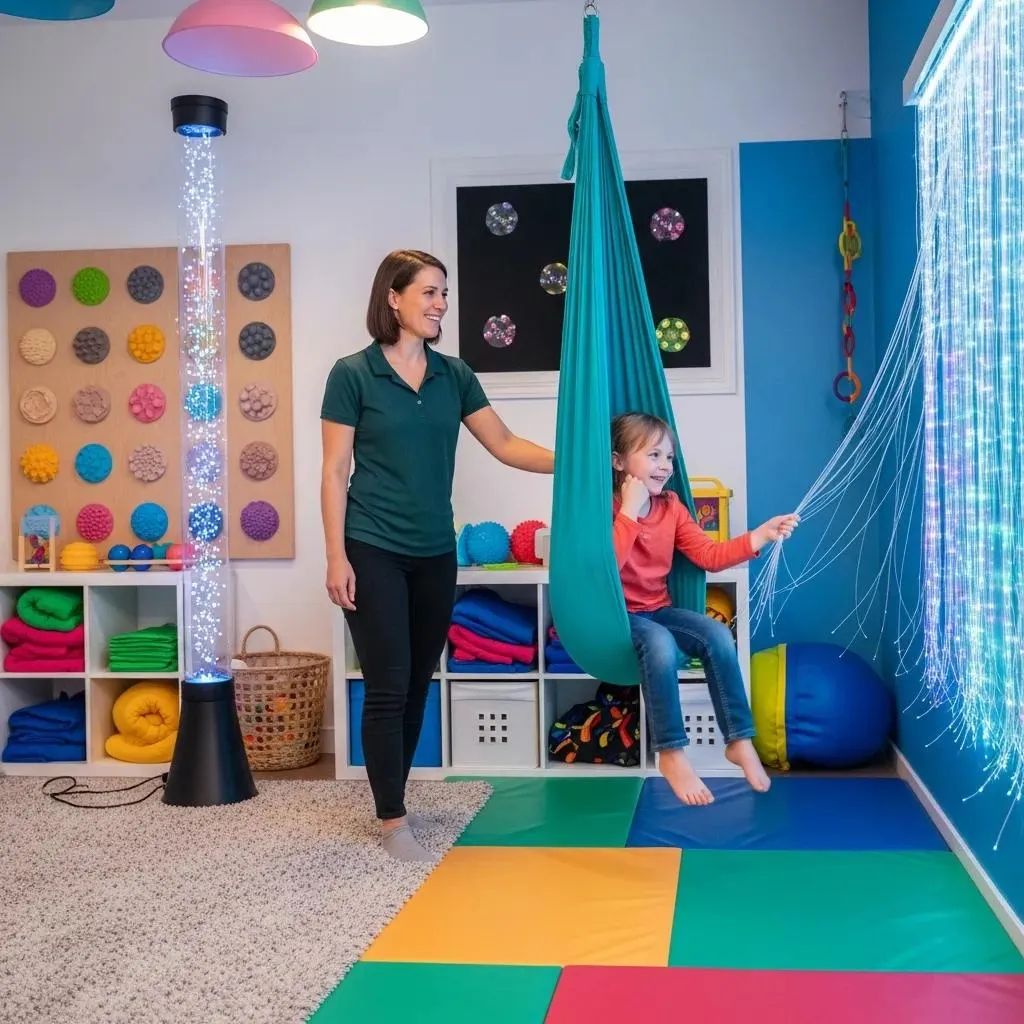

Occupational therapy’s impact on child development is powerful because it helps children grow in many areas, not just school skills. At Skill Point Therapy in Tampa and Brandon, we use DIRFloortime and child-led play therapy to support each child’s natural curiosity and strengths. This playful and supportive approach helps children feel more confident as they learn new ways to handle daily challenges.
One of the unique parts of occupational therapy is how it blends fun with skill-building. For example, blowing bubbles can improve oral motor control, and cooking simple snacks can boost sequencing and problem-solving skills. Research indicates that approximately 75% of children in occupational therapy experience meaningful progress in their social interactions, demonstrating the far-reaching benefits of this approach.
Occupational therapy’s impact on child development also strengthens independence at home and school. When children develop motor skills, learn to focus better, and connect with others through play, they carry these abilities into every part of their lives. With the proper support and family involvement, children develop skills that last a lifetime.
Key Takeaways
- Occupational therapy enhances cognitive development by improving executive functions, such as attention, memory, and problem-solving, through targeted interventions and play-based activities.
- Social skills are enhanced in children through occupational therapy, which utilizes play to foster communication, cooperation, and emotional regulation during interactions.
- OT fosters independence in daily activities by developing fine motor skills needed for self-care tasks, thereby boosting children’s confidence and autonomy.
- Holistic approaches in OT address various developmental aspects, ensuring customized therapy plans that involve caregivers and cater to individual strengths.
- Early interventions in occupational therapy have a profound impact on children’s developmental trajectories, enhancing outcomes across physical, cognitive, affective, and social domains.
Development Enhancement Through Occupational Therapy
Occupational therapy (OT) significantly enhances cognitive development in children by targeting key executive functions, including attention, memory, organization, and planning. The role of OT in child development is evident through targeted interventions involving memory games, structured play, and problem-solving exercises. These activities develop significant skills, such as focus, cognitive flexibility, and reasoning, thereby enhancing children’s self-regulation and independence in daily tasks.
Evidence shows OT positively supports early literacy skills, nurturing pre-academic cognitive functions necessary for future learning. Through these means, OT serves as a key resource for fostering cognitive growth, particularly in children facing physical, emotional, and mental challenges in their environments. Additionally, OT can support children with Sensory Processing Disorder by improving their ability to integrate and respond to sensory information effectively.
By utilizing interactive, play-based approaches, OT not only motivates and engages children but also reinforces fundamental executive functioning skills.
Motor Skills and Daily Participation Improvement
Occupational therapy plays a crucial role in enhancing balance and coordination, which are essential for the development of children’s motor skills. By engaging in targeted activities that promote these abilities, children experience increased independence in daily tasks, fostering a sense of autonomy. This improvement not only aids in self-care tasks but also boosts social participation and confidence in different environments, ultimately contributing to comprehensive developmental progress.
Additionally, enhancing fine motor skills is crucial for tasks such as writing and manipulating objects, which further support a child’s overall development. Furthermore, incorporating a sensory diet can significantly enhance a child’s ability to engage with their surroundings, positively impacting their functional development.
Enhanced Balance and Coordination
Improved balance and coordination play a crucial role in the development of children’s general motor skills, impacting their ability to engage in daily activities effectively. Occupational therapy employs targeted interventions to improve these skills, integrating balance exercises such as hopping and standing on one foot with postural control training. These methods promote gross motor control and stability, enabling children to perform tasks such as dressing and writing with confidence.
Furthermore, sensory integration activities facilitate the better processing of proprioceptive inputs, which in turn support motor planning. Occupational therapy also addresses co-occurring issues like ADHD or sensory processing challenges, amplifying the benefits of improved coordination.
Additionally, treatment may include vestibular exercises that stimulate the vestibular system, further enhancing balance and coordination. Parental involvement amplifies these efforts, allowing practice in natural environments. As children achieve better balance and coordination, they experience increased functional participation, which not only fosters independence but also improves their overall quality of life.
Increased Independence in Tasks
Facilitating increased independence in everyday tasks is a key objective of therapeutic interventions for children. Pediatric occupational therapy (OT) enhances fine motor skills, enabling children to participate in self-care activities, such as grooming and feeding. As therapists implement adaptive strategies and gradually fade assistance, children begin to navigate tasks independently, thereby building confidence and enhancing their psychological well-being.
OT assesses and addresses sensory processing differences, which further enhances children’s ability to manage daily activities effectively. Additionally, incorporating sensory integration therapy into routines can help children become more comfortable with various sensory inputs encountered during daily tasks.
| Task | OT Intervention |
|---|---|
| Grooming | Visual schedules for step-by-step guidance |
| Dressing | Adaptive equipment for ease |
| Feeding | Play-based exercises for utensil use |
| Hygiene | Gradual fading of assistance |
| Self-care skills | Sensory integration to reduce avoidance |
Through targeted interventions, OT fosters significant gains in children’s daily participation and reduces caregiver burden, thereby improving family well-being.
Development of Play and Social Skills

In occupational therapy, play serves as a crucial medium for enhancing social interaction and developing fundamental skills in children. It facilitates affective resilience and nurtures social understanding, allowing children to navigate complex social landscapes through guided experiences. By engaging in diverse play-based activities, children not only improve their motor skills but also develop meaningful relationships and collaborative skills that are integral to their comprehensive development.
This approach emphasizes tailored interventions that address unique challenges, especially for children with developmental hurdles. Additionally, sensory play can significantly enhance emotional regulation, supporting the ability to manage feelings during social interactions.
Role of Play
While engaging in play, children not only enjoy themselves but also develop fundamental social skills that are crucial for their overall growth and development. Through play, they learn critical concepts such as turn-taking, sharing, and cooperation, which are integral to social interaction. Occupational therapy enhances this process by offering guided play sessions that model appropriate behaviors, particularly for children with developmental delays or disabilities.
Such interventions foster a child’s ability to effectively initiate, sustain, and conclude play episodes. Additionally, varied play types—free, structured, or cooperative—offer diverse learning experiences, enriching affective understanding and promoting peer acceptance. In this way, play serves as an essential conduit for developing not only social skills but also affective and cognitive growth in children. Notably, the SPOTR Lab emphasizes the importance of sensory integration in enhancing children’s play and participation experiences.
Moreover, engaging in multisensory play helps build perceptual coherence and cognitive development, further supporting children’s social interactions.
Enhancing Social Interaction
As children navigate their formative years, the development of social skills becomes increasingly critical for fostering positive interactions and building resilient relationships. Approximately 25% of children experience social skill deficits that hinder their ability to form friendships and express their feelings. Occupational therapy addresses these challenges through play-based interventions that naturally encourage cooperative behaviors.
Role-playing exercises improve communication and affective recognition, while sensory integration techniques alleviate anxieties that hinder peer interaction. Involving parents guarantees that skills learned in therapy transfer to everyday situations. Structured social skills groups guided by therapists facilitate peer learning and constructive feedback, ultimately boosting children’s confidence and ability to engage socially.
Play therapy techniques, such as art and music therapy, are particularly effective in enhancing social skills and emotional expression among children. Social interaction is vital for building friendships and expressing emotions, and early intervention through occupational therapy can significantly improve long-term affective and behavioral outcomes.
Skills Development Through Play
Recognizing play as a crucial component of child development highlights its role in developing diverse skills necessary for navigating everyday life. Occupational therapy utilizes play to develop fine motor skills through activities like crafting and puzzles, refining coordination essential for daily tasks. Cognitive growth occurs as children engage in problem-solving and role-playing, fostering planning and adaptability.
Additionally, sensory activities can enhance cognitive growth by stimulating critical thinking and problem-solving skills. Affectively, play provides a safe outlet for expression, helping children navigate feelings and develop self-regulation.
Furthermore, therapeutic play environments enhance gross motor skills, thereby improving physical independence and autonomy. Collectively, these experiences forge critical pathways for language acquisition and communication, ensuring children are equipped with the tools necessary for successful interactions within their everyday contexts, thereby promoting holistic development through meaningful play. Moreover, play-based activities help develop emotion regulation and communication, reducing the risk of persistent social difficulties.
Holistic and Tailored Interventions in Pediatric OT

In the field of pediatric occupational therapy (OT), integrating holistic and tailored interventions is crucial for promoting comprehensive child development. By employing multi-domain strategies, pediatric OTs address physical, cognitive, affective, and social aspects, fostering an engaged, resilient child. Customized therapy plans focus on a child’s distinctive strengths and contextual needs, with goal-setting involving caregivers to guarantee practical and motivating objectives.
Therapists employ a combination of environmental adaptations, caregiver-mediated strategies, and child-focused interventions to facilitate skill acquisition and adaptation in everyday environments. Activity-centered practices reinforce learning through natural and authentic tasks, thereby enhancing participation and success. This extensive, empathetic approach fosters meaningful engagement, enabling children to thrive in their environments while promoting independence and self-regulation.
Additionally, incorporating a sensory diet can significantly enhance self-regulation and attention, further supporting a child’s development.
Impact on Infant and Early Childhood Mental Health (IECMH)
The integration of holistic approaches in pediatric occupational therapy extends greatly to the domain of infant and early childhood mental health (IECMH), where early interventions can profoundly influence a child’s developmental trajectory. Key impacts of occupational therapy (OT) on IECMH include:
- Cognitive and Affective Growth: OT improves emotional regulation, fostering responsiveness to caregiver interactions.
- Parent-Child Relationships: Sensory processing support strengthens healthy attachment and co-occupation in routines.
- Skill Development: Focusing on fine and gross motor skills increases confidence and independence in young children.
- Family Resilience: Caregiver education fosters emotional security, positively contributing to familial dynamics.
Through these facets, OT serves as a crucial vehicle for nurturing holistic mental health from infancy, promoting both personal and relational well-being.
Early Identification and Population Health Role

While early identification of developmental delays is crucial for promoting positive outcomes in children, occupational therapy (OT) plays a notable role in facilitating this process through structured developmental monitoring. OTs employ standardized milestone checklists to track progress across different domains, ensuring that nuanced delays are detected early. By training public health workers, OTs improve community capacity for developmental surveillance, especially in at-risk populations.
Initiatives like the CDC’s “Learn the Signs. Act Early.” foster caregiver engagement in recognizing milestones, emphasizing the importance of prompt referrals. Additionally, integrating OT screenings within primary care and community programs broadens access to timely interventions, ultimately reducing long-term disability burdens and enhancing child developmental outcomes. This collaborative approach has a significant impact on population health.
The Role of Parental Education in OT Success
Parental education consistently emerges as a crucial factor in the success of occupational therapy (OT) for children with developmental challenges. Empowered parents contribute significantly to therapy outcomes through a range of means:
- Enhancing Engagement: Active parental involvement leads to nearly double the developmental progress in children.
- Building Skills: Familiarity with coaching improves understanding of child behaviors and decreases family stress.
- Fostering Collaboration: Family-centered practices facilitate shared decision-making, leading to more tailored interventions.
- Improving Confidence: Varied educational methods prepare parents to effectively manage their child’s needs, thereby promoting comprehensive parental wellness.
These elements underscore the essential role education plays in transforming parental participation into a potent tool for enhancing therapeutic success, ultimately benefiting both child and family dynamics.
Benefits of Play-Based Learning in Occupational Therapy

Play-based learning in occupational therapy offers a dynamic approach to addressing the diverse needs of children with developmental challenges. This method fosters neuroplasticity by engaging children in repetitive play activities that accelerate synapse formation and integrate affective and cognitive functions. Improved motor skills result from activities like climbing and threading beads, promoting independence in everyday tasks.
Moreover, play nurtures social-emotional development, enabling children to navigate conflicts and develop emotional resilience. Cognitive skills flourish as interactive games improve decision-making and planning abilities. Additionally, sensory integration plays a crucial role, enabling children to process sensory input effectively. In summary, play-based learning equips children with essential skills, facilitating holistic growth in a supportive and engaging environment.
Future Directions for Pediatric Occupational Therapy
How will the future of pediatric occupational therapy evolve to meet the complex needs of today’s children? As advancements in technology and understanding of child development continue, several key directions are emerging:
- Integration of Advanced Technologies: Utilizing VR/AR for engaging therapeutic environments and AI for tracking progress.
- Expansion of Early Intervention: Scaling up programs that address developmental challenges early and effectively in diverse educational settings.
- Holistic, Client-Centered Care: Emphasizing thorough approaches that consider mental health and environmental impacts on development.
- Workforce Development: Guiding workforce challenges while expanding training in focused and technological skills.
These improvements will shape pediatric occupational therapy, fostering a more effective, inclusive, and responsive approach to child care.
Frequently Asked Questions
What Is Occupational Therapy’s Impact on Child Development?
Answer (2 sentences):
Occupational therapy helps children develop and strengthen their motor, sensory, and emotional skills, enabling them to thrive in various settings, including at home, in school, and in social situations. By addressing challenges early, therapy builds confidence and independence that shape healthy long-term development.
How Can I Find a Qualified Pediatric Occupational Therapist Near Me?
If you search online for “occupational therapy near me,” you’ll often find directories and local listings of therapists in your area (for example, the OT Directory on OTPotential lets you filter by pediatric focus). To find a qualified pediatric occupational therapist from those listings, individuals should verify the therapist’s state licensure and NBCOT certification, seek referrals from trusted healthcare professionals, and utilize directories from reputable organizations to ensure the therapist’s experience and specialization in pediatric care.
What Is the Typical Duration of Occupational Therapy Sessions for Children?
Pediatric occupational therapy sessions typically last between 30 and 45 minutes. Factors such as the child’s age, attention span, and specific therapy goals determine the exact duration and frequency of these essential sessions.
How Does Child-Led Therapy Compare to Traditional Therapy?
Child-led therapy, like DIRFloortime, follows a child’s natural interests to spark growth through play and connection. Traditional treatment often uses structured exercises, while child-led approaches keep children engaged by making learning feel fun, personal, and meaningful.
How Can Families Support Their Child’s Therapy at Home?
Families can support their child’s therapy at home by integrating therapeutic activities into daily routines, collaborating with therapists to develop tailored strategies, and creating an environment that encourages skill development through meaningful, engaging, and enjoyable experiences.
At what Age Should Children Start Receiving Occupational Therapy if Needed?
When should children begin occupational therapy? Ideally, interventions start if developmental delays in motor or sensory skills arise, often in infancy. Early support fosters crucial growth, ensuring children progress toward independence and social engagement throughout their developmental path.
Conclusion
Occupational therapy’s impact on child development gives children tools to overcome challenges and discover new strengths. At Skill Point Therapy, we use DIRFloortime and child-led play therapy to meet children where they are and build from their natural interests. This creates a safe and fun environment where growth feels exciting, not overwhelming.
Child-led play therapy may appear simple, but it develops essential skills. For example, gardening can improve hand strength and coordination, while playing board games can strengthen attention and emotional regulation. These everyday activities become powerful ways to help children succeed at home, in school, and in friendships.
Occupational therapy’s impact on child development reminds us that progress is possible with the proper guidance and support. Parents play a crucial role in this journey, and our team is here to support you every step of the way. Contact Skill Point Therapy today to learn more about child-led therapy or to discuss specific areas where you’d like to hear how we can help your child grow.
References
- https://www.kidsfirstservices.com/first-insights/how-occupational-therapy-improves-cognitive-skills-in-children
- https://pmc.ncbi.nlm.nih.gov/articles/PMC10453018/
- https://www.kutestkids.com/blog/the-role-of-occupational-therapy-in-developing-play-and-social-skills
- https://www.sascoriver.com/blog/the-transformative-power-of-occupational-therapy-in-childhood-development/
- https://www.occupationaltherapy.com/articles/fostering-healthy-minds-exploring-occupational-5637
- https://pmc.ncbi.nlm.nih.gov/articles/PMC11212480/
- https://ojs.acad-pub.com/index.php/APR/article/view/549
- https://pmc.ncbi.nlm.nih.gov/articles/PMC9082975/
- https://eric.ed.gov/?id=EJ1333259
- https://www.aota.org/practice/practice-essentials/payment-policy/medicare1/medicare—role-of-ot-in-assessing-functional-cognition