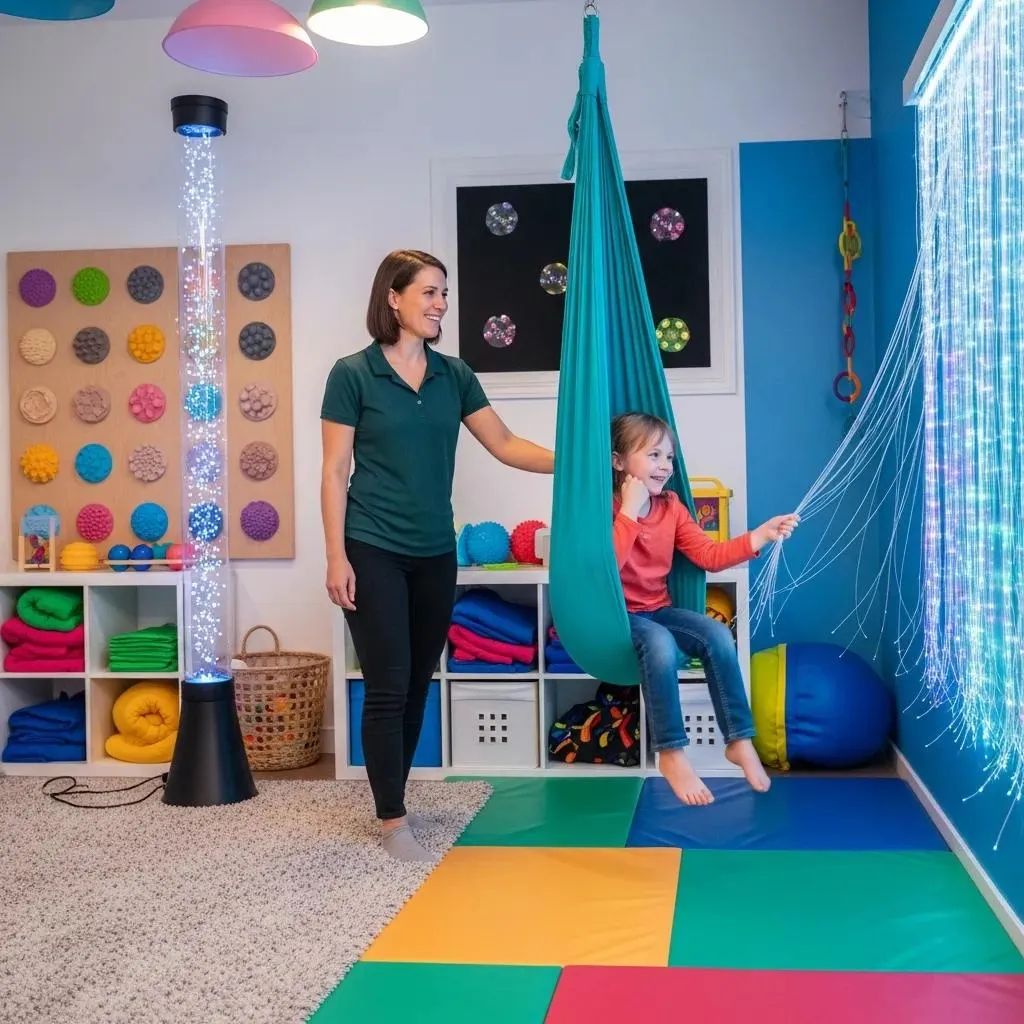

Some children struggle with sensory needs in ways that aren’t always easy to see. A child might avoid certain clothing textures or become overwhelmed by bright lights without anyone realizing these are sensory challenges. Studies show that approximately 1 in 6 children experience sensory difficulties; however, with the proper support, they can learn to feel safe, calm, and confident.
At Skill Point Therapy in Tampa and Brandon, FL, we believe therapy should be child-led and playful, because children learn best when they feel engaged and supported. Our therapists utilize DIRFloortime to design engaging, personalized activities tailored to each child’s individual needs. This same approach works well at home, where playful strategies can help parents build stronger connections with their kids.
That’s why early intervention matters so much. With the proper sensory processing techniques for kids, such as deep pressure play or calming movement breaks, families can help their children build focus and resilience. These sensory processing techniques for kids not only support daily routines but also open doors to growth, friendships, and independence.
Key Takeaways
- Implement deep pressure therapy using weighted blankets or hug machines to reduce anxiety and enhance body awareness in children.
- Utilize the Wilbarger brushing protocol to help desensitize tactile defensiveness and improve comfort with various textures.
- Engage children in sensory bins with a variety of textures to promote exploration and develop their tactile discrimination skills.
- Incorporate vestibular and proprioceptive tools, such as therapeutic swings, to support balance, coordination, and emotional self-regulation.
- Tailor interventions based on individual sensory profiles to maximize effectiveness and achieve positive behavioral outcomes.
Understanding Sensory Integration Therapy
Understanding Sensory Integration Therapy (SIT) offers valuable insights into the intricate relationship between sensory processing and children’s daily functioning. This therapeutic approach focuses on identifying behaviors associated with sensory issues and implementing interventions that enhance sensory processing through engaging, play-based activities. These sensory processing techniques for children are designed to create a safe and enjoyable environment where kids can actively explore and learn, stimulating their vestibular, tactile, and proprioceptive senses.
The therapeutic goal is to foster improved nervous system organization and motor planning, ultimately aiding children with developmental challenges such as autism and ADHD. Intervchild’s unique needs, SIT promotes engagement to enhance self-regulation and social development in their daily lives. Sensory integration theory suggests that the central nervous system does not process sensory information in isolation, which reinforces the importance of incorporating multiple sensory experiences in therapy.
Additionally, early detection and intervention are vital for improving a child’s quality of life, making it crucial to address sensory processing challenges as soon as they are observed.
Core Sensory Systems Addressed
Sensory Integration Therapy not only addresses specific behavioral challenges but also focuses on the core sensory systems that play a fundamental role in children’s development. Each sensory system contributes distinctly to a child’s ability to interact effectively with their environment.
- Visual System: Essential for interpreting the surroundings, aiding in learning through the detection of color, shape, and movement.
- Auditory System: Key for language comprehension and effective communication, filtering different sounds for focused attention in various environments.
- Tactile System: Early developing and significant for affective regulation, helping children discern touch and interact confidently with their surroundings.
Recognizing the importance of early intervention can significantly enhance a child’s ability to process sensory information and adapt to their environment.
Understanding these systems enables caregivers and educators to create supportive environments that foster positive growth and development, allowing children to thrive in various situations.
Effective Sensory Modulation Techniques

Effective sensory modulation techniques play an essential role in supporting children’s ability to navigate their environments. Approaches such as deep pressure therapy, tactile stimulation techniques, and proprioceptive input activities offer targeted strategies to improve emotional regulation and body awareness. By integrating these methods, caregivers can create nurturing spaces that foster sensory integration and promote positive behavioral outcomes.
Implementing individualized treatment protocols ensures that each child’s unique sensory profile is addressed effectively. Additionally, understanding Sensory Processing Disorder (SPD) can help caregivers tailor these techniques to meet the specific needs of each child.
Deep Pressure Therapy
Numerous studies highlight the groundbreaking impact of Deep Pressure Therapy (DPT) on children with autism and sensory processing disorders. This therapeutic technique offers diverse benefits, including:
- Improved Affective Regulation: DPT activates the parasympathetic nervous system, reducing anxiety and promoting calmness. Incorporating deep-pressure activities into daily routines can further enhance emotional stability.
- Enhanced Body Awareness: By stimulating proprioceptive receptors, children gain a better understanding of their body position, aiding in focus and coordination. Additionally, DPT is known to improve attention and focus in various settings, facilitating on-task behaviors.
- Physiological Relaxation: Research indicates a notable decrease in heart rate and stress hormones, fostering a sense of security.
Through methods such as weighted blankets and hug machines, DPT serves as a valuable tool for parents and educators working to create supportive environments for children, enabling them to thrive both psychologically and physically in their daily lives.
Tactile Stimulation Techniques
Exploring tactile stimulation techniques reveals a wealth of strategies designed to assist children with sensory processing challenges. Practical methods, such as the Wilbarger Protocol, utilize soft-bristled brushes for deep pressure stimulation, tailored to each child’s distinctive sensitivities. This approach helps desensitize tactile defensiveness, particularly when parents receive training to ensure a consistent routine outside of therapy.
Moreover, sensory gyms offer engaging activities, such as swinging and sand play, which integrate tactile and vestibular input, thereby promoting regulation. Occupational therapists tailor these experiences to accommodate varying responsiveness levels, thereby enhancing children’s comfort with different textures and materials. These techniques provide supportive pathways for children, enabling caregivers and professionals to foster resilience in the face of sensory processing challenges effectively.
Notably, children with autism spectrum disorder (ASD) often experience atypical sensory processing, highlighting the importance of these targeted interventions. Integrating sensory modulation techniques into daily routines can further enhance children’s ability to manage their sensory experiences.
Proprioceptive Input Activities
Proprioceptive input activities serve as crucial tools for enhancing sensory modulation in children, particularly those with sensory processing disorders and autism spectrum disorder. Engaging in targeted activities can facilitate body awareness and promote affective regulation. Some practical proprioceptive activities include:
- Wall push-ups – Providing resistance to improve body awareness.
- Weighted backpacks – Offering deep pressure that helps ground children.
- Animal walks – Encouraging playful movement that strengthens motor planning and coordination.
These activities create an organizing and calming effect, making them beneficial during shifts or moments of affective dysregulation. Regular incorporation into daily routines helps reduce restlessness and fosters greater self-regulation, ultimately improving social participation and engagement in diverse settings. Additionally, understanding the differences in proprioception can help caregivers tailor these activities better to meet the individual sensory needs of each person.
By recognizing sensory processing challenges, families can effectively implement these activities to support their child’s development.
Therapeutic Settings and Tools

Utilizing a range of therapeutic settings and tools greatly improves sensory processing interventions for children. Tactile integration tools, like textured mats and therapy balls, enhance fine motor skills and tactile awareness. Techniques such as the Wilbarger brushing protocol provide crucial stimulation for those with tactile defensiveness.
Participation in sensory bins fosters exploration and discrimination through various textures. Additionally, vestibular and proprioceptive tools—like therapeutic swings and weighted blankets—support balance and self-regulation. Visual and auditory integration tools, including light panels and musical instruments, enrich sensory experiences.
Incorporating structured daily sensory diet sheets ultimately facilitates active learning and social interaction, while adaptive games promote cognitive growth. By personalizing these interventions, therapists and caregivers can effectively address the distinct sensory needs of children.
Clinical Evidence Supporting Sensory Processing
Clinical evidence supporting sensory processing emphasizes the need for tailored interventions based on research validating their effectiveness. Meta-analysis results indicate promising outcomes for children utilizing diverse contextual treatment approaches, which address personal sensory needs and challenges. These findings underscore the importance of a thorough understanding of sensory processing difficulties in order to improve therapeutic practices and enhance children’s adaptive behaviors.
Recent studies have revealed that sensory processing disorders are neuroanatomically distinct, highlighting the necessity for targeted interventions to support affected children. Occupational therapists play a crucial role in evaluating sensory issues and developing individualized treatment plans that cater to each child’s unique needs.
Research Validating Effectiveness
Sensory processing disorders (SPD) present a singular challenge for both children and caregivers, often necessitating a more profound understanding rooted in empirical research. Clinical evidence supports the effectiveness of sensory processing interventions through several key findings:
- Neuroimaging techniques, such as diffusion tensor imaging, reveal abnormal white matter tracts that differentiate SPD from other disorders like ADHD or ASD.
- Systematic reviews indicate that sensory integration therapy can yield statistically significant improvements in behavioral and sensory processing outcomes.
- EEG studies highlight altered brain activity patterns associated with sensory challenges, reinforcing SPD as a recognizable brain-based disorder.
Additionally, understanding individual sensory needs is crucial for tailoring effective interventions that address the unique challenges each child faces. This body of research emphasizes the critical need for reliable, objective diagnostic measures, ensuring that children receive the appropriate support tailored to their individual sensory profiles.
Meta-Analysis Results Overview
Frequently, meta-analyses reveal compelling evidence supporting the effectiveness of sensory integration therapy (SIT) for children with sensory processing disorders, particularly those with developmental conditions such as autism spectrum disorder (ASD) and cerebral palsy. A recent synthesis of 24 studies confirmed significant improvements in sensory and motor development, highlighting the therapy’s positive impact on motor interpretation and processing. However, variability in SIT application and limited clinical trials underscore the need for standardized protocols to improve effectiveness and evaluation.
While encouraging outcomes emerge from well-controlled trials, mixed results prompt caution, emphasizing the necessity for rigorous research. Ultimately, enhancing consistency in intervention methods can facilitate a deeper understanding of SIT’s potential benefits for children affected by it and their families.
Contextual Treatment Approaches
The effectiveness of sensory integration therapy is increasingly recognized, yet the application of contextual treatment approaches remains crucial for understanding its broader implications. Contextual treatment acknowledges the environment’s role in sensory processing, emphasizing integrated strategies that can improve engagement and development. Key components may include:
- Collaborative support: Involving families, teachers, and therapists to create harmonious surroundings.
- Tailored interventions: Addressing specific needs by adapting sensory tasks to different settings, such as home or school.
- Comprehensive assessments: Evaluating sensory challenges alongside contextual factors to inform therapeutic choices.
Key Outcomes of Sensory Processing Techniques
While many parents and educators seek effective interventions for children with sensory processing challenges, the outcomes of sensory processing techniques reveal considerable benefits that extend beyond mere symptom management. These interventions promote social skills, enhance motor abilities, and mitigate behavioral dysregulation, ultimately fostering greater independence. Significantly, individual therapy sessions can improve social engagement and adaptive behaviors in children with conditions such as autism spectrum disorder.
| Outcome Category | Key Benefits | Measurement |
|---|---|---|
| Social Skills & Adaptive Behavior | Improved interaction, increased independence | Sensory Integration and Praxis Test |
| Sensory Processing & Motor Skills | Better balance, coordination, and dexterity | Quantitative physiological measures |
| Behavioral & Emotional Regulation | Decreased anxiety and emotional stability | Parental reports and clinical observations |
Frequently Asked Questions
What Are Some Sensory Processing Techniques for Kids that Parents Can Try at Home?
Parents can explore simple tools such as weighted blankets, fidget toys, and structured play that engages movement and touch. These approaches help children stay calm, focused, and ready to participate in daily activities.
How Do I Know if My Child Needs Sensory Integration Therapy?
A child may require sensory integration therapy if persistent sensory dysfunction significantly disrupts daily activities, social interactions, or emotional regulation. A professional evaluation can clarify sensory reactivity and identify strategies to enhance comprehensive functioning and overall well-being.
What Age Is Appropriate to Start Sensory Integration Therapy?
Sensory integration therapy is generally appropriate for children aged 4 to 12 years. This age range supports effective engagement in therapeutic activities, enabling meaningful participation and potential improvement in sensory processing capabilities for those who need it.
Are There Any Side Effects of Sensory Integration Therapy?
Sensory integration therapy may lead to challenges such as low self-esteem, anxiety, and frustration. Affective side effects, social isolation, and potential overstimulation can arise, necessitating careful monitoring and personalized approaches to guarantee positive experiences for children.
Can Sensory Integration Therapy Be Done at Home?
Yes, sensory integration therapy can be adapted for home environments and often improved through parent training. While effective, these initiatives may challenge the fidelity of therapeutic techniques without regular professional oversight, underscoring the importance of expert guidance.
How Long Does It Typically Take to See Improvements?
Improvements typically occur within six months, although timelines may vary. Factors such as the severity of the child’s sensory challenges, engagement in therapy, and tailored interventions markedly influence the duration and extent of progress observed.
Conclusion
Sensory processing techniques for kids offer children the support they need to navigate everyday challenges with confidence. A child who once avoided playground slides learned to enjoy swinging and climbing through gentle, guided exposure. These small victories show how tailored strategies can help children explore the world safely and joyfully.
Early intervention makes a real difference. Studies indicate that over 70% of children with sensory difficulties show noticeable improvement when supported with structured, playful techniques. Simple strategies, such as incorporating movement breaks, using textured toys, or creating calming spaces, can transform daily routines into opportunities for growth and self-confidence.
Every child’s journey is unique, and individualized approaches are most important. If you have any questions or would like to discuss specific areas of concern for your child, please get in touch with Skill Point Therapy in Tampa or Brandon, FL. Our team is here to guide families with expertise, care, and playful, child-led strategies that work at home and in therapy.
References
- https://pmc.ncbi.nlm.nih.gov/articles/PMC7726187/
- https://www.skillpointtherapy.com/8-sensory-integration-therapy-techniques/
- https://pmc.ncbi.nlm.nih.gov/articles/PMC10955541/
- https://childmind.org/article/treating-sensory-processing-issues/
- https://www.oxfordhealth.nhs.uk/wp-content/uploads/2014/05/Sensory-Processing-presentation-February-2014.pdf
- https://sensoryhealth.org/basic/empirical-evidence-related-to-therapies-for-sensory-processing-impairments
- https://www.autismcrc.com.au/interventions-evidence/category-overview/sensory
- https://ottheory.com/therapy-model/sensory-integration-theory
- https://www.ncbi.nlm.nih.gov/books/NBK559155/
- https://medicalpolicy.bcbstx.com/content/dam/bcbs/medicalpolicy/pdf/therapy/THE803.020_2024-12-15.pdf