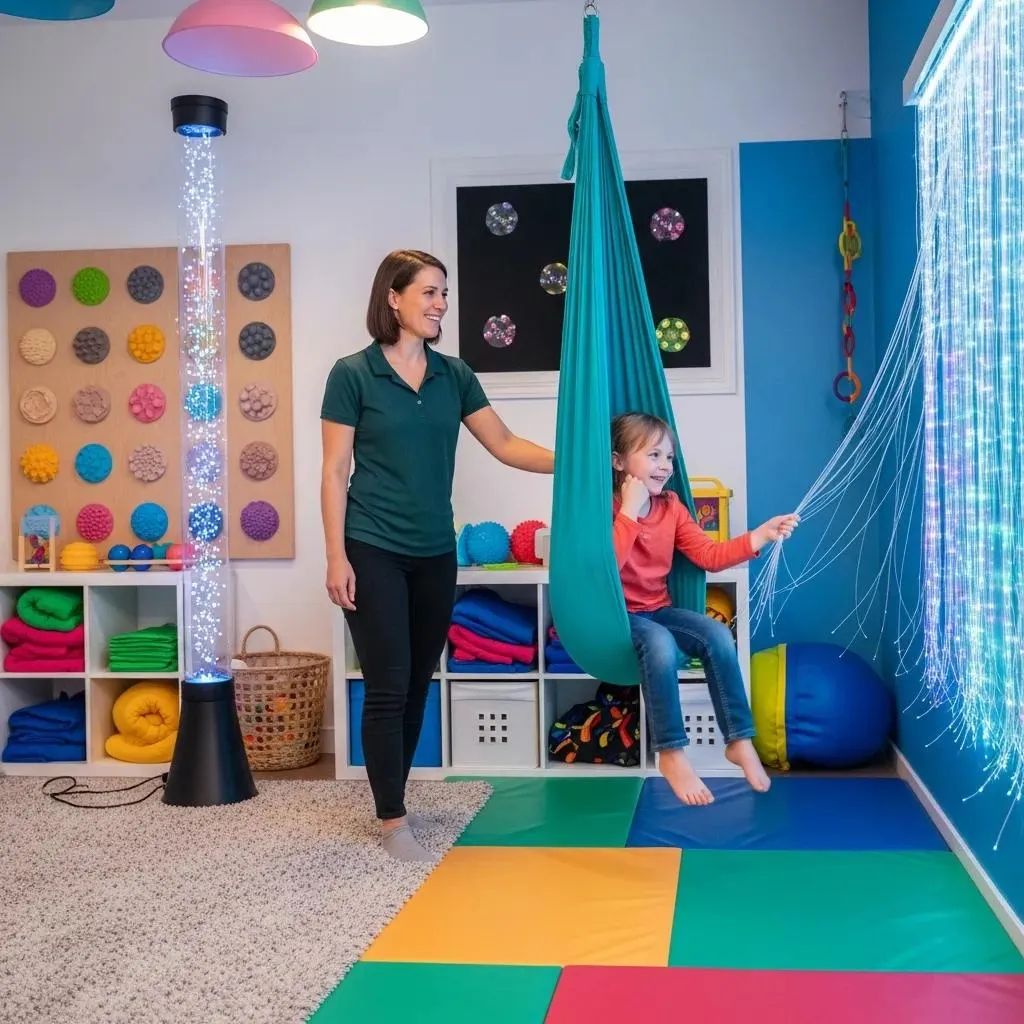

Fine motor skills are the small movements our hands and fingers make every day. These skills are critical because they help children hold pencils and write neatly. When kids improve their fine motor skills, their handwriting usually gets better, making schoolwork easier and more fun.
Occupational therapy near me often focuses on playful, child-led activities that children enjoy, so they don’t even realize they are working on their skills. For example, learning to button a shirt or zip a jacket uses fine motor skills to help kids get dressed on their own. When children practice these movements in therapy, they become more independent and confident in daily tasks.
Eating is another activity that requires good fine motor skills, such as using a fork or spoon with control. Occupational therapists use games like stacking small snacks or scooping playdough to build these hand muscles. When children improve fine motor skills through fun, playful therapy, they gain abilities that help them in many parts of life.
Key Takeaways
- Engage children in play-based activities, such as rolling playdough and stacking blocks, to enhance hand strength and dexterity and improve handwriting.
- Utilize tailored pencil grips and adaptive writing tools to enhance grip comfort and motor control during writing tasks.
- Incorporate multisensory learning techniques, such as tracing shapes and textured materials, to strengthen visual-motor integration and muscle memory.
- Implement evidence-based handwriting programs, such as Handwriting Without Tears or Helping Handwriting Shine, to support structured progress in legibility.
- Foster collaboration between occupational therapists, teachers, and parents to set goals and integrate fine motor activities into daily routines.
From Scribbles to Masterpieces: Helping Kids Build Strong Fine Motor Skills
Kids start their fine motor journey with simple scribbles, and with practice, those marks turn into amazing drawings and writing. Fine motor skills help children use their hands and fingers to do things like hold a pencil, button a shirt, or tie their shoes. Building these skills early makes everyday tasks easier and more fun for kids as they grow.
Playing with crayons, clay, or stickers isn’t just fun—it also strengthens little muscles in the hands. These playful activities improve hand-eye coordination and finger control, which are essential for writing and drawing. When children enjoy practicing these skills, they learn faster and feel proud of their progress.
At Skill Point Therapy, we help children develop fine motor skills through playful, hands-on activities. Our therapists guide kids step by step, turning every scribble into a masterpiece. Parents can support this at home by encouraging drawing, cutting, and other fun crafts that strengthen fine motor skills and prepare them for school and life.
Adaptive Tools for Improved Handwriting
Adaptive tools play a crucial role in improving handwriting for individuals with fine-motor challenges, particularly through tailored pencil grips. These ergonomic designs improve grip comfort and stability, enabling users to maintain better control while writing. Furthermore, custom writing tools tailored to personal needs can significantly improve handwriting legibility and overall confidence in writing tasks.
Incorporating adaptive feedback mechanisms alongside these tools can further enhance a student’s writing experience by providing more relevant and personalized support during practice. Additionally, implementing structured handwriting programs can provide clear pathways for progress in legibility, regardless of age or abilities. Addressing fine motor delays early on can significantly support the development of practical handwriting skills.
Pencil Grips Benefits
While traditional beliefs often prioritize the dynamic tripod grip for effective handwriting, recent research highlights the importance of exploring alternative pencil grips to improve writing performance significantly. Studies have shown that mature grasp patterns, such as the lateral tripod and quadrupod, show no significant differences in speed or legibility compared to the dynamic tripod grip. This suggests that accommodating students with alternative grips can yield fast and legible handwriting without compromising quality.
Additionally, interventions that focus on modifying pencil grip, coupled with sensorimotor training, have been shown to enhance letter formation and alignment. By recognizing the value of distinct grips, educators and therapists can provide tailored strategies to foster handwriting success and alleviate difficulties for children facing challenges.
Furthermore, findings indicate that task length may influence handwriting legibility more than grasp type, emphasizing the need for a holistic approach to writing interventions. Fine motor skills are essential for effective handwriting, underscoring the importance of targeted training strategies. Moreover, understanding sensory processing disorder is crucial to addressing the unique challenges children with autism face in handwriting development.
Specialized Writing Tools
Recognizing the diverse grips children may use for writing naturally leads to an exploration of customized writing tools designed to improve handwriting. Tailored writing utensils, including weighted pens and ergonomic designs, cater to varying motor control needs by enhancing stability and reducing fatigue. Textured surfaces and tactile paper provide crucial sensory feedback for accurate letter formation, benefiting children with sensory processing differences.
Moreover, mechanical devices stabilize hand movements, thereby improving consistency for those with motor disorders. Offering visual and spatial supports, such as raised-line paper and tracing sheets, further promotes spatial awareness. By integrating these adaptive tools, educators and caregivers can significantly improve writing skills and boost young learners’ confidence.
Additionally, engaging in hand-eye coordination activities can further enhance fine motor proficiency. Early identification of fine motor skills delays is crucial for timely intervention, as monitoring fine motor skills development can significantly impact cognitive development and academic achievement.
Visual-Motor Integration Techniques
Visual-motor integration techniques, such as tracing shapes and letters, provide children with structured opportunities to develop crucial coordination skills. Activities like dot-to-dot puzzles and tossing and catching balls engage both visual perception and motor execution, fostering improved hand-eye coordination. These targeted exercises can enhance comprehensive fine motor skills and build a child’s confidence in their abilities.
Additionally, timely intervention from occupational therapists can further support the development of these essential skills. Incorporating developmental milestones into practice can help therapists tailor activities to meet each child’s unique needs. Engaging in activities that promote adaptive skills development is crucial for fostering independence and self-confidence in children as they learn to navigate daily tasks.
Tracing Shapes and Letters
Tracing shapes and letters serves as a foundational tool for improving fine motor skills and fostering visual-motor integration in young learners. Research indicates that tracing supports letter recognition, promotes appropriate size, and reinforces correct formation, proving beneficial from preschool age onward. Beyond improving handwriting, tracing allows children to refine their fine motor skills while concentrating on artistic letter formation.
While challenges exist, such as improper starting points or reliance on prompts, addressing these through multisensory techniques can boost learning. Incorporating tactile experiences, such as sandpaper tracing, fosters kinesthetic memory, helping students acquire correct letter shapes. Engaging in fine motor activities can improve dexterity.
With structured support and progressive fading of prompts, educators can guide children toward independence in handwriting, ultimately nurturing their confidence and writing skills.
Dot-to-Dot Activities
Engaging children in dot-to-dot activities is an effective way to improve fine motor skills while promoting visual-motor integration. These activities require controlled hand movements as children connect dots, thereby enhancing precision and hand-eye coordination. Using different writing tools helps children strengthen their grip and dexterity.
Furthermore, maneuvering smaller dots challenges finger isolation and the pincer grasp, vital for later writing tasks. Dot-to-dot puzzles not only foster visual tracking and spatial awareness but also improve problem-solving as children determine the correct order of connections. Completing each puzzle instills a sense of achievement and builds confidence, making dot-to-dot activities a practical way to develop essential skills in a fun, tactile way.
With various textures and grips that enhance fine motor skills and further support children’s readiness for everyday tasks, dot-to-dot activities are a practical way to develop essential skills.
Tossing and Catching Balls
Tossing and catching balls is an effective way for children to develop essential motor skills, particularly hand-eye coordination. Engaging in these activities can significantly improve a child’s spatial awareness and coordination abilities. Research indicates that, with age, children’s catching performance improves, highlighting the significance of incorporating ball games into their routine.
Furthermore, early catching typically involves minimal force absorption, which can be enhanced as children learn to adjust their hand positioning based on the ball’s height.
| Motor Skill Focus | Benefits |
|---|---|
| Hand-Eye Coordination | Strengthened through activities |
| Gross Motor Development | Improved through organized play |
| Spatial Awareness | Enhanced via tracking balls |
Multisensory Approaches for Writing Confidence

While developing writing confidence can be challenging for many children, incorporating multisensory approaches significantly elevates their learning experience. Engaging multiple senses simultaneously—sight, sound, movement, and touch—helps strengthen neural pathways crucial for letter formation and motor planning. Visual learners benefit from color-coded visuals, while auditory learners thrive on verbal cues.
Kinesthetic learners solidify memory through activities like sand writing. Utilizing textured materials, such as sandpaper or raised-line paper, improves tactile learning and reinforces muscle memory. Consistent guided practice fosters automaticity, allowing children to focus on the writing process. Ultimately, these multisensory strategies not only improve writing skills but also uplift self-esteem, enabling children as they witness their progress and build a sense of achievement in their abilities.
Evidence-Based Handwriting Programs
Evidence-based handwriting programs have emerged as vital tools in fostering writing skills among students, particularly those who struggle with fine motor abilities. These programs use structured methodologies to improve handwriting proficiency significantly. Key features include:
- Helping handwriting Shine: Integrates OT strategies into classrooms, resulting in significant writing progress within an 8-week framework.
- Handwriting Without Tears: Demonstrated moderate evidence with a 3-point average gain in proficiency from fall to spring.
- Size Matters Handwriting Program: Provided compelling research, emphasizing legibility improvements through engaging practices.
- Write Start Integrated Program: Co-taught by professionals, leading to superior legibility and speed outcomes for primary graders.
- Collaborative Findings: Strong evidence supports partnerships between educators and therapists, resulting in improved handwriting outcomes.
Such programs offer hope and direction for educators aiming to support their students’ writing experiences.
Structured Curricula for Skill Development

Structured curricula for skill development play an essential role in enhancing fine motor abilities through evidence-based writing programs and systematic instructional approaches. These curricula effectively incorporate multisensory learning techniques that promote engagement and retention of skills such as grip, dexterity, and coordination. By focusing on measurable goals and integrating practical tasks, they support the holistic development of foundational and functional skills necessary for daily activities.
Evidence-Based Writing Programs
Handwriting programs that incorporate evidence-based practices play an essential role in fostering skill development among children and youth. These programs not only improve fluency but also boost overall writing abilities. Key components include:
- Significant fluency gains were observed in preschool and elementary students.
- Timed transcription skills training shows effectiveness (ES = 0.49).
- Programs, like the Science of Handwriting Program, emphasize structured skill development.
- Collaborative approaches, such as Write Start, improve outcomes by integrating occupational therapy.
- Multisensory interventions support cognitive and motor development.
Structured Instructional Approaches
Numerous structured instructional approaches effectively improve fine motor skills in children, providing tailored frameworks for skill development. These programs often combine physical training, such as strength and coordination exercises, with engaging activities like visual arts. Evidence shows that structured interventions yield greater motor proficiency than unstructured play, particularly in preschoolers and older children.
By emphasizing repetition and consistent practice, children can markedly boost their fundamental motor skills. Programs like “Handwriting Without Tears” specifically target handwriting readiness through structured fine motor activities, thereby improving legibility and spatial awareness. Additionally, active guidance from professionals guarantees effective implementation, supporting educators and caregivers in fostering school readiness and overall motor competence in children aged 4–9.
Multisensory Learning Techniques
Multisensory learning techniques offer a dynamic approach to developing fine motor skills in children by engaging multiple senses simultaneously. This comprehensive strategy not only supports skill acquisition but also enhances cognitive development. Key elements of multisensory learning include:
- Engaging in tactile activities like tracing letters and manipulating objects.
- Incorporating kinesthetic movement to reinforce active muscle memory.
- Utilizing sensory bins for interactive visual and tactile experiences.
- Creating multiple neural pathways through varied sensory inputs.
- Facilitating participation, leading to greater attention and focus.
These methods significantly improve children’s fine motor precision while fostering crucial cognitive abilities, thereby supporting both academic performance and joyful learning experiences. Through structured and thoughtfully designed multisensory activities, educators and parents can effectively nurture every child’s development.
Comprehensive Handwriting Assessments

When evaluating a child’s handwriting skills, it is essential to use thorough methods that provide a holistic understanding of their abilities. Extensive handwriting assessments involve a combination of standardized tools, such as the Test of Handwriting Skills-Revised and the Evaluation Tool of Children’s Handwriting, which analyze different components. These assessments focus on pencil grip, joint mobility, and visual-motor integration, ensuring an accurate representation of handwriting capabilities.
Moreover, evaluating authentic writing performance through kinematic analysis and posture assessments offers deeper insights. By understanding both product-based elements, such as letter formation, and process-based factors, such as pen pressure, practitioners can effectively identify areas for improvement, enabling targeted interventions to enhance children’s handwriting skills and overall confidence in their writing abilities.
Collaborative Intervention Strategies
Effective collaborative intervention strategies involve a team approach that brings together occupational therapists, teachers, and parents to address fine motor and handwriting challenges in children. This coordinated effort guarantees a thorough understanding of a child’s needs and progress. Key elements of successful intervention include:
- Conducting joint assessments using standardized tools for objective evaluation.
- Setting measurable goals during collaborative meetings to track improvement.
- Integrating fine motor activities into daily classroom and home routines.
- Utilizing adaptive and assistive technology for improved engagement.
- Maintaining regular communication to monitor progress and adjust strategies as needed.
Fun Fine Motor Skill Games and Activities

Collaborative intervention strategies set the stage for engaging activities that can significantly improve children’s fine motor skills. Block building and construction games enhance hand strength and spatial awareness, while stringing beads or lacing cards effectively strengthen pincer grasp and bilateral coordination. Manipulative play with playdough and sensory bins strengthens intrinsic hand muscles and tactile discrimination.
Card and board games like Uno and Mancala promote fine motor control and cognitive flexibility by requiring players to handle small pieces. Furthermore, art and craft activities, including coloring and cutting, support hand endurance and precision. Together, these fun games and activities create a rich learning environment that fosters not only skill development but also creativity and problem-solving in children.
Tips for Parents to Support Handwriting at Home
Supporting handwriting development at home can be a rewarding process for both parents and children. By integrating diverse activities and tools, parents can foster fine motor skills and writing confidence. Here are some practical tips:
- Provide varied writing materials, like small crayons or textured papers.
- Encourage sensory experiences through finger painting or drawing in sand.
- Monitor posture; guarantee comfortable seating and proper paper positioning.
- Integrate writing into daily routines with lists and notes.
- Focus on skill progression, starting with scribbles and gradually building to letters.
These strategies not only improve handwriting but also promote a love for writing. By actively engaging in their child’s writing expedition, parents can create an enriching environment that supports growth and creativity.
Frequently Asked Questions
How Can I Improve Fine Motor Skills at Home?
Simple daily activities like playing with clay, using scissors, or stringing beads can improve fine motor skills. These tasks build hand muscles and coordination in an enjoyable way for children.
At what Age Should My Child Start Developing Fine Motor Skills?
Children typically begin developing fine motor skills between birth and 3 months. Skills progress through different stages, with significant advancements occurring by 24 months as they engage in more purposeful manipulation of objects and tools.
What Are the Best OT Strategies to Improve Fine Motor Skills?
Occupational therapists use tailored exercises, sensory play, and functional tasks to enhance hand strength and precision. Consistent practice combined with play encourages lasting progress.
How Can Screen Time Affect Fine Motor Skill Development?
Like weeds choking a garden, excessive screen time hinders fine motor skill development. Children may struggle with coordination as touchscreens replace essential hands-on play, potentially delaying critical developmental milestones.
Are There Specific Foods That Promote Fine Motor Skill Growth?
Certain foods, such as fish and eggs, are associated with improved fine motor skill development. Nutritional status greatly influences motor skills, underscoring the importance of a balanced diet rich in essential nutrients for optimal growth and development.
How Do Environmental Factors Influence Handwriting Skills?
Environmental factors considerably impact handwriting skills; for instance, 70% of children struggle with writing due to inadequate lighting and distracting surroundings. Creating supportive spaces can improve focus and fine motor control, fostering better writing experiences.
When Should I Seek Professional Help for My Child’s Handwriting Issues?
Professional help should be sought if handwriting issues persist despite practice, particularly when legibility affects schoolwork, frustration arises during writing tasks, or developmental milestones are not met by the child’s age, prompting concerns for intervention.
How Does Occupational Therapy Help Improve Fine Motor Skills?
Occupational therapy targets specific hand and finger movements through engaging, child-led activities that build coordination and control. This personalized approach boosts skills essential for handwriting and self-care.
Conclusion
When children improve their fine motor skills, the positive changes ripple through their schoolwork and home life. Imagine a child who once struggled to hold a pencil now writing clearly and proudly showing their homework. At home, simple tasks like buttoning clothes or using utensils become easier, boosting their independence and self-confidence. Using DIRFloortime and playful, child-led therapy, these improvements help children feel more connected with their family and build stronger relationships through shared success.
Fine motor skill progress also brightens a child’s self-esteem, making them eager to try new activities and face challenges with a smile. When kids feel confident in their abilities, parents often notice less frustration and more joy in daily routines. If you’re wondering how occupational therapy near me could help your child reach these milestones, Skill Point Therapy is here to guide you.
Contact Skill Point Therapy today if you’d like to learn more or discuss specific concerns about your child’s fine motor skills or handwriting development. We’re happy to support your family’s journey to greater confidence and success.
References
- https://www.heartwisesupport.org/post/occupational-therapy-techniques-for-improving-writing-skills
- https://www.advancedtherapyclinic.com/blog/the-impact-of-occupational-therapy-on-handwriting-and-coordination
- https://www.sascoriver.com/blog/occupational-therapy-essentials-improving-handwriting-skills/
- https://pmc.ncbi.nlm.nih.gov/articles/PMC11985230/
- https://www.theottoolbox.com/handwriting/
- https://www.joincoralcare.com/blog/top-fine-motor-strategies-kids
- https://www.ot-mom-learning-activities.com/fine-motor-activities.html
- https://ottheory.com/therapy-model/frame-reference-development-handwriting-skills
- https://blog.schoolspecialty.com/fine-motor-skills-handwriting-tools-classroom/
- https://pmc.ncbi.nlm.nih.gov/articles/PMC8625902/