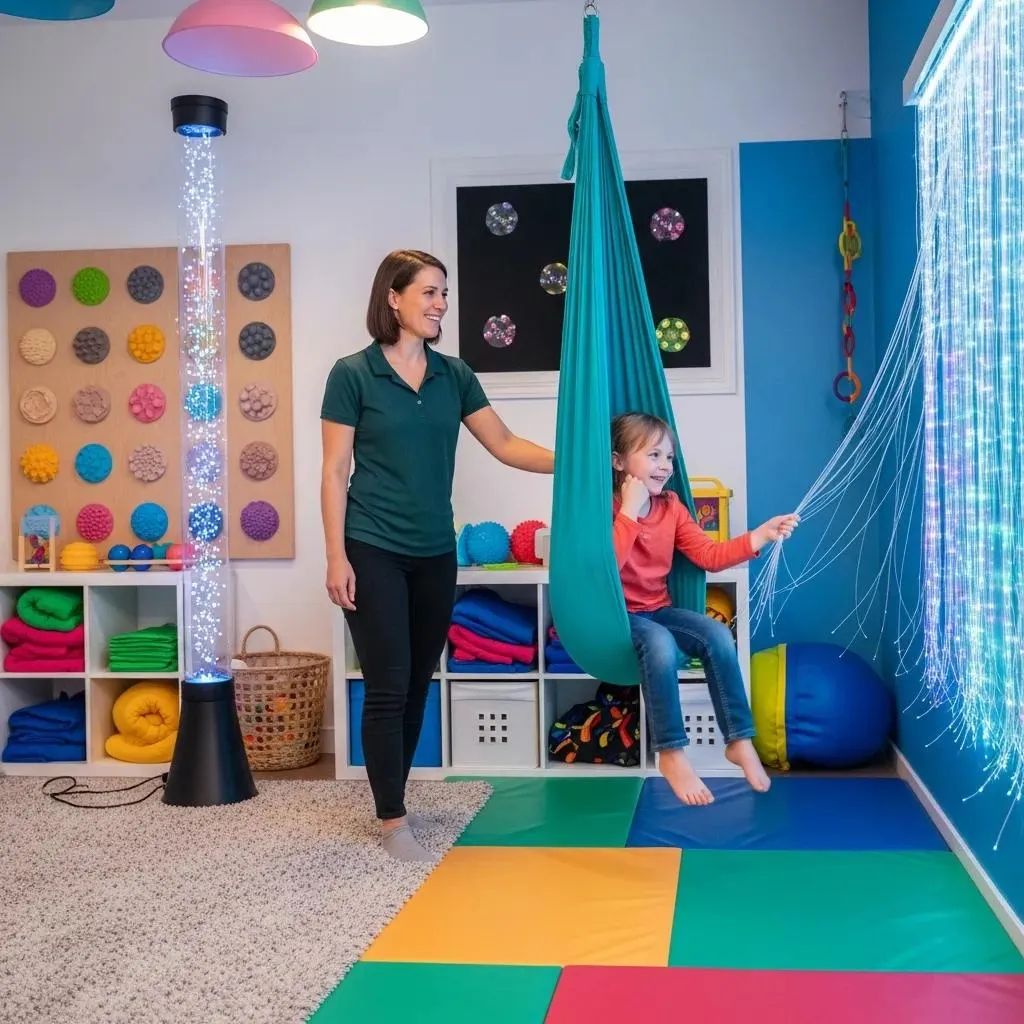

DMI Intensives’ occupational therapy programs offer children longer sessions that focus on building a single specific movement or motor skill. These intensives often target gross motor tasks, such as rolling, sitting up, crawling, and transitioning between positions. In many cases, the therapist may repetitively gently guide the child’s body through the movement so their muscles and brain learn the correct pattern safely and effectively.
More structured or drill-based therapies, like ABA, follow a set of planned exercises focused on building specific behaviors or skills. These drills help children practice targeted actions repeatedly to increase learning and confidence. ABA is sometimes coupled with other therapies, such as speech therapy or occupational therapy, which focus on skills like communication and motor tasks—such as cutting with scissors or buttoning a shirt—to help build independence.
Child-led, playful therapy—such as DIRFloortime—takes a very different approach that many children naturally enjoy. In this style, children feel loved, supported, and safe because the therapist follows their interests while building emotional connection and communication skills. Families often search for occupational therapy near me, hoping for an approach that fits into everyday life, and child-led treatment does just that by blending effortlessly into home routines, playtime, and everyday interactions.
Key Takeaways
- Understand Therapy Approaches: Child-led therapy emphasizes children’s interests, playful therapy incorporates fun activities, and traditional treatment follows structured methods for skill development.
- Consider Child’s Needs: Assess your child’s preference for autonomy in therapy; a child-led approach is ideal for those who thrive on self-direction.
- Evaluate Engagement: Playful therapy is effective for fostering social skills and emotional regulation through enjoyable activities that capture children’s interest.
- Assess Structure vs. Flexibility: Traditional therapy provides consistent routines, while child-led and playful approaches offer greater flexibility, adapting to individual interests and needs.
- Involve Parents and Caregivers: Active participation by parents enhances therapeutic outcomes, making collaborative approaches beneficial regardless of the chosen therapy.
Comparing Therapy Approaches by Focus Areas
Each therapy approach brings unique strengths that support different areas of child development. Understanding these typical focus areas can help families make informed decisions about what fits best for their child’s needs. While child-led and DIRFloortime-inspired therapies are versatile and widely used, intensives and structured methods often target specific skills more directly.
| Therapy Type | Typical Focus Areas | Example Activities |
|---|---|---|
| DMI Intensives | Gross motor skills, body awareness | Rolling, sitting, crawling, guided movement |
| Structured/Drill-based (ABA) | Behavior, communication, routines | Following instructions, social skills drills |
| Child-led & Playful (DIRFloortime) | Social-emotional skills, communication, sensory processing, and emotional regulation | Play-based interaction, emotional connection, and family involvement |
Child-led and playful therapies, especially those inspired by DIRFloortime, emphasize emotional connection and engagement, supporting growth across many developmental areas. These approaches help children build confidence and independence in ways that feel natural and enjoyable.
Understanding Child-Led Occupational Therapy
Understanding Child-Led Occupational Therapy requires an appreciation of its fundamental approach, which enables children to take the lead in their therapeutic path. This model contrasts notably with traditional occupational therapy (OT), where therapists often direct sessions. In child-led OT, as in DIR/Floortime, therapists facilitate play-based activities aligned with the child’s interests and developmental goals.
This responsive atmosphere nurtures inherent motivation and improves self-efficacy. Critical to this approach is the emphasis on personalized goals and the child’s decision-making process, both of which foster a sense of control. By actively participating in therapy, children engage more deeply, promoting emotional regulation and resilience.
Moreover, this method encourages active family involvement, which can reduce parental stress and improve child outcomes. Ultimately, understanding the nuances of child-led OT can help caregivers make informed decisions about their child’s therapeutic needs, especially since DIRFloortime has proven effective in enhancing social communication and emotional development.
The Importance of Play in Therapy
Play serves as a powerful catalyst in therapy, promoting essential growth and development in children. Through play, children improve motor skills, coordination, and sensory processing, all of which are fundamental to independence. Play-based occupational therapy not only supports cognitive and academic gains but also nurtures affective regulation and social skills.
Parents searching for “dirfloortime near me” or “occupational therapy near me” may find that play-based approaches foster a safe environment where children can express themselves and build resilience. Engaging in therapeutic play scenarios encourages critical thinking and decision-making, which are essential for everyday interactions. Ultimately, when considering “is play-based OT better for my child?” parents should acknowledge its thorough benefits in nurturing holistic development.
Research shows that play benefits physical, mental, emotional, and social development, improving motor skills, coordination, and independence. Furthermore, play serves as the primary code of communication for children, allowing them to explore their feelings and experiences in a safe and supportive manner. Additionally, sensory integration techniques can significantly enhance children’s ability to engage in play, supporting their overall developmental progress.
Key Features of Traditional Occupational Therapy

Occupational therapy encompasses a broad spectrum of practices aimed at improving daily functioning and general wellbeing. Traditional occupational therapy is founded on several key features, focusing on customized approaches to meet client needs. The integration of a holistic philosophy guarantees the consideration of personal goals, environments, and tasks.
Occupational therapists typically work in various settings, including hospitals, schools, and long-term care facilities, to provide essential support to clients. Additionally, occupational therapy enhances motor skills, which are vital for a child’s independence and confidence. The focus on play-based interventions allows for engaging and effective skill development.
| Key Features | Description | Goals |
|---|---|---|
| Client-Centered Approaches | Tailored interventions based on unique motivations | Improve engagement in meaningful activities |
| Evidence-Based Practice | Grounded in frameworks and therapeutic research | Support informed decision-making |
| Holistic Assessments | Extensive evaluations across multiple domains | Establish personalized, measurable goals |
This structured approach guarantees adequate support for individuals facing challenges in daily life, promoting skill development and increased independence.
Sensory Processing and Regulation in OT
In occupational therapy, sensory integration techniques play an essential role in helping children process and organize sensory input. Coupled with affective self-regulation strategies, these approaches help address behavioral and engagement challenges, fostering improved participation in daily activities. Effective occupational therapy can greatly support children in developing the skills necessary to navigate their environments with greater confidence and ease.
Understanding that sensory processing deficits are included in the DSM-5 diagnostic criteria for Autism Spectrum Disorder (ASD) highlights the need for targeted interventions in therapy. Additionally, Sensory Integration Therapy focuses on improving the brain’s ability to process sensory information, a crucial skill for children facing these challenges. These interventions often lead to enhanced emotional regulation, promoting better social participation and reduced anxiety in everyday situations.
Sensory Integration Techniques
Sensory integration techniques serve as essential tools for helping children navigate the complexities of sensory processing. Occupational therapists employ evidence-based strategies to improve the functioning of core sensory systems, including the tactile, vestibular, and proprioceptive systems. Activities such as swinging and spinning stimulate balance and spatial awareness, while deep pressure techniques help regulate sensory input.
Tactile play encourages discrimination of different textures, and proprioceptive exercises improve body awareness and coordination. Research indicates that these techniques lead to significant improvements in sensory processing, adaptive behaviors, and functional skills across diverse professional standards. Moreover, evidence from randomized controlled trials demonstrates that these strategies can be particularly effective in promoting emotional regulation and self-control.
By tailoring interventions to meet personal needs, therapists create supportive environments that enable children to thrive in their daily lives. Understanding the brain’s ability to organize and interpret sensory information is crucial for effective sensory integration therapy. Additionally, personalized sensory diets can significantly enhance emotional balance and self-regulation, ensuring that each child receives the support they need.
Emotional Self-Regulation Strategies
Building on the foundation of sensory integration techniques, affective self-regulation strategies become crucial for children who struggle to manage their emotions. Techniques such as deep breathing, mindfulness practices, and yoga not only promote relaxation but also improve emotional awareness. Engaging in cognitive-behavioral strategies helps children recognize emotional triggers, enabling them to respond more adaptively.
Additionally, incorporating sensory tools like weighted blankets can further enhance emotional regulation. Social skills training and emotional literacy activities foster empathy, allowing children to navigate their feelings and relationships effectively. Environmental modifications, including calming spaces and structured routines, create supportive settings for self-regulation.
Consistent practice of these strategies reinforces emotional resilience, equipping children with the tools to manage stress and improve their overall emotional wellbeing in diverse environments, including home and school. Furthermore, effective emotional management aids in forming relationships and handling stress, highlighting the importance of these strategies in overall child development.
Benefits of Parent and Caregiver Involvement

During therapy sessions, parents and caregivers play a crucial role in optimizing their children’s developmental outcomes. Their involvement significantly enhances cognitive abilities, language skills, and social competence. When parents actively participate in therapy strategies at home, children exhibit improved behaviors and stronger family dynamics.
Parent coaching not only equips caregivers with knowledge but also reduces stress by offering practical strategies. Consistent reinforcement of therapeutic techniques across daily routines fosters skill generalization and long-term success.
Furthermore, collaborative approaches improve psychological support and validate parent experiences, reducing feelings of isolation. Consequently, active family engagement is fundamental for achieving meaningful progress in children’s development and promoting comprehensive wellbeing within the family unit. High parent participation correlates with greater developmental progress, further highlighting the importance of caregiver involvement in the therapeutic process.
Comparing the effectiveness of Therapy Approaches
When comparing therapy approaches for children, motivation and engagement levels are vital in determining effectiveness. Research indicates that child-led, playful occupational therapy methods often improve these factors, leading to enhanced skill acquisition and greater wellbeing. However, traditional therapy methods retain their value for structured skill development, underscoring the need to select an approach that aligns with the child’s distinctive characteristics and therapeutic goals.
Motivation and Engagement Levels
How do different therapy approaches influence motivation and engagement in children undergoing occupational therapy? Child-led occupational therapy fosters inherent motivation by allowing children to select meaningful activities, promoting higher engagement through autonomy. Likewise, playful approaches utilize games and imaginative tasks to stimulate curiosity, enhancing enjoyment and affective involvement.
In contrast, traditional methods often rely on structured routines that may not resonate with a child’s interests, potentially lowering motivation. While rapport and enthusiasm from therapists can enhance engagement in all processes, customization and opportunities for choice are essential across approaches. Ultimately, combining playful elements and child-led strategies can create a supportive therapeutic environment that optimizes motivation and engagement, encouraging children’s active participation in their therapy experience.
Engaged patients show greater interest in therapy tasks, which directly influences their motivation and engagement.
Skill Development Effectiveness
Although varied therapy approaches demonstrate distinct strengths, the effectiveness of skill development in occupational therapy largely hinges on the alignment between interventions and specific child needs. Key areas of focus, such as motor skills, cognitive performance, and functional independence, benefit from tailored strategies that incorporate different tiers of interventions.
| Intervention Tier | Focus Area |
|---|---|
| Universal (Tier 1) | Handwriting, fine motor skills |
| Targeted | Sensory and behavioral processing |
| Intensive | Self-regulation and daily living skills |
| Consultation | Collaboration with teachers |
| Outcome Assessment | Varied methods for competency evaluation |
This structured approach guarantees thorough support, enhancing a child’s potential for growth and independence in daily activities.
Tailoring Therapy to Individual Needs

Tailoring therapy to individual needs is essential for effectively supporting a child’s development and wellbeing. Thorough assessments that evaluate physical, cognitive, emotional, and social factors guide the identification of strengths and limitations, informing targeted interventions. By employing client-centered frameworks, such as the PEOP model, practitioners can address a child’s distinctive context by considering cultural and environmental influences.
Collaborative goal-setting with children and caregivers improves engagement, ensuring that therapeutic activities are meaningful and aligned with the child’s interests. Flexible intervention plans, incorporating adaptive tools and groundbreaking strategies, enable children while fostering independence. By emphasizing participation in daily tasks, therapy can transform into a supportive pathway for growth and resilience, ultimately nurturing the child’s autonomy and holistic wellbeing. Individualized treatment plans lead to higher success rates and greater satisfaction in therapy.
Monitoring Progress in Occupational Therapy
Monitoring progress in occupational therapy is crucial for ensuring that interventions remain effective and aligned with a child’s evolving needs. Practitioners use a variety of methods, including standardized assessments and checklists, to track skill acquisition. Data collection forms and digital platforms facilitate organization and authentic tracking, while visual charts illustrate trends for reviews and meetings.
Both quantitative and qualitative data are collected to provide a thorough understanding of a child’s performance. Best practices emphasize consistent data collection and sharing progress with stakeholders to foster collaboration. By addressing challenges such as inconsistencies and employing training, practitioners improve the reliability of monitoring efforts, ultimately providing a clearer view of each child’s growth and development in therapy.
Making the Right Choice for Your Child

How can parents guarantee they select the most suitable occupational therapy approach for their child? To make an informed decision, they should consider several factors that align with their child’s distinctive needs and preferences.
- Understand the child’s interests and how they can inform therapy goals.
- Evaluate the therapy’s evidence-based effectiveness regarding social, emotional, and developmental outcomes.
- Consider the importance of parent involvement and communication with the therapist.
- Assess the flexibility of the chosen approach to integrate other interventions, if necessary.
Frequently Asked Questions
What Is Child-Led vs Traditional OT?
Child-led OT encourages children to explore and learn through their own interests, building intrinsic motivation. Traditional OT uses more step-by-step guidance to teach specific skills efficiently.
How Do I Choose the Right OT Approach for My Child?
To choose the right OT approach for a child, consider their personal needs, preferences, and developmental goals. Engaging professionals and involving families improves outcomes across therapeutic methods, fostering meaningful growth and participation.
Why Does Child-Led vs Traditional OT Matter for My Family?
Choosing the right approach helps your child feel more comfortable, confident, and motivated during therapy. It also makes it easier for you and their school team to reinforce strategies consistently.
What Qualifications Should I Look for in an OT Therapist?
When seeking an occupational therapist, look for accredited qualifications, relevant licensing, tailored training, and a commitment to evidence-based practice. Consider their expertise in assessment and intervention planning, as well as their familiarity with children’s developmental needs.
How Long Will Therapy Sessions Typically Last?
Therapy sessions typically last between 30 and 90 minutes, depending on the child’s age, setting, and specific needs. Factors such as attention span, condition severity, and therapy goals influence the ideal duration and frequency of sessions.
Can Child-led, Playful OT Be Combined With Other Therapies?
Occupational therapy can be effectively combined with diverse therapies, such as behavioral analysis, speech therapy, and immersive virtual reality. These integrative approaches improve treatment outcomes by addressing multiple developmental needs and promoting holistic client progress.
What Should I Do if My Child Resists Therapy?
When a child resists therapy, caregivers should utilize gradual exposure techniques, incorporate preferred activities, and foster a supportive environment. Engaging with the child’s interests and collaborating with professionals can effectively reduce resistance and promote participation.
Conclusion
References
- https://www.skillpointtherapy.com/therapys-impact-on-child-development-2/
- https://moretosayct.com/why-occupational-therapy-is-key-for-kids-with-sensory-processing-challenges/
- https://www.northstarslpc.com/blog/child-led-therapy
- https://www.wondirfulplay.com/blog/dir-floortime-occupational-therapy-for-autism
- https://www.kidsfirstservices.com/first-insights/how-occupational-therapy-improves-emotional-regulation-in-children
- https://www.tandfonline.com/doi/full/10.1080/19411243.2024.2360414
- https://source.colostate.edu/csu-explores-collaborations-occupational-therapy-early-childhood-education/
- https://www.abilityinnovations.com/blog/the-unique-role-of-child-led-occupational-therapy-in-emotional-regulation
- https://cstacademy.com/resources/articles/utilizing-occupational-therapy-in-therapeutic-preschools-how-early-intervention-supports-child-development/
- https://www.moveabout.com.au/parent-information/why-play-based-therapy-important/