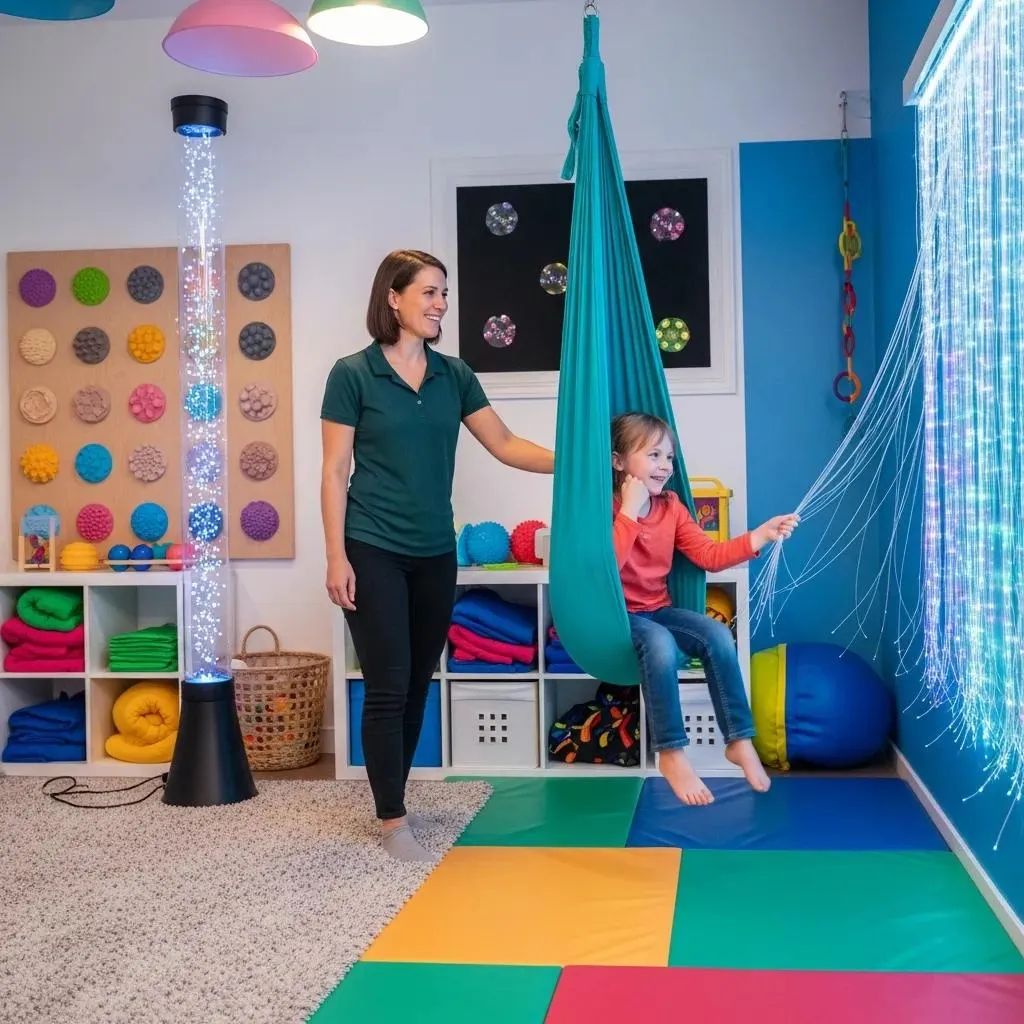

As a pediatric occupational therapist with over 20 years of experience, I’ve seen the incredible progress children can make when we focus on treating sensory processing challenges. Sensory Processing Disorder (SPD) affects how the brain interprets sensory input, leading to difficulties in daily life. Early intervention is key!
By starting therapy early, we can use playful, tailored techniques like proprioceptive activities (think bear hugs and jumping) and tactile exercises (like playing with sand or textured objects) to help kids develop stronger sensory processing skills.
Treating sensory processing doesn’t just help kids handle sensory input better—it transforms how they engage with the world. Through Sensory Integration Therapy, we focus on improving sensory motor skills and adaptive behavior while building confidence. Every child is unique, and therapy plans are crafted to match their specific needs and goals.
Watching a child master a task that once felt impossible is one of the most rewarding experiences for any occupational therapist.
With the proper support, children with SPD can achieve remarkable independence and enjoy a higher quality of life. Whether it’s learning to dress, eat, or play with peers, every small victory adds up. The journey may take time, but treating sensory processing with patience and expertise paves the way for lifelong success. Let’s unlock your child’s potential together!
Key Takeaways
- Pediatric occupational therapists provide personalized interventions for children with Sensory Processing Disorder (SPD), focusing on enhancing sensory motor skills.
- They use sensory integration therapy to help children respond effectively to sensory inputs, using proprioceptive input, tactile stimulation, and vestibular activities.
- A ‘sensory diet’ of activities is tailored to each child’s specific needs, with techniques like deep pressure, swinging, and brushing used for regulation.
- Occupational therapists also address behavioral challenges in SPD children, teaching coping strategies and enhancing cognitive skills such as attention and memory.
- Early detection of SPD by occupational therapists allows for effective management and improved quality of life through timely interventions and support for families.
Understanding Sensory Processing Disorder
Diving into the domain of Sensory Processing Disorder (SPD) requires an extensive understanding of its intricate aspects. SPD, a condition that affects how the brain processes sensory information, may cause hypersensitivity or hyposensitivity to stimuli. This disruption can lead to chronic difficulties that impede everyday life, prompting behaviors or reactions to manage or cope with sensory input.
The prevalence of SPD is estimated to affect 5 to 10 percent of children without disabilities, and if applied to the entire U.S. population, nearly 15 million persons could experience sensory processing disorders. Notably, SPD does not discriminate, affecting any demographic group. Early detection of SPD is vital as timely healthcare intervention can help manage the condition effectively and improve the quality of life for the affected individual.
The diagnosis of SPD, currently not officially recognized as a standalone medical condition, often falls under autism spectrum disorder (ASD) in the Diagnostic and Statistical Manual of Mental Disorders. The overlap with conditions like ASD and ADHD makes it challenging to distinguish SPD as a distinct disorder. Assessment tools like the Sensory Profile and the Sensory Processing Measure (SPM) are used by occupational therapists to evaluate sensory processing problems.
It’s crucial to understand that despite its common manifestation in individuals with ASD, not all individuals displaying SPD are on the autism spectrum, highlighting the diverse range of individuals affected by this disorder.
Children with SPD often display signs of inappropriate responses to sensory input, including overreacting or underreacting, which can be a telltale sign of disorders such as Sensory Modulation Disorder (SMD), Sensory Discrimination Disorder (SDD), and Sensory-Based Motor Disorder (SBMD). These specific challenges greatly influence the child’s movement, balance, posture, and ability to differentiate sensations. Pediatric occupational therapists are instrumental in diagnosing and treating these conditions, often utilizing personalized interventions to enhance sensory motor skills and improve the child’s daily life.
Sensory Integration Therapy Explained
Sensory Integration Therapy plays a crucial role in addressing Sensory Processing Disorders (SPD) in pediatric occupational therapy. This therapeutic approach aids children in integrating and responding to diverse sensory inputs effectively. It targets challenges in processing sensory information, such as difficulties in touch, smell, sight, hearing, and taste, which can often result in problematic behavior and repetitive actions.
Sensory Integration Therapy adopts a holistic method, improving participation in everyday tasks by providing a tailored ‘sensory diet’ of activities designed to meet each child’s distinct needs. It seeks to help the brain adapt, improving the child’s ability to process and respond to sensations more efficiently. Initially proposed by A. Jean Ayres in the mid-20th century, this therapy has evolved into a systematic approach to address sensory processing difficulties in autistic children (systematic approach). This therapy also employs olfactory and gustatory stimulation techniques, encouraging children to explore new scents and flavors (olfactory and gustatory stimulation).
The therapy’s central focus is developing a child’s adaptive behavior and functional skills, particularly in children with conditions like Autism Spectrum Disorder and ADHD (conditions treated). Key techniques in this therapy include proprioceptive input, tactile stimulation, vestibular activities, auditory processing, and visual perception exercises. These techniques use tools like weighted blankets, textured materials, movement exercises, sound-filtering tasks, and puzzles, all aimed at refining sensory processing.
Additionally, therapists often employ assistive tools and adaptive utensils to enhance children’s self-care abilities and further promote their independence (adaptive utensils).
The therapy’s goal is to improve sensory processing, enhance motor skills, assist in affect regulation, increase social interactions, and promote adaptive responses. It enables children with SPD to navigate their world better, leading to a more fulfilling life.
Differentiating SPD and ADHD

While Sensory Integration Therapy offers practical solutions for Sensory Processing Disorders, it’s likewise essential to understand the differentiation between SPD and another common pediatric condition, ADHD (Attention Deficit Hyperactivity Disorder).
To differentiate between these two conditions, it is vital to examine the symptoms, characteristics, diagnostic considerations, and treatment approaches. Both conditions may exhibit symptoms such as inattention, distractibility, and hyperactivity; however, the underlying causes and responses to stimuli differ.
- SPD primarily deals with difficulties in processing sensory input, leading to atypical responses to sensory stimuli. Children with SPD may either over- or under-respond to sensory experiences. Such altered sensory processing can significantly affect a child’s functional abilities and independence, impacting their daily life tasks. It’s essential to identify these disorders early, as early intervention can lead to successful outcomes in therapy (early intervention).
- On the other hand, ADHD is characterized by problems with focus, impulsivity, and sustaining attention, regardless of sensory input.
- Diagnostically, SPD is not formally recognized in the DSM-5 TR but can be identified through assessments by occupational therapists. ADHD, however, requires thorough evaluations involving multiple parties.
- Treatment for SPD commonly involves occupational therapy, while ADHD often requires medication and behavioral therapy.
Understanding these differences is vital to providing appropriate care and support for children living with these conditions. In addition, children with ADHD often coexist with other conditions like oppositional defiant disorder, anxiety, and borderline personality disorder, leading to shared symptoms such as emotional dysregulation and impulsivity (co-occurring disorders). Research has indicated that SPD is often seen in children with developmental conditions, and its symptoms can vary in severity, making it crucial to recognize and intervene early (early detection).
Benefits of Occupational Therapy
Given the unique challenges faced by children with sensory processing issues, occupational therapy emerges as an invaluable tool to improve their daily functioning and general quality of life. Occupational therapists use a variety of strategies to boost practical life skills, such as self-care and self-feeding, and fine motor skills, which are essential for tasks like handwriting. This fosters independence in children and enables them to participate fully in school activities.
Notably, occupational therapy is instrumental in managing behavioral challenges. By teaching coping strategies and affective regulation, children learn to navigate their surroundings more effectively and develop key social skills. Pediatric occupational therapists’ focus is on enhancing children’s social skills for school success through early intervention and tailored strategies.
Additionally, focusing on cognitive skills, such as attention, memory, and learning, can significantly support students’ academic endeavors.
Sensory integration techniques guide children with sensory processing issues to respond appropriately to sensory experiences, thereby reducing the impact of hypersensitivity or hyposensitivity on their activities (sensory integration). Implementing therapy techniques that focus on fine motor skills can significantly enhance a child’s abilities and overall development.
Occupational therapy also benefits mental health. Through the use of relaxation techniques and sensory strategies, children can better handle stress and anxiety. This thorough support extends to families as well, with therapists educating parents on sensory processing issues and providing strategies for home support. The result is a holistic approach that markedly improves the quality of life for children with sensory processing issues.
Sensory Integration Framework and Techniques

Nearly every occupational therapist employs the Sensory Integration Framework, a fundamental tool conceptualized by Dr. A. Jean Ayres in the 1970s. This approach is primarily used to address sensory processing disorders in children. The framework focuses on providing sensory stimuli through play to regulate the sensory system and improve self-regulation.
Incorporating diverse sensory inputs, including vestibular, proprioceptive, auditory, and tactile, this method employs a number of techniques:
- Proprioceptive input techniques like using weighted blankets and deep-pressure applications
- Vestibular activities such as swinging and spinning promote balance
- Tactile stimulation techniques, including brushing and texture exploration
- Auditory exercises aimed at sound filtering and auditory challenges
Therapists also prepare personalized sensory diet plans, which are crucial for enhancing the overall functioning of each child (sensory diet plans). In practice, over 95% of occupational therapists apply this framework in their sessions. They create tailored interventions based on the specific sensory needs of each child, similar to how pediatric physical therapists customize care plans to enhance children’s motor skills and coordination (customized care plans).
They adjust the environment to produce the necessary sensory challenges. As part of the intervention process, therapists also collaborate closely with primary caregivers, integrating their feedback and guidance into the therapeutic plan (collaboration with primary caregivers). This therapeutic process often involves the use of the DIR/Floortime model, which emphasizes playful interactions and emotional bonds to support developmental growth (DIR/Floortime model). It’s significant to note, however, that while sensory integration therapy is a valuable tool, it should be part of a thorough treatment plan, and its limitations should be discussed with families.
Frequently Asked Questions
What Are the Key Signs a Child May Need Occupational Therapy for Sensory Processing Disorder?
Key signs that a child may need occupational therapy for sensory processing disorder include hypersensitivity to stimuli, difficulty with tactile activities, social integration issues, behavioral challenges, motor skills delays, and learning difficulties related to sensory issues.
How Does Treating Sensory Processing Improve Emotional Regulation?
Treating sensory processing improves emotional regulation by helping children understand and manage sensory input more effectively. As they develop these skills, they feel less overwhelmed, leading to fewer emotional outbursts and greater self-control.
How Do Occupational Therapists Measure Progress in Sensory Integration Therapy?
Occupational therapists use both qualitative and quantitative outcome measures, such as direct reports and standardized tests, to track progress in sensory integration therapy. They ensure that interventions support the child’s daily activity goals and improve sensory processing.
What Are Some Daily Life Challenges That Children With SPD Might Face?
Children with Sensory Processing Disorder (SPD) may experience daily challenges such as extreme irritability, difficulty shifting between activities, sensitivity to textures, and resistance to new foods. These issues can significantly impact their learning and social interactions.
How Can Schools Support Children With SPD and ADHD?
Schools can support children with SPD and ADHD by creating an adaptable, sensory-friendly environment, modifying teaching methods, recognizing personal needs, and fostering an inclusive atmosphere through teacher training and peer understanding. Collaboration with occupational therapists is also beneficial.
Are There Any Potential Risks or Side Effects to Sensory Integration Therapy Techniques Like the Wilbarger Brushing Technique?
Sensory integration therapy, such as the Wilbarger Brushing Technique, can potentially cause temporary discomfort, excessive sensory stimulation, or sensory overload symptoms. To minimize risks and guarantee effectiveness, it should be administered by trained professionals.
Conclusion
To summarize, treating sensory processing is a journey that requires dedication, skill, and collaboration. Pediatric occupational therapists play a vital role in helping children with Sensory Processing Disorder (SPD) navigate their unique challenges. Using sensory integration therapy, we focus on improving how children process sensory input, enabling them to grow and thrive.
These techniques are carefully tailored to each child, empowering them to build essential life skills and confidence.
Occupational therapists appreciate your commitment to supporting your child on this path. Your love and dedication make a world of difference in their progress. Together, we can continue treating sensory processing challenges and celebrate every step forward. By working as a team, we can help your child achieve their full potential and enjoy a happier, more independent life.