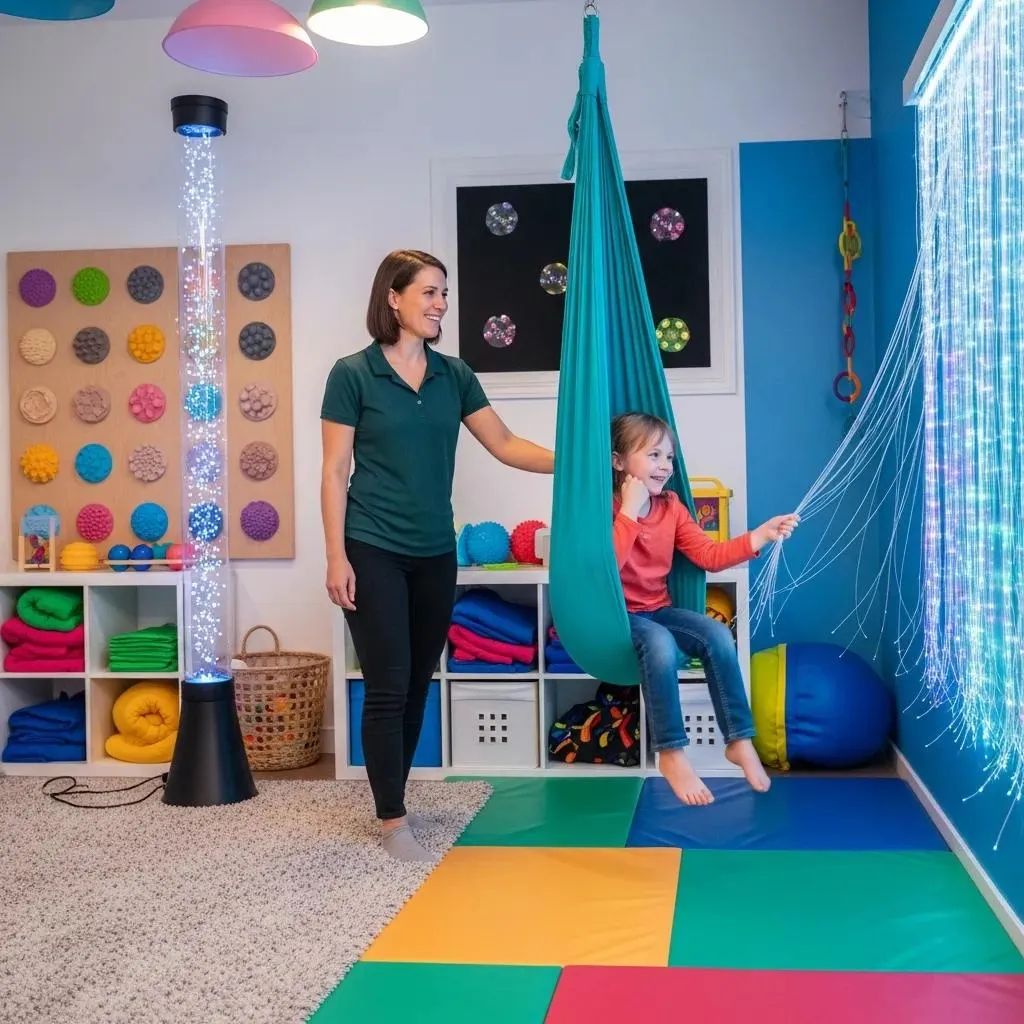

Children learn and remember more when they are doing activities they genuinely enjoy. This applies to play-based speech therapy, occupational therapy, physical therapy, and even everyday schoolwork. When a child feels joy and curiosity, their brain is more open to learning, and they are more willing to try new skills without fear or pressure.
Playful therapy creates a warm and natural setting where communication grows through authentic experiences. For example, instead of repeating the same sound 20 times, a child might roar, whisper, and “feed” a toy dinosaur while practicing new words. Instead of drilling vocabulary cards, they may plan a pretend birthday party and talk through each step. And rather than repeating directions over and over, they might follow a playful treasure map, practicing listening skills while hunting for clues. Drill-style therapy can help in small doses, but it often feels stiff, tiring, and less meaningful to children who learn best through real play.
This is why many families searching for “speech therapy near me” are drawn to child-led, relationship-based care. Playful treatment not only helps children make faster progress, but it also teaches parents simple ways to support growth at home. When families join in the play—reading together, pretending together, building together—they strengthen skills and build deeper, happier relationships at the same time.
Key Takeaways
- Play-based therapy enhances language development through meaningful interactions and encourages children to practice communication in a fun, engaging way.
- Unlike structured drills, play activities promote decision-making, fostering independence and strengthening children’s communication skills.
- Play therapy activates brain regions involved in problem-solving and memory, facilitating better retention of language skills than rote learning techniques.
- Collaborative, child-led play reduces anxiety and nurtures emotional regulation, creating a more receptive learning environment for children.
- Evidence shows that lay therapy results in greater improvements in vocabulary and speech intelligibility, particularly for children with developmental language disorders.
The Importance of Play in Language Development
Although play is often perceived as mere recreation, it plays a critical role in language development by fostering meaningful interactions that expose children to new vocabulary and communication skills. Engaging in symbolic play allows children to express ideas and emotions, facilitating language acquisition through imaginative scenarios. Also, social routines within play provide structured opportunities for children to practice turn-taking, listening, and responsive communication, which are essential for effective dialogue.
Research indicates that playful, child-led activities increase engagement and receptiveness to learning, thereby accelerating language development. By creating a rich environment for vocabulary expansion, play effectively parallels language development, reinforcing the connection between play’s developmental milestones and children’s communicative abilities. Furthermore, evidence from the UK suggests that guided play activities significantly enhance children’s language development, underscoring the powerful impact of play-based learning.
Notably, the DIRFloortime approach utilized in therapy sessions emphasizes child-led methods that enhance engagement through play, ultimately promoting emotional and social growth alongside language development.
Benefits of Play-Based Therapy for Children
Play-based therapy offers numerous benefits that extend beyond mere recreation, serving as a powerful vehicle for enhancing children’s overall development. This therapeutic approach fosters engagement while addressing diverse developmental domains:
- Enhanced communication skills through interactive games and storytelling.
- Cognitive and problem-solving development via critical thinking and memory exercises. This approach is efficient in supporting children with autism spectrum disorder as they learn to express themselves through play.
- Emotional regulation facilitated by expressive play amid therapeutic contexts.
- Social skills are cultivated through cooperation and empathy in shared activities.
- Confidence-building and independence are encouraged by providing decision-making opportunities.
These play benefits not only create an enriching environment for children to investigate their abilities but also promote holistic growth in a relaxed and enjoyable manner, ultimately facilitating successful therapy engagement.
How Neurodevelopment Supports Play as a Learning Tool

As the brain develops, its structure is fundamentally designed to prioritize learning through direct experiences, positioning play as a vital tool in the educational process. Research indicates that play activates the prefrontal cortex, fostering the creation of new neural pathways and enhancing psychological regulation and problem-solving skills. Experiential learning through play results in medial prefrontal neurons that are more adept at processing information compared to those formed in non-play settings.
The release of oxytocin and dopamine during play contributes to a conducive neurochemical environment, bolstering memory, motivation, and social skills. Ultimately, the brain’s architecture supports play as the foundational pathway for learning, underscoring its critical role in children’s developmental success and cognitive flexibility. Healthy play experiences are linked to positive outcomes, highlighting the importance of integrating play into learning environments.
Additionally, engaging in sensory integration activities can enhance a child’s ability to manage sensory overload, further supporting their overall development through play. Furthermore, incorporating sensory diets into playtime can help children with sensory processing challenges navigate their environment more effectively.
Enhancing Engagement and Motivation Through Play
How can incorporating play improve children’s engagement and motivation during speech therapy? Play-based therapy naturally aligns with children’s ways of exploring and communicating, fostering significant improvements in motivation dynamics. By allowing children to take the lead in enjoyable activities, therapy becomes less of a chore, enhancing play engagement.
Incorporating play into speech therapy transforms it into an engaging experience, empowering children to communicate naturally and joyfully.
- Increases spontaneous communication attempts
- Enhances motivation through internal reward systems
- Reduces anxiety and fear often linked with structured drills
- Facilitates better affective regulation and socio-emotional skills
- Encourages flexible language use and cognitive development
Through these mechanisms, play not only sustains interest but also fosters lasting communication skills that extend beyond the therapy setting, demonstrating the profound efficacy of play-based methods in developing crucial speech and language abilities. Furthermore, studies indicate that play therapy significantly improves socio-emotional skills, reinforcing the importance of a play-centered approach in treatment. Additionally, incorporating play therapy enhances emotional regulation, allowing children to navigate their feelings as they engage in treatment.
Moreover, it activates neural pathways essential for emotional and cognitive development, improving the overall therapeutic experience.
Observational Evidence of Play Therapy Effectiveness

Numerous studies have documented the effectiveness of play therapy in improving speech and language skills among children, particularly those with developmental disorders. Observational studies reveal that play therapy not only greatly enhances communication abilities but also fosters socio-emotional skill development. For instance, participants in play-based interventions exhibited stable improvements in emotional expression and reduced challenging behaviors, demonstrating long-term effectiveness.
Data indicate considerable improvements in intelligibility and vocabulary, especially among preschoolers with developmental language disorders. Moreover, play therapy fosters self-regulation and reduces anxiety, yielding simultaneous gains in communication and behavior. The evidence collectively underscores the multifaceted benefits of play therapy, underscoring its role as a superior alternative to traditional drill-based methods for addressing diverse developmental needs.
Furthermore, a recent randomized controlled trial found that play-based interventions can lead to significant gains in pragmatic language skills for children with autism, highlighting their effectiveness in targeted communication areas. Significantly, social skills therapy enhances emotional regulation, further bolstering the success of play-based interventions for children with communication challenges. Additionally, research indicates that consistent parental engagement enhances expressive language and communication frequency, creating genuine communication opportunities for improved outcomes.
Practical Strategies for Parents to Promote Play
In promoting play, parents can emphasize child-led activities that reflect the child’s interests, such as imaginative play or building projects. Integrating language naturally during these activities not only fosters communication but also enriches vocabulary and social skills. Such strategies utilize the inherent joy of play, making learning both meaningful and effective for the child. Engaging in play helps in facilitating emotional regulation, allowing children to navigate their feelings through enjoyable experiences.
Additionally, child-led play aligns with natural preferences, encouraging authentic interaction and promoting exploration, which facilitates spontaneous interactions vital for language acquisition. Incorporating sensory-rich activities into play can further enhance engagement and support various aspects of development.
Encouraging Child-Led Play
While recognizing the significance of play in a child’s development, parents can adopt practical strategies to encourage child-led play, fostering autonomy and deeper engagement. This approach respects a child’s play preferences and nurtures their inherent motivation, ultimately enhancing logical thinking and social skills.
- Create a safe and stimulating play environment filled with a variety of materials. Sensory play can significantly enhance children’s exploration and creativity.
- Allow children to guide their play experiences, promoting decision-making and control.
- Pause during interactions to give children the opportunity to initiate communication. Responding to all forms of communication reinforces a child’s value and understanding.
- Encourage exploration of diverse play options to stimulate creativity.
- Minimize structured activities to allow children to frame their own play scenarios.
Implementing these strategies not only supports child autonomy but also lays the groundwork for thorough language and cognitive development.
Integrating Language During Activities
Child-led play provides a natural platform for language development, allowing parents to integrate language into diverse activities actively. By employing language modeling techniques such as expansions and recasting, parents can foster vocabulary acquisition and improve sentence complexity. For instance, when a child refers to a “ball,” a parent might respond with “big red ball,” thereby enriching the child’s language experience.
Furthermore, introducing thematic vocabulary related to play dynamics not only reinforces learning but also promotes engagement. Facilitating turn-taking and encouraging conversation during games further nurtures social communication skills. Parents’ involvement in these aspects has been shown to yield significant improvements in communication and behavior, thereby enhancing the child’s affective regulation and peer interactions.
Additionally, play therapy promotes practical expression and social interaction through engaging, child-led activities, supporting overall development.
Collaborating With Professionals for Optimal Outcomes

Effective collaboration among professionals is crucial for achieving ideal outcomes in play-based speech therapy. This interdisciplinary approach enables the integration of diverse expertise, improving intervention design and implementation.
- Collaborative planning fosters personalized goals that address both communication and behavioral aspects.
- Consistent outcome monitoring facilitates adaptive strategies based on actual child feedback.
- Active parent participation guarantees skill transfer beyond therapy settings.
- Joint training equips professionals with the confidence to deliver thorough interventions.
- Data-driven decisions improve therapeutic effectiveness and family trust.
Through such cooperation, professionals can create dynamic interventions, optimize children’s developmental trajectories, and guarantee sustainable progress. This partnership ultimately enriches the therapy experience, promoting meaningful outcomes that resonate with family needs and priorities.
Understanding Limitations and Individual Differences in Therapy
Collaboration among professionals lays the groundwork for addressing the complexities inherent in speech therapy; however, recognizing the limitations of standardized approaches is crucial for tailoring effective interventions. Standardized drills frequently overlook personal learning styles, attention spans, and cognitive variability, which can impede progress. These approaches often fail to translate into authentic communication, especially for children with language delays or attention deficits.
Research indicates that fatigue and decreased motivation during repetitive tasks limit retention. Additionally, variability in speech perception underscores the need for personalized strategies, as cognitive capacity influences engagement and learning outcomes. Adopting play-based strategies can foster motivation and integrate learning within a natural context, ultimately facilitating more effective therapy tailored to each child’s distinct needs. Furthermore, implicit learning can play a significant role in enhancing speech recognition, underscoring the importance of adapting therapy techniques to individual differences.
Frequently Asked Questions
What Makes Play-Based Speech Therapy More Motivating for Kids?
Play-based speech therapy naturally increases motivation because children practice communication skills in activities they already enjoy.
How Does Play-Based Speech Therapy Support Long-Term Progress?
It strengthens real-world communication by teaching skills in meaningful, emotionally rich experiences that children can use outside the therapy room.
How Long Do Play-Based Speech Therapy Sessions Typically Last?
Play-based speech therapy sessions typically last 30 minutes, balancing session duration with therapy effectiveness. This timeframe optimizes children’s engagement, preventing fatigue while ensuring focused intervention, fostering greater progress in speech and language development.
Can Play-Based Therapy Be Combined With Other Treatment Methods?
Like weaving a tapestry, play integration and therapy collaboration can be combined effectively. This holistic approach boosts communication skills, promotes heartfelt wellbeing, and supports children’s development, creating a richer, more meaningful therapeutic experience.
What Age Groups Benefit Most From Play-Based Speech Therapy?
Toddlers benefit greatly from early play-based interventions, while preschoolers gain improved communication and socio-emotional skills. Both age groups show advances in vocabulary and pragmatic language, fostering vital developmental milestones for effective speech development.
How Can Parents Track Progress During Play-Based Therapy?
Parents can track progress during play-based therapy through structured observations, documenting changes in engagement and affective expression. Regular communication with therapists and the use of tracking logs improve progress monitoring, reinforcing parent involvement in the therapeutic process.
How Can Occupational Therapy Enhance Play-Based Speech Therapy?
Occupational therapy supports regulation, attention, and motor skills, making it easier for children to participate meaningfully in play-based communication. When both therapies work together, kids experience smoother engagement and faster progress.
Are There Specific Play Activities Recommended for Home Therapy?
Recommended home therapy activities include dramatic play scenarios in which children express emotions and create narratives, as well as sensory activities that engage multiple senses. These approaches foster communication skills, encouraging exploration and interaction within a supportive, playful environment.
Conclusion
Play-based, child-led speech therapy creates real and lasting progress because children learn best when they feel connected, understood, and excited to participate. When kids lead the play, their communication becomes more natural and meaningful—whether they’re pretending to cook a meal and naming ingredients, guiding a doll through a morning routine while practicing sequencing words, or building a fort and using new vocabulary to solve problems together. These moments feel like fun to a child, but they are powerful teaching opportunities that build confidence, language skills, and emotional regulation.
Research shows that play-based interventions can improve language skills by up to 70% more than traditional drill-only methods. This number reflects what we see every day in the therapy room—children stay engaged longer, communicate more freely, and make steady progress without feeling pressured or frustrated. When therapy feels like play, children are more willing to try new sounds, new words, and new ideas.
If you have questions about your child’s speech development or want to know whether a playful, child-led approach is right for your family, Skill Point Therapy is here to help. We’re always happy to listen, guide, and support you every step of the way.
References
- https://journals.kmanpub.com/index.php/jarac/article/view/3373?articlesBySameAuthorPage=30
- https://www.frontiersin.org/journals/psychology/articles/10.3389/fpsyg.2019.01960/full
- https://pubs.asha.org/doi/10.1044/2021_AJSLP-20-00310
- https://www.kidsfirstservices.com/first-insights/why-play-based-therapy-is-effective-for-children
- https://www.parkwoodclinic.com/post/why-play-based-therapy-works-the-power-of-play-in-speech-development
- https://www.tandfonline.com/doi/full/10.1080/09638288.2023.2259305
- https://pmc.ncbi.nlm.nih.gov/articles/PMC12441714/
- https://www.heischools.com/blog/the-power-of-play-how-play-based-pedagogy-strengthens-childrens-language-development
- https://www.abilityinnovations.com/blog/play-in-speech-development
- https://www.speechpathsf.com/speech-therapy-blog/the-link-between-play-and-language-development-in-toddlers