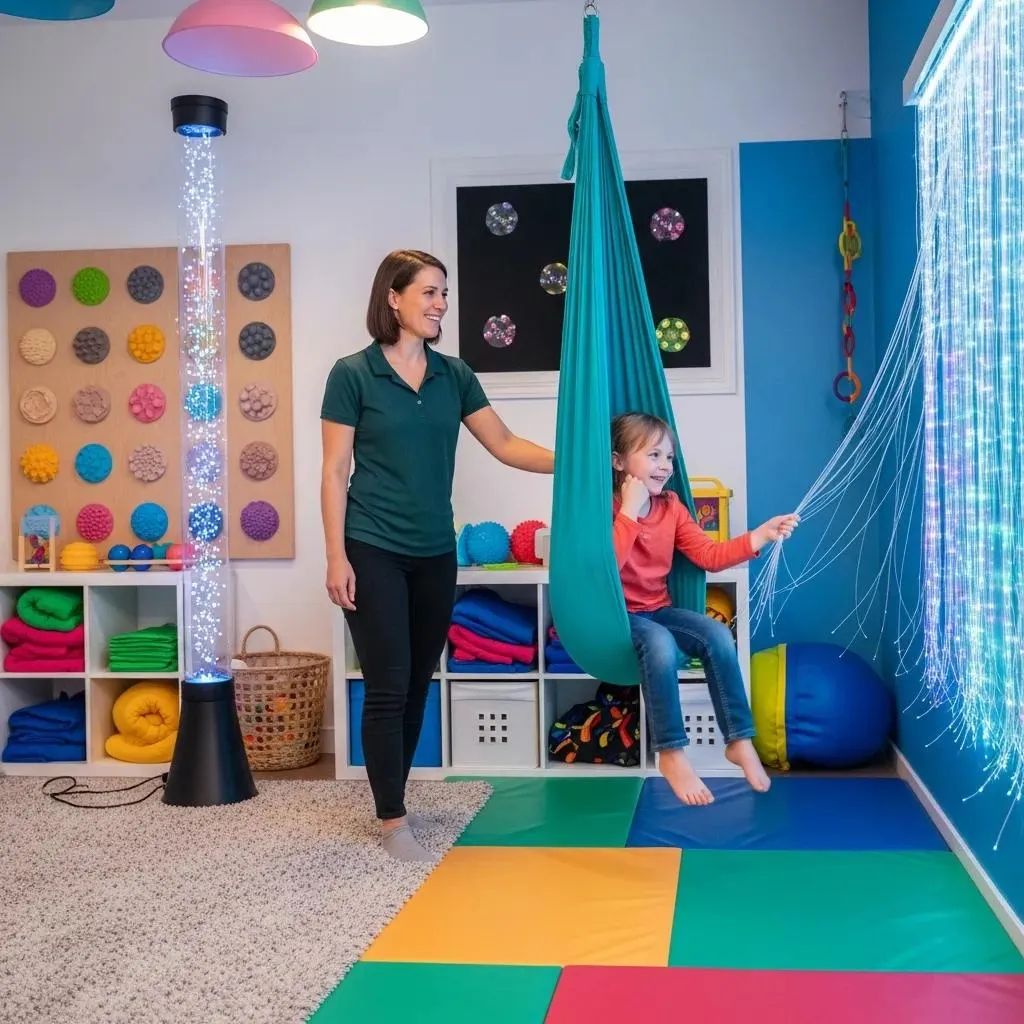

Recognizing sensory processing issues is essential for parents in Hillsborough County who may be searching for ‘occupational therapy near me’ to understand their child’s needs better. Many children may show signs such as covering their ears in loud places, refusing certain clothing textures, or becoming overwhelmed during routine tasks like brushing teeth or getting dressed. These reactions are not bad behavior—they are signs that the child’s brain may be having trouble organizing and responding to sensory information.
Parents often notice sensory challenges in everyday situations. For example, a child may become upset by the sound of a vacuum or dislike the feeling of certain foods. Others might constantly seek movement — spinning or jumping — more than their peers. A less common sign is when a child seems unaware of pain or temperature changes, which can also signal sensory processing differences.
About 1 in 20 children experience sensory processing challenges that affect how they learn, play, and connect with others. Early intervention produces the best outcomes by helping children build coping skills and confidence before habits become harder to change. In Tampa, Brandon, and Ruskin (in early 2026), clinics like Skill Point Therapy use DIRFloortime and occupational therapy to help children regulate their senses, grow emotionally, and thrive at home and school.
Key Takeaways
- Observe your child for signs such as frequent tantrums, sensitivity to textures/sounds, and unexpected aggression, which may indicate sensory processing issues.
- Utilize screening tools, such as the Sensory Profile 2, to assess sensory processing in your child effectively.
- Seek early intervention services to enhance sensory skills and improve daily functioning through structured therapeutic support.
- Access local resources, such as Sunshine Physical Therapy Clinic in Hillsborough County, for specialized therapy and support.
- Join support groups or community networks to share experiences and strategies with other families facing similar challenges.
Understanding Sensory Processing Disorders

Although many people are unaware, sensory processing disorder (SPD) significantly impacts the way some people interact with their environment. SPD affects the brain’s ability to process sensory information, leading to hypersensitivity or hyposensitivity to stimuli. Common signs of sensory processing disorder in Brandon, FL, include frequent tantrums, excessive movement, and difficulty in social interactions. Parents in Tampa and Hillsborough should monitor their children for signs of unexpected aggression or resistance to grooming activities.
Understanding how to recognize sensory processing issues is vital for developing appropriate support systems. A significant point to note is that 1 in every 20 children experiences SPD, highlighting the importance of awareness among parents.
Additionally, sensory integration therapy can help children manage their sensory processing challenges. Furthermore, early diagnosis and intervention can significantly improve outcomes for children with SPD, making it crucial to seek expert care when needed. So, how do I know if my child has a sensory processing issue? Monitoring their reactions to different sensory inputs can provide valuable insights into their distinctive sensory profiles and needs.
Prevalence of Sensory Processing Issues in Children
Approximately 1 in 6 children in the United States may experience sensory processing issues, highlighting a notable concern for parents, educators, and healthcare providers. Prevalence estimates range from 5% to 16.5%, affecting many young children, even those without diagnosed disabilities. Alarmingly, sensory processing difficulties are frequently present in high-risk populations, including those with autism spectrum disorder, with prevalence rates soaring to 80%–100%.
This underscores the importance of recognizing these challenges early. Early recognition of SPD symptoms can lead to effective interventions that support children in their daily environments. Research indicates that sensory integration therapy can significantly enhance emotional regulation and social participation for affected children. Parents seeking support should consider searching for “occupational therapy near me,” as tailored interventions can notably improve a child’s daily functioning, social participation, and learning experiences.
Awareness and early intervention are crucial to help affected children navigate their daily environments effectively.
Common Symptoms of Sensory Processing Challenges

Children with sensory processing challenges often exhibit a range of symptoms, including over-responsiveness, sensory seeking, and under-responsiveness. For instance, some may overreact strongly to everyday sounds or textures, while others actively seek out sensory experiences through movement or play. Recognizing these behaviors is essential for understanding their impact on daily life and affective wellbeing.
Addressing sensory processing issues early can lead to more effective intervention strategies and improved outcomes for children. Creating a sensory-friendly environment can significantly help in managing these challenges. Incorporating sensory integration therapy techniques can also provide targeted support to enhance emotional regulation and social participation.
Sensory Over-Responsiveness Behaviors
Sensory over-responsiveness manifests as an intense, often distressing reaction to stimuli that most people find tolerable or even negligible. Children exhibiting this behavior frequently recoil from loud noises, such as vacuum cleaners or ringing phones, and may refuse specific clothing due to discomfort with textures or seams. Bright lights can induce significant distress, while unexpected touch often leads to adverse reactions.
Such sensitivities can disrupt daily routines, making activities like haircuts or family outings challenging. Affective responses may include irritability or social withdrawal, often accompanied by sleep disturbances. Awareness and recognition by parents can facilitate early intervention, allowing for tailored strategies that support the child’s sensory needs and improve overall quality of life.
Sensory processing issues often lead to behaviors that can be distressing not only for the child but also for the family environment. Implementing sensory integration therapy can help the child manage these overwhelming sensations. Additionally, understanding sensory integration is crucial for developing effective coping strategies that empower children in their daily lives.
Sensory Seeking Actions
When people engage in sensory-seeking behaviors, they often exhibit a strong desire for sensory experiences that are fundamental to their development and self-regulation. Typical behaviors include excessive jumping or climbing, touching others, and chewing on non-edible items. Understanding these actions is vital for supporting their needs effectively.
Given that sensation-seeking behavior is common among children with sensory processing challenges, early recognition is key to fostering appropriate interventions. Engaging in sensory-rich activities can further facilitate their development and emotional regulation. Incorporating movement and activity into daily routines can also enhance their focus and self-regulation skills.
| Type of Sensory Seeking | Examples |
|---|---|
| Motor and Movement | Climbing, crashing, fidgeting |
| Tactile and Touch-Related | Seeking textures, rough play |
| Oral and Mouth-Related | Chewing on non-food items |
Recognizing these patterns enables parents and caregivers in Hillsborough County to provide empathetic support, therefore fostering a nurturing environment conducive to growth and self-regulation.
Under-Responsiveness Indicators
Persons who exhibit underresponsiveness to sensory input may struggle to respond appropriately to varying stimuli in their environment, leading to challenges in daily interactions and activities. These persons often require more intense or frequent sensory stimulation to register their surroundings, which can manifest physically and behaviorally. They might appear slow to respond to loud noises or touch, overlook minor injuries, and frequently bump into objects.
Socially, they may seem passive or disinterested, requiring repeated prompts to participate. Additionally, low arousal levels can impact their physical coordination and attention span, complicating daily tasks. Recognizing these signs allows caregivers to provide tailored support, ensuring a nurturing environment that promotes growth and understanding in their sensory experiences.
Understanding sensory modulation disorder can also help caregivers identify their child’s specific sensory needs and implement effective strategies to support their child’s thriving. By developing a sensory diet that incorporates engaging activities, caregivers can enhance their child’s ability to process sensory information effectively.
Identifying Sensory Processing Issues in Your Child

Identifying sensory processing issues in children requires careful observation of common symptoms, such as aversions to certain textures or sounds, as well as patterns of behavior that may suggest sensory seeking or avoidance. Utilizing screening and assessment tools can provide a structured approach to understanding a child’s distinctive sensory profile. By recognizing these signs early, parents can seek appropriate support to improve their child’s developmental path.
Understanding that sensory processing disorder (SPD) is a distinct neurodevelopmental disorder will help parents advocate for the necessary resources and interventions.
Common Symptoms to Observe
How can parents discern whether their child is experiencing sensory processing issues? Common symptoms include hypersensitivity, where a child may overreact to bright lights or loud sounds, frequently covering their ears or eyes to escape overwhelming stimuli. They may avoid certain foods due to texture sensitivity, express distress with sudden physical touch, or display clumsiness and fear of playground equipment.
Conversely, hyposensitivity manifests as a craving for intense sensory experiences, difficulty recognizing individual space, and hyperactivity. Moreover, emotional signs like dramatic mood swings and social problems can arise from sensory challenges. Observing these behaviors can provide insight, helping parents better understand their child’s needs and seek appropriate support.
Additionally, many children with sensory issues may also be diagnosed with conditions like autism spectrum disorder, indicating a need for comprehensive evaluation.
Screening and Assessment Tools
Recognizing sensory processing issues in a child can be challenging. Yet, a range of screening and assessment tools is available to assist parents and professionals in understanding these difficulties more deeply. Standardized questionnaires, like the Sensory Profile 2 (SP-2) and Sensory Processing Measure-2 (SPM-2), gather observations from caregivers and teachers, providing insights into sensory behaviors across different environments.
Clinical observational assessments, such as the Structured Observations of Sensory Integration-Motor, require trained professionals to assess motor skills and proprioception directly. For a more thorough evaluation, the Sensory Integration and Praxis Tests (SIPT) offer detailed profiles of sensory strengths and weaknesses. These tools equip families with informed insights, paving the way for timely interventions and support tailored to each child’s distinctive needs. Understanding the full scope of occupational therapy’s expertise can also enhance the assessment process and support for children with sensory processing issues.
Screening and Evaluation Processes in Hillsborough County
Given the complexities surrounding sensory processing issues, the screening and evaluation processes in Hillsborough County play a crucial role in providing early interventions for young children. The Early Childhood Council offers free monthly developmental screenings for children aged 0-5 that identify key developmental delays, including sensory processing concerns. Families can conveniently request screenings online or via phone, enhancing accessibility. Upon receiving parental consent, qualified professionals under IDEA conduct thorough evaluations within 60 days to assess eligibility for special education services.
The collaborative review between parents and the evaluation team ensures a tailored approach, enabling the timely initiation of the services. These processes aim to provide significant support, fostering better developmental outcomes for children facing sensory challenges.
Assessment Tools for Sensory Processing Disorders

What assessment tools are available to address sensory processing disorders, and how do they contribute to understanding a child’s distinctive sensory experiences? Various standardized, questionnaire-based tools, such as the Sensory Profile 2 and the Sensory Processing Measure-2 (SPM-2), provide crucial insights into sensory processing patterns across different environments. Performance-based assessments such as the Sensory Integration and Praxis Tests (SIPT) and the Evaluation in Ayres Sensory Integration® (EASI) provide detailed assessments of sensory integration capabilities.
Utilizing multiple informants—parents, teachers, and caregivers—enhances the accuracy of observations and helps identify specific challenges. These tools, collectively, foster a thorough understanding of a child’s sensory experiences, enabling families and practitioners to support their developmental path effectively.
Challenges in Diagnosis and Recognition
How can the complexities of sensory processing disorder (SPD) contribute to diagnostic challenges? SPD, not explicitly recognized in the DSM, results in inconsistent criteria that often lead to underdiagnosis, especially in children with overlapping neurodevelopmental conditions. Reliance on subjective caregiver reports and clinical observations can further exacerbate these challenges, potentially leading to the overlooking of subtle symptoms.
Parents may misinterpret sensory difficulties, particularly in children with limited verbal expression, while standardized observation tools may fail to capture the full spectrum of sensory responses across varied environments. Moreover, the co-occurrence of SPD with disorders like autism and ADHD complicates accurate diagnosis, making differentiation vital yet challenging. Recognizing these complexities is fundamental in providing practical support to affected children and their families.
Importance of Early Intervention Services

Although many parents may initially overlook sensory processing issues, early intervention services play a crucial role in addressing these challenges effectively. Timely support can significantly improve a child’s development and family dynamics. Key benefits of early intervention include:
- Improved Sensory Responsivity: Therapeutic interventions can boost children’s ability to process sensory information.
- Increased Daily Participation: Addressing sensory needs allows children to engage in everyday activities more confidently.
- Reduction in Challenging Behaviors: Early strategies can minimize behavioral issues linked to sensory dysfunction.
- Enhanced Family Understanding: Families gain insights into sensory challenges, fostering more informed support.
Investing in early services paves the way for better social and academic outcomes, ensuring children thrive in diverse environments.
Resources and Support for Families
Access to a range of resources and support systems is essential for families navigating sensory processing challenges. Many therapy centers now offer specialized services, including evidence-based sensory programs, tailored sensory diets, and family education to support daily routines. Parents are increasingly seeking therapy centers that use DIRFloortime, a relationship-based approach that strengthens emotional connection and sensory regulation.
Families can also benefit from workshops, community support groups, and online resources designed to make information and assistance more accessible to all.
Navigating the Educational System for Sensory Needs

Navigating the educational system can be challenging for families of children with sensory processing needs, given the complexities of policies and available support structures. To facilitate this navigation, families can focus on the following key elements:
- Understand Personalized Education Programs (IEPs), which outline necessary accommodations and services.
- Seek early identification through developmental screenings, available monthly, to address sensory issues before they escalate.
- Investigate tailored settings, such as ESE Center Charter Schools, that offer customized educational programs and therapeutic support.
- Utilize 504 Plans for students who need accommodations but do not qualify for special education, ensuring modifications for sensory needs.
Frequently Asked Questions
Recognizing sensory processing challenges often begins with noticing patterns—like covering ears in noisy spaces or avoiding certain textures. These responses can signal a child’s difficulty filtering sensory input, a key insight that helps parents seek the proper support early on.
Why Is Recognizing Sensory Processing Issues So Important for Parents?
Early recognition empowers parents to understand behaviors rather than label them as defiance or shyness. This awareness opens the door to personalized interventions, helping children feel more regulated, understood, and capable in daily routines.
How Can I Support My Child With Sensory Processing Issues at Home?
To support a child with sensory processing issues at home, create a sensory-friendly environment by using weighted items, visual aids for routine and movement breaks, establishing quiet spaces, enhancing predictability, and affective regulation while promoting generalwellbeingg
What Are Common Myths About Sensory Processing Disorders to Avoid?
What misconceptions might hinder understanding of sensory processing disorders? Common myths include the idea that they are non-existent, only affect children, or stem from willful misbehavior, obscuring authentic challenges that require empathy, support, and intervention.
Are Sensory Processing Issues Linked to Any Specific Medical Conditions?
Sensory processing issues are strongly linked to diverse medical conditions, especially autism spectrum disorder, ADHD, and anxiety disorders. These challenges can significantly impact daily functioning, affective regulation, and social interactions in affected children, necessitating a supportive approach.
How Do Sensory Processing Challenges Affect Family Dynamics?
Sensory processing challenges often disrupt family dynamics by necessitating routine adjustments, limiting activities, and increasing parental vigilance, which can lead to stress, feelings of judgment, and isolation while also fostering advocacy and growth within supportive networks.
What Steps Can I Take if I Suspect My Child Has SPD?
Initially, document observed behaviors, then consult a pediatrician for assessment. Request a referral to an occupational therapist for focused evaluation and interventions, and engage in supportive parent networks for shared experiences and resources.
Conclusion
Recognizing sensory processing issues early can make a lasting difference in your child’s growth and confidence. When parents understand the signs and take small steps toward support, children begin to feel calmer and more in control of their daily routines. Early awareness helps families replace frustration with understanding, creating a stronger emotional connection at home.
With the proper support, families can learn strategies that make everyday activities more manageable and enjoyable. Occupational therapy using DIRFloortime focuses on each child’s strengths while addressing their sensory needs in a playful, supportive way. These personalized approaches help children build self-regulation, improve focus, and engage more comfortably with others.
Families across Hillsborough County—including those in Tampa, Brandon, and soon Ruskin—can find hope and guidance through early intervention. At Skill Point Therapy, we’re always here to listen and help you explore what’s best for your child. Contact us anytime—no obligation, just a caring conversation with a team that understands what you’re going through.
References
- https://sensoryhealth.org/sites/default/files/file-attachments/ahn_miller.pdf
- https://www.fldoe.org/core/fileparse.php/7673/urlt/Hillsborough1920os.pdf
- https://skillpointtherapy.com/resources-for-sensory-processing/
- https://www.ecctampabay.org/images/stories/downloads/ResourceGuide.pdf
- https://pmc.ncbi.nlm.nih.gov/articles/PMC9688399/
- https://digitalcommons.usf.edu/cgi/viewcontent.cgi?article=4366&context=etd
- https://harkla.co/pages/sensory-processing-disorder
- https://www.fldoe.org/core/fileparse.php/7690/urlt/0070160-edoppsenlet.pdf
- https://www.myflfamilies.com/sites/default/files/2024-06/CBC Inventory of Services.xlsx
- https://childmind.org/article/sensory-processing-issues-explained/